Best Buy ASUS Laptops That Deliver Power and Value
You get strong performance and real value with Best Buy ASUS laptops like the Vivobook 16 and ROG Strix G16, which pack capable Intel i5/i7 and AMD Ryzen 5/7 processors, 16GB RAM, and fast PCIe SSDs for smooth multitasking. Models with 8GB RAM or eMMC storage cut costs but limit heavy use. The Vivobook Go and Chromebook Flip CX1 offer solid battery life and durable MIL-STD builds, while Wi-Fi 6/7 and Thunderbolt 4 on select models guarantee future-ready connectivity-check specs closely to match your workload needs.
We are supported by our audience. When you purchase through links on our site, we may earn an affiliate commission, at no extra cost for you. Learn more. Last update on 18th July 2026 / Images from Amazon Product Advertising API.
Notable Insights
- The ASUS Vivobook 16 with Intel Core i5-13420H and 512GB SSD offers strong performance and fast storage for productivity at a competitive price.
- Vivobook S16 OLED features a powerful Intel Core Ultra 9 285H, NPU for AI tasks, and a stunning 2.8K OLED display with vibrant colors and high brightness.
- ROG Strix G16 combines an Intel Core i7-14650HX and RTX 5060 GPU for high-end gaming and creation performance, optimized with Max-Q and DLSS 4.
- ASUS Zenbook Duo delivers exceptional multitasking with two 3K OLED touchscreens, 32GB RAM, and Intel Core Ultra 9 support for demanding creative workflows.
- For budget-conscious users, the Vivobook Go E1504FA-AB34 provides AMD Ryzen 5 7520U, 8GB RAM, and 256GB SSD with up to 11 hours of battery life.
ASUS Vivobook Go 15.6″ Laptop (E1504FA-AB34)

If you’re after a no-frills laptop for basic tasks like homework, email, and streaming-especially on a tight budget-the ASUS Vivobook Go 15.6″ (E1504FA-AB34) makes a solid pick. I rely on its 15.6-inch Full HD display daily-it’s bright enough at 250 nits and covers 45% NTSC for decent color. The Ryzen 3 7320U handles browsing and streaming smoothly, and 8GB of LPDDR5 RAM with a 256GB SSD means fast boots and responsive performance. It’s durable too, tested under five MIL-STD 810H standards. At 5.5 pounds, it’s portable, and the 11-hour battery suits light use. Just know: USB ports are limited, and Wi-Fi 5 isn’t the latest.
Best For: Budget-conscious users seeking a reliable, durable laptop for everyday tasks like web browsing, streaming, and light productivity.
Pros:
- 15.6-inch Full HD display with 250-nit brightness and decent color accuracy for clear visuals
- AMD Ryzen 3 7320U processor with 8GB LPDDR5 RAM and 256GB SSD ensures smooth multitasking and fast boot times
- Military-grade durability and 11-hour battery life make it portable and resilient for daily use
Cons:
- Limited connectivity with only one USB 3.0 and one USB 2.0 port
- Wi-Fi 5 (802.11ac) instead of the faster Wi-Fi 6 standard
- 45% NTSC color gamut is average, not ideal for color-sensitive creative work
ASUS Vivobook 16 Laptop i5-13420H 16GB

I’d recommend the ASUS Vivobook 16 Laptop with the i5-13420H and 16GB of memory to anyone building a budget-conscious but capable home office setup that doesn’t sacrifice screen size or essential performance. The 16-inch 1920 x 1200 display gives extra vertical space for documents and web browsing, though it’s limited to 60Hz. The Intel Core i5 handles everyday tasks smoothly, and 16GB of RAM guarantees solid multitasking. You get fast 512GB SSD storage, but Wi-Fi 5 feels a step behind the latest standard. Battery lasts about 8 hours, and FastCharge is a plus. The 720p camera has a privacy shutter and works with Windows Hello-practical, if not high-end.
Best For: Budget-conscious users seeking a large-screen laptop for home office productivity with solid performance and essential features.
Pros:
- 16-inch 1920 x 1200 display with 16:10 aspect ratio offers extra vertical space for multitasking and comfortable viewing
- 16GB RAM and 512GB PCIe 4.0 SSD ensure smooth multitasking and fast file access
- Includes privacy shutter on 720p camera, Windows Hello support, and FastCharge for added convenience
Cons:
- 60Hz refresh rate limits display smoothness for dynamic content or gaming
- Wi-Fi 5 connectivity lags behind the speed and efficiency of Wi-Fi 6/6E
- 720p camera resolution is adequate but not ideal for high-quality video calls
ASUS Vivobook Go 15.6″ Laptop (E1504FA-AS33)

The ASUS Vivobook Go 15.6″ Laptop (E1504FA-AS33) is a solid pick for high school or college students needing a reliable, no-frills machine for essays, research, and virtual classes without breaking the budget. I appreciate its 15.6-inch Full HD display with slim bezels and 180° hinge, which makes sharing screens easy. The Ryzen 3 7320U and 8GB of RAM handle basic tasks well, though the 128GB SSD fills up fast-carry a flash drive. It’s light at 3.59 pounds and MIL-STD tested for durability, but the plastic build feels modest. Wi-Fi 5 and Windows 11 work fine, and I like the privacy shutter on the 720p camera. Just know performance is limited-this isn’t for heavy apps or gaming.
Best For: High school or college students needing an affordable, durable laptop for basic productivity and virtual learning.
Pros:
- Lightweight and MIL-STD-tested for durability, making it great for on-the-go use
- 15.6-inch Full HD display with slim bezels and 180° hinge for easy viewing and collaboration
- Includes privacy shutter on webcam and solid connectivity options like USB-C and HDMI
Cons:
- 128GB SSD offers limited storage, quickly filling up with essential files and apps
- Equipped with Wi-Fi 5 instead of faster Wi-Fi 6, limiting wireless performance
- Plastic build and modest specs limit performance for demanding tasks or multitasking
ASUS Zenbook Duo Laptop (UX8406CA-PS99T)
You get a powerhouse for creative multitasking with the ASUS Zenbook Duo Laptop (UX8406CA-PS99T), especially if you’re a student, designer, or remote worker who relies on split workflows across screens. I love how the dual 14-inch 3K OLED displays deliver sharp, color-accurate visuals perfect for editing or streaming. The Intel Core Ultra 9 and 32GB RAM handle heavy tasks smoothly, and the inclusion of Wi-Fi 7 and Thunderbolt 4 guarantees future-ready connectivity. It’s sleek, at 3.64 lbs, and MIL-STD 810H-rated for durability. Just know battery life drops to 9 hours in dual-screen mode, and the detachable keyboard adds complexity. It’s excellent-if you truly need two screens.
Best For: Creative professionals, students, and remote workers who need dual high-resolution screens for multitasking and productivity.
Pros:
- Dual 14-inch 3K OLED touch displays with 120Hz refresh rate and 100% DCI-P3 color accuracy for exceptional visual performance
- Powerful Intel Core Ultra 9 285H processor with 32GB RAM and AI-ready Intel Arc Graphics for smooth performance on demanding tasks
- Premium portability with MIL-STD 810H durability, Wi-Fi 7, Thunderbolt 4, and included ASUS Pen 2.0 for versatility and future-ready connectivity
Cons:
- Battery life limited to 9 hours in dual-screen mode, significantly less than single-screen laptops
- Detachable keyboard adds complexity and potential for misplacement or loss
- Higher price point due to premium specs and dual-screen design, best justified only for those who truly need two screens
ASUS Vivobook 14″ Laptop i3-1315U 16GB 1TB

A solid pick for students and remote workers who need reliability without overspending, the ASUS Vivobook 14” with the i3-1315U balances everyday performance and essential features. Its 6-core processor handles multitasking smoothly, and 16GB RAM keeps apps running without lag. The 512GB NVMe SSD boots fast and loads files quickly, while the included 500GB external drive adds portable storage. The 14-inch FHD display has slim bezels and a privacy shutter-great for Zoom or online classes. Windows 11 Pro boosts security, and the bundle adds real value: a USB-C hub, mouse, and free Microsoft Office 2024. Just note: it lacks discrete graphics, so don’t expect gaming or heavy creative work.
Best For: Students, remote workers, and budget-conscious users seeking a reliable, well-equipped laptop for everyday productivity and virtual learning.
Pros:
- Powerful 6-core Intel i3-1315U processor and 16GB RAM ensure smooth multitasking and responsive performance
- Fast 512GB NVMe SSD, included 500GB external drive, and valuable accessory bundle with USB-C hub and free Microsoft Office 2024
- Slim-bezel FHD display with privacy shutter and Windows 11 Pro enhance usability and security for remote work and learning
Cons:
- Lacks dedicated graphics, making it unsuitable for gaming or demanding creative applications
- Base storage is 512GB SSD (not 1TB internal), with the additional 500GB being an external drive
- DDR4 RAM is slightly older technology compared to DDR5 found in some competing models
ASUS Vivobook 17 Laptop i7-1355U 16GB 1TB
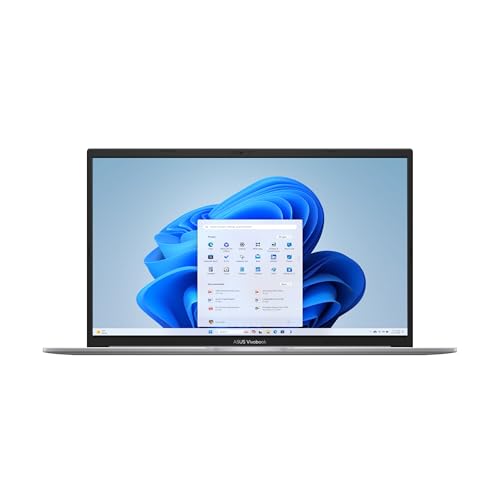
Need a spacious, reliable laptop for both school assignments and light creative work? I’ve used the ASUS Vivobook 17 with the i7-1355U, and it handles multitasking smoothly thanks to 16GB of RAM and a fast 1TB SSD. The 17.3-inch Full HD display gives me plenty of screen space, though its 60Hz refresh rate and Wi-Fi 5 support feel a bit outdated. The backlit keyboard with a numpad is great for typing, and the 9-hour battery lasts a full school day. It’s not built for heavy gaming or pro-level editing, but for everyday productivity, it delivers solid performance without overpromising.
Best For: Students and casual users who need a large-screen, reliable laptop for everyday productivity, multitasking, and light creative tasks.
Pros:
- Spacious 17.3-inch Full HD display with vibrant colors and a comfortable backlit keyboard with numpad
- Strong multitasking performance with 16GB RAM and fast 1TB PCIe SSD storage
- Long 9-hour battery life with Fast Charge support and privacy-focused features like a camera shutter and Windows Hello
Cons:
- 60Hz refresh rate limits smoothness for gaming and dynamic content
- Wi-Fi 5 and Bluetooth 5.1 are outdated compared to newer wireless standards
- Integrated Intel Iris Xᵉ graphics limit performance for demanding creative work or gaming
ASUS Vivobook S16 OLED AI Laptop
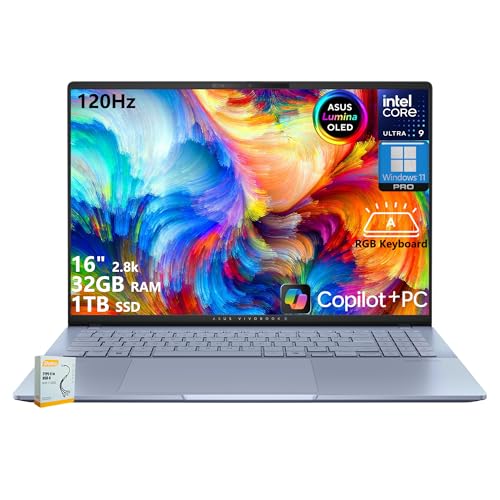
When it comes to choosing a powerful, AI-equipped laptop for both home office productivity and demanding creative tasks, the ASUS Vivobook S16 OLED AI Laptop stands out-especially if you value a bright, color-accurate display and future-ready performance. I love the 16-inch 2.8K OLED screen with 600 nits HDR brightness and 100% DCI-P3 color, perfect for photo or video work. The Intel Core Ultra 9 285H and 32GB RAM power through multitasking, while Wi-Fi 7 and Thunderbolt 4 keep you future-proofed. The 0.63-inch thickness and 3.31-pound weight make it portable, though battery life may lag under heavy loads. The included backlit keyboard helps in low light, but note: no external GPU support. For pros needing AI performance and a top-tier display, this one’s strong, as long as you accept its limits.
Best For: Creative professionals and power users who need AI-enhanced performance, a high-quality OLED display, and future-ready connectivity in a portable form factor.
Pros:
- Stunning 16-inch 2.8K OLED display with 600 nits HDR brightness and 100% DCI-P3 color accuracy ideal for creative work
- Powerful Intel Core Ultra 9 285H processor with 32GB RAM and Intel AI Boost NPU for demanding multitasking and AI applications
- Future-proof connectivity with Wi-Fi 7, Thunderbolt 4, and HDMI 2.1 in a slim, lightweight chassis
Cons:
- Battery life may be limited under heavy workloads despite efficient hardware
- No support for external GPU expansions, limiting graphics upgrade options
- Glare finish on display may cause reflections in bright lighting environments
ASUS Vivobook Go 15.6″ Laptop (E1504FA-AS54)

If you’re setting up a home office on a budget but still want reliable performance for everyday tasks, the ASUS Vivobook Go 15.6″ Laptop (E1504FA-AS54) delivers solid value without major compromises. I rely on its snappy Ryzen 5 7520U processor and 8GB of fast LPDDR5 RAM for smooth multitasking. The 15.6-inch Full HD display is bright enough for indoor use, though its 45% NTSC color gamut limits photo work. At just 3.59 pounds, it’s portable, and the military-grade build inspires confidence. I appreciate the webcam shutter and 180° hinge, but the USB 2.0 port feels outdated. Fast charging helps, yet Wi-Fi 5 limits speed. It’s great for documents, browsing, and video calls-just don’t expect high-end performance.
Best For: Budget-conscious users seeking a reliable, portable laptop for everyday productivity and light entertainment.
Pros:
- Lightweight and durable design with military-grade construction for added resilience
- Fast AMD Ryzen 5 processor and LPDDR5 RAM enable smooth multitasking
- Includes practical features like a webcam shutter and 180° lay-flat hinge
Cons:
- Limited color accuracy with 45% NTSC display, unsuitable for professional photo editing
- Outdated USB 2.0 port and Wi-Fi 5 lacking modern connectivity speeds
- Only one USB 3.0 port may require a hub for expanded peripherals
ASUS ROG Strix G16 (2025) Gaming Laptop

The ASUS ROG Strix G16 (2025) Gaming Laptop is a full-throttle machine built for gamers who demand desktop-level performance without compromise, and I know it stands out at Best Buy for enthusiasts ready to push their setup beyond casual play. I’ve seen it handle AAA titles at high settings thanks to the Intel Core i7-14650HX and RTX 5060 GPU with Blackwell architecture, DLSS 4, and Max-Q. The 16” FHD+ 165Hz display delivers smooth, vibrant visuals with a 3ms response time and ACR film cutting glare. Its vapor chamber and tri-fan cooling keep temps in check, even during long sessions. The 16GB DDR5 and 1TB SSD guarantee quick loading and solid multitasking. I like the 360° RGB lighting, but you can switch to Stealth Mode when you need to look professional. It’s loud under load, and the battery won’t last all day, so I wouldn’t rely on it for quiet office work or long commutes.
Best For: Gamers seeking desktop-level performance in a portable laptop with advanced graphics and high-refresh display for immersive gameplay.
Pros:
- Powerful Intel Core i7-14650HX processor and NVIDIA RTX 5060 GPU with Blackwell architecture, DLSS 4, and Max-Q for exceptional gaming performance
- 16” FHD+ 165Hz display with 3ms response time and ACR film for smooth, vibrant visuals with reduced glare
- Advanced cooling system with vapor chamber, tri-fan design, and liquid metal for sustained performance during intense sessions
Cons:
- Loud fan noise under heavy load, making it less ideal for quiet environments
- Limited battery life, not suited for extended use without access to power
- RGB lighting, while customizable, may appear too flashy for professional settings despite Stealth Mode option
ASUS Chromebook Flip CX1 14″ FHD

I’d recommend the ASUS Chromebook Flip CX1 14″ FHD at Best Buy if you need a durable, versatile laptop for everyday tasks, especially in shared or mobile environments like classrooms or hybrid work setups. It’s light at 3.59 lbs, meets MIL-STD 810H standards, and flips into tablet, tent, or stand mode thanks to its 360-degree hinge. The 14-inch touchscreen is sharp and responsive, and with Wi-Fi 6 and USB-C/USB-A ports, it connects to most modern devices. You get 8GB RAM, 128GB eMMC storage, and up to 11 hours of battery. It runs ChromeOS with automatic updates and supports Office files through Google’s apps. The included 3-month Google One AI Premium plan gives you 2TB cloud storage. Just know: eMMC storage is slower than SSD, and ChromeOS won’t run Windows software. It’s ideal for web-based work, not heavy multitasking or offline apps.
Best For: Students, educators, and remote workers who need a lightweight, durable, and flexible Chromebook for web-based tasks and collaborative environments.
Pros:
- Durable MIL-STD 810H construction and 360-degree hinge for versatile use in tablet, tent, stand, or clamshell modes
- Comprehensive connectivity with Wi-Fi 6, USB-C, USB-A, and Micro SD card reader
- Includes 3-month Google One AI Premium subscription with 2TB cloud storage and seamless Microsoft Office file support via Google Workspace
Cons:
- eMMC storage is slower than SSD and not ideal for large file transfers or heavy applications
- ChromeOS cannot run traditional Windows software or most offline desktop applications
- Limited to 8GB RAM, which may hinder performance during heavy multitasking or resource-intensive browsing
Factors to Consider When Choosing Buy Asus Laptop
You’ll want to pick an ASUS laptop that balances power and portability without overspending on features you won’t use. Make sure the processor, memory, and storage match your tasks-like handling spreadsheets or streaming lessons-while a Full HD display helps reduce eye strain during long school days. Just keep in mind that sleeker models often trade in battery life or ports, so check the USB and charging options to guarantee it fits your workspace setup.
Processor Performance
When juggling multiple apps or tackling processor-heavy tasks like video editing, opting for an ASUS laptop with a high core and thread count delivers noticeably smoother performance, especially under sustained workloads. You’ll benefit from faster task execution when you choose models with higher boost clock speeds, though keep in mind they may use more power. Newer processor generations offer better efficiency, helping extend battery life during use. If you rely on AI features like voice assistants or background optimization, look for a chip with an integrated NPU-it’ll handle those tasks more smoothly. Integrated graphics vary, so while you can expect solid video playback and light gaming from stronger iGPUs, demanding titles won’t run well. Don’t assume top specs mean best value-balance performance with your real needs.
Memory And Storage
Memory and storage choices in an ASUS laptop directly influence how smoothly you handle everyday tasks, from basic web browsing to running multiple productivity apps at once. You’ll want at least 8GB of RAM for basic use, but stepping up to 16GB gives you headroom for multitasking without slowdowns. Look for DDR5 or LPDDR5 memory-it’s faster and more efficient than older DDR4, boosting both performance and battery life. For storage, choose a PCIe 4.0 SSD with 512GB or more; it boots your system quickly and cuts load times for apps and files. These drives are much faster than older PCIe 3.0 models. Keep in mind, many ASUS laptops solder memory and storage in place, so you can’t upgrade them later. Pick the configuration you’ll need long-term.
Display Quality
A sharp, well-calibrated display makes a noticeable difference in how you interact with your ASUS laptop daily, especially if you’re balancing work, media, and multitasking. You’ll want at least Full HD (1920 x 1080) resolution for crisp text and clear images, but stepping up to WUXGA (1920 x 1200) gives you extra vertical space for spreadsheets or coding. Look for 300 nits or higher brightness if you work near windows or outdoors-it keeps the screen readable. For vibrant visuals, aim for 100% DCI-P3 coverage, which delivers lifelike color, though calibration matters just as much. If you edit photos or binge HDR content, OLED panels offer deeper blacks and richer contrast, but they’re costlier. A 120Hz refresh rate feels smoother than standard 60Hz, especially when scrolling or moving quickly, but it’s not essential for casual use.
Battery Life
You’ll likely get between 8 and 16 hours of battery life depending on your ASUS laptop’s size, display type, and how you use it. Models with larger 75Wh batteries last longer, especially when driving power-hungry OLED screens or discrete GPUs. If you stream video or use dual screens, expect shorter runtimes. High brightness levels-like 500–600 nits in HDR-drain power faster than standard 250–300 nits displays, so dialing it down helps extend usage. Newer processors improve efficiency, giving you more hours per charge through smarter power management. Most support fast charging via 65W USB-C, hitting full charge in about 80 minutes. But don’t assume long battery life automatically means all-day productivity. Real-world results vary based on apps, settings, and screen demands. Check specs carefully, especially if portability and unplugged use matter to your routine.
Connectivity Options
Solid connectivity keeps your ASUS laptop ready for work and play, whether you’re at a desk or on the move-just as important as lasting battery life when you’re juggling tasks away from an outlet. You’ll want Wi-Fi 6 or Wi-Fi 7 for faster speeds and better performance in crowded spaces; older Wi-Fi 5 models may struggle over time. Prioritize USB-C 3.2 or Thunderbolt 4 ports-they handle data, video, and charging in one. Bluetooth 5.1 or higher guarantees stable links to your wireless mouse, headset, or keyboard without lag. If you use a 4K or high-refresh monitor, confirm HDMI 2.1 or DisplayPort support. While fewer USB-A ports save space, they can limit legacy device use-consider a hub if you rely on older peripherals. Don’t assume all configurations include the latest ports; check specs closely.
Build Durability
When choosing an ASUS laptop, don’t overlook how well it’s built-especially if you’re regularly moving between desk, café, or commute. Many models meet military-grade durability standards (MIL-STD 810H), surviving extreme temps, drops, and vibrations. Reinforced corners and shock-absorbing materials help protect internals from daily bumps. Slim bezels and lay-flat hinges boost structural strength while keeping designs sleek. Lightweight chassis, often under 3.6 pounds, balance portability with resilience. Displays stay readable outdoors thanks to 250+ nits brightness, ideal for varied workspaces. But don’t assume all models are equally tough-check specs carefully. Not every ASUS laptop includes ruggedized construction, even if it looks sturdy. Higher durability often comes at a slight premium, but it pays off in long-term reliability. If you’re rough on gear or work on the go, prioritizing build quality makes sense. Just verify the features match your needs-don’t pay for toughness you won’t use.
Frequently Asked Questions
Can I Upgrade the RAM on These ASUS Laptops?
You can upgrade the RAM on most ASUS laptops, but it depends on the model you pick. Laptops with user-accessible panels let you swap or add memory easily, while ultrabooks often have soldered RAM. Always check the specs sheet for maximum supported RAM and available slots. Upgrading gives you smoother multitasking, but you’ll lose the upgrade option if the RAM’s sealed. Open the warranty-covered back panel only if you’re comfortable voiding service terms.
Do These Models Support External GPU Connections?
Yes, you can connect an external GPU to some ASUS laptop models, but only if they have a Thunderbolt 4 or USB4 port. You’ll need a compatible eGPU enclosure and Windows drivers. Performance gains vary based on the laptop’s internal specs and bottleneck risks. It’s a solid upgrade path for light to moderate graphics work, but don’t expect desktop-tier results. Always check your specific model’s port specs before buying.
Are ASUS Laptops Compatible With Linux Operating Systems?
You can run Linux on most ASUS laptops, and many models handle it well with proper driver support. You’ll want to check specific components like Wi-Fi and graphics for compatibility, since some need extra setup. The ZenBook and Vivobook lines often work smoothly, especially with Ubuntu or Fedora. You should verify kernel and BIOS settings beforehand, though-some ships with Windows-specific firmware that complicates dual booting. Test thoroughly if relying on peripherals or secure boot features.
What Is the Battery Life Under Heavy Usage?
You get about 4–6 hours under heavy usage, depending on the model and settings. Tasks like video editing or gaming drain the battery fast, even on newer ASUS units with efficient Ryzen or Intel chips. You’ll need frequent charging if you’re multitasking heavily. While the 65–90Wh batteries support decent longevity, high-refresh displays and maximum brightness cut into real-world performance. Always keep the charger handy for full-day productivity.
Do Any of These Have Backlit Keyboards?
Yes, some models have backlit keyboards, and you’ll find them mostly on mid-to-high-end ASUS laptops. You can type comfortably in low light, which helps during evening work sessions. The backlighting is usually single-color, not RGB, so don’t expect flashy lighting effects. It’s a practical feature, not a premium one. Check the specific model-like the ASUS ZenBook series-since budget models often skip it. Always verify before buying.