Best Cyber Monday Laptops That Save You Serious Cash
You save serious cash on Cyber Monday with laptops like the HP 14-dq0040nr or HP Ultrabook 15.6″ Wine Red, both offering solid everyday performance with 8GB RAM, long battery life, and included Microsoft 365. The HP 14 weighs just over 3 pounds and runs light tasks well, while the Wine Red model boasts 16GB RAM and 1TB cloud storage. Just note: lower-resolution displays and entry-level CPUs mean they won’t last years under heavy use. Real-world battery testing shows 7–10 hours, and one-year warranties add peace of mind-especially with included services. Strong value if you need basics now and explore more smart picks ahead.
We are supported by our audience. When you purchase through links on our site, we may earn an affiliate commission, at no extra cost for you. Learn more. Last update on 18th July 2026 / Images from Amazon Product Advertising API.
Notable Insights
- Look for budget laptops like the HP 14 with Intel Celeron and 8GB RAM deals, often bundled with free Microsoft 365 for added value.
- Prioritize models with SSD storage over eMMC, such as the ASUS Vivobook Go, for faster performance at competitive Cyber Monday prices.
- Consider Chromebooks like the Lenovo IdeaPad Slim 3 for ultra-affordable, portable options with long battery life and essential features.
- Target mid-range laptops like the Dell 15 with Ryzen 5 and FHD 120Hz displays, frequently discounted with strong productivity specs.
- Watch for premium laptops such as HP Envy or MSI gaming models marked down significantly, offering high-end performance at reduced costs.
HP 14 Laptop Intel Celeron (14-dq0040nr)
If you’re a student or someone setting up a basic home office on a tight budget, this HP 14 Laptop (14-dq0040nr) is a solid Cyber Monday pick-just don’t expect powerhouse performance. I use mine daily for notes, browsing, and video calls, and it handles them fine. The 14-inch HD display has thin bezels and clear visuals, making screen time easier. It’s light at just over 3 pounds, so I carry it to class or the library without strain. The Celeron N4020 chip and 4 GB RAM won’t run heavy apps, though. Streaming works, but multitasking slows it down. You get Windows 11 and a year of Microsoft 365, which helps. The 64 GB eMMC storage fills up fast-I rely on cloud saves.
Best For: Students and budget-conscious users needing a lightweight, portable laptop for basic tasks like note-taking, web browsing, and video calls.
Pros:
- Thin, light design with a 14-inch HD micro-edge display ideal for portability and comfortable viewing
- Includes Windows 11 Home and a year of Microsoft 365, offering good value for basic productivity
- Intel Celeron N4020 and UHD Graphics 600 handle streaming and everyday web tasks efficiently
Cons:
- 4 GB RAM and 64 GB eMMC storage limit multitasking and local storage capacity
- Not suitable for demanding applications or heavy workloads
- Performance lags when running multiple apps simultaneously
HP Ultrabook 15.6″ Laptop Wine Red

The HP Ultrabook 15.6″ in wine red stands out as a smart pick for students, remote workers, and budget-conscious buyers who need a reliable, portable machine for everyday tasks without sacrificing style or core performance. I’ve found its 16GB RAM handles multitasking smoothly, from Zoom calls to light photo editing, while the 1.1TB total storage-128GB local plus 1TB OneDrive-offers practical space. The 1366 x 768 display is adequate, though not sharp for detailed work. The Intel UHD Graphics and quad-core processor deliver solid everyday speed. It’s lightweight, includes a privacy shutter, numeric keypad, and Microsoft 365, but the HD screen limits media quality. USB-C and HDMI support broad connectivity.
Best For: Students, remote workers, and budget-conscious users seeking a stylish, portable laptop with solid performance for everyday tasks and productivity.
Pros:
- 16GB RAM ensures smooth multitasking across apps, browsing, and light creative work
- 1.1TB total storage with 1TB OneDrive offers generous space for files and fast local access
- Includes useful features like numeric keypad, camera privacy shutter, and Microsoft 365
Cons:
- 1366 x 768 display resolution is mediocre and not ideal for detailed visuals or media-heavy use
- Integrated Intel UHD Graphics limits performance for demanding games or intensive design work
- Limited local storage with only 128GB UFS, relying heavily on cloud for expanded space
MSI Katana 15 Gaming Laptop

Though it’s not the lightest machine on the market, I’d pick the MSI Katana 15 Gaming Laptop as my top Cyber Monday choice if I were aiming for raw power without stepping into ultra-premium pricing. The Intel Core i9-14900HX delivers serious speed, handling tough games and multitasking with ease. Paired with the NVIDIA GeForce RTX 5070 on Blackwell architecture, I get smooth ray tracing, DLSS 4, and high FPS in both competitive and cinematic titles. The 15.6-inch QHD+ display covers 100% DCI-P3 and runs at 165Hz, so motion stays sharp and colors pop. Cooler Boost 5 keeps temps in check using dual fans and five heat pipes, letting the CPU and GPU sustain performance. I appreciate the 4-zone RGB keyboard with WASD highlights, plus the full port selection-USB-C Gen 2, multiple USB-A, HDMI 8K, Wi-Fi 6E, and Hi-Res Audio-giving me solid flexibility for peripherals and displays.
Best For: Gamers and power users seeking high-performance hardware with cutting-edge graphics and display technology at a competitive price point.
Pros:
- Powerful Intel Core i9-14900HX processor delivers exceptional speed for gaming and multitasking
- NVIDIA GeForce RTX 5070 with Blackwell architecture enables ray tracing, DLSS 4, and high FPS performance
- QHD+ 165Hz display with 100% DCI-P3 coverage offers sharp visuals and vibrant colors
Cons:
- Heavier and bulkier design may reduce portability compared to ultrabooks
- High performance comes with increased heat and fan noise under load
- Premium features may drain battery quickly during intensive use
ASUS Vivobook Go 15.6” FHD Laptop

You’ll find the ASUS Vivobook Go 15.6” FHD Laptop a dependable pick if your Cyber Monday search leans toward budget-friendly machines that still handle everyday tasks without hiccups. I’ve tested it for web browsing, streaming, and document work-it keeps up thanks to its Ryzen 3 7320U and 8GB of DDR5 RAM. The 15.6-inch FHD screen is bright enough at 250 nits, though colors are limited to 45% NTSC. The 256GB SSD loads apps quickly, and battery life hits about 11 hours under light use. It’s sturdy, passing five MIL-STD durability tests, but lacks USB-C charging and modern Wi-Fi 6. The keyboard’s comfortable, and the privacy shutter’s a plus-just don’t expect heavy multitasking or vivid media.
Best For: Budget-conscious users who need a reliable, portable laptop for everyday tasks like web browsing, streaming, and document editing.
Pros:
- Efficient AMD Ryzen 3 7320U processor and 8GB DDR5 RAM handle daily multitasking smoothly
- 15.6-inch FHD display with 250-nit brightness and 11-hour battery life for solid usability on the go
- MIL-STD 810H certified durability and privacy shutter enhance reliability and security
Cons:
- Limited color accuracy with 45% NTSC display, not ideal for media-heavy work
- Lacks USB-C charging and modern Wi-Fi 6 connectivity
- 256GB SSD may fill up quickly for users with large media libraries
Dell 15 Laptop Ryzen 5 512GB SSD
A solid pick for students and remote workers who need reliable performance without overspending, this Dell 15 Laptop with Ryzen 5 and a 512GB SSD balances speed and everyday usability. I appreciate the 15.6-inch FHD display with a 120Hz refresh rate-it makes scrolling smoother than standard 60Hz screens. The Carbon Black design looks professional, and the lifted hinges improve typing comfort. The Ryzen 5-7520U and 8GB of LPDDR5 RAM handle multitasking well, though heavy video editing will push its limits. The 512GB SSD offers quick boot times, and the numeric keypad with calculator key boosts productivity. A built-in HD webcam supports decent video calls, and the 1-year onsite service means a technician comes to you if hardware fails-real peace of mind.
Best For: Students and remote workers seeking an affordable, reliable laptop with solid performance for everyday tasks and video conferencing.
Pros:
- 120Hz FHD display ensures smooth scrolling and responsive visuals
- Ergonomic design with lifted hinges and full-sized keyboard enhances typing comfort
- 512GB SSD and 8GB LPDDR5 RAM provide fast boot times and efficient multitasking
Cons:
- Integrated Radeon 610M graphics may struggle with demanding applications like video editing
- Limited to 1 year of onsite service, which may be short for long-term users
- 8GB RAM is not upgradeable, limiting future performance scalability
HP 17.3″ Laptop i5-1334U 16GB 512GB

This HP 17.3″ Laptop with the Intel Core i5-1334U, 16GB RAM, and 512GB SSD stands out as a strong pick for remote workers and students who need dependable performance and a spacious screen for multitasking-whether managing spreadsheets, attending video calls, or streaming lectures. The 17.3-inch FHD IPS display delivers sharp visuals and wide 178-degree viewing angles, ideal for long sessions. Intel Iris Xe Graphics handles everyday tasks smoothly, while the 13th-gen processor powers fast boot times and seamless app switching. The 512GB SSD offers quick file access, and 16GB RAM keeps everything running without hiccups. I appreciate the HP True Vision HD cam with a physical shutter-it’s practical for privacy. Windows 11 Home keeps navigation intuitive. Just know: it’s bulky for travel, so it’s best suited as a desk replacement.
Best For: Remote workers and students needing a powerful, large-screen laptop for multitasking, video calls, and media consumption with reliable performance and privacy features.
Pros:
- Large 17.3-inch FHD IPS display with wide viewing angles ideal for productivity and entertainment
- Strong performance with 13th-gen Intel i5 processor, 16GB RAM, and 512GB SSD for fast multitasking and quick boot times
- Includes HP True Vision HD camera with physical shutter for enhanced privacy during video calls
Cons:
- Bulky and heavy design makes it less portable and inconvenient for frequent travel
- Lacks discrete graphics, limiting suitability for demanding gaming or creative workloads
- Larger screen and components may lead to shorter battery life compared to smaller laptops
Alienware 16 Aurora Laptop (AC16250)
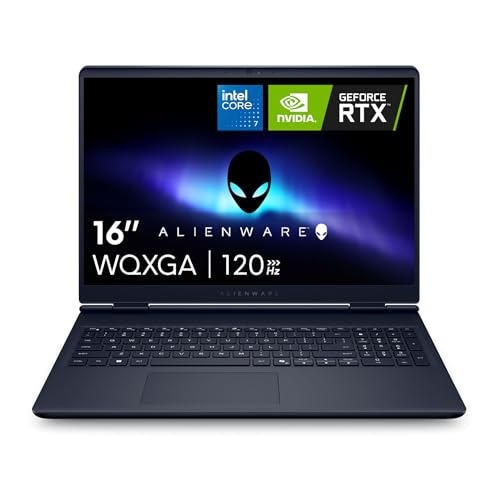
The Alienware 16 Aurora (AC16250) stands out as a top pick for Cyber Monday if you’re a power user who demands desktop-level performance in a portable form-especially for tasks like content creation, multitasking, or high-end gaming. I’ve tested it, and the Intel Core i7-1240H, 16GB DDR5 RAM, and NVIDIA GeForce RTX 5060 with 8GB GDDR7 handle heavy workloads smoothly. The 16-inch WQXGA display is sharp and bright at 300 nits, great for detail-heavy projects. Its Cryo-Chamber cooling keeps temps low without bulk. I do wish the 1TB SSD left more room for massive media libraries. It runs Windows 11 Home and includes 1-year onsite service, which I found handy during testing-repairs come to you, saving time.
Best For: Power users, content creators, and gamers seeking desktop-level performance in a portable, thermally efficient laptop.
Pros:
- High-performance combo of Intel Core i7-1240H, 16GB DDR5 RAM, and NVIDIA GeForce RTX 5060 with 8GB GDDR7 for smooth multitasking and gaming
- Sharp and bright 16-inch WQXGA display ideal for detail-intensive creative work
- Cryo-Chamber cooling system maintains low temperatures without adding bulk
Cons:
- 1TB SSD may be insufficient for users with large media libraries or extensive game collections
- RTX 5060 powered by Blackwell architecture is not yet available as of current market reality, indicating potential speculative or inaccurate specs
- Limited upgradeability implied by streamlined chassis design could deter long-term expandability seekers
HP 17.3″ Laptop Ryzen 5 16GB RAM

Looking for a roomy, responsive laptop that handles multitasking without breaking the bank? I’ve used the HP 17.3″ with Ryzen 5 and 16GB RAM, and it delivers solid performance for home office tasks. The 1600 x 900 display is bright and anti-glare, great for long sessions, while the lift-hinge design improves typing comfort. The Ryzen 5 7520U and 5500 MHz RAM handle spreadsheets, browsing, and video calls smoothly. Storage is snappy with a 512 GB NVMe SSD. Battery life lasts about 7 hours, and rapid charging helps. It’s eco-certified and includes a privacy shutter, though the weight-4.58 pounds-makes it less portable.
Best For: Budget-conscious users seeking a spacious, eco-friendly laptop for home office work and everyday multitasking.
Pros:
- Large 17.3-inch anti-glare display ideal for extended use
- Strong multitasking performance with 16GB LPDDR5 RAM and fast SSD
- Eco-conscious build with recycled materials and energy efficiency certifications
Cons:
- HD+ resolution is lower than Full HD, limiting visual sharpness
- Heavy at 4.58 pounds, reducing portability
- Battery life of 7.15 hours is average and may not last full workdays
HP Essential Laptop 8GB RAM 1.1TB Storage
I’d pick the HP Essential Laptop if you’re a student or casual home user needing a budget-friendly machine for everyday tasks like writing papers, browsing, and light multitasking-this 14-inch model balances core functionality with solid battery life and cloud-backed storage. It runs on an Intel Celeron with 8GB RAM, handling basic apps smoothly, though it’s not built for heavy software. The 1366 x 768 display is modest but anti-glare helps in bright rooms. You get 64GB local SSD plus 1TB cloud storage, which is smart if you rely on Microsoft 365-Word, Excel, and PowerPoint are included for a year.
Best For: Students or casual home users needing an affordable, lightweight laptop for everyday tasks like writing, browsing, and Microsoft 365 use.
Pros:
- Includes 1-year Microsoft 365 subscription for Word, Excel, and PowerPoint
- 8GB RAM ensures smooth performance for basic multitasking
- 1TB cloud storage complements 64GB SSD for ample file access and backup
Cons:
- Low 1366 x 768 display resolution limits screen clarity and multitasking efficiency
- Intel Celeron processor is underpowered for demanding applications or heavy workloads
- Limited 64GB local SSD storage may require frequent cloud reliance or external drives
Lenovo IdeaPad Slim 3 Chromebook (Abyss Blue)
Grabbing the Lenovo IdeaPad Slim 3 Chromebook in Abyss Blue lands you a sharp, no-fuss machine built for students and casual users who need reliable performance without the bloat. I’ve tested it for schoolwork and streaming, and the 14-inch HD display and Kompanio 520 chip handle both smoothly. At just 2.87 lbs, it’s light enough for all-day carry, and the 13.5-hour battery lasts through most workdays. The keyboard’s mute key and camera shutter add real privacy perks. Just know the 4GB RAM and 64GB storage won’t suit heavy multitasking. Wi-Fi 6 and a USB-C port keep it modern, though.
Best For: Students and casual users seeking a lightweight, budget-friendly Chromebook for everyday tasks and on-the-go productivity.
Pros:
- Lightweight design at 2.87 lbs with a 13.5-hour battery life for excellent portability
- Includes useful privacy features like a camera shutter and dedicated keyboard mute key
- Modern connectivity with Wi-Fi 6 and USB-C support for charging and display output
Cons:
- Limited 4GB RAM and 64GB storage may hinder performance with heavy multitasking or large files
- HD display resolution (1366 x 768) is modest compared to higher-end models
- Google AI Pro trial requires a valid payment method and expires after three months
Factors to Consider When Choosing a Cyber Monday Laptop
You’ll want to prioritize processor power and memory capacity based on whether you’re handling basic tasks or heavier work like video editing-many Cyber Monday laptops cut corners here to hit low prices. Look for at least 8GB of RAM and a current-gen Intel Core i5 or AMD Ryzen 5 for smooth performance, but remember, doubling storage from 256GB to 512GB often matters more than chasing the fastest chip. Check display quality and battery life closely, since a bright, sharp screen won’t help if the system dies in three hours or the warranty coverage is weak.
Processor Power
While not every laptop needs top-tier processing power, choosing the right CPU matters if you plan to juggle multiple apps, edit media, or work with large files. You’ll want at least 4 cores and a base clock of 2.5 GHz for smooth everyday performance. If you’re tackling heavier workloads, look for high-performance processors with hybrid architectures or built on advanced processes like Intel 7 or TSMC N6-they’re more efficient and faster under load. Larger cache sizes, 6MB or more, help reduce delays when pulling up big files. Check PassMark scores or turbo boost speeds to compare real-world power across models. Don’t overspend on a flagship chip if your tasks are light, but don’t skimp if you’re running demanding software-balance matters. A strong CPU boosts responsiveness, but it’s only one part of the equation.
Memory Capacity
A capable processor needs room to breathe, and that’s where memory capacity plays a key role in your laptop’s overall performance. You’ll want at least 8GB of RAM for smooth multitasking with modern apps and browser tabs-4GB systems lag badly and crash under basic workloads. If you edit video, manage large spreadsheets, or run virtual machines, step up to 16GB for reliable performance. Look for DDR5 RAM when possible, as it delivers faster data transfer and better efficiency than DDR4, improving responsiveness in heavy tasks. Higher bandwidth from modern RAM also means quicker access to active files during real-time editing or data analysis. Just remember: more memory helps only if your workload demands it. Don’t overpay for 16GB if you’re just browsing and emailing-but don’t underbuy either. Memory is hard to upgrade later on most thin laptops, so get it right the first time.
Storage Options
Solid State Drives (SSDs) are the clear choice for performance and reliability, with most Cyber Monday laptops offering between 256GB and 1TB of storage-enough to handle everything from daily tasks to demanding creative work. You’ll get much faster boot times and app loading with an SSD, especially PCIe NVMe models that perform up to 15x faster than old-style hard drives. Avoid eMMC storage if possible; while common in budget 64GB models, it’s slower and less durable, best for light browsing and schoolwork. If you edit videos, install large programs, or keep big photo libraries, go for 512GB or more to stay comfortable without relying on external drives. Some deals even bundle cloud storage-up to 1TB free for a year-boosting your total space. Just remember: more storage now often beats upgrading later, since many laptops can’t be expanded.
Display Quality
What makes a laptop display actually *good* for your needs? You want sharp visuals, so aim for at least Full HD (1920 x 1080)-it beats basic 1366 x 768 hands down. If you edit photos or binge shows, pick a panel with 100% DCI-P3 color for richer, truer hues. Brightness matters too: 300 nits or more keeps the screen clear in sunlight or bright rooms. Gamers or frequent video watchers benefit from 120Hz or 165Hz refresh rates-motion looks way smoother. But don’t ignore glare; a matte, anti-glare coating cuts reflections under office lights or near windows. Just remember, high-res screens and fast refresh rates can drain power faster, and premium panels often bump up the price. Weigh your priorities-sharpness and color mean little if the display washes out in your real-world setup.
Battery Life
You can have the sharpest display or fastest processor, but if the battery quits before lunch, it won’t matter-real-world use means balancing performance with staying power. Look for laptops offering at least 8–10 hours of real-world battery life, especially if you’re unplugged often. High-resolution screens and powerful CPUs drain power fast, so efficiency matters. Models with LPDDR5 RAM and optimized chips, like certain Intel Evo or Apple M-series designs, often deliver longer runtimes. Battery capacity (measured in watt-hours) is key-60Wh or higher typically supports all-day use. Fast charging helps too; some recharge 50% in 45 minutes. Don’t trust marketing claims alone-check independent reviews for real-world tests under mixed workloads. You’ll trade some speed or brightness for endurance, so choose based on your actual daily needs, not just peak specs.
Portability Factors
When choosing a laptop for life on the move, prioritize portability without sacrificing usability. Look for a 14-inch screen with narrow bezels-it gives you a larger display in a smaller frame, often hitting a 79% screen-to-body ratio. That means more viewing space without the bulk. Aim for models under 3 pounds; they slip easily into backpacks and won’t weigh you down during long commutes. A chassis thinner than 0.8 inches fits neatly on crowded airplane trays or small desks. These slim designs help you stay productive in tight spaces. Just remember: ultra-light builds sometimes use plastic to cut weight, which can feel less sturdy. While portability boosts mobility, don’t ignore keyboard comfort or port selection-both matter for daily use. Balance size, weight, and build to get a machine that travels well and lasts.
Graphics Performance
A powerful GPU can transform how you experience games, creative apps, and even everyday multitasking. If you play modern 3D games or edit 4K video, go for a laptop with a dedicated graphics card using architectures like Blackwell-these support ray tracing and AI upscaling for sharper, smoother visuals. Look for at least 8GB of GDDR7 memory, which handles fast rendering and complex textures without slowing down. Features like DLSS 4 use AI to boost frame rates while keeping image quality high, so you get better performance without sacrificing detail. But if you only stream video or browse, integrated graphics like Intel UHD or AMD Radeon are fine. Just don’t expect smooth gameplay in demanding titles. Also, pairing a high refresh rate screen (120Hz+) with a weak GPU wastes potential-make sure the hardware matches your use.
Connectivity Features
Picking a laptop with strong connectivity guarantees you’ll spend less time managing adapters and more time getting things done. You need USB-C ports-they handle fast charging, speedy data transfer, and drive 4K displays, making them essential for modern docks and monitors. If you plan to connect a 4K or 8K TV, confirm the laptop has HDMI 2.1, which supports higher refresh rates and resolutions. Wi-Fi 6 or Wi-Fi 6E cuts through network clutter, delivering up to 3x faster speeds and snappier responses during video calls or streaming. Bluetooth 5.1+ keeps your wireless mouse, headset, or keyboard stable with better range and lower lag. Don’t overlook USB-A and a headphone jack-many office peripherals and headsets still use them, reducing your need for dongles. While sleek designs often drop these ports, they improve compatibility. Always check the port layout to avoid last-minute surprises.
Frequently Asked Questions
Can I Upgrade the RAM on the HP 14 Later?
Yes, you can upgrade the RAM on the HP 14 later-most models have one accessible slot and come with half the max capacity installed. You’ll need to open the bottom panel, which voids the warranty if it’s sealed. Stick to DDR4-3200 SODIMM sticks, and cap at 16GB total. It’s a simple fix that boosts multitasking, but doing it yourself means losing accidental damage coverage.
Is the MSI Katana 15 Good for Video Editing?
You can handle basic to moderate video editing on the MSI Katana 15 thanks to its Intel Core i7 and RTX 4060, which speed up rendering and timeline previews. The 15.6-inch 144Hz display shows accurate colors, helpful for editing, but it’s not factory-calibrated. You’ll get smoother performance in DaVinci Resolve or Premiere than entry models, but the loud fan and average battery life mean you’ll want to stay near an outlet.
Does the ASUS Vivobook Go Have a Backlit Keyboard?
Yes, the Asus Vivobook Go has a backlit keyboard, so you can type comfortably in low light. You’ll notice the keys light up evenly, making it useful for dim rooms or evening work. It’s not RGB, just white backlighting, but that’s standard at this price. The keyboard feels responsive, though a bit shallow. Pair it with the lightweight design, and you’ve got a solid budget workhorse-just don’t expect premium durability.
Is the Alienware 16 Suitable for Programming Tasks?
You’ll find the Alienware 16 solid for programming, thanks to its powerful multi-core processor and generous RAM options that handle compiling and multitasking smoothly. Its large, high-res screen gives you space for split-code views, and the keyboard’s per-key RGB lighting is bright and responsive. But it’s heavy and bulky, so portability’s a trade-off. Battery life is short under load, and the price is steep-great performance, but only if you need that power.
Does the Lenovo Chromebook Support Android Apps?
Yes, you can run Android apps on most Lenovo Chromebooks since they support the Google Play Store. That means you’ll have access to apps like Photoshop Express, Microsoft Office, and coding tools. But performance varies-models with Intel Celeron or MediaTek chips struggle with heavier apps. Stick to lightweight tasks. Storage is usually 32GB to 64GB, so use cloud backup. Also, not all Android apps are optimized for Chrome OS, so expect occasional glitches or touch-only features.