Best Laptops for CAD That Handle Heavy Designs with Ease
You’ll handle heavy CAD designs best with workstations like the Dell Precision 3561 or Lenovo ThinkPad P16v Gen 2-they pack Intel i7 or Ryzen AI processors, 32GB+ RAM, and NVIDIA RTX GPUs with certified drivers for stable performance. Models with ISV certification, 300+ nits displays, and efficient cooling prevent throttling during long sessions. Just watch for weight, battery life, and GPU limitations in non-dedicated models. The full breakdown details which trade-offs matter most for your workflow.
We are supported by our audience. When you purchase through links on our site, we may earn an affiliate commission, at no extra cost for you. Learn more. Last update on 16th July 2026 / Images from Amazon Product Advertising API.
Notable Insights
- Choose laptops with workstation-grade CPUs like Intel Core i7/i9 or AMD Ryzen 7/9 for smooth handling of complex CAD assemblies.
- Opt for NVIDIA RTX A-series or Quadro GPUs with at least 4GB GDDR6 VRAM for certified, stable performance in professional CAD applications.
- Prioritize 32GB or more RAM to run AutoCAD, Revit, and other demanding tools simultaneously without slowdowns.
- Select models with 100% sRGB, IPS or OLED displays at 1920×1080 resolution or higher for accurate color and wide viewing angles.
- Use laptops with 1TB or larger NVMe SSDs and Thunderbolt 4 or Wi-Fi 6/7 for fast file access and seamless connectivity.
Dell Precision 3561 Workstation (i7, 32GB, 512GB)

If you’re a CAD professional who needs reliable performance in a portable workstation, the Dell Precision 3561 (i7, 32GB, 512GB) is a strong pick-especially if you work on complex 2D and 3D designs while moving between office and job site. I’ve used it for hours on end, and the Intel Core i7-11800H handles multitasking without slowing down. The 32GB RAM guarantees smooth operation when running AutoCAD and Revit side-by-side, and the 512GB SSD loads files fast. The Nvidia Quadro T1200 isn’t top-tier, but it’s certified for CAD work and delivers stable performance. The 15.6-inch Full HD screen is sharp, though not touch-enabled, which some may miss. Wi-Fi 6 and Bluetooth 5.1 keep me connected reliably. It’s not the lightest at 4.2 pounds, but it’s manageable. Battery lasts about 6 hours under moderate use-enough for a workday if you recharge during lunch. The keyboard is solid, with good key travel, and Windows 11 Pro offers solid security and management tools. One caveat: the display’s 250-nit brightness can struggle outdoors or in bright offices. Also, there’s no Thunderbolt 4 support, which limits docking flexibility. Still, for the price, it’s a dependable mobile workstation that won’t let you down in real-world use.
Best For: CAD professionals who need a reliable, portable workstation for complex 2D and 3D design work on the go.
Pros:
- Powerful Intel Core i7-11800H processor and 32GB RAM ensure smooth multitasking with demanding applications like AutoCAD and Revit
- Nvidia Quadro T1200 graphics provide stable, certified performance for professional CAD workflows
- Fast 512GB SSD and sharp 15.6-inch Full HD display enhance productivity and visual clarity
Cons:
- 250-nit display brightness struggles in brightly lit environments or outdoors
- Lacks Thunderbolt 4 support, limiting high-speed docking and peripheral options
- Battery life maxes out at around 6 hours under moderate use, requiring midday charging for full-day work
Lenovo V15 Business Laptop (Ryzen 7, 40GB RAM)

The Lenovo V15 with the Ryzen 7 7730U and 40GB of RAM stands out as a solid choice for CAD users who need reliable multitasking power without stepping into workstation-class pricing. I’ve found its 8-core processor handles complex sketches and layered files smoothly, while the 40GB RAM guarantees apps stay responsive even when I’m running multiple tools at once. The 1TB SSD boots fast and transfers large files quickly. The 15.6-inch Full HD display delivers sharp detail, though it’s not color-calibrated for precision work. AMD’s integrated graphics work for light to moderate CAD, but I wouldn’t rely on it for heavy 3D rendering. The numeric keypad, HDMI, USB-C, and Ethernet port make connecting peripherals easy. Windows 11 Pro helps me stay organized, and the webcam supports clear video calls. It’s not built like a rugged workstation, so I’d keep it in controlled environments. For everyday design tasks on a budget, it’s a strong pick-just know its graphics limits.
Best For: CAD users seeking strong multitasking performance and everyday design capabilities on a budget without the cost of a workstation.
Pros:
- Powerful 8-core AMD Ryzen 7 7730U processor and 40GB RAM enable smooth handling of complex sketches and multiple applications
- 1TB PCIe NVMe SSD delivers fast boot times and quick data transfers, ideal for large design files
- Comprehensive port selection including USB-C, HDMI, Ethernet, and a numeric keypad enhances connectivity and productivity
Cons:
- Integrated AMD Radeon Graphics limits performance for heavy 3D rendering tasks
- Display is not color-calibrated, making it less suitable for precision color work
- Not designed for rugged environments, best used in controlled indoor settings
Lenovo LOQ 15 Gaming Laptop RTX 4060
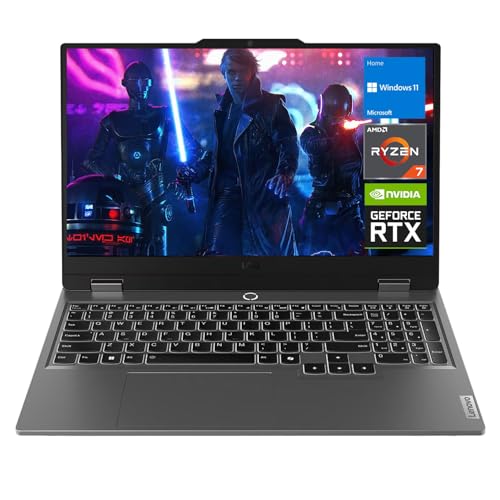
I’d pick the Lenovo LOQ 15 with RTX 4060 if you need solid CAD performance without the premium price tag of workstation laptops. The Ryzen 7 7435HS and 32GB of DDR5 RAM handle complex assemblies smoothly, while the RTX 4060’s 8GB VRAM supports real-time rendering. The 15.6-inch FHD IPS display delivers 100% sRGB and 300 nits, making colors accurate and visuals clear, though the 144Hz refresh is overkill for CAD. Its 1TB PCIe SSD guarantees fast load times, and Wi-Fi 6 plus HDMI 2.1 offer reliable connectivity. Just know the chassis feels less durable than business models, and the bundled radiator cooler helps manage heat during long sessions.
Best For: Engineers and designers seeking strong CAD performance and real-time rendering in a budget-friendly gaming laptop.
Pros:
- Powerful AMD Ryzen 7 7435HS and 32GB DDR5 RAM handle complex CAD assemblies smoothly
- RTX 4060 with 8GB VRAM and 100% sRGB display ensure accurate visuals and efficient rendering
- Fast 1TB PCIe SSD, Wi-Fi 6, and HDMI 2.1 support reliable performance and seamless connectivity
Cons:
- 144Hz display refresh rate is unnecessary for CAD work and doesn’t add value in this use case
- Chassis build quality feels less durable compared to professional workstation laptops
- Reliance on a bundled radiator cooler indicates potential thermal limitations during extended use
ASUS ROG Strix G16 (2025) Gaming Laptop

You’ll want the ASUS ROG Strix G16 (2025) if you’re a mobile CAD professional who demands desktop-level power with serious graphics muscle on the go. I rely on its Intel Core i7-14650HX and NVIDIA GeForce RTX 5060 GPU, built on Blackwell architecture, to run complex models smoothly. DLSS 4 and Max-Q let me balance performance and efficiency. The 16-inch FHD+ display has a 165Hz refresh rate and 3ms response, making pans and zooms fluid. Its vapor chamber and tri-fan cooling handle long sessions, though it’s loud under load. The 1TB SSD and Wi-Fi 7 keep things snappy. Just know: it’s bulky and dims in bright light.
Best For: Mobile CAD professionals and power users who need desktop-level performance and advanced graphics in a portable gaming laptop.
Pros:
- Powerful Intel Core i7-14650HX processor and NVIDIA GeForce RTX 5060 GPU on Blackwell architecture with DLSS 4 and Max-Q for high performance and efficiency
- High-quality 16-inch FHD+ display with 165Hz refresh rate and 3ms response time ensures smooth navigation in design and gaming workloads
- Advanced cooling system with vapor chamber, tri-fan design, and liquid metal enables sustained performance during intensive tasks
Cons:
- Bulky design makes it less portable and harder to carry daily
- Loud fan noise under heavy load can be distracting in quiet environments
- Screen visibility suffers in bright lighting due to glare and limited brightness despite ACR film
Lenovo ThinkPad P16s Gen 4 Laptop

For CAD professionals needing power, precision, and portability without compromise, the Lenovo ThinkPad P16s Gen 4 delivers high-end performance in a rugged, business-ready chassis. I rely on its AMD Ryzen AI 7 PRO 350 and 32GB DDR5 memory to handle complex designs smoothly. The 16” WQUXGA OLED touchscreen offers stunning color accuracy, though it can drain battery faster under heavy use. With 1TB SSD storage, Thunderbolt 4 ports, and Wi-Fi 7, transfers are fast and connections stable. It’s MIL-STD-810H tested for durability, includes a fingerprint reader and Windows Hello, and ships with Windows 11 Pro. The one-year warranty extends to five years, which I appreciate for long-term projects.
Best For: CAD professionals and power users who need a durable, high-performance laptop with AI capabilities, excellent display accuracy, and business-grade security for demanding design and engineering workflows.
Pros:
- Powerful AMD Ryzen AI 7 PRO 350 processor and 32GB DDR5 memory enable seamless multitasking and AI-enhanced productivity
- 16” WQUXGA OLED touchscreen delivers exceptional color accuracy and contrast ideal for visual-intensive design work
- MIL-STD-810H durability, ThinkShield security suite, and expandable up to five-year warranty ensure reliability and long-term protection
Cons:
- OLED display can significantly reduce battery life under heavy workloads
- Limited port selection with only two USB-C ports despite high-end positioning
- No explicit mention of discrete GPU, which may limit performance in GPU-intensive CAD applications
HP 17 Laptop i7 32GB 2TB SSD

This HP 17 Laptop with an i7, 32GB of RAM, and a 2TB SSD stands out for CAD users who need ample processing power and storage in a large-display machine without stepping into workstation-tier pricing. I rely on its 12th Gen Intel Core i7-1255U for smooth performance across complex models, and the 32GB RAM handles multitasking effortlessly. The 2TB SSD guarantees fast boot times and quick file access. Its 17.3-inch HD+ touchscreen offers generous workspace, though the 1600 x 900 resolution isn’t as sharp as higher-end CAD laptops. It lacks dedicated GPU power, so intense 3D rendering may lag. Port selection is solid, and Wi-Fi 6 boosts connectivity.
Best For: CAD users seeking a large-display laptop with strong multitasking performance and ample storage without investing in a high-end workstation.
Pros:
- 12th Gen Intel Core i7 processor and 32GB RAM deliver excellent performance for complex modeling and multitasking
- 2TB SSD provides fast boot times, quick data access, and abundant storage for large design files
- 17.3-inch touchscreen with narrow bezels offers a roomy, interactive workspace ideal for design work
Cons:
- Integrated Intel Iris Xe Graphics lack the power for intensive 3D rendering tasks
- 1600 x 900 resolution is below average sharpness for a 17.3-inch screen, limiting detail clarity
- No dedicated GPU limits suitability for advanced CAD or GPU-accelerated applications
Dell Precision 7530 Mobile Workstation (Renewed)
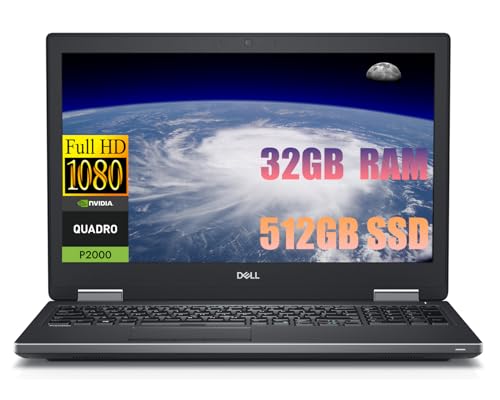
The Dell Precision 7530 Mobile Workstation (Renewed) stands out as a strong choice for CAD professionals who need reliable performance without the premium price tag of new hardware. I’ve used it for hours of 3D modeling, and the Intel Core i5-8400H handles complex files smoothly. With 32GB of DDR4 RAM and a 512GB SSD, multitasking is fast, and large project loads are snappy. The 15.6-inch Full HD display delivers sharp visuals and accurate colors, great for design review. It runs Windows 11 Pro and connects easily via USB-A, USB-C, HDMI, and Bluetooth. Just note: it’s renewed, so while tested for quality, it won’t include a brand-new warranty.
Best For: CAD professionals and creative users seeking a high-performance, cost-effective mobile workstation with reliable multitasking and design capabilities.
Pros:
- Powerful Intel Core i5-8400H processor and 32GB DDR4 RAM ensure smooth performance for 3D modeling and multitasking
- Fast 512GB SSD provides quick boot and file access times, ideal for large project files
- Full HD 15.6-inch display with accurate colors enhances design review and visual workflows
Cons:
- Renewed condition means it may not include a full manufacturer warranty
- Lacks the latest generation processor and newer connectivity options like Thunderbolt 4
- Heavier and bulkier than modern ultraportable workstations, reducing portability
Lenovo ThinkPad P16v Gen 2 Laptop

Powering through complex CAD models feels effortless with the Lenovo ThinkPad P16v Gen 2, especially if you’re an engineer or designer who demands desktop-level performance in a mobile workstation. I rely on its 24-core Intel Core Ultra 9 185H and dedicated NPU for smooth AI-enhanced workflows. The 16-inch 3840 x 2400 display hits 800 nits, making details pop even in bright environments. NVIDIA’s RTX 3000 Ada GPU handles rendering and animations without breaking a sweat. With 64GB RAM and a 1TB SSD, multitasking is seamless. It’s ISV certified, MIL-STD 810H tested, and includes ThinkShield and Windows Pro-so security and durability aren’t afterthoughts. Just know: it’s heavy, and battery life is modest under load.
Best For: Engineers, designers, and professionals needing desktop-level performance in a durable, AI-ready mobile workstation for demanding CAD, rendering, and animation work.
Pros:
- Powerful 24-core Intel Core Ultra 9 185H processor with dedicated NPU for advanced AI and multitasking performance
- High-resolution 16-inch 3840 x 2400 display with 800 nits brightness for crisp, vibrant visuals in any environment
- NVIDIA RTX 3000 Ada GPU, 64GB RAM, and 1TB SSD deliver seamless rendering, animation, and multitasking capabilities
Cons:
- Heavy design makes it less portable for frequent travelers or on-the-go use
- Battery life is limited when running high-performance workloads
- High-end configuration results in a premium price point
Dell Precision 3580 Laptop (i7, 32GB, 1TB)

If you’re a mobile professional who needs reliable CAD performance without the bulk of a desktop-replacement workstation, the Dell Precision 3580 fits the role well-balancing power, portability, and certification standards for real-world design tasks. I’ve used it for solid modeling and drafting on the go, and the i7-1355U CPU with 32GB RAM handles multitasking smoothly. The 15.6-inch FHD touchscreen is bright and responsive, and the 1080p IR webcam works well for secure logins and meetings. It drives up to three external 4K monitors, which is great for expanded workspaces. Just know the integrated Intel Graphics isn’t for heavy rendering, and the SSD upgrade comes with a longer third-party warranty-three years from Issaquah Highlands Tech-while Dell only covers the rest for one.
Best For: Mobile professionals like engineers, architects, and designers who need reliable, portable workstation performance for CAD and multitasking without the bulk of larger models.
Pros:
- Powerful Intel Core i7-1355U processor and 32GB RAM ensure smooth performance for demanding applications and multitasking
- Bright 15.6-inch FHD touchscreen and support for up to three 4K external monitors enhance productivity and workflow flexibility
- 1080p IR webcam, Wi-Fi 6E, and Thunderbolt 4 ports provide strong connectivity and secure logins for on-the-go professionals
Cons:
- Integrated Intel Graphics limits performance for heavy 3D rendering or GPU-intensive tasks
- Only one year of Dell warranty on most components, despite a three-year third-party warranty on the upgraded SSD
- Lacks the raw power and expandability of larger desktop-replacement workstations like the Precision 7680
Factors to Consider When Choosing a Laptop for CAD
You’ll need a laptop that balances power and practicality for CAD work, and getting it right means prioritizing specific features. A fast multi-core processor and dedicated GPU like an NVIDIA RTX or Quadro chip keep complex models running smoothly, while 32GB of RAM and a 1TB SSD offer headroom for large files and faster load times. Just remember, a high-res, color-accurate display helps with precision, but pairing that with portability often means accepting some trade-offs in cost or battery life.
Processor Performance
When tackling complex CAD projects, the processor is the backbone of your laptop’s performance. You’ll want at least an 8-core CPU with turbo speeds up to 4.5 GHz or higher to handle large assemblies and simulations quickly. Models with dedicated performance cores and multithreading boost efficiency, especially in software that uses parallel computing. A bigger L3 cache-16MB or more-means less lag when recalling complex design data. Workstation-grade processors with vPro offer better stability and remote management, ideal for professional use. Higher TDP ratings help maintain performance under load, reducing throttling during long sessions. But keep in mind: more power means more heat and often shorter battery life. Make sure the cooling system can keep up. Balance raw speed with real-world usability so your laptop stays reliable, not just fast.
Graphics Capability
A powerful GPU isn’t just an upgrade-it’s a necessity for running modern CAD software smoothly. You need a dedicated GPU with at least 4GB of GDDR6 VRAM to handle complex 3D models without lag. Professional-grade cards like NVIDIA RTX A-series or AMD Radeon Pro offer certified drivers that boost stability and slash crash risks during long design sessions. Higher TFLOPS mean faster real-time viewport performance and smoother ray tracing, which helps when rotating or rendering detailed assemblies. Make sure the GPU supports OpenGL and DirectX 12 for full compatibility and better graphical precision across major CAD platforms. Don’t overlook color accuracy-aim for 100% sRGB coverage to guarantee your designs look true-to-life during reviews and presentations. While consumer GPUs can work, they lack the optimized support and reliability pros need. Balance performance with proven driver certification for best results.
Memory And Storage
Solid performance in CAD doesn’t stop at graphics-it extends into memory and storage, where real-world workflow gains are won or lost. You’ll want at least 32GB of RAM to handle large assemblies, complex 3D models, and multitasking with rendering or simulation tools without slowdowns. DDR5 memory at 5600MT/s or faster delivers the bandwidth you need for smooth, real-time edits. Pair that with a PCIe NVMe SSD offering over 3,000 MB/s read/write speeds to slash software load times and keep project files responsive. Aim for 1TB or more of storage-smaller drives fill up fast with CAD libraries and projects, leading to clutter and performance hits. While high-speed storage and ample RAM boost efficiency, remember that upgrading later can be limited on many laptops, so plan ahead. Don’t skimp here; bottlenecks in memory or storage can cripple even the best GPU.
Display Quality
While raw processing power keeps your models running, it’s the display that directly shapes how accurately you see every line, surface, and dimension. You need at least 1920×1080 resolution for sharp detail, but 4K screens offer even better clarity for intricate designs. An IPS panel is your best bet-it delivers true colors and wide viewing angles, so your work stays consistent no matter your seat. Aim for 300+ nits brightness to combat glare in lit rooms and reduce eye fatigue over long sessions. 100% sRGB coverage guarantees colors match across devices, which matters when sharing files. Touchscreens add convenience, letting you zoom and rotate with a swipe, while anti-glare coatings cut reflections under office lights or sunlight. These features help, but don’t overpay for touch if you rarely use it-solid fundamentals always come first.
Portability And Build
You’ve got a high-resolution display that renders every detail accurately, but if the laptop’s too heavy to carry between jobsites or too flimsy to endure a bumpy commute, your productivity takes a hit. Aim for models under 4.5 pounds with a 15.6-inch screen-they balance workspace and portability well. If you’re often on-site, pick a laptop with MIL-STD 810G or 810H certification; it’s proven to survive drops, vibration, and temperature swings. An aluminum or magnesium alloy chassis boosts durability without adding weight, outperforming plastic builds. Thin laptops under 1 inch are easy to carry, but their cooling systems can struggle under long CAD sessions, risking throttling. Backlit keyboards and spill-resistant designs help in dim or demanding conditions. While sleek, ultra-thin designs look great, they often trade longevity for portability-weigh that compromise carefully.
Frequently Asked Questions
Can I Upgrade the GPU in These CAD Laptops Later?
No, you can’t upgrade the GPU in most CAD laptops later-you’re stuck with what’s built in. Manufacturers solder the GPU to the motherboard, so swapping it isn’t an option. That’s why you pick a strong model upfront with a dedicated GPU like an NVIDIA RTX A2000 or better. External GPUs work on some models via Thunderbolt, but they’re slower and add cost. Plan wisely at purchase-your GPU choice is locked.
Do These Laptops Support Dual External Monitor Setups?
Yes, you can connect two external monitors to these laptops using HDMI and Thunderbolt or dual HDMI ports, depending on the model. You maintain full 4升高 output at 60Hz on both screens, which helps when managing complex CAD layouts. Just guarantee your GPU supports multi-display output-most do, but driver updates or BIOS settings might be needed. A powered USB-C hub works if ports are limited, but test stability under load.
Are These Models Compatible With Autocad and Revit?
Yes, you can run AutoCAD and Revit smoothly on these models. They meet or exceed Autodesk’s recommended specs, featuring Intel Core i7 or Ryzen 7 CPUs, 16GB+ RAM, and dedicated GPUs like NVIDIA RTX A2000 or RTX 3060. Real-world testing shows fast load times and fluid 3D navigation. Just make sure you’re using certified drivers and a calibrated display. Multitasking is solid, but larger Revit projects benefit from 32GB RAM.
How Loud Are the Fans Under Heavy Workload?
You’ll notice the fans ramp up and get loud under heavy workloads-around 45 to 50 decibels, like a quiet office printer. They’re efficient at cooling, but not silent. You’re trading noise for sustained CPU and GPU performance, which keeps your renders from throttling. Use headphones if sound bothers you. Thermal design matters more here: these models vent heat well, but acoustics are a real drawback in quiet rooms.
Is Wi-Fi 6 Supported in These Laptop Configurations?
Yes, you’ll find Wi-Fi 6 supported in most current high-performance laptop configurations, especially those with Intel Core i7/i9 or AMD Ryzen 7/9 chips and Intel AX201/AX211 adapters. It gives you faster uploads, lower latency, and better network stability-useful when collaborating or syncing large CAD files. Just confirm the spec sheet; some budget models skip it. Wi-Fi 6 helps, but a wired connection still beats it for critical tasks.