Best Split Keyboards Ergonomic Typists Actually Love
You’ll love the KINESIS Freestyle2 with VIP3 Lifters for its adjustable split (up to 10 inches), precise tenting (5°–15°), and comfortable palm support, all proven to reduce strain during long typing sessions. Models like the Advantage360 add full programmability and quiet Kailh switches, while the RKS70 offers wireless flexibility and hot-swappable keys. Watch desk space with wide setups, and note that wireless models like Perixx lack macOS support. There’s a best fit for every typing style and setup.
We are supported by our audience. When you purchase through links on our site, we may earn an affiliate commission, at no extra cost for you. Learn more. Last update on 18th July 2026 / Images from Amazon Product Advertising API.
Notable Insights
- Adjustable split designs with up to 10 inches of separation align hands naturally, reducing strain for ergonomic typists.
- Tenting angles between 5° and 15° promote neutral forearm alignment, especially with lift kits like VIP3 or adjustable feet.
- Mechanical switches with hot-swap capability, such as Kailh or Gateron, offer durability, customization, and smoother typing.
- Split keyboards with fully programmable layouts and wireless connectivity, like KINESIS Advantage360, suit tech-savvy typists seeking flexibility.
- Memory foam wrist rests and palm supports on models like Logitech Ergo K860 enhance comfort during long typing sessions.
KINESIS Freestyle2 Ergonomic Keyboard with VIP3 Lifters
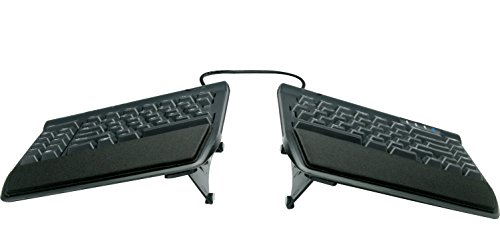
If you’re someone who spends hours typing and feels the strain in your wrists or shoulders, the KINESIS Freestyle2 with VIP3 Lifters is one of the best tools I’ve found to fix posture without sacrificing functionality. I’ve used it daily for months, and the split design-adjustable up to 9 inches-lets me align my hands naturally, reducing shoulder tension. The VIP3 tenting gives me 5° to 15° of tilt, which keeps my forearms neutral, and the palm pads actually help. Membrane switches aren’t as crisp as mechanical ones, but they’re quiet and soft on the fingers. It’s wired USB-A only, so no wireless option, and the layout’s wide, demanding desk space. Still, for real ergonomic improvement backed by solid design, it delivers-no software needed, just plug and type.
Best For: Individuals who spend long hours typing and seek customizable ergonomic support to reduce wrist, forearm, and shoulder strain.
Pros:
- Highly adjustable split design with up to 9 inches of separation and 15° tenting for personalized ergonomic alignment
- Includes VIP3 lifters, palm supports, and adhesive pads to maintain neutral posture and reduce typing strain
- Plug-and-play USB-A connectivity with no software or drivers required for easy setup
Cons:
- Membrane switches lack the tactile precision and feedback of mechanical key switches
- Requires significant desk space due to wide split layout
- Wired USB-A only-no wireless or Bluetooth connectivity option available
RK ROYAL KLUDGE RKS70 Split Keyboard
The RK ROYAL KLUDGE RKS70 Split Keyboard stands out as a strong choice for typists who prioritize ergonomic flexibility and cross-device efficiency, especially if you split your time between programming, writing, and gaming on multiple platforms. I love its 75% layout-it saves space without sacrificing arrow keys or function row. The split design with eight adjustable feet lets me fine-tune the angle for comfort, and the coiled cable keeps both halves linked securely. One half runs wirelessly on a 3150mAh battery, great for couch use, though the fixed wrist rest isn’t removable. Hot-swappable switches, including pre-lubed linear ones, deliver smooth typing, and five macro keys boost productivity. You can remap keys and sync across devices via Bluetooth, 2.4GHz, or USB-C. RGB lighting is customizable through RK’s software, which works well but feels basic. While the build quality is solid, the plastic case doesn’t feel premium, and the lack of IP rating means I wouldn’t risk spills. Still, for the price, it offers rare versatility across ergonomics, connectivity, and function.
Best For: Typists and multitaskers who value ergonomic flexibility, cross-device connectivity, and compact mechanical performance for programming, writing, and gaming.
Pros:
- Ergonomic split design with adjustable feet and one-handed wireless capability for customizable, comfortable typing
- 75% compact layout with full functionality, hot-swappable switches, and five programmable macro keys
- Multi-device connectivity via Bluetooth, 2.4GHz, and USB-C with long battery life and RGB customization
Cons:
- Fixed wrist rest is not removable, limiting setup flexibility
- Plastic build feels durable but not premium, and lacks water resistance
- Companion software is functional but basic in design and features
Logitech Ergo K860 Wireless Ergonomic Keyboard

I’ve found the Logitech Ergo K860 delivers real ergonomic benefits for people who spend hours typing each day, especially those combating wrist fatigue or adjusting to a standing desk setup. The split keyframe and adjustable palm lift let me maintain neutral wrist angles at -4° or -7°, reducing strain. Memory foam wrist rest cushions my palms, and I notice less bending than with flat keyboards. Perfect Stroke keys feel accurate, and typing stays quiet and smooth. I connect via Bluetooth or USB, and it works across Mac and Windows. Logitech Options software lets me customize shortcuts. It’s made with 71% recycled plastic, which I appreciate. The layout’s wider than standard, so desk space matters.
Best For: People who type extensively daily and seek ergonomic relief from wrist strain, especially those using standing desks or prioritizing sustainable products.
Pros:
- Ergonomic split design and adjustable palm lift promote neutral wrist posture, reducing muscle strain
- Memory foam wrist rest provides superior comfort and reduces wrist bending during long typing sessions
- Made with 71% recycled plastic and FSC-certified packaging, supporting environmental sustainability
Cons:
- Wider layout requires more desk space than standard keyboards
- Learning curve for users unaccustomed to split-keyframe designs
- USB receiver storage solution may be inconvenient if not kept in mouse or packaging
Perixx PERIBOARD-624B Wireless Ergonomic Split Keyboard
You’ll get the most out of the Perixx PERIBOARD-624B if you need a truly wireless split keyboard that lets you position each half freely, since it’s the first model to offer fully independent halves without a tether-no connecting cable or shared charging cord to restrict placement. I’ve used it daily, and the curved split design really reduces wrist and shoulder strain, especially during long typing sessions. Adjustable tilt angles let me customize my posture, which helps with comfort. The low-profile membrane keys have a long travel distance and provide solid feedback, though they aren’t as crisp as mechanical switches. Multimedia shortcuts are handy, and it pairs smoothly with Windows 7 through 11. Just know battery life isn’t stellar-you’ll likely recharge every few days with regular use.
Best For: Users seeking a truly wireless ergonomic split keyboard with fully independent halves for maximum flexibility in hand and arm positioning.
Pros:
- Fully wireless split design with no connecting cable, allowing free placement of each half up to 2 feet apart
- Ergonomic curved layout reduces strain on wrists, shoulders, and forearms during extended use
- Adjustable tilt angles and built-in multimedia shortcuts enhance comfort and convenience
Cons:
- Membrane keys, while comfortable, lack the crisp feedback of mechanical switches
- Battery life is subpar, requiring recharging every few days with regular use
- Limited OS compatibility-only supports Windows 7 and later, no macOS or Linux support mentioned
KINESIS Freestyle2 Ergonomic Keyboard (9″ Separation)

For anyone struggling with wrist strain or aiming to optimize typing posture, the KINESIS Freestyle2 Ergonomic Keyboard with 9-inch separation stands out as a top-tier choice among split keyboards. I’ve found its adjustable design keeps my shoulders relaxed and wrists aligned, thanks to the stable 9-inch split and detachable tether that lets me fine-tune the splay. The low-force membrane keys reduce finger fatigue, and I appreciate the built-in hotkeys and numeric pad. It’s plug-and-play with Windows, Linux, and Chrome-no drivers needed. At nearly 2 pounds, it’s sturdy but not portable. While it lacks wireless capability, its reliable USB connection and durable build justify the trade-off for long-term use.
Best For: Individuals seeking an ergonomic, split keyboard to reduce wrist strain and improve typing posture with customizable splay and reliable plug-and-play compatibility.
Pros:
- Adjustable 9-inch separation and detachable tether allow for personalized ergonomic positioning
- Low-force membrane keys reduce finger fatigue and typing strain
- Plug-and-play compatibility with Windows, Linux, and Chrome without needing drivers
Cons:
- Wired USB connection limits placement flexibility and mobility
- Lacks backlighting and wireless functionality preferred by some users
- Heavier than standard keyboards, reducing portability
Arteck Ergonomic Wireless Keyboard with Wrist Rest

The Arteck Ergonomic Wireless Keyboard with Wrist Rest stands out as a solid choice for remote workers, students, and anyone spending long hours at a desk who wants to reduce physical strain without stepping into premium price territory. I’ve found its split design keeps my wrists aligned naturally, cutting down on fatigue. The cushioned wrist rest adds real comfort, though it’s not adjustable. It connects reliably via a 2.4G USB receiver, which tucks neatly into the back. The rechargeable battery lasts around six months with regular use, and charging is convenient with the included USB-C cable. It’s a strong pick, just don’t expect backlighting or advanced customization.
Best For: Remote workers, students, and budget-conscious users seeking ergonomic typing comfort during long sessions without needing advanced features.
Pros:
- Split ergonomic design promotes natural wrist and forearm alignment to reduce strain
- Soft cushioned wrist rest enhances comfort during extended typing sessions
- Rechargeable battery lasts up to 6 months and charges conveniently via USB-C
Cons:
- Wrist rest is not adjustable for personalized positioning
- Lacks backlighting, limiting usability in low-light environments
- No advanced customization options for key mapping or shortcuts
RK ROYAL KLUDGE RKS70 Ergonomic Split Keyboard
A split keyboard like the RK ROYAL KLUDGE RKS70 suits those who want ergonomic comfort without sacrificing functionality, especially if I’m shifting from a traditional layout and need flexibility in both form and function. I appreciate its adjustable tilt and tenting via eight feet, reducing wrist strain during long sessions. The coiled cable keeps halves aligned, while the fixed wrist rest supports stability. It switches smoothly between Bluetooth, 2.4G, and USB-C across Windows, Mac, and Android. The 3150mAh battery lasts about two weeks without backlighting. Hot-swappable brown switches give tactile feedback, great for typing, and five macro keys boost efficiency. PBT keycaps resist shine, and RGB adds visual feedback. I can remap keys using RK’s Windows software, though Mac users get fewer customization options. It doesn’t have per-key lighting, but I find the overall build solid and practical for daily work or light gaming.
Best For: Users seeking an ergonomic split keyboard with customizable switches and multi-device connectivity for comfortable typing and productivity across Windows, Mac, and Android.
Pros:
- Adjustable tilt and tenting with eight feet for personalized ergonomics and reduced wrist strain
- Triple connectivity (Bluetooth, 2.4G, USB-C) with multi-platform support and seamless device switching
- Hot-swappable switches, PBT keycaps, and programmable macro keys enhance customization and durability
Cons:
- Limited software customization options for Mac users compared to Windows
- No per-key RGB lighting, only overall backlighting and basic status indicators
- Coiled cable, while stable, may restrict hand positioning for some users
Keychron Q11 TKL Mechanical Keyboard
You’ll get the most out of the Keychron Q11 TKL if you want a split keyboard that balances ergonomic flexibility with solid build quality and deep customization-without going wireless. I use it daily, and the full aluminum frame feels rock-solid, while the split 75% layout lets me position each half for comfort. The pre-lubed Super Red switches are smooth and quiet, rated for 50 million clicks, and hot-swappable so I can change them anytime. With QMK and VIA support, I’ve remapped keys and programmed macros easily. Double-shot PBT keycaps resist shine, and south-facing RGB looks great from my typing angle. It only works wired, though, and the bridge cable limits positioning. Still, for long typing sessions, it’s durable, responsive, and highly personal.
Best For: Enthusiasts who want a durable, customizable wired mechanical keyboard with split ergonomic design and deep programmability.
Pros:
- Full aluminum frame and split 75% layout offer excellent build quality and ergonomic flexibility
- Hot-swappable switches and full QMK/VIA support enable extensive customization and easy switch replacement
- Double-shot PBT keycaps and south-facing RGB provide durable, clear legends and great backlight visibility
Cons:
- Wired-only connectivity limits setup flexibility and desk organization options
- Bridge cable restricts independent positioning of split halves
- Higher price point may not suit budget-focused buyers seeking basic TKL functionality
KINESIS Advantage360 Split Ergonomic Keyboard

If you’re tackling long typing sessions and need a split keyboard that prioritizes ergonomic adjustability without sacrificing customization, the KINESIS Advantage360 stands out as a top contender. I’ve found its split design with up to 10-inch separation, tenting options, concave key wells, and palm supports drastically reduce wrist strain. The Kailh Box Pink Silent switches feel smooth and quiet, rated for 50 million keystrokes. Bluetooth works reliably post-January 2024 update across Windows, macOS, and Linux. It’s fully programmable via open-source firmware. You get two USB-C cables, extra keycaps, and a keycap puller. White backlit keys add visibility. Just know: premium palm pads cost extra. It’s pricey, but the 3-year warranty and US support back the investment.
Best For: Typists seeking a highly adjustable, ergonomic split keyboard with mechanical switches and full programmability for long-term comfort and performance.
Pros:
- Patented split design with up to 10-inch separation, tenting, and concave key wells for superior ergonomic customization
- Kailh Box Pink Silent switches offer smooth, quiet typing with 50-million keystroke durability
- Bluetooth connectivity with broad OS compatibility and fully open-source, customizable firmware
Cons:
- Premium palm pads sold separately, adding to overall cost
- High price point may deter budget-conscious buyers
- Requires firmware update for optimal wireless performance, potentially complicating initial setup
KINESIS Freestyle Edge RGB Mechanical Keyboard

The KINESIS Freestyle Edge RGB stands out as a top pick for split keyboard users seeking customizable mechanical performance with solid ergonomic support-especially those prioritizing long typing sessions at a desk. I love the hot-swap linear switches, which make typing smooth and let me tweak the feel without soldering. The split design and detachable palm supports reduce wrist strain, and the RGB lighting adds flair without distracting. It’s fully programmable, works well with Macs, and the included lift kit helps fine-tune the angle. At 4.5 pounds, it’s sturdy but not portable. The $180 price may sting, and warranty details require checking online. Still, its 4.5-star rating from nearly 300 users proves it delivers where it counts.
Best For: Ergonomic split keyboard enthusiasts and mechanical keyboard users who prioritize customization, comfort during long typing sessions, and RGB aesthetics.
Pros:
- Hot-swap linear switches allow easy switch customization without soldering
- Fully programmable layout with ergonomic split design and detachable palm supports for reduced wrist strain
- Includes Mac keycaps and lift kit for personalized typing angle and compatibility
Cons:
- At 4.5 pounds, it’s heavy and not ideal for portable use
- $180 price point may be steep for some buyers
- Warranty details are online-only, requiring extra steps to review coverage
Factors to Consider When Choosing a Split Keyboard
You’ll want to pick a split keyboard that balances ergonomic design benefits with your actual workspace needs. Key switch types affect both typing comfort and noise, so go for mechanical switches like Browns or Reds if you want a soft tactile feel without disturbing others, and check if the model supports wireless connectivity options-Bluetooth LE or 2.4 GHz-since they cut cable clutter but can introduce minor input lag. Don’t overlook customizable layout features or tenting and splay adjustments: raising the center (10–30 degrees) helps align your wrists, but not every desk setup can accommodate wide-split positions, so test the range before committing.
Ergonomic Design Benefits
When selecting a split keyboard for better ergonomics, prioritize models that actively support natural hand and arm alignment, since even small adjustments in layout can greatly reduce muscle strain. You’ll benefit from adjustable separation-up to 10 inches on some units-so you can match your shoulder width and avoid hunching. Tenting angles between 5° and 15° help keep your forearms neutral, cutting down on ulnar deviation that stresses wrists over time. A curved or concave key layout positions the keys closer to your fingers’ natural arc, reducing stretching and awkward keystrokes. Look for integrated palm supports; they can cut wrist bending by up to 25% and boost support by over 50% compared to flat designs. While these features improve comfort, not all models fit every desk setup-check dimensions and tenting compatibility. Some require a learning curve, but long-term use typically boosts endurance and reduces fatigue.
Key Switch Types
Your typing experience hinges on switch choice-mechanical switches deliver precise actuation and long-term reliability, with linear options offering smooth, quiet keystrokes and low activation force (often 45 grams or less) to minimize finger strain during extended use. You’ll find tactile switches provide subtle feedback with a slight bump, while clicky types add audible confirmation-both can slow your pace if speed and silence matter. Membrane switches are quieter and softer but wear faster, typically lasting under 10 million keystrokes versus 50 million on premium mechanical switches. If you value customization, pick a board with hot-swappable sockets so you can test different MX-style switches without soldering. Just remember: lighter switches reduce fatigue, but may increase typos if actuation isn’t well-tuned. Prioritize switch feel and lifespan together-you’ll type more comfortably and replace your keyboard less often.
Wireless Connectivity Options
Though convenience often drives the choice, wireless connectivity in split keyboards demands careful evaluation of responsiveness, compatibility, and power management to match your workflow. You’ll typically choose between Bluetooth, 2.4GHz RF, or USB-C, each affecting latency and device pairing. Bluetooth lets you connect to multiple devices-ideal if you switch between Windows, macOS, or Android-while 2.4GHz offers lower latency for uninterrupted typing. Look for models with independent wireless halves; they eliminate the need for a cable between sides, giving you true positional freedom. Battery life ranges from days to weeks, especially with backlighting off, and sleep modes help conserve power. Just remember: while wireless setups reduce clutter, they require regular charging and solid signal stability to avoid lag. Always verify OS compatibility and connection reliability before committing.
Customizable Layout Features
You get real ergonomic benefits from a split keyboard only when the layout adapts to your body, not the other way around. Adjust the separation up to 10 inches to match your shoulder width and keep arms neutral. Some models support tenting from 5 to 15 degrees, but avoid over-tilting without wrist support. Detachable pivot tethers or bridge cables let you fix the splay angle or use halves independently-just make certain cable strain won’t limit positioning. Go for fully programmable layouts with open-source firmware if you want full control: remap keys, build layers, or redesign the base layout. Hot-swappable sockets work with both 3-pin and 5-pin switches, so you can test different stabilities, actuation forces, and sounds without soldering. Just remember: customization adds complexity-setup time increases, and beginner firmware tools can frustrate. Test firmware updates and switch compatibility before locking in.
Tenting And Splay Adjustments
When setting up a split keyboard, getting the tenting and splay right makes a measurable difference in comfort and long-term wrist health. Tenting tilts the inner edges of each half upward-usually 5 to 15 degrees-to keep your forearms neutral and reduce strain. Splay lets you spread the halves apart, sometimes up to 10 inches, matching your shoulder width for relaxed shoulders and hands. Together, these adjustments cut ulnar deviation and support a natural typing posture. Many keyboards let you fine-tune tenting with built-in legs or add-on kits, giving you precise control. Just know-some tenting solutions require extra parts you’ll need to manage. While ideal for long sessions, over-tenting or excessive splay can cause fatigue if not tailored to your body. Test angles gradually. A well-tuned setup feels stable and effortless, but don’t assume more adjustment always means better results. Your actual comfort matters most.
Build Quality Materials
A solid build keeps your split keyboard stable through years of typing, just as important as the tenting and splay you’ve already dialed in. You’ll want aluminum frames or reinforced plastics-they resist flex and handle daily adjustments without cracking. Double-shot PBT keycaps last longer than ABS, keeping legends clear and surfaces textured even after heavy use. Look for mechanical switches with gold-plated contacts rated for 50 million keystrokes; they’re more reliable than membrane boards and maintain consistency over time. Pre-lubed switches and factory-installed stabilizers cut rattling and improve feel right out of the box. Braided cables and reinforced hinges also help, especially if you move your setup often. Just keep in mind: higher durability usually means more weight and cost. You’re trading portability and price for longevity. Still, if you type for hours daily, investing in robust materials pays off in comfort and reduced fatigue over months and years.
Compatibility Across Devices
How well does your split keyboard play with others? It depends on whether it supports your operating system-some models favor Windows, while others fully work with macOS, Linux, or Chrome OS, including correct key mapping. If you prefer wireless, check for Bluetooth, 2.4GHz, or dual-mode support, and confirm your device has matching ports. Wired versions typically use USB-A or USB-C, so make sure your laptop or desktop has compatible connections. Watch out for keyboards needing proprietary software-these can limit function on certain platforms. Many top models allow multi-device pairing over Bluetooth, letting you switch smoothly between three devices. But don’t assume seamless performance; always verify real-world compatibility. A great ergonomic design means nothing if it won’t work with your daily driver. Test connectivity options thoroughly before committing.
Frequently Asked Questions
Can Split Keyboards Help With Carpal Tunnel Syndrome?
Yes, split keyboards can help with carpal tunnel syndrome by letting you keep your wrists straight and shoulders relaxed. You’ll reduce strain because the design encourages natural arm alignment. But they’re not a fix-all-your setup matters. You’ve got to adjust the tenting, split width, and typing posture right. Some models, like the Kinesis Advantage360, offer deep customization and solid build quality, but expect a 2–3 week adaptation period. Pair it with breaks and stretches for best results.
Are Split Keyboards Compatible With Mac and Windows?
Yes, most split keyboards work with both Mac and Windows right out of the box. You’ll just plug in via USB or pair over Bluetooth, and they’re ready. Many let you switch between OS modes with a quick key combo, keeping shortcuts accurate. Some budget models lack Mac media keys or require extra software, so check compatibility specs first. Brands like Kinesis and ErgoDox test thoroughly across systems, offering firmware updates and solid warranties for long-term reliability.
Do Split Keyboards Require Special Software to Function?
No, split keyboards don’t need special software to work-they plug in and type right away via USB or Bluetooth. You’ll get full functionality on both Mac and Windows without installing anything. But if you want to remap keys or tweak layouts, some models support optional software like QMK or VIA. Those tools add flexibility but aren’t required. Wireless splits may need firmware updates occasionally, yet daily use stays simple. Just pair and go-no headaches.
How Do I Clean a Split Ergonomic Keyboard?
You unplug it first-always. Then, you pop off the keycaps with a puller and rinse them in lukewarm, soapy water. Let them dry fully-overnight’s safest. You wipe the exposed base with a microfiber cloth and 70% isopropyl alcohol. Avoid soaking the electronics. You clean under keys weekly with compressed air. Spills? Shut it down fast. Some models resist spills better, like those with IP56 ratings, but never dunk it.
Can I Use a Split Keyboard for Gaming?
Yes, you can use a split keyboard for gaming, but it’s not ideal for fast-paced titles. You’ll face a steeper learning curve due to the spaced layout and possible input lag on wireless models. Wired splits like the Keebio Iris or Planck maintain better responsiveness. Your fingers work harder moving between halves, slowing rapid key combos. If you play casually or value comfort, they work well. For competitive gaming, traditional keyboards win. Test one first-your hand size and grip style change how well it’s likely to perform.