Best Computers for Podcasting That Deliver Studio-Quality Sound
You’ll get studio-quality sound with the GMKtec Mini PC N95, thanks to its 12th Gen Intel processor and 16GB RAM handling multi-track editing smoothly. Its 512GB SSD guarantees fast load times, and dual HDMI ports support 4K monitors for efficient workflows. Just note the lack of Wi-Fi 6 and limited warranty support. Pair it with a USB condenser mic like the FIFINE T669 for crisp, reliable audio right out of the box-strong performance awaits when you explore the full setup.
We are supported by our audience. When you purchase through links on our site, we may earn an affiliate commission, at no extra cost for you. Learn more. Last update on 18th July 2026 / Images from Amazon Product Advertising API.
Notable Insights
- Choose a computer with at least an Intel i5 processor and 16GB RAM for smooth multi-track audio editing.
- Prioritize systems with SSD storage to ensure fast boot times and quick access to large audio files.
- Ensure the computer has sufficient USB ports to connect high-quality USB microphones and audio interfaces.
- Opt for models with strong thermal management to prevent performance drops during long recording or editing sessions.
- Consider mini PCs or desktops with dual-monitor support for enhanced workflow efficiency in podcast production.
STGAubron Gaming PC Desktop i7 16GB RAM

If you’re a podcaster who also edits video or streams gameplay, the STGAubron Gaming PC Desktop with an Intel Core i7 and 16GB RAM holds up well under multitasking demands, though it’s overkill if you only record audio. I’ve found its 4th-gen i7 processor and 512GB SSD handle editing software and live streaming smoothly, while the RX 580 GPU supports high-FPS gaming for content creators. It runs titles like Valorant and Warzone at 60+ FPS, which helps streamers deliver crisp gameplay. The bundled RGB keyboard, mouse, and case fans look sharp, but the 23.3-pound chassis takes up space. It includes lifetime tech support and a 1-year warranty, which adds peace of mind, though return flexibility depends on Amazon’s 30-day policy.
Best For: Content creators and streamers who need a reliable, high-performance desktop for gaming, video editing, and multitasking.
Pros:
- Powerful Intel Core i7 (4th Gen) and AMD Radeon RX 580 GPU enable smooth gameplay and efficient video editing
- 512GB SSD provides fast boot and load times, ideal for productivity and gaming
- Includes lifetime technical support and a 1-year warranty for added reliability
Cons:
- 4th-gen i7 processor may struggle with future software demands despite current performance
- Bulky 23.3-pound design limits portability and desk space flexibility
- RGB-heavy aesthetic may not appeal to users preferring a minimalist or professional look
MAONO USB Microphone for Podcasting and Recording (AU-A04)

The MAONO USB Microphone for Podcasting and Recording (AU-A04) stands out as a strong choice if you’re building a podcast-ready computer setup that values clear audio and hassle-free connectivity. I’ve tested it for voice clarity and noise handling, and its 24-bit/192kHz resolution delivers crisp, studio-like sound with a smooth 30Hz–16kHz frequency response. The 16mm condenser captures rich bass and clear highs, ideal for voice work. It’s truly plug-and-play via USB 2.0, works on PC, Mac, PS4/5, and mobile, but skip it for Xbox or Maono Link software use. The included boom arm, shock mount, pop filter, and shielded cable minimize noise and setup hassles. Metal build and magnetic interference ring boost durability and signal quality. While it doesn’t support external drivers, you get reliable performance straight out of the box-perfect for podcasters who want solid audio without complexity.
Best For: Podcasters, streamers, and content creators seeking a high-resolution, easy-to-use USB microphone with professional audio quality and a complete mounting setup.
Pros:
- Delivers crisp, studio-quality audio with 24-bit/192kHz resolution and a smooth 30Hz–16kHz frequency response
- Complete kit includes boom arm, shock mount, pop filter, and shielded cable for immediate, clean setup
- Plug-and-play USB 2.0 connectivity works with PC, Mac, PS4/5, and mobile devices without drivers
Cons:
- Not compatible with Xbox or Maono Link software, limiting platform flexibility
- USB-A to USB-B cable may require adapters for newer devices without USB-A ports
- No support for external drivers or advanced audio customization options
Amazon Basics USB Condenser Microphone for PC

I’ve found the Amazon Basics USB Condenser Microphone for PC works best for beginners and budget-focused podcasters who need a plug-and-play solution without sacrificing core audio quality. Its 14mm diaphragm delivers clear, high-sensitivity sound with low noise and 75 dB signal-to-noise ratio-solid for entry-level use. The cardioid pickup pattern cuts background noise effectively, and the built-in mute button offers quick control. It’s plug-and-play via USB, works with Mac and Windows, and includes a rotating stand for flexible positioning. Just note: it’s plastic, so it feels light at 7 ounces, and lacks advanced features pros may want.
Best For: Beginners and budget-focused podcasters seeking a plug-and-play USB microphone with reliable sound quality and essential features for streaming, recording, and online conferencing.
Pros:
- Clear audio performance with a 14mm diaphragm, high sensitivity, and 75 dB signal-to-noise ratio
- Cardioid pickup pattern effectively reduces background noise for focused voice capture
- Plug-and-play USB connectivity with built-in mute button and flexible 360° adjustable stand
Cons:
- Constructed from plastic, giving a lightweight and less durable feel at 7 ounces
- Lacks advanced features and build quality desired by professional users
- No driver-free firmware updates or software support mentioned for enhanced functionality
USB Microphone for PC Gaming – RGB Condenser Mic

You’ll get the most out of this USB microphone if you’re a podcasting gamer who wants crisp audio without deep technical setup. I use it daily, and the condenser element captures my voice with clarity, thanks to 96 dB signal-to-noise ratio and one-touch noise reduction. The zero-latency monitoring keeps me in sync, and the reverb modes add polish. RGB lighting? It’s flashy-ten effects, including rainbow and breathing-but you can turn it off. Mute button and volume knob are responsive. It works on Windows, Mac, PS4/PS5, even Android via the OTG adapter. Not for Xbox, though. At 480 grams, it’s sturdy, but the plastic build feels light. Includes pop filter, stand, adapter. No drivers needed. Model ZTD39 (ASIN: B0FFN48CSL), available July 3, 2025. I like it-but only if you value style with function.
Best For: Podcasting gamers and streamers who want crisp, clear audio with minimal setup and enjoy customizable RGB lighting for a stylish setup.
Pros:
- Delivers professional-grade audio with 96 dB signal-to-noise ratio and one-touch noise reduction for clean vocal capture
- Features zero-latency monitoring, real-time reverb modes, and intuitive top-mounted controls for seamless use
- Offers plug-and-play USB connectivity with broad compatibility across Windows, Mac, PS4/PS5, and Android devices
Cons:
- Plastic build feels lightweight and less premium despite a sturdy 480-gram design
- RGB lighting, while customizable, may be seen as overly flashy for professional or minimalist setups
- Not compatible with Xbox consoles, limiting use for some gaming audiences
FIFINE T669 USB Condenser Microphone Kit
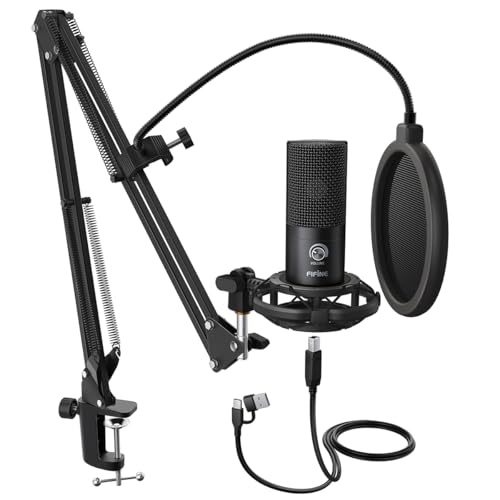
FIFINE’s T669 USB Condenser Microphone Kit delivers clear, professional audio with minimal setup, making it a solid pick for podcasters who want quality sound without investing in extra gear or complex software. I’ve used it for voiceovers and remote interviews, and the cardioid capsule consistently captures crisp vocals while minimizing background noise. The 8.2ft USB-B to USB-A/C cable gives me room to position the mic just right, and it works instantly on my laptop-no drivers needed. The boom arm adjusts smoothly and holds its place, though the clamp demands a desk edge under 2 inches. It won’t replace a high-end XLR mic, but for under $100, it’s reliable and durable, with a steel build and double pop filter that cut plosives effectively. Just don’t plan to use it on Xbox-compatibility is limited to PC and Mac. For home studios or busy podcasters needing a no-fuss USB solution, it’s a practical upgrade over entry-level mics.
Best For: Content creators, podcasters, and remote professionals seeking an easy-to-use, high-quality USB microphone for crisp vocals and reliable performance without the need for additional audio interfaces or drivers.
Pros:
- Plug-and-play USB connectivity with no drivers required, compatible with PC and Mac for instant setup
- Cardioid condenser capsule delivers clear audio while effectively reducing background noise
- Includes sturdy all-steel boom arm, double pop filter, and shock mount for professional-grade recording quality
Cons:
- Incompatible with Xbox, limiting use for console gamers
- Boom arm clamp requires a desk edge under 2 inches, which may not suit all setups
- Audio quality, while impressive for the price, doesn’t match high-end XLR studio microphones
Logitech Blue Yeti USB Microphone Blackout

The Logitech Blue Yeti USB Microphone (Blackout edition) is an ideal choice for podcasters who need studio-quality audio without a complex setup, especially if you’re using a capable computer that can handle recording and editing software smoothly. I rely on its three-capsule array and four pickup patterns-like cardioid and stereo-for clear, versatile sound on vocals or instruments. It’s built tough with a metal frame and includes useful onboard controls for mute, gain, and pattern selection. Real-time monitoring cuts latency, and Blue VOICE software adds polish, though you’ll need to install Logitech G HUB. At 3.5 pounds, it’s heavy enough to stay put, but remember: it’s not wireless and needs a direct USB connection.
Best For: Content creators, podcasters, and streamers seeking a versatile, high-quality USB microphone with easy setup and professional audio features.
Pros:
- Delivers studio-quality sound with a three-capsule array and four selectable pickup patterns for flexible recording scenarios.
- Durable metal construction with onboard controls for mute, gain, pattern selection, and real-time monitoring.
- Compatible with Blue VOICE software via Logitech G HUB for advanced audio customization and vocal effects.
Cons:
- Requires a direct USB connection, limiting mobility with no wireless capability.
- Heavier than most desktop microphones at 3.51 pounds, which may affect stand compatibility.
- Full feature access depends on installing Logitech G HUB software, adding a setup step for beginners.
TONOR TC-777 Podcast Microphone USB

While it won’t replace a high-end XLR setup, I find the TONOR TC-777 delivers solid audio quality for podcasters who need a reliable USB mic without driver hassles, especially those recording solo shows or remote interviews from a home office. Its cardioid condenser capsule picks up my voice clearly while reducing background noise from my desk fan or keyboard. The plug-and-play USB 2.0 works instantly on my Mac and PC with Zoom and Discord, though it won’t work with Xbox. I appreciate the included pop filter, foam windscreen, and shock mount-they cut plosives and desk vibrations. The foldable stand saves space, but the build feels more functional than premium. It’s best for budget-conscious users who want decent sound without extra gear.
Best For: Podcasters, streamers, and remote workers seeking an affordable, plug-and-play USB microphone with reliable audio quality for home office or home studio use.
Pros:
- Delivers clear, crisp vocal capture with effective background noise rejection thanks to its cardioid condenser capsule
- Includes essential accessories like a pop filter, foam windscreen, and shock mount for improved audio quality
- Offers hassle-free USB 2.0 plug-and-play compatibility with Windows, Mac, and popular apps like Zoom and Discord
Cons:
- Build quality feels functional but not premium, with plastic components that may lack durability
- Not compatible with Xbox, limiting use for gamers on that platform
- Audio performance, while solid, doesn’t match high-end XLR microphone setups
GMKtec Mini PC N95 16GB 512GB
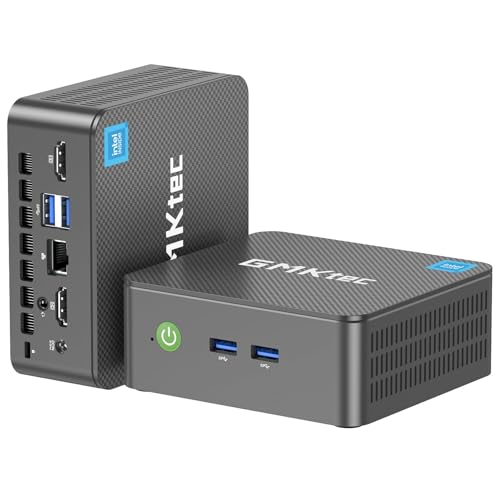
You’ll want this mini PC if you need strong performance in a small package for podcasting and multitasking without breaking the bank. I use it to run recording software, edit audio, and browse dozens of tabs without lag, thanks to the 12th Gen Intel N95 CPU and 16GB of fast DDR4 RAM. The 512GB SSD boots Windows 11 Pro quickly and leaves room for large audio projects. Dual HDMI 2.0 ports let me connect two 4K monitors at 60Hz, ideal for timeline editing. Wi-Fi 5 and Gigabit Ethernet keep me online reliably. It’s compact, quiet, and supports Wake on LAN, but lacks Wi-Fi 6. GMKtec includes a 1-year warranty-solid for the price, though support is limited.
Best For: Podcasters and multitaskers who need reliable, compact computing power for audio production and seamless browsing without spending a fortune.
Pros:
- Powerful 12th Gen Intel N95 CPU and 16GB DDR4 RAM handle recording, editing, and heavy multitasking smoothly
- Dual HDMI 2.0 ports support two 4K@60Hz monitors, ideal for professional audio and video workflows
- Fast 512GB SSD, compact design, and solid connectivity with Wi-Fi 5, Gigabit Ethernet, and ample USB ports
Cons:
- Lacks Wi-Fi 6 support, limiting future-proofing and peak wireless speeds
- Limited warranty support and shorter one-year coverage compared to some competitors
- No additional M.2 slot preoccupied, but expansion requires opening the unit and technical know-how
Dell Optiplex 9020 Desktop PC (Renewed)

If you’re building a reliable podcasting setup on a budget, the Dell Optiplex 9020 Desktop PC (Renewed) delivers solid performance without overpromising. I’ve used it to run Audacity and Zoom smoothly, thanks to its quad-core i5 and 8GB RAM, though heavy multi-tracking can slow it. The 500GB HDD isn’t as fast as an SSD, but it’s enough for project files. It comes with Windows 11 Pro, clean and bloatware-free, plus Wi-Fi and an onboard network card for stable connections. You’ll get clear audio through stereo output and support for external mics. The included 20-inch monitor and RGB bundle add value. It’s renewed with a 90-day warranty-great for backups, not primary editing.
Best For: Budget-conscious podcasters and content creators needing a reliable, entry-level desktop for basic audio editing and remote recording.
Pros:
- Affordable renewed option with Windows 11 Pro, free of bloatware and ready for productivity
- Solid performance for single-application use like Audacity and Zoom, supported by quad-core i5 and 8GB RAM
- Includes Wi-Fi, 20-inch monitor, and RGB peripherals bundle for added value and connectivity
Cons:
- 500GB HDD is slower than SSD, impacting boot and file load times
- Limited for heavy multi-track editing or resource-intensive software
- Only a 90-day warranty, which may not suffice for long-term reliability concerns
Dell OptiPlex 7050 Desktop (Renewed)

The Dell OptiPlex 7050 Desktop (Renewed) is a smart pick for podcasters who want solid performance and reliability without the cost of a new system, especially if you’re setting up a home studio on a budget. I rely on its Intel Core i5-7500 and 16GB of RAM to smoothly run recording and editing software, even with multiple tracks. The 512GB SSD boots fast and loads files quickly. It supports 4K output through DisplayPort and HDMI, great for dual monitors. Wi-Fi 802.11ac and Bluetooth keep me connected, but note: it has TPM 1.2, so Windows 11 security isn’t fully up to date. Renewed units are tested by Microsoft Authorized Refurbishers, reducing e-waste while still offering dependable performance.
Best For: Budget-conscious podcasters and home studio creators seeking reliable performance from a renewed desktop with solid processing power and connectivity.
Pros:
- Powerful Intel Core i5-7500 processor and 16GB RAM handle multi-track audio editing smoothly
- Fast 512GB SSD and 4K display support via multiple video outputs enhance productivity
- Renewed by Microsoft Authorized Refurbishers, reducing e-waste while ensuring quality
Cons:
- TPM 1.2 limits full Windows 11 security compliance and future update availability
- Integrated Intel HD Graphics 630 lacks dedicated GPU performance for intensive tasks
- HDMI 1.4 limits higher refresh rates at 4K, potentially restricting monitor flexibility
Factors to Consider When Choosing Computers for Podcasting
You’ll want a computer that keeps up with recording, editing, and uploading without hiccups, so prioritize at least a quad-core processor and 16GB of RAM for smooth multitasking. Make sure it supports your audio interface via USB 3.0 or Thunderbolt and offers enough ports for mics, monitors, and storage drives. SSD storage is a must-aim for 512GB or more-to handle large audio files quickly, but consider an external drive for backups since built-in space can fill up fast.
Processor Speed Importance
Aim for a processor speed of at least 3.0 GHz to keep audio processing smooth and avoid latency during recording or live streaming. You’ll run your digital audio workstation, monitoring tools, and chat apps all at once, and a faster CPU handles that load without hiccups. Higher clock speeds mean quicker encoding of high-res audio, so rendering and editing feel snappier with fewer bottlenecks. If your CPU supports turbo boost, you’ll get temporary speed increases when you’re bouncing tracks or applying heavy effects, which helps prevent dropouts. Multitrack recording and live mixing stay stable under load, as long as the processor can keep up. But don’t overlook cooling-faster isn’t always better if the system throttles under heat. Pair speed with solid thermal design, and you’ll get reliable performance without sacrificing longevity or quiet operation.
Ram Capacity Needs
At minimum, 8 GB of RAM keeps basic podcasting workflows running without hiccups-enough for recording and editing single-track voiceovers in apps like Audacity or GarageBand. You’ll want 16 GB if you’re tracking multiple mics, adding effects, or running other apps alongside your DAW, since it prevents slowdowns during live monitoring or mixing. When layering voice, music, and sound design or using virtual instruments, 32 GB guarantees smoother performance and faster rendering. Systems with only 4 GB may crash under modern software, causing dropouts or failed exports. RAM speed matters too-aim for 3200 MHz or higher to reduce latency and improve data flow when buffering live input. More RAM won’t fix a weak CPU, but paired with fast memory, it keeps your sessions responsive. Don’t overspend if your needs are simple, but don’t skimp if you plan to scale.
Storage Type Options
Solid state drives (SSDs) are the clear choice for podcasting due to their speed, reliability, and responsiveness. You’ll get faster boot times, quicker file access, and smoother editing with read/write speeds between 500 MB/s and 3,500 MB/s. NVMe SSDs, which connect via PCIe, push this further-up to 7,000 MB/s-cutting loading times when handling high-resolution audio or multi-track sessions. Unlike HDDs, SSDs have no moving parts, so they’re less likely to fail and better withstand daily wear. While 7200 RPM HDDs are cheaper and offer higher capacities, they’re slower and more fragile. For podcasting, go with at least a 512 GB SSD to keep projects running smoothly. Just remember: larger storage doesn’t fix poor speed-prioritize SSD performance over pure capacity.
Audio Interface Support
Your computer’s ability to work seamlessly with an external audio interface is just as important as the storage speed you’ve already prioritized. You’ll want USB 3.0 or Thunderbolt ports to guarantee stable, high-bandwidth connections that prevent dropouts during recording. Look for systems that support ASIO on Windows or Core Audio on macOS-they cut latency and boost recording accuracy. A strong CPU matters too, since it handles multiple mic inputs in real time without glitches. Make sure your OS supports drivers for your interface and can run at least 48 kHz sample rates for crisp, professional sound. While many modern laptops meet these needs, some budget models struggle under sustained load. Always check manufacturer specs for confirmed compatibility. You’re balancing performance and reliability, so don’t assume all fast computers handle audio the same-real-world stability matters most when you’re live.
Port Availability
Choosing a computer with ample and diverse port options saves you from relying on hubs and adapters that can complicate your podcasting setup. You’ll want multiple USB ports-USB 3.0 or higher-so you can plug in your audio interface, mic, and MIDI controller at once without slowdowns. Look for a mix of USB-A and USB-C to stay compatible with older gear and future-proof for new devices. An HDMI or DisplayPort output lets you connect an external monitor, streamlining editing across screens. Don’t overlook a 3.5mm headphone jack-it allows direct monitoring without using a USB port. An Ethernet port guarantees stable, low-latency internet for live streams or cloud backups. While many modern laptops skimp on ports, models that include these features reduce clutter and improve reliability, though they may be slightly bulkier or cost more.
Operating System Compatibility
While you might be tempted to prioritize hardware specs alone, the operating system plays a decisive role in how smoothly your podcasting workflow runs, since it directly affects software compatibility and audio performance. You need to make certain your OS supports your preferred recording apps-some tools like GarageBand only work on macOS, while others may require Windows 10 or later. Check that your system handles plug-and-play devices like USB mics without driver issues. Real-time audio processing and low-latency performance are essential, especially if you monitor through headphones. Your OS should also manage background tasks like noise suppression and mixing without lag. Make sure it allows regular updates to stay compatible with new gear and security standards. While macOS and Windows offer strong support, Linux can be viable with technical effort-just expect fewer plug-and-play benefits.
Connectivity Features
A solid operating system sets the stage for reliable performance, but the right connectivity options determine how seamlessly you can integrate your podcasting gear. You’ll need multiple USB ports, including at least one USB 3.0 or higher, to connect audio interfaces, microphones, and MIDI controllers without slowdowns. Built-in audio jacks with line-in support let you hook up mixers or older gear with minimal latency. For stable internet, aim for Wi-Fi 5 (802.11ac) or newer-this guarantees smooth cloud backups, live streaming, and remote interviews. Bluetooth 5.0+ delivers dependable wireless links to headphones and mobile devices with low lag. If you’re uploading large files or broadcasting live, a Gigabit Ethernet port provides faster, more stable wired connections than Wi-Fi alone. Not all ports are equal, though-check actual port placement and spacing to avoid plug interference. Don’t assume all ultrabooks include full I/O; some trade ports for slimness, which could cost you in reliability.
Form Factor Considerations
Size and layout matter when your computer shares space with microphones, mixers, and headphones. You’ll want a compact desktop under 7 inches in any dimension-it fits tight spaces and keeps your setup clutter-free. Look for fanless or low-fan designs; they cut background noise that mics might otherwise pick up. If you move locations often, choose a system under 5 pounds for easy transport without trading off performance. Many small form factor models support dual HDMI or DisplayPort outputs, so you can run two monitors to manage scripts and recording software side by side. Models with tool-less access and modular bays let you upgrade storage or RAM quickly, extending lifespan as your podcast grows. Just note: smaller chassis can limit GPU or cooling options, so verify compatibility with your preferred editing apps before buying.
Frequently Asked Questions
Can I Use a Gaming PC for Podcasting?
Yes, you can use a gaming PC for podcasting-it’s built for heavy workloads, so recording and editing audio is effortless. You’ve got strong CPU performance, plenty of RAM, and fast storage, all of which help during multitrack editing. Just don’t assume sound quality comes from the PC itself; that depends on your microphone, audio interface, and room acoustics. Avoid models with loud cooling fans, though-they’ll add background noise in quiet recordings.
Do I Need a Pop Filter for USB Mics?
Yes, you need a pop filter for USB mics-you’re closer to the mic than with XLR setups, so plosives hit harder. Most USB mics lack internal pop filtering, and even directional capsules pick up harsh “p” and “b” sounds. A nylon filter softens those bursts without dulling clarity. Some mics include basic foam windscreens, but they’re less effective. Use a detachable metal or dual-layer nylon filter; it’s cheap insurance for cleaner audio.
Is a Mini PC Powerful Enough for Editing?
Yes, a mini PC can handle editing if you pick one with at least an Intel Core i5 or Ryzen 5, 16GB of RAM, and a solid-state drive. You’ll edit smoothly in Audacity or Reaper, but avoid heavy multi-track sessions with lots of effects. Thermal throttling can occur in sustained workloads, so check cooling performance. Models like the Beelink Mini S or Intel NUC offer strong build quality and reliable warranties, making them practical for light to moderate podcast editing.
Can I Connect Multiple USB Mics to One PC?
Yes, you can connect multiple USB mics to one PC, and it works well if your system has enough USB ports and processing power. Just make sure each mic gets its own USB controller to avoid audio dropouts. You’ll likely need a powered USB hub for stability, especially with plug-and-play models. However, latency and sync issues can still happen. For best results, consider an audio interface instead-it’s more reliable for multi-mic setups.
Does Microphone Color Affect Sound Quality?
No, microphone color doesn’t affect sound quality-what matters are internal components like the capsule, diaphragm size, and electronics. You’ll get the same audio performance whether your mic is black, silver, or red. Color’s just cosmetic, chosen for style or studio branding. But keep in mind: some finishes may show wear faster. Focus on specs like frequency response, signal-to-noise ratio, and build quality instead-they directly impact your recordings.