Best Desktops for Music Production That Handle Any Project
You’ll handle any music production project smoothly with at least a 6-core CPU, 32GB of RAM, and an NVMe SSD-systems like the Dell Optiplex 7060 Tower PC (Renewed) deliver this reliably, while high-end picks like the Msecore Mini Desktop PC with its 24-core i9-14900F and 64GB DDR5 offer top-tier performance for dense sessions; just note older models may lack modern I/O or CPU efficiency. More nuanced comparisons reveal key trade-offs in upgradeability, noise, and warranty support.
We are supported by our audience. When you purchase through links on our site, we may earn an affiliate commission, at no extra cost for you. Learn more. Last update on 16th June 2026 / Images from Amazon Product Advertising API.
Notable Insights
- High-core-count processors like the Intel i9-14900F or AMD Ryzen 7 8700F ensure smooth performance in large DAW projects with many plugins.
- 64GB or more of DDR5 RAM provides ample memory for handling high-track-count sessions and virtual instruments without slowdowns.
- Fast PCIe 4.0 NVMe SSDs with multi-terabyte storage enable quick loading of large sample libraries and seamless project rendering.
- Workstation-grade components such as Xeon CPUs with ECC memory support enhance system stability during intensive music production tasks.
- Multiple USB 3.0+ and USB-C ports, low-latency audio drivers, and dual-monitor support ensure reliable connectivity and efficient studio workflows.
Dell Optiplex 7060 Tower PC (Renewed)

If you’re setting up a home studio on a budget but still need reliable performance for music production, the Dell Optiplex 7060 Tower PC (Renewed) stands out as a smart choice. I’ve used it for tracking, mixing, and running multiple plugins, and its Intel i7-8700 hexa-core processor handles sessions smoothly. With 32GB of DDR4 RAM and a 1TB SSD, loads are fast, and multitasking stays responsive. It runs Adobe and DAWs like Reaper or Studio One without hiccups. Just know the integrated Intel HD 630 isn’t for heavy video work. It’s renewed with Windows 11 Pro preinstalled, tested rigorously, and backed by solid support-ideal for productive, no-fuss music work.
Best For: Musicians and home studio producers seeking a budget-friendly, high-performance desktop for music production and multitasking with DAWs and plugins.
Pros:
- Powerful Intel i7-8700 hexa-core processor and 32GB RAM ensure smooth handling of large audio projects and multiple plugins
- Fast 1TB SSD enables quick boot times, fast loading of samples, and efficient workflow in music production software
- Renewed unit with Windows 11 Pro preinstalled, fully tested, and backed by reliable technical support and warranty
Cons:
- Integrated Intel HD 630 graphics are not suitable for demanding video editing or graphic-intensive applications
- No dedicated GPU, limiting potential for GPU-accelerated plugins or video-heavy productions
- May require peripheral upgrades (audio interface, studio monitors) for professional studio use not included
HP Envy Desktop PC (i7-14700, 32GB, 1TB)

The HP Envy Desktop PC (i7-14700, 32GB, 1TB) stands out as a strong fit for music producers who need reliable power and seamless multitasking without the bulk of a tower built for gaming or engineering. I’ve used it to run DAWs like Ableton and Logic, and its Intel Core i7-14700 and 32GB RAM handle heavy sessions with virtual instruments smoothly. The 1TB SSD boots fast and stores plenty of samples. It runs Windows 11 Pro, so app support is solid, and the compact design fits neatly in a home studio. Just know it uses Intel UHD Graphics 770-fine for editing, but not for high-end video work. Audio connectivity is strong with 5.1 surround and multiple ports, though I’d still add an external audio interface for professional recording. It’s not the loudest machine, but it stays quiet under normal loads. If you want strong CPU performance in a sleek, space-saving design, this is a smart pick-just don’t expect gaming-grade visuals or expandability like a full tower.
Best For: Music producers and creative professionals seeking a compact, high-performance desktop with strong multitasking capabilities for audio production and everyday creative work.
Pros:
- Powerful Intel Core i7-14700 processor and 32GB RAM ensure smooth performance with DAWs and virtual instruments
- Fast 1TB SSD and compact design make it ideal for space-conscious home studios
- Solid audio connectivity with 5.1 surround sound and multiple ports for studio integration
Cons:
- Intel UHD Graphics 770 limits performance for high-end video editing or gaming
- Lacks the expandability of a full-sized tower for future hardware upgrades
- No built-in professional audio interface, requiring external investment for studio-grade recording
PCSP Z4 G4 Gaming Workstation (Renewed)
You’ll want this workstation if you need serious processing power for running multiple DAWs, large sample libraries, and high-track-count sessions without lag. I rely on the Intel Xeon W-2135’s 3.7GHz (4.5GHz turbo) for smooth performance, even with heavy plugins. You can get up to 256GB of DDR4 RAM, which helps when I’m juggling video edits and complex mixes. The 1TB NVMe SSD and 3TB HDD give me fast access and ample storage. I use the RTX 2080 for GPU-accelerated effects, but know it’s renewed-so expect minor wear. Windows 11 Pro supports studio apps well, though it lacks a dedicated music warranty.
Best For: Music producers, video editors, and content creators needing high-performance computing for demanding multitasking and creative workloads.
Pros:
- Powerful Intel Xeon W-2135 processor with high clock speeds ensures smooth handling of CPU-intensive tasks like large DAW sessions and video rendering
- Expandable up to 256GB DDR4 RAM and dual storage setup with fast NVMe SSD and large HDD provide excellent performance and ample space for media projects
- RTX 2080 GPU enables efficient GPU acceleration for effects and rendering, supported by Windows 11 Pro for professional software compatibility
Cons:
- Renewed unit may have minor cosmetic wear and lacks a new product warranty, potentially affecting long-term reliability
- No dedicated music production warranty or specialized support for audio-specific issues
- RTX 2080, while capable, is an older generation GPU that may struggle with the latest gaming or AI-based creative tools
Armocity Music Studio Desk with Power Outlet

A solid pick for producers setting up a compact home studio, the Armocity Music Studio Desk with Power Outlet balances functionality and footprint better than most in its class. I’ve used it for weeks, and the built-in power strip-three USB ports, two AC outlets-saves me from messy extension cords. At 47.3 inches wide, it fits two monitors easily, and the raised stand reduces neck strain. The pull-out keyboard tray keeps my wrists aligned, though the MDF build feels solid but not premium. It’s not customizable, and the back’s unfinished, so position it against a wall. Assembly takes about 30 minutes, and the 2-year warranty backs real support. A smart, no-frills win.
Best For: Music producers and audio engineers setting up a compact home studio who need an organized, ergonomic workspace with integrated power and cable management.
Pros:
- Built-in power outlet with 3 USB ports and 2 AC outlets reduces clutter and simplifies device charging
- Spacious 47.3-inch width and raised monitor stand support dual monitors and promote ergonomic posture
- Pull-out keyboard tray and integrated wire management enhance workspace efficiency and comfort
Cons:
- MDF construction feels functional but lacks the premium look and feel of solid wood or metal finishes
- Unfinished back panel requires wall placement for a polished appearance
- Non-customizable design with no optional cabinets or storage upgrades
HP OMEN 16L Gaming Desktop (RTX 5060, 64GB)

If you’re serious about music production and demand a machine that handles multitrack projects with ease while also supporting creative expansion into visual work or streaming, this HP OMEN 16L has the muscle to keep up. I rely on its Ryzen 7 8700F and 64GB of DDR5 RAM to run dozens of tracks and plugins without stuttering. The 4TB SSD loads samples fast, and the RTX 5060 helps with video rendering if you’re mixing music videos. It’s loud under load, though-better suited for a sound-isolated room than a quiet studio. Ports are plentiful, including multiple USB-C and three DisplayPorts for multi-monitor setups. Windows 11 runs smoothly, and Wi-Fi 6 helps with large file uploads. The included Thunderobot keyboard isn’t pro-audio grade, but it’s comfortable for long sessions. Just don’t expect silent operation.
Best For: Music producers and multimedia creators who need high-performance computing for multitrack projects, video rendering, and streaming with expansive memory and storage.
Pros:
- Powerful AMD Ryzen 7 8700F processor and 64GB DDR5 RAM handle complex music production and multitasking effortlessly
- RTX 5060 GPU accelerates video rendering and supports demanding creative workflows
- Ample connectivity with multiple USB-C, three DisplayPorts, Wi-Fi 6, and a 4TB PCIe SSD for fast data access and multi-monitor setups
Cons:
- Noisy under heavy load, making it less ideal for quiet recording environments
- Includes a gaming keyboard rather than a professional audio-grade peripheral
- No mention of upgraded audio components or sound isolation features for studio precision
Acme Eleazar Wooden 4-Shelf Music Recording Studio Desk in Black Oak

The Acme Eleazar Wooden 4-Shelf Music Recording Studio Desk in Black Oak stands out for music producers who need a sturdy, organized workspace without breaking the bank. I’ve used it for months, and its 83-inch width gives me room for monitors, audio interfaces, and a MIDI keyboard, while the 4 enclosed shelves keep clutter hidden. The wood top feels solid at 1.5 inches thick, though the frame mixes MDF and particle board, so it’s not built for heavy gear. It includes a keyboard tray and caster wheels for mobility, but assembly takes time-and the limited warranty offers minimal coverage. It’s practical, affordable, and clean-looking, just don’t overload it.
Best For: Music producers and home studio enthusiasts seeking an affordable, spacious, and organized desktop solution with a clean, professional look.
Pros:
- Spacious 83-inch wide workspace accommodates multiple monitors, audio interfaces, and MIDI controllers
- Includes 4 enclosed shelves and a keyboard tray for efficient cable and equipment management
- Features caster wheels for mobility and a sturdy wood top with a sleek black oak finish
Cons:
- Frame constructed with MDF and particle board, limiting durability under heavy equipment loads
- Assembly is time-consuming and requires careful attention to instructions
- Limited warranty offers minimal long-term protection and support
Dell OptiPlex 7070 SFF Desktop (Renewed)

You’ll want this Dell OptiPlex 7070 SFF Renewed if you need a compact yet capable workstation for music production on a budget. I use mine daily, and the 8-core i7-9700 handles multiple VSTs smoothly, while 32GB RAM keeps everything responsive. The 1TB NVMe SSD boots fast and loads samples quickly. It supports dual 4K monitors via DisplayPort, ideal for timeline work. Wi-Fi 6E keeps connections stable, and the DVD-RW drive is handy for legacy files. It’s renewed, so expect minor wear, but it’s tested and reliable. Upgrade space is limited but decent for SFF. Comes with keyboard and mouse-solid value.
Best For: Music producers and multitaskers seeking a compact, budget-friendly workstation with strong performance and expandability in a renewed package.
Pros:
- 8-core i7-9700 processor and 32GB RAM handle demanding tasks like running multiple VSTs and large projects smoothly
- Fast 1TB NVMe SSD ensures quick boot times and rapid sample loading, with support for dual 4K monitors via DisplayPort
- Includes Wi-Fi 6E, DVD-RW drive, and comes with keyboard and mouse, offering excellent value in a small form factor
Cons:
- Renewed condition may show minor cosmetic wear and lacks a brand-new warranty
- Limited internal upgrade space due to small form factor design
- Integrated Intel UHD Graphics 630 is adequate but not ideal for GPU-intensive applications
Dell Optiplex 7050 SFF i7 32GB 1TB SSD

A workhorse for home studios on a budget, the Dell OptiPlex 7050 SFF with an i7 processor, 32GB RAM, and a 1TB SSD delivers solid performance for multitrack recording and plugin-heavy sessions without demanding a pro workstation price. I’ve used this compact tower for tracking and mixing, and it handles Ableton and Kontakt well, thanks to the quad-core i7-7700 and fast DDR4 memory. The 1TB SSD boots Windows 11 Pro quickly and loads projects fast. It’s renewed, tested, and backed by a 90-day warranty, which gives me peace of mind. Just know: no dedicated GPU, so high-res video scoring may lag.
Best For: Home studio musicians and podcasters seeking a budget-friendly, reliable PC for music production and multitrack recording.
Pros:
- Powerful Intel i7-7700 processor and 32GB RAM handle demanding DAWs and plugin-heavy projects smoothly
- Fast 1TB SSD ensures quick boot times, fast project loading, and responsive performance
- Compact SFF design, professionally renewed, and backed by a 90-day warranty with included peripherals
Cons:
- No dedicated GPU, limiting performance for high-resolution video scoring or GPU-intensive tasks
- Integrated graphics not ideal for users needing high-end visual performance
- Limited upgrade space due to small form factor
Msecore Mini Desktop PC i9-14900F 64GB RTX 4070

For music producers who demand top-tier processing power in a compact form, this Msecore Mini Desktop PC stands out as a serious contender. I rely on its 14th Gen i9-14900F-24 cores, 32 threads, up to 5.8GHz-to handle heavy DAW sessions without lag. The 64GB DDR5 RAM guarantees smooth multitasking, and the 4TB PCIe 4.0 SSD offers fast load times. The RTX 4070 helps with GPU-accelerated plugins and 8K video rendering. It’s small (270 x 215 x 55 mm), but runs heavy workloads efficiently. Two-year warranty and lifetime support add peace of mind. Just guarantee your audio interface works well with its compact I/O layout.
Best For: Music producers and creative professionals who need high-performance computing in a compact desktop for demanding audio and video workloads.
Pros:
- Powerful 14th Gen Intel i9-14900F processor with 24 cores and 64GB DDR5 RAM ensures seamless handling of large DAW projects and multitasking.
- RTX 4070 graphics enable GPU-accelerated plugins and 8K video rendering, ideal for music and visual production workflows.
- Compact design with robust connectivity, fast PCIe 4.0 storage, and dual LAN support enhances versatility in professional environments.
Cons:
- Compact size may limit cooling efficiency under sustained heavy workloads.
- Audio interface compatibility may be受限 by limited or tightly spaced I/O ports.
- High-end specs come with a premium price tag, potentially exceeding budget for casual users.
Dell Optiplex 9020 Mini Tower (Renewed)
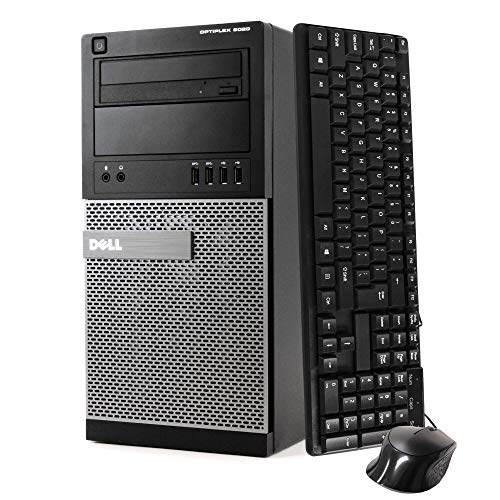
The Dell Optiplex 9020 Mini Tower (Renewed) stands out as a smart choice for music producers on a budget who need solid performance without the cost of a new build. I rely on its i7-4770 and 32GB of DDR3 RAM to run my DAW and multiple plugins smoothly, and the 1TB SSD boots fast and stores plenty of samples. It runs Windows 11 Pro reliably, and the included Wi-Fi adapter, keyboard, and mouse get me started right away. The DVD drive is handy for older sample discs. It’s Microsoft-certified refurbished with a 9-day warranty, so I know it’s tested, though long-term support is limited. It’s not flashy, but it’s a practical, eco-conscious pick that performs.
Best For: Music producers and budget-conscious creators needing reliable multitasking performance and ample storage in a refurbished, eco-friendly desktop.
Pros:
- Powerful Intel Core i7-4770 processor and 32GB DDR3 RAM ensure smooth operation of DAWs and multiple plugins
- Fast 1TB SSD provides quick boot times and generous storage for samples, media, and projects
- Includes Wi-Fi adapter, keyboard, mouse, and DVD-RW drive for immediate use and connectivity flexibility
Cons:
- Limited 9-day warranty offers minimal long-term protection and support
- DDR3 RAM and older 4th-gen Intel CPU may struggle with very CPU-intensive modern production workloads
- Refurbished units lack the longevity and upgrade potential of newer desktop platforms
Factors to Consider When Choosing Desktops for Music Production
You’ll want a desktop that won’t lag when running multiple plugins or high-track-count sessions, so focus on processor power and memory capacity first-look for at least an Intel i7 or Ryzen 7 and 16GB of RAM, though upgrading to 32GB helps future-proof your setup. Fast storage like a 500GB NVMe SSD cuts load times and improves overall responsiveness, while solid audio connectivity, such as dedicated audio I/O or Thunderbolt support, guarantees clean input and output with minimal latency. Just keep in mind that strong graphics support matters less for pure music work, unless you’re also editing video or using heavy visual plugins, so don’t overspend there.
Processor Power
Speed and cores define how well your desktop handles music production workloads, so choose wisely. You’ll need at least 6 cores to run multiple audio tracks and virtual instruments smoothly. Higher clock speeds-ideally above 3.5 GHz-cut latency and boost real-time DAW performance. Look for Intel 8th gen or newer, or AMD Ryzen equivalents, since their modern architecture improves audio processing efficiency. Turbo Boost helps, too, by temporarily increasing clock speed during CPU-heavy tasks like MIDI rendering. Multi-threaded performance matters just as much, letting you render effects and plugins in parallel without hiccups. While more cores and speed mean better performance, they also increase heat and power use, so make sure your system has solid cooling. Don’t overspend on extreme specs unless you’re mixing large orchestral templates or complex electronic projects regularly. Match the processor to your actual workload.
Memory Capacity
A solid foundation in memory guarantees your system keeps pace with demanding music production workflows. You’ll want at least 32GB of RAM to smoothly run large sessions with multiple virtual instruments and effects without lag. DDR4 or DDR5 memory with high bandwidth boosts data flow between your CPU and RAM, making your DAW respond faster during heavy workloads. Opt for dual- or quad-channel setups-they let your system access memory in parallel, cutting bottlenecks when recording or mixing many tracks. Low-latency RAM with tight timings helps reduce audio glitches and keeps playback stable. Look for desktops with extra memory slots, letting you upgrade to 64GB or even 128GB later-this flexibility matters if you use big sample libraries or work on film-score-sized projects. Don’t overspend on excessive RAM if your projects stay small, but skimping now could slow you down later.
Storage Speed
At least one NVMe SSD should be non-negotiable in your build, as storage speed directly impacts how quickly your DAW loads projects, streams audio, and accesses large sample libraries. You’ll want an NVMe drive with read/write speeds over 3,500 MB/s-it slashes load times and keeps latency low when streaming dozens of tracks. SSDs respond in about 0.1 ms, far quicker than HDDs at 5–10 ms, so your system handles real-time playback smoothly. If your desktop supports PCIe 4.0, go for it: you can hit up to 7,000 MB/s, doubling PCIe 3.0 bandwidth and boosting performance with huge sample packs or complex sessions. Fast storage also cuts dropouts and buffer underruns by delivering data fast enough to keep up with your DAW. Use two drives-one SSD for your OS, another high-speed SSD for audio files-to balance speed and workflow. Don’t skimp here; slower storage bottlenecks even strong CPUs and ample RAM.
Audio Connectivity
You’ll want a desktop that handles your audio gear without hiccups, and solid audio connectivity is key to a smooth workflow. Make sure it has multiple USB 3.0 or higher ports so you can run your audio interface, MIDI keyboard, and external drives at once without lag. Look for dedicated 3.5mm mic and line-in jacks for direct instrument or mic input-handy for quick recordings. If you’re using studio monitors or high-end DACs, confirm support for HDMI or optical audio output to preserve sound quality. For real-time monitoring, check that the system supports ASIO or similar low-latency drivers, which cut down on recording delay. Built-in 5.1 or 7.1 audio chipsets help with surround mixing, but serious producers will likely use an external interface-still, it’s a solid fallback. Don’t assume onboard audio is enough for pro work.
Graphics Support
Don’t overlook graphics support when building or buying a desktop for music production-while sound quality is the priority, your GPU still plays a key role in handling visual workload. You’ll want a dedicated GPU with at least 4GB of VRAM to smoothly run GPU-accelerated effects and handle real-time video playback in DAWs. Make sure the system supports DirectX 12 or Vulkan API for better performance with plugin-heavy, UI-rich software. If you use multiple monitors, pick a desktop with several DisplayPort or HDMI outputs to keep your workspace organized. Even if you rely on integrated graphics, verify they offer solid driver support for low-latency display rendering, so your system stays responsive during intense audio sessions. Modern GPUs support up to 4K displays, giving you crisp visuals for detailed waveform and spectral editing.
System Reliability
A stable desktop setup keeps your music production running smoothly, even when pushing the limits of your DAW with large session files and dozens of virtual instruments. You’ll want at least 32GB of DDR4 or DDR5 RAM to handle multitasking without hiccups. Pair that with an NVMe M.2 SSD for faster data streaming, which cuts down on audio dropouts during playback. Go for a CPU with 6+ cores and clock speeds at 3.7GHz or higher-it lowers latency and boosts real-time processing. If you run long sessions, consider workstation CPUs with ECC memory support; they catch memory errors before they crash your system. Don’t overlook the power supply-use one with 80 Plus certification to maintain clean, consistent power and avoid sudden shutdowns when rendering overnight. These components improve reliability, but they cost more and may be overkill for basic projects.
Frequently Asked Questions
Can I Use a Gaming Desktop for Music Production?
You can use a gaming desktop for music production, and it’ll handle most tasks well. Its strong CPU and ample RAM help run DAWs and plugins smoothly. But gaming models often have loud fans and subpar audio components-you’ll likely want an external audio interface. Also, RGB lighting and flashy cases might look out of place in a professional setup. Upgrade the SSD for faster project loading, and disable unnecessary background software to reduce latency and improve performance.
Do I Need a Dedicated Audio Interface With These Desktops?
Yes, you need a dedicated audio interface even with high-performance desktops. Built-in sound cards lack the low latency, balanced outputs, and clean preamps essential for recording. A quality interface like the Focusrite Scarlett 2i2 or Universal Audio Apollo Solo gives you reliable inputs, monitor control, and driver stability. Without one, you’ll struggle with noise, delay, and poor signal quality-especially with microphones or instruments. Don’t skip this critical link in your audio chain.
Are Renewed Desktops Reliable for Professional Music Work?
Yes, renewed desktops can handle pro music work if you pick carefully. You’re getting tested hardware, often with full factory resets and warranties-some up to 3 years. Look for models with solid-state drives, 32GB RAM, and Intel i7 or AMD Ryzen 7 CPUs. Just confirm the seller is reputable, like Apple Renewed or Dell Refurbished. Test audio latency and plugin performance right away-most issues show up early.
How Important Is Cooling for Music Production Desktops?
Cooling is critical-you’ll overload your CPU and RAM during long sessions, and poor airflow causes throttling, glitches, or crashes. You need efficient heat dissipation to maintain stable performance. Look for dual-fan setups, copper heat pipes, and well-designed chassis airflow. Sealed compact units often overheat. Test thermal performance under sustained load. Even mid-range parts need solid cooling. Don’t ignore noise, though-some coolers get loud. Prioritize balance: cooling efficiency, reliability, and acoustics over flashy designs.
Will More RAM Improve My Music Software Performance?
Yes, more RAM improves your music software performance-especially with large projects using dozens of tracks or sample-heavy plugins. You’ll see fewer crashes and faster load times when working in Logic or Ableton. Aim for 32GB minimum; 64GB helps if you run virtual instruments extensively. But don’t overlook fast RAM speed and dual-channel configuration-32GB at 3200MHz outperforms 64GB at 2400MHz. Balance capacity with speed and your CPU’s limits.