Best Drawer Dividers That Maximize Every Inch of Space
You’ll maximize every inch with adjustable dividers like the Vtopmart 12-Pack or Criusia 10-Pack-both offer tool-free setup and expand to fit drawers from 10 to 17 inches. The Vtopmart’s shatter-resistant plastic and silicone grips hold firmly but avoid scratches, while the Criusia’s foldable fabric design adapts quickly to changing needs. Their low-profile builds save vertical space, though neither handles heavy tools well. Just check your drawer size first. See how each performs in real-world use.
We are supported by our audience. When you purchase through links on our site, we may earn an affiliate commission, at no extra cost for you. Learn more. Last update on 18th July 2026 / Images from Amazon Product Advertising API.
Notable Insights
- Adjustable-length dividers expand from 10 to 17 inches, fitting various drawer sizes and maximizing usable space.
- Low-profile designs at 0.6 inches thick allow more dividers to fit side by side without wasting space.
- Foldable fabric organizers adapt to changing storage needs and optimize oddly shaped or deep drawers.
- Tool-free spring tension installation ensures quick, reconfigurable setups without hardware or wasted corner space.
- Durable, space-efficient materials like shatter-resistant plastic and reinforced fabric prevent warping and maintain stability.
Vtopmart 12-Pack Adjustable Drawer Dividers
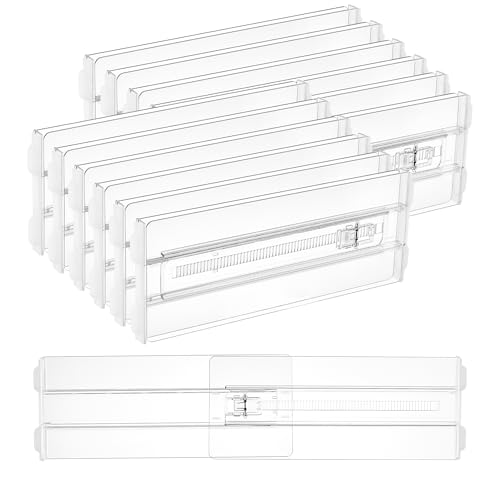
If you’re looking for a simple, reliable way to organize small items in drawers without permanent fixtures, the Vtopmart 12-Pack Adjustable Drawer Dividers are one of the best choices-especially if you value flexibility and scratch protection. I’ve used them in multiple drawers, and the shatter-resistant clear plastic holds up well over time. The silicone strips on both sides really do prevent scratches, even when sliding items in and out. They adjust from 10.2 to 16.5 inches and stand 4 inches high, fitting most standard drawers. At 0.6 inches thick, they’re slim but stable, thanks to spring tension and silicone grip. You’ll need a clean surface for solid holds, though-dust or oil weakens the grip fast. They’re not meant for heavy tools or office gear like staplers, but for clothes, socks, or toiletries, they work perfectly. I can reposition or remove them anytime by pressing the button and collapsing the side. After months of use, none have cracked or lost tension. Just don’t expect them to lock into place like built-in dividers-they rely on friction, so avoid overstuffing. Overall, they deliver smart, scratch-free organization without damage or hassle.
Best For: Individuals seeking a flexible, scratch-free drawer organization solution for items like clothing, socks, cosmetics, and toiletries without permanent installation.
Pros:
- Made of durable, shatter-resistant clear plastic with protective silicone strips that prevent drawer damage
- Adjustable length (10.2 to 16.5 inches) and slim 0.6-inch thickness allow versatile placement in various drawer sizes
- Easy to install and remove with spring tension and silicone grip, enabling reconfiguration without tools or residue
Cons:
- Relies on friction and clean surfaces for stability, which can fail if drawers are dusty or oily
- Not suitable for heavy items like tools or office equipment due to tension-based design
- May shift if drawers are overstuffed, as they don’t lock permanently into place
Criusia Drawer Organizer 10-Pack (Beige)

I’ve found the Criusia Drawer Organizer 10-Pack works best for families or individuals managing multiple storage zones-especially those organizing baby clothes across nursery drawers, underwear and socks in bedroom dressers, or small office supplies. The set gives you 10 durable, foldable organizers in three sizes-4 large, 4 medium, and 2 small-so you can mix layouts efficiently. Made with reinforced non-woven fabric and rigid plastic boards, they hold their shape well and resist collapsing. I appreciate that they’re odorless, which matters when storing baby items. Setup is instant-just unfold and insert. They keep drawers neat and accessible, though they don’t adjust mid-drawer like dividers with sliding walls.
Best For: Families or individuals managing multiple storage zones, especially those organizing baby clothes, underwear, socks, or small office supplies across nursery drawers, bedroom dressers, or closets.
Pros:
- Durable construction with reinforced non-woven fabric and rigid plastic boards maintains shape and resists collapsing
- Versatile 10-piece set with three sizes for efficient, customizable drawer organization
- Foldable design allows for easy setup, compact storage, and portability
Cons:
- Sizes are fixed and cannot be adjusted within drawers like sliding divider systems
- Limited height may not suit deeper drawers or bulkier clothing items
- Beige color may show stains or dirt over time with heavy use
Factors to Consider When Choosing Drawer Dividers
You’ll want to pick drawer dividers that balance durability, fit, and ease of use without overcomplicating your setup. Look for models made from sturdy ABS plastic or reinforced bamboo-they hold up over time but won’t scratch drawers or shift around during daily use. Just keep in mind that adjustable sizes and modular layouts offer flexibility, but some require precise measurement or limit drawer closure if stacked too high.
Material Durability
Durability starts with material choice when selecting drawer dividers that hold up over time. Shatter-resistant plastic won’t crack under pressure or when adjusted frequently, making it ideal for busy drawers. If you prefer fabric, choose non-woven material with reinforced stitching-it resists tearing even with constant folding and unfolding. Look for heavy-duty plastic boards inside fabric dividers; they keep the structure rigid and prevent collapse when stacked items compress the space. Silicone strips or rubberized edges aren’t just for grip-they reduce friction, so materials won’t degrade from sliding against the drawer. Odorless, non-toxic components matter too, since off-gassing can weaken materials over time in enclosed spaces. While plastic lasts longer, fabric offers flexibility-just confirm the stitching and internal supports are robust. There’s no one-size-fits-all, but testing for bend resistance and checking warranty length helps gauge real-world performance.
Size Adjustability
When drawer dividers fit snugly and adapt to your space, they keep contents organized without shifting or wobbling during daily use. You’ll want adjustable models that expand between 10 and 17 inches to match your drawer widths-most extend smoothly with tension-based mechanisms, securing firmly without tools. A standard 4-inch height works for the majority of drawers, but check your depth before buying. Some designs adjust in both length and width, giving you more flexibility for irregular spaces or corner drawers. Divider thickness, typically around 0.6 inches, affects how many you can fit side by side; too many can overcrowd small drawers. While adjustable units offer strong customization, they may not suit ultra-shallow or oversized cabinets. Always measure your drawer’s interior first and leave a little room for smooth insertion and removal.
Installation Ease
While some drawer dividers demand tools or complex assembly, models with spring tension mechanisms install quickly and securely without extra hardware. You just expand them to fit your drawer’s width, and they lock into place with firm pressure. For the best grip, choose versions with silicone-lined contact points-but remember, they need a clean, smooth surface to stay put during daily use. Adjustable dividers must be set to the correct length before insertion; otherwise, they’ll wobble or slip. Some styles fold or collapse, making them easy to insert and reposition when reorganizing. Pre-assembled kits save you time compared to modular systems that require precise alignment. They’re not all equally stable, though-wider drawers often need center supports for long-term durability. Always test stability by sliding the divider gently after setup to avoid shifting. Installation ease matters most when you value simple, reversible organization.
Space Efficiency
Space efficiency starts with choosing drawer dividers that adapt to your drawer’s unique dimensions and your storage needs. You’ll want adjustable dividers with expandable lengths-they close gaps and eliminate dead space in varying drawer sizes. Opt for low-profile designs under one inch thick, so you can stack items vertically without wasting room. If storage needs change often, pick foldable organizers; they collapse when unused, freeing up space fast. Vertical stacking dividers help you use the full drawer height, neatly separating different item types in layers. Modular or grid-based layouts let you customize compartments for odd-shaped or asymmetrical drawers, cutting wasted corners. Just remember: while these features boost efficiency, overly complex systems can make access slower. Prioritize simplicity and flexibility-especially in high-traffic drawers where speed and function matter most.
Usage Versatility
You get more long-term value from drawer dividers when they work across multiple areas of your home, not just the kitchen. Adjustable models with expandable lengths fit most drawer sizes, so you can reuse them in bedroom dressers, home office desks, or bathroom vanities. Look for ones that lock in vertically or horizontally-this lets you customize compartments for anything from cutlery to chargers and small office supplies. Durable materials like high-impact plastic or bamboo, paired with non-slip feet, keep dividers stable whether holding heavy tools or light accessories. Foldable designs add flexibility for changing needs, while multi-size sets let you optimize deep and shallow drawers alike. Just note: ultra-thin dividers may warp under heavy loads, and overly rigid systems can be hard to reconfigure. Test fit before full setup, and avoid tight installations that stress corners.
Frequently Asked Questions
Can Drawer Dividers Be Used in Kitchen Cabinets?
Yes, you can use drawer dividers in kitchen cabinets, and they work well for organizing flatware, lids, or spice jars when sized correctly. Just make sure the dividers fit your cabinet’s interior dimensions-most standard ones are designed for drawers, not deep shelves. You’ll likely need adjustable or custom-cut models to prevent wobbling. Stick to durable materials like ABS plastic or bamboo for stability. They won’t replace shelf organizers entirely, but they boost orderliness if matched to your storage needs.
Are These Dividers Safe for Children’s Drawers?
Yes, these dividers are safe for children’s drawers if you pick models with rounded edges and non-toxic materials like BPA-free plastic or unfinished wood. Always check for small, detachable parts that could be choking hazards. Secure them firmly so they don’t dislodge during use. Avoid metal dividers with sharp corners. Opt for brands that specify child-safe certifications. Supervise young kids during drawer use to prevent pinched fingers or tipping-especially with deep or heavy drawers.
Do Drawer Dividers Work in Curved or Round Drawers?
No, most drawer dividers don’t work well in curved or round drawers because they’re designed for straight edges and right angles. You’ll struggle to anchor them securely, and gaps will form. Some flexible foam or adjustable felt options might conform slightly, but they offer minimal support. For round drawers, custom-cut inserts or small collapsible bins are better. Always measure first-many “universal” dividers assume rectangular interiors. Test stability before loading.
Can I Paint or Customize the Color of Dividers?
You can paint or customize most plastic and wood dividers, but results vary by material. Acrylic-based paints stick best to plastic if you sand and prime first. Wood takes stain or paint easily. Check if coatings might affect slide function-thick layers can snag. Removable fabric wraps are a no-fuss alternative. Always test on a small area. Custom colors boost organization, but improper prep leads to peeling. Consider manufacturer warranties; DIY changes may void them.
Are Drawer Dividers Recyclable or Eco-Friendly?
Yes, you can recycle most drawer dividers, but it depends on the material. Cardboard and bamboo models are biodegradable and compostable-great for eco-goals. Plastic ones often aren’t recyclable locally due to mixed resins. Look for dividers labeled BPA-free or made from 100% recycled content if sustainability matters. Note: some “eco-friendly” brands skip warranties or use thinner materials that warp over time, so test durability in high-use drawers first.