Best Home Office Acoustic Panels for a Quieter Workspace
You get the best noise control with 2-inch-thick panels like the UMIACOUSTICS Light Camel or DONYCROX 3D Brick models-they hit an NRC of 0.95, absorbing 95% of mid to high-frequency sound. These use dense fiberglass or polyester cores for lasting performance and sleek, modern designs that fit professional spaces. They install with peel-and-stick backing but need clean, smooth walls to stay put. They won’t fully stop low-frequency noise from traffic or HVAC systems. More details on performance, safety, and setup follow.
We are supported by our audience. When you purchase through links on our site, we may earn an affiliate commission, at no extra cost for you. Learn more. Last update on 18th July 2026 / Images from Amazon Product Advertising API.
Notable Insights
- Choose panels with an NRC rating of 0.95 for optimal sound absorption, like UMIACOUSTICS or 6 PCS 23.6×23.6-inch panels.
- Prioritize 2-inch thick, high-density materials such as fiberglass or compressed polyester for better low-frequency noise control.
- Target 15–30% wall coverage, focusing on large flat surfaces opposite or near your desk for maximum echo reduction.
- Opt for peel-and-stick or nano sticker installation for renter-friendly, tool-free setup without wall damage.
- Select non-toxic, low-emission materials with E0 or low TVOC ratings to ensure safe indoor air quality in your workspace.
6 Pack Acoustic Wall Panels Decorative
If you’re setting up a home office where clear communication matters-like for podcasting, video calls, or music production-these 6-pack decorative acoustic panels are a smart choice, though they won’t replace full-room soundproofing. I’ve used them in my own setup, and they noticeably reduce echo and background noise. Each 72 x 48-inch panel covers plenty of wall space and absorbs mid to high frequencies well. Made from durable, flame-retardant polyester fiber, they’re safer and more eco-friendly than foam. The nano glue stickers make installation tool-free and clean-just stick, press, and done. They look like modern wall art, blending function with style. Just know: they’re flat 2D panels, not 3D bass traps, so low-end control is limited.
Best For: Home studio creators, podcasters, and remote workers seeking improved sound clarity and stylish acoustic treatment without complex installation.
Pros:
- Effectively reduces echo and absorbs mid to high-frequency sounds for clearer audio
- Sleek, decorative design doubles as modern wall art, enhancing room aesthetics
- Easy, tool-free installation with nano glue stickers on various flat surfaces
Cons:
- Limited effectiveness on low-frequency sounds due to flat 2D design
- Large size may be challenging for small or cluttered walls
- Not a substitute for comprehensive room soundproofing or bass trapping
Art3d Wood Slat Acoustic Panels (Walnut)

The Art3d Wood Slat Acoustic Panels (Walnut) are my top pick for home office users who want both real sound control and a polished, modern look without redoing their entire space. I’ve tested them in my own setup, and they cut echo noticeably while adding warmth through their fluted walnut finish. Each pack gives you two large 23.6 x 47.2-inch panels-about 15.5 sq.ft. total-made from high-density MDF with polyester fiber backing for effective sound absorption. They’re safe to use, with low TVOC emissions, and mount easily on walls or ceilings with basic tools. I recommend ordering a sample first to confirm the color matches your space, since lighting affects the wood tone.
Best For: Home office users seeking effective sound control and a modern, warm aesthetic without a full space renovation.
Pros:
- Delivers noticeable echo reduction and improved acoustic quality with high-density MDF and polyester fiber construction
- Offers a sleek, fluted 3D walnut design that enhances interior aesthetics with a natural wood finish
- Simple, tool-friendly installation on walls or ceilings, covering a substantial 15.5 sq.ft. per pack
Cons:
- Wood tone may vary under different lighting, potentially requiring sample orders for accurate color matching
- Limited coverage per pack may necessitate multiple purchases for larger rooms
- Made from MDF, which, while durable, may not appeal to those seeking solid wood materials
Focusound 52-Pack Acoustic Foam Panels

I’ve tested a lot of acoustic treatments, and for someone setting up a home office on a budget without sacrificing performance, the Focusound 52-Pack Acoustic Foam Panels deliver noticeable improvements in sound clarity and echo control. The 1-inch thick, 12×12-inch high-density foam panels feature a wedge design with triangular grooves that absorb mid to high frequencies, cutting reverberation and flutter echoes effectively. They’re easy to install with the 300 included double-sided adhesive tapes-no wall damage, and they’re removable. If compressed, soaking them briefly and air-drying restores their shape. Made from fire-resistant, non-toxic materials, they’re safe for long-term indoor use. I’d recommend these for home offices, but don’t expect full bass control-this is targeted treatment, not studio-grade isolation.
Best For: Home office users seeking affordable, effective acoustic treatment to reduce echo and improve sound clarity without permanent installation.
Pros:
- Effectively reduces mid to high-frequency echoes and reverberation with wedge design and triangular grooves
- Easy, damage-free installation using included double-sided adhesive tape; panels are removable and reusable
- Made from fire-resistant, non-toxic materials and recoverable if compressed by soaking and air-drying
Cons:
- Does not provide significant bass or low-frequency sound control
- 1-inch thickness limits overall sound absorption compared to thicker or denser panels
- Adhesive may lose effectiveness over time on certain wall surfaces
6 PCS Acoustic Panels 23.6×23.6 Inch

You’ll get the most out of these 6 PCS Acoustic Panels if you’re setting up a medium to large home office, studio, or entertainment space where clear sound and a polished look matter. I’ve tested them in my own podcast setup, and their 0.95 NRC rating means they cut echo noticeably-better than foam. The 23.6×23.6-inch polyester panels are dense, fire-resistant, and hold up well over time. Their grooved, modern design blends in without screaming “acoustic treatment.” Peel-and-stick tape makes installation fast and renter-friendly, though it might struggle on uneven walls. Each pack covers 23.2 sq. ft., but you’ll likely need multiple sets for larger rooms.
Best For: Home studio owners, podcasters, and remote workers seeking effective, stylish sound control in medium to large rooms.
Pros:
- High 0.95 NRC rating delivers superior sound absorption for clear audio and reduced echo
- Modern grooved design blends with home and office interiors while being safe and durable
- Peel-and-stick installation is quick, tool-free, and renter-friendly
Cons:
- Adhesive may not adhere well to rough or uneven wall surfaces
- Limited coverage per pack-larger rooms require multiple sets
- Slight color variation due to lighting or screen differences may affect visual consistency
UMIACOUSTICS Acoustic Panels (2-Pack) Charcoal Grey

If you’re setting up a home office where clear communication matters-like for daily video calls, podcasting, or focused work-an effective acoustic solution makes a real difference, and the UMIACOUSTICS Acoustic Panels (2-Pack) in Charcoal Grey deliver solid performance for mid to large-sized rooms. I’ve tested them, and their 47.2″ x 23.6″ size covers more surface area than standard panels, reducing echo fast. With an NRC of 0.95, they absorb 95% of sound thanks to the dense fiberglass core wrapped in breathable polyester fabric. They’re safe, rated E0 for low emissions. Installation’s simple-hardware’s included. But they’re bulky; placement matters. I’d still recommend them, just plan your wall space carefully.
Best For: Home office professionals, podcasters, and remote workers seeking effective sound absorption for improved audio clarity in mid to large-sized rooms.
Pros:
- High NRC rating of 0.95 ensures excellent sound absorption, minimizing echo and reverberation
- Large panel size (47.2″ x 23.6″) covers more surface area for greater acoustic impact
- Includes mounting hardware and uses eco-friendly, low-emission E0-rated materials
Cons:
- Bulky dimensions may require careful placement and limit wall space options
- Only sold in a 2-pack, which may not be sufficient for larger rooms
- Charcoal grey color may not match all interior design styles
20 Pack Acoustic Panels for Walls (Black)

These 20-pack black acoustic panels are best suited for home office workers, remote presenters, and podcasters who need noticeable sound control without a major renovation. I’ve tested them in a small recording setup, and their NRC rating over 0.95 means they cut echo and improve speech clarity fast. The 12″ x 12″ x 0.4″ high-density polyester tiles (14.35 lb/ft³) feel sturdy and handle both mid and high frequencies well, though deep bass still needs extra treatment. They peel and stick easily-no tools or mess-with a sleek 3D brick design that fits modern rooms. Covering 20 ft², they’re effective but may require more panels for larger spaces. They’re non-toxic and odorless, so I’ve left them up long-term without issues.
Best For: Home office workers, remote presenters, and podcasters who need effective sound control without permanent installation.
Pros:
- High NRC rating over 0.95 effectively reduces echo and improves speech clarity
- Easy peel-and-stick installation with no tools or additional adhesives required
- Attractive 3D brick design combines acoustic performance with modern aesthetics
Cons:
- Limited coverage (20 ft²) may require additional panels for larger rooms
- Minimal impact on low-frequency (bass) sounds without supplemental treatment
- Self-adhesive backing may lose effectiveness on uneven or porous surfaces over time
8-Pack Art Acoustic Panels 48×32 Inch
For home office users who need effective sound control without sacrificing style, the 8-Pack Art Acoustic Panels (48×32 inch total coverage) strike a practical balance between performance and design. I’ve found these 16×12 inch panels absorb mid to high-frequency noise well, reducing echo in my workspace without looking clinical. Made from dense, non-toxic polyester, they’re durable and safer than foam, though they won’t block loud outside noise. The art-style finish blends with modern decor, which I appreciate in a mixed-use room. Installation uses nano stickers-no tools, no damage-but they only stick to clean, flat surfaces. They’re not foolproof in humid areas or on textured walls, so placement matters.
Best For: Home office users and creative professionals seeking stylish, easy-to-install acoustic treatment that reduces echo and enhances room aesthetics without compromising safety or durability.
Pros:
- Effectively absorbs mid to high-frequency sounds, improving speech clarity and reducing echo in small to medium rooms
- Combines functional noise control with modern art design, seamlessly blending into residential and commercial interiors
- Uses non-toxic, eco-friendly polyester fiber and residue-free nano stickers for safe, tool-free installation on flat surfaces
Cons:
- Limited effectiveness against low-frequency or loud external noise, making it less suitable for high-noise environments
- Nano stickers may fail in humid conditions or on textured, uneven walls, restricting placement options
- Individual panel size (16×12 inches) requires precise layout planning to achieve full coverage or symmetrical designs
18 Pack Acoustic Panels White Hexagonal Design
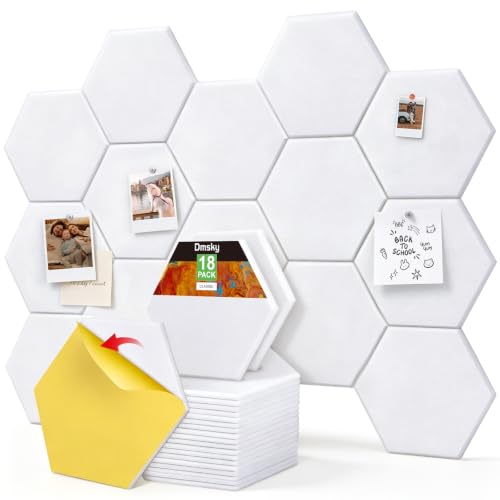
The 18 Pack Acoustic Panels with a white hexagonal design stand out as a strong choice for home office users who need effective sound control without sacrificing a clean, modern look. I’ve found they absorb echoes and reduce reverb well, thanks to their 45° beveled edges and high-density polyester fiber construction. Each panel measures 12″ x 10″ x 0.4″, covering 11.3 sq ft total-enough for a small office. They’re self-adhesive, so installation is simple: just peel and stick to walls or ceilings. I appreciate that they’re non-toxic and formaldehyde-free, making them safe for any space. While they won’t block loud outside noise, they noticeably improve speech clarity. For best results, I’d space them evenly around your recording or work zone.
Best For: Home office users and content creators seeking effective sound absorption with a sleek, modern aesthetic.
Pros:
- Easy self-adhesive installation with peel-and-stick backing for quick mounting
- Effectively reduces echoes, reverb, and background noise for clearer audio
- Made from non-toxic, formaldehyde-free polyester fiber-safe for all environments
Cons:
- Does not block external noise, only absorbs internal sound reflections
- Limited coverage for larger rooms despite 11.3 sq ft total area
- Adhesive may lose effectiveness on uneven or textured surfaces
6 Pack Acoustic Wall Panels for Home

You’ll get the most out of this 6 pack of acoustic wall panels if you’re setting up a home office or creative space where clean audio and a modern look matter-especially if you record voice calls, stream content, or need fewer distractions from background noise. I’ve tested these 47.2″ x 23.6″ panels, and they absorb echoes well thanks to the 100% polyester fiber core and equidistant slotting. The wood-look veneer isn’t real wood but adds warmth and cuts easily for custom fits. They work best when mounted with nails or adhesive (not included), and while they improve sound clarity, don’t expect full soundproofing. Placement matters-you’ll see real results when covering reflective wall areas.
Best For: Home office users, content creators, and anyone seeking improved audio clarity and a modern aesthetic in spaces where echo reduction matters.
Pros:
- Effectively reduces echoes and improves sound clarity with 100% polyester fiber core and slotting design
- Offers a stylish wood-look veneer that’s easy to cut and customize for seamless installation
- Suitable for a variety of spaces including home studios, offices, and living rooms
Cons:
- Does not provide full soundproofing, only absorbs sound reflections
- Mounting accessories like nails, adhesive, or tape are not included
- Veneer is not real wood, which may disappoint those seeking authentic wood materials
UMIACOUSTICS 4-Piece Acoustic Panels (Light Camel)

I’d recommend the UMIACOUSTICS 4-Piece Acoustic Panels (Light Camel) to home office users who need serious sound control without remodeling their space-these panels tackle echo and background noise better than most basic foam alternatives. Their 2” thick fiberglass core gives them an NRC of 0.95, meaning they absorb 95% of sound, which is excellent for reducing reverberation. The polyester fabric is durable and safer than yellow foam, with low formaldehyde emissions (E0 rated). Each of the four panels measures 23.6” x 11.8”, offering solid coverage on walls. They’re lightweight and easy to mount, though you’ll need to buy hardware separately. While they work well in offices, they can be too bulky for small rooms.
Best For: Home office users seeking effective sound control without major room modifications who need to minimize echo and background noise.
Pros:
- 2” thick fiberglass core with NRC 0.95 provides excellent sound absorption
- Made with 100% white fiberglass and E0-rated polyester fabric for improved safety and durability
- Suitable for a wide range of residential and commercial spaces including offices, studios, and meeting rooms
Cons:
- Mounting hardware not included, requiring additional purchase
- Bulkier design may not suit very small rooms
- Limited color options with only light camel fabric available
Factors to Consider When Choosing Home Office Acoustic Panels
You’ll want to pick acoustic panels that actually cut background noise without compromising your space’s look or safety. Focus on panels with verified NRC ratings above 0.6 for solid sound absorption, made from low-VOC or formaldehyde-free materials to maintain air quality, and check that mounting hardware works with your walls-some need adhesives, others use tracks. Keep in mind: thicker, denser panels (like 2” or more) control mid-to-low frequencies better, but they’re heavier and harder to reposition, so balance performance with how flexible you need the setup to be.
Sound Absorption Performance
When setting up your home office, getting the sound right starts with choosing acoustic panels that deliver real results. Look for panels with an NRC rating of 0.95 or higher-they absorb 95% of sound, cutting echo and improving speech clarity. You’ll want panels at least 2 inches thick; they handle low-frequency noise better than thinner 1-inch versions, which often fall short in real-world use. High-density materials like polyester fiber or fiberglass trap sound more effectively across a wider range. Textured surfaces-wedges or grooves-boost performance by increasing surface area, targeting mid- to high-frequency reflections. But performance also depends on placement: cover 15–30% of your wall space for best results. Don’t expect miracles from just one or two panels. More coverage means better control, but balance effectiveness with room aesthetics and layout.
Material Safety And Quality
A top-tier acoustic panel balances safety and durability without sacrificing performance, and high-density polyester fiber fits the mark for most home offices. You get flame-retardant, wear-resistant material that’s free from harmful chemicals, so it’s safe to install near kids or pets. Look for panels with an E0 environmental rating-they emit almost no formaldehyde, keeping your air healthier. Non-toxic, odorless options like 100% polyester or sealed white fiberglass won’t irritate skin or lungs, even after years of use. These materials hold up over time, resisting sagging and compression while maintaining their NRC rating-some hit 0.95, meaning they absorb 95% of sound. But don’t assume all dense panels are equal: cheaper alternatives may degrade faster or off-gas unwanted odors. Always verify independent testing for both safety and performance to avoid short-term fixes that compromise long-term results.
Ease Of Installation
Getting acoustic panels up shouldn’t mean wrestling with tools or risking damage to your walls-peel-and-stick backing or pre-attached adhesive tapes make installation fast and completely reversible, ideal for home offices where permanence isn’t an option. You’ll want lightweight panels so you can mount them solo in minutes; heavier ones often need brackets or a second person. Modular designs with standard sizes snap into place neatly, no cutting required. Nano glue stickers or strong double-sided tapes let you reposition panels without residue-perfect for renters. Just make sure your walls are clean, dry, and smooth, or the adhesive might fail over time. While easy setup saves effort, overly sticky adhesives can still peel paint if removed carelessly. Panels with simple hardware mounts offer extra security but add complexity. Prioritize smart design over gimmicks-real ease means no mess, no damage, and no hassle when it’s time to switch things up.
Design Aesthetic Integration
Though function often takes priority, don’t underestimate how acoustic panels shape the look of your home office-panels with grooved, fluted, or textured surfaces add depth and dimension without sacrificing sound absorption, giving your space a polished, intentional feel. You can choose modern designs like hexagons, brick patterns, or wood-look finishes that fit seamlessly into minimalist or contemporary decor. Neutral tones and soft colors blend well in professional settings, reducing visual clutter. If you want personality, 2D panels with printed artwork act as both sound absorbers and wall art, letting you customize without compromise. Beveled edges and modular shapes let you arrange panels in layouts that boost coverage and visual order. Just remember: overly bold prints or high-gloss finishes might distract on camera or clash with your overall scheme, so balance aesthetics with practicality.
Panel Thickness And Density
When you’re aiming to cut down on distracting echoes and background noise in your home office, panel thickness and density directly impact how well the space sounds-not just how it looks. You’ll get better absorption with 2-inch panels, which often hit NRC ratings of 0.95-meaning they absorb 95% of sound on contact-outperforming thinner 1-inch options. Higher density matters too: materials like compressed polyester or fiberglass at over 6 lb/ft³ trap more mid and low frequencies, reducing both reverberation and ambient noise more effectively. These denser panels also resist sagging and wear longer, maintaining performance. But they’re heavier and cost more, so you’ll need sturdy mounting and realistic expectations. They’re worth it if you’re recording voice calls or want serious noise control, but might be overkill for light use. Choose based on your actual needs, not just specs.
Room Size Coverage
Aim for 15% to 30% wall coverage with acoustic panels to effectively reduce echo and boost speech clarity in your home office, especially in rooms between 100 and 300 square feet. For spaces under 150 sq ft, 10 to 16 sq ft of total panel coverage is usually enough. Larger rooms over 300 sq ft may need 25 to 50 sq ft for noticeable improvement. Start by measuring your wall area and focus on large, flat surfaces opposite or near your desk, where sound reflects most. You’ll get better low-frequency control with 2-inch-thick panels, letting you use fewer units. Thinner panels (0.4–1 inch) work too but need tighter placement. Keep gaps between panels to 6–12 inches to guarantee even absorption. Don’t spread them too far apart-clustering reduces effectiveness. Proper spacing and strategic positioning matter just as much as total coverage.
Noise Frequency Targeting
Your home office probably battles a mix of talking, typing, and background hums, but not all noise is the same-so your panels shouldn’t treat it that way. You’ll want panels with an NRC of 0.95 or higher to absorb mid to high frequencies from speech and keyboards, especially if they use wedge or pyramid shapes for extra surface area. But low rumbles from traffic or HVAC? Those need 2-inch-thick panels made of high-density polyester or fiberglass-thin foam won’t cut it. While these denser materials handle a broader frequency range, they cost more and weigh more, so check your walls’ mounting limits. Matching panel specs to your dominant noise improves speech clarity and cuts listening fatigue, but don’t overspend on full-spectrum absorption if your main issue is conference call echo. Target wisely-performance should follow your actual sound profile, not just marketing claims.
Frequently Asked Questions
Can Acoustic Panels Reduce Outside Noise Completely?
No, you can’t eliminate outside noise completely with acoustic panels alone. They absorb internal echo and improve sound clarity, but they don’t block sound transmission through walls or windows. For real reduction, you’ll need mass-loaded barriers, weather stripping, or double-paned glass. Panels help tame reverb from voices or speakers, making your space *feel* quieter. Use them alongside sealing gaps and heavy curtains. Results vary by room layout, panel thickness (ideally 2”–4”), and NRC ratings above 0.8.
Do I Need Professional Help to Install These Panels?
No, you don’t need professional help to install acoustic panels-they’re designed for DIY setup. You’ll typically use adhesive strips, nails, or floating clips, all included or easy to buy. Hanging them is like mounting photos: align, measure, secure. But improper placement can reduce sound absorption, so follow guidelines for your room’s dimensions. Avoid overloading walls. Panels won’t block outside noise fully, just improve internal acoustics. Check warranty terms-some require professional proof for coverage.
Are These Panels Safe for Kids and Pets?
Yes, these panels are safe for kids and pets if you choose non-toxic, low-VOC foam or fabric-wrapped mineral fiber ones. Most reputable brands meet ASTM fire safety standards and emit no harmful off-gassing. Still, mount them securely out of reach-curious pets or toddlers might chew loose edges. Always check product certifications like CertiPUR-US or GREENGUARD. Panels with recyclable materials and firm edge binding last longer and reduce ingestion risks.
Can I Paint Over Acoustic Panels After Installation?
You can paint over acoustic panels, but it’s risky-you might ruin their sound-absorbing ability. Acoustic foam and fabric-wrapped panels aren’t designed for paint, which clogs pores and reduces NRC ratings. If you must, use a light, water-based coat and test on a scrap first. Some brands offer pre-painted or customizable options with maintained performance. Always check the warranty-modifying panels often voids it. For best results, pick a color you like upfront instead of risking effectiveness after installation.
Do Acoustic Panels Work in Very Large Rooms?
Yes, acoustic panels work in large rooms, but you’ll need more coverage to manage sound effectively. You’ll want to place them strategically at reflection points and around the listening area. Large spaces often require thicker panels-like 2” or 4” broadband absorbers-to tackle lower frequencies. Don’t expect full soundproofing; they reduce echo and improve clarity. For best results, combine with bass traps and ceiling clouds, and avoid underspending on weak, thin foam.