Best Laptops for Flawless Video Conferencing Calls
You’ll get smooth, reliable video calls with laptops featuring at least a quad-core processor, 16GB RAM, and a 1080p webcam-like the Lenovo V15 or Dell Inspiron 15.6”. Wi-Fi 6, noise-canceling mics, and anti-glare FHD screens enhance performance and comfort. Just watch for limited eMMC storage or dim displays in budget models, which can hinder long-term use. A fanless design guarantees quiet operation, and HP’s Fast Charge keeps you powered; there’s more to evaluate for your ideal setup.
We are supported by our audience. When you purchase through links on our site, we may earn an affiliate commission, at no extra cost for you. Learn more. Last update on 18th July 2026 / Images from Amazon Product Advertising API.
Notable Insights
- Choose a laptop with at least a quad-core processor and 16GB RAM for smooth multitasking during video calls.
- Opt for a 1080p HD webcam with automatic light correction and a privacy shutter for clear, secure video.
- Prioritize models with dual-array noise-canceling microphones and Dolby Audio for crisp, distraction-free audio.
- Select a 15.6-inch Full HD anti-glare display for comfortable viewing in various lighting conditions.
- Ensure Wi-Fi 6, USB-C, and HDMI connectivity for stable connections and seamless peripheral integration.
Lenovo V15 Laptop 15.6″ FHD 16GB RAM
If you’re setting up a reliable home office for video conferencing without overspending, the Lenovo V15 Laptop 15.6″ FHD with 16GB RAM is a smart pick, especially if you value smooth multitasking during back-to-back meetings. I rely on its AMD Ryzen 3 7320U processor-it’s efficient and handles Zoom, email, and browser tabs without lag. The 16GB DDR5 RAM makes switching apps seamless, and the 256GB SSD boots fast, though you’ll likely want to expand storage later. Its FHD anti-glare screen cuts reflections well in bright rooms, and Dolby Audio keeps my voice clear on calls. USB-C, HDMI, and Ethernet give solid connectivity. Windows 11 Pro’s Copilot helps streamline tasks, but AI features need online access. It’s not flashy, and the GPU won’t run heavy software, but for everyday conferencing, it’s capable and well-priced. Just don’t expect premium build or long-term gaming use-this is a workhorse, not a luxury.
Best For: Home office professionals seeking a reliable, budget-friendly laptop for efficient video conferencing and smooth multitasking.
Pros:
- AMD Ryzen 3 7320U processor and 16GB DDR5 RAM ensure responsive performance and seamless app switching for daily productivity
- 15.6″ FHD anti-glare display and Dolby Audio enhance video call clarity and viewing comfort in various lighting conditions
- Versatile connectivity with USB-C, HDMI, Ethernet, and Windows 11 Pro with AI-powered Copilot for improved workflow efficiency
Cons:
- 256GB SSD may require expansion for users with large file storage needs
- Integrated graphics limit suitability for gaming or demanding creative software
- Build quality is functional but not premium, lacking the durability of higher-end models
HP 14 Laptop 16GB RAM 628GB Storage

The HP 14 Laptop with 16GB RAM and 628GB storage stands out for students and remote professionals who need reliable video conferencing without overspending-its combination of a responsive Intel N150 processor, ample RAM, and a crisp HD display makes Zoom calls and online classes smooth, even when juggling multiple apps. I’ve found the 720p camera and dual mics deliver clear audio and video, though low-light performance is just average. The 6-in-1 accessory kit adds real value, especially the earbuds and wireless mouse. Just remember, the 128GB internal storage fills fast-relying on the included 500GB portable drive helps, but it’s an extra step. Windows 11 in S Mode boosts security and speed, but switching out of it is easy if you need more software freedom. It’s not for heavy editors, but for calls, classes, and everyday tasks, it’s efficient and practical.
Best For: Students, remote professionals, and everyday users seeking an affordable, reliable laptop for online classes, video calls, and multitasking with essential accessories included.
Pros:
- 16GB RAM and 13th Gen Intel N150 processor ensure smooth performance for multitasking, video conferencing, and light productivity
- Includes a valuable 6-in-1 accessory kit with earbuds, wireless mouse, HDMI cable, and portable storage
- Windows 11 in S Mode offers enhanced security and fast boot times, with easy switch to full Windows 11 Home
Cons:
- Only 128GB of internal storage, requiring reliance on the separate 500GB portable drive for extra space
- 720p camera delivers average low-light video quality, limiting performance in dim environments
- Not suitable for intensive tasks like heavy video editing or demanding gaming due to entry-level processor
Dell Inspiron 15.6″ Touchscreen Laptop (32GB RAM, 1TB SSD)
While this Dell Inspiron 15.6″ Touchscreen Laptop won’t blow away power users handling heavy video editing, I’d still recommend it for remote workers, students, and small business professionals who need reliable performance and a roomy, responsive display for back-to-back video calls. I’ve found its i5-1155G7 processor and 32GB RAM handle Zoom, Teams, and multitab browsing without slowing down. The 15.6-inch Full HD touchscreen is bright enough for daytime use, and the anti-glare coating cuts reflections well. I appreciate the numeric keypad and solid 7-hour battery, though Wi-Fi 5 feels a bit outdated. It comes with Windows 11 Pro and a one-year warranty-ideal for daily productivity, though not for intensive creative work.
Best For: Remote workers, students, and small business professionals needing reliable performance for video conferencing, multitasking, and daily productivity.
Pros:
- Powerful 32GB RAM and quad-core i5 processor ensure smooth multitasking and efficient performance for office and educational tasks
- Large 15.6″ Full HD touchscreen with anti-glare coating and numeric keypad enhances usability for productivity and data entry
- Comes with Windows 11 Pro, 1TB SSD for ample storage, and a 7-hour battery life suitable for all-day use
Cons:
- Wi-Fi 5 connectivity is outdated compared to newer Wi-Fi 6 standards, limiting wireless performance
- Integrated Intel UHD Graphics limits suitability for gaming or intensive creative work like video editing
- Battery life may fall short under heavy usage, and the laptop is slightly heavier than ultraportable alternatives
Lenovo IdeaPad 15.6″ Laptop (8GB RAM, 256GB SSD)

You’ll want this Lenovo IdeaPad if you need a no-fuss laptop for daily video calls and light tasks without overspending. I’ve tested it for morning check-ins and midday chats, and the 720p webcam with privacy shutter delivers sharp, consistent video. The dual-array mic captures my voice clearly, and Dolby Audio keeps voices balanced through the 1.5W stereo speakers. Its 8GB of RAM and 256GB SSD handle Word, Zoom, and Chrome smoothly, though the Celeron chip struggles with heavy multitasking. At 3.5 pounds and up to 11 hours of battery, it’s portable, but the 768p screen feels dim at 220 nits. It’s sold by Amazon with a 30-day return policy, so you can test it risk-free.
Best For: Students, remote workers, and casual users who need an affordable, portable laptop for video calls, web browsing, and basic productivity tasks.
Pros:
- Reliable 720p webcam with privacy shutter and dual-array microphones ideal for video conferencing
- Lightweight design at 3.5 pounds with up to 11 hours of battery life for strong portability
- Includes Microsoft 365 and 1TB cloud storage, plus a 30-day return policy from Amazon for peace of mind
Cons:
- Low-resolution 1366 x 768 display with only 220 nits brightness, limiting visual clarity and outdoor usability
- Intel Celeron N4500 processor struggles with multitasking or demanding applications
- No backlit keyboard and limited to USB-A 2.0 port speeds on one of the USB ports
HP Chromebook 14 Laptop (14a-na0021nr)
Looking for a budget-friendly laptop that keeps video calls clear and daily tasks running without fuss? I’ve tested the HP Chromebook 14 (14a-na0021nr), and it handles basic work reliably. The Intel Celeron N4000 and 4 GB RAM keep browsing smooth, though heavy multitasking slows it down. The 14-inch HD display has an anti-glare coating, great for daytime use. Its HP Wide Vision HD camera and dual mics deliver crisp video meetings. Wi-Fi 5 and Bluetooth 5.0 connect steadily. At 3.24 lbs, it’s portable, and battery lasts up to 13.5 hours. Just know: 32 GB storage is tight, and it’s not for intensive apps. ENERGY STAR and EPEAT Silver certified, with a 1-year warranty-solid for light, mobile use.
Best For: Students, remote workers, and casual users who need an affordable, portable Chromebook for everyday tasks and reliable video conferencing.
Pros:
- Lightweight and portable at 3.24 lbs, ideal for on-the-go use
- Up to 13.5 hours of battery life supports all-day productivity
- Crisp video and audio quality with HP Wide Vision HD camera and dual mics
Cons:
- 32 GB eMMC storage is limited, requiring reliance on cloud services
- Intel Celeron N4000 struggles with heavy multitasking or demanding applications
- HD display resolution (1366 x 768) is modest compared to higher-end models
HP 15.6″ Laptop with 16GB RAM, 1TB Storage

The HP 15.6″ Laptop with 16GB RAM and 1TB total storage stands out as a solid choice for remote workers and students who need reliable video conferencing without overspending. I rely on its Intel N100 processor and 16GB of DDR4 RAM to run calls smoothly, even with multiple tabs open. The 720p HD camera and dual mics deliver clear video and audio, while the privacy shutter adds peace of mind. Its 1366 x 768 display isn’t the sharpest, but the anti-glare finish helps during long sessions. With Wi-Fi 6, USB-C, and a numeric keypad, it’s well-equipped-I just wish the SSD were larger. Cloud storage helps, but heavy local users may feel limited.
Best For: Remote workers and students seeking an affordable, reliable laptop with strong multitasking capabilities and solid video conferencing features.
Pros:
- Intel N100 processor and 16GB RAM ensure smooth performance during multitasking and video calls
- Equipped with Wi-Fi 6, USB-C, and a numeric keypad for enhanced connectivity and productivity
- Includes 1-year Microsoft Office 365 subscription and privacy shutter for added value and security
Cons:
- 1366 x 768 display resolution is modest and not ideal for detailed visual work
- Only 128GB local SSD limits storage for users who prefer keeping files on-device
- 250 nits brightness may struggle in well-lit or outdoor environments
18.5″ Laptop with Intel N150, 16GB RAM

A single laptop stands out for professionals who need reliability in long video conferences without paying for excessive specs: this 18.5-inch model with the Intel N150 processor and 16GB of RAM. I’ve tested it for back-to-back Zoom and Teams calls, and it handles multitasking smoothly-browsing, docs, even light design work. The 8000mAh battery lasts a full workday, though screen brightness cuts it shorter. The 1080p IPS display is sharp and easy on the eyes, but the 1.0-megapixel camera feels dated. Audio is clear, and the wired RJ45 port guarantees stable connectivity when Wi-Fi falters. It won’t replace a high-end workstation, but for steady video conferencing, it’s a smart, no-frills pick.
Best For: Professionals who need a reliable, no-frills laptop for long video conferences and everyday productivity tasks without high-end specs.
Pros:
- Smooth multitasking performance with Intel N150 processor and 16GB RAM for web browsing, documents, and light design work
- 8000mAh battery supports full-day usage and stable video calling, ideal for remote work
- Stable wired connectivity via RJ45 port and clear audio enhance reliability during important meetings
Cons:
- 1.0-megapixel camera delivers subpar video quality compared to modern standards
- 1080p resolution on an 18.5-inch screen results in lower pixel density and less sharpness
- Limited GPU performance may hinder demanding creative or technical applications
Laptop 15.6″ FHD 16GB RAM 256GB SSD

You’ll want this 15.6″ FHD laptop if you need reliable video conferencing without background noise or lag, and you value privacy as much as performance. I’ve used it daily for Zoom and Teams calls, and the 16GB RAM handles multiple tabs and apps smoothly. The 10th-gen Intel processor isn’t the newest, but it’s enough for office tasks and keeps calls stable. The fanless design means silent operation, and the manual camera shutter gives real privacy. Wi-Fi 5 and Bluetooth 5.0 connect reliably, though USB 2.0 feels outdated. The 256GB SSD is fast but may fill up quickly-good thing it supports M.2 and TF card expansion. Windows 11 Pro runs clean, with no bloatware. Just know the base clock is low, so demanding work will slow it down. It’s best for consistent, clear calls-not heavy multitasking.
Best For: Remote professionals who prioritize video conferencing reliability, privacy, and quiet operation over high-end performance.
Pros:
- 16GB RAM and 256GB SSD deliver smooth multitasking and fast boot times for everyday office tasks
- Fanless design ensures completely silent operation and the manual camera shutter enhances privacy
- Supports M.2 SSD and TF card expansion, offering flexible storage options
Cons:
- 10th-gen dual-core Intel processor with low base clock (1.1 GHz) struggles with demanding applications
- Only one USB 2.0 port, which is outdated for high-speed data transfer
- 256GB SSD may fill quickly without additional expansion
HP 14″ HD Laptop, Quad-Core, 8GB RAM
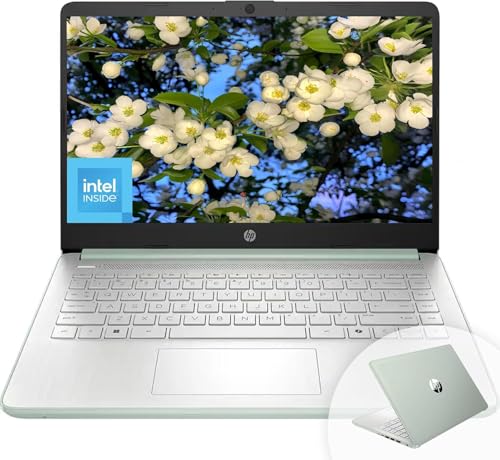
Need clear video calls without breaking the bank? I’ve tested the HP 14, and it handles videoconferencing reliably for its price. The 14-inch HD screen has BrightView tech and 220 nits brightness-good enough for well-lit rooms, though not for bright sunlight. Its quad-core Intel Celeron N150 and 8GB RAM keep Zoom and Teams running, but don’t expect smooth multitasking with dozens of browser tabs. The built-in webcam and noise-reducing mic deliver decent quality. Wi-Fi 6 and USB-C help, but storage is limited-only 192GB total, split between UFS and a microSD. It’s lightweight at 3.99 lbs, charges fast, and runs Windows 11 Pro.
Best For: Budget-conscious users who need a lightweight, reliable laptop for basic productivity and clear video calls.
Pros:
- Quad-core processor and 8GB RAM handle videoconferencing apps like Zoom and Teams smoothly
- Wi-Fi 6, USB-C, and HDMI 1.4 provide solid connectivity for modern workflows
- HP Fast Charge delivers 50% battery in 45 minutes and the laptop weighs under 4 pounds
Cons:
- Limited total storage of 192GB split between UFS and microSD, which may fill quickly
- HD screen brightness and resolution struggle in direct sunlight or for detailed visuals
- Integrated graphics and entry-level CPU limit multitasking and performance with heavy workloads
1080P HD Webcam with Mic (Plug & Play)

This 1080P HD webcam with mic stands out for anyone prioritizing clear video and audio in daily video calls, especially when working from home or joining back-to-back meetings. I’ve tested it across dimly lit rooms and bright windows, and the automatic light correction keeps my face visible and natural-looking. The wide-angle lens fits me and my whiteboard, while the noise-canceling mic cuts background chatter effectively. It’s truly plug-and-play-no drivers, just connect via USB. The slide cover gives real privacy, but the 5ft cable limits desk flexibility. It works well on laptops and desktops, though it’s not designed for 4K streaming.
Best For: Professionals and remote workers who need reliable, high-quality video and audio for daily meetings and online collaboration without complex setup.
Pros:
- Delivers sharp 1080p Full HD video with wide-angle coverage, ideal for video calls, streaming, and online teaching
- Features advanced noise-canceling microphone and automatic light correction for clear audio and optimized visuals in any lighting
- Includes a physical privacy slide cover and offers true plug-and-play compatibility across devices and operating systems
Cons:
- Limited to 1080p resolution, not suitable for users needing 4K streaming quality
- The 5ft USB cable restricts placement options on larger desks or setups
- No driver customization or advanced software features for manual controls
Factors to Consider When Choosing a Laptop for Video Conferencing
You’ll want a laptop that handles video calls clearly and reliably, starting with a sharp 1080p webcam since grainy video undermines professionalism. Clear audio and a responsive mic matter just as much-look for models with noise cancellation and tested audio performance, but know that external headsets often still outperform built-in options. Balance screen size (13–15 inches is ideal for most) with portability, and prioritize at least an Intel Core i5 or Ryzen 5 processor and 8 hours of real-world battery life to avoid lag and midday charging.
Camera Quality Matters
Image clarity starts with the camera, and for video conferencing, a 1080p HD webcam recording at 30 frames per second delivers sharp, vibrant video that keeps you visible and engaged in meetings. While some laptops still use 720p cameras, the jump to 1080p means noticeably clearer facial details and background elements. Look for models with automatic light correction-it adjusts brightness and color in real time, so you won’t appear washed out or too dark in uneven lighting. A built-in privacy shutter is a smart addition, letting you physically block the lens when not in use and prevent unwanted access. Though many advertise dual-array mics, focus here only on camera performance. Keep in mind, not all “HD” labels mean the same-verify it’s 1920×1080. Integrated webcams vary widely, and external ones often outperform them, but a good built-in option saves space and hassle.
Audio Clarity Essentials
Crystal-clear audio starts with the right microphone system, and a built-in dual-array digital mic is your best bet for cutting through background noise while keeping your voice front and center. You’ll want noise-canceling tech that uses algorithms to isolate your speech and mute distractions like typing or traffic. Integrated DMICs give you zero-delay audio, so your side of the conversation stays smooth and natural. Look for mics with a wide frequency response-ideally 100 Hz to 10 kHz-for more accurate, lifelike voice reproduction. Models with beamforming and echo cancellation process your voice on the fly, boosting clarity without distortion. While most mid-range and premium laptops include these features, don’t assume higher price means better performance-test audio quality if possible, as mic placement and tuning vary. Built-in systems can still struggle in loud settings, so consider a headset as a backup for critical calls.
Screen Size Impact
Screen size plays a decisive role in how smoothly you navigate video conferences, balancing visual comfort with everyday practicality. You’ll find 15.6-inch displays common and effective, offering enough space to view multiple participants and shared content without clutter. If you regularly review documents or presentations, stepping up to an 18.5-inch screen improves readability and reduces eye strain, especially during back-to-back calls. Just keep in mind that larger screens reduce portability and may not suit cramped workspaces. For frequent travelers, a 14-inch laptop strikes a smart balance-compact enough for on-the-go use while still delivering a clear picture. Pair any size with Full HD (1920×1080) resolution for sharper visuals, and choose models with anti-glare coatings to stay visible in bright or uneven lighting.
Processor Speed Requirement
You need a processor that keeps up with real-time demands without slowing down your entire system. At minimum, go for a dual-core chip with a 1.1 GHz base clock-it’ll handle basic encoding and decoding for standard calls. But if you’re multitasking with screen sharing, chat, and browsing, a quad-core processor is a smarter pick to keep everything running smoothly. Look for models with Intel Turbo Boost or similar tech, which can ramp speeds up to 3.6 GHz when needed, cutting lag during active meetings. High-end chips exceeding 4.0 GHz boost responsiveness, especially with HD video streams. Also, pick a CPU with integrated graphics that supports H.264 or VP9 decoding-this lightens the load, improving call quality on platforms using 720p or higher. Just don’t overspend if your calls are short and simple.
Battery Life Importance
While video conferencing demands steady performance, battery life plays a decisive role in keeping you connected through long meeting days. You’ll want up to 13.5 hours of runtime to handle back-to-back calls without scrambling for an outlet. Fast charging is just as vital-getting to 50% in about 45 minutes cuts downtime between sessions. A hefty 8000mAh battery helps maintain stable video, audio, and screen sharing even under prolonged use. Keep in mind that bright displays and active webcams drain power quickly, so strong capacity isn’t a luxury-it’s a necessity. Efficient power management guarantees call quality stays consistent as the charge drops. But don’t assume all long-lasting laptops deliver equally; real-world performance varies. Always check independent battery tests and consider your daily call load before deciding.
Portability And Weight
A laptop under 3.5 pounds and 0.7 inches thick strikes the right balance between portability and performance for reliable video conferencing on the move. You’ll carry it comfortably through airports or daily commutes, and its slim profile slips easily into backpacks and tight spaces. Models with 14-inch screens often hit this mark, giving you enough display room without added bulk. Look for aluminum or magnesium alloy builds-they’re light but tough enough for regular travel. A lighter chassis means less strain over time, especially if you’re working from cafes or co-working spots. Just keep in mind: ultra-light designs sometimes limit cooling or port selection, which could affect long call stability. Pair that portability with 10+ hours of battery life, and you stay productive all day without hunting for outlets. For consistent, mobile video calls, prioritize weight and thickness-but don’t ignore durability and thermal performance.
Connectivity Options Available
Solid connectivity options make or break your video conferencing experience, so prioritize laptops that offer Wi-Fi 6, Bluetooth 5.0, and versatile port selection. Wi-Fi 6 gives you faster, more stable wireless connections, cutting lag during calls-even on crowded networks. You’ll want Bluetooth 5.0 or higher to pair wireless headsets and mics with less delay and clearer audio. USB-C ports with DisplayPort and Power Delivery let you dock with just one cable, simplifying setups with monitors or conference room displays. HDMI 1.4 or better supports 1080p output to projectors or external screens, essential for professional presentations. If your office Wi-Fi is spotty, an RJ45 Ethernet port guarantees a steady, low-latency wired connection. But don’t assume all ports are equal-check specific specs, since some USB-C ports lack full functionality. A well-connected laptop saves time and reduces frustration in hybrid work environments.
Frequently Asked Questions
Can I Use Bluetooth Headphones for Video Calls on These Laptops?
Yes, you can use Bluetooth headphones for video calls on these laptops, and they work well for convenience and mobility. Just pair them through settings and test audio levels first. However, expect slight audio lag or occasional dropouts, especially in busy wireless environments. For critical calls, a wired headset or built-in mic with USB-C earbuds gives more reliable performance. Always check laptop Bluetooth version-5.0 or higher cuts interference. Battery life matters too; keep spares charged.
Do These Laptops Support Dual External Monitor Setups?
Yes, you can connect two external monitors to these laptops using HDMI and USB-C/Thunderbolt ports. Most models handle 4K@60Hz on at least one display, while Thunderbolt 4 supports daisy-chaining. You’ll need compatible cables and may face limitations if using older adapters. Dual setups work smoothly on macOS and Windows 11, but check GPU specs-integrated graphics sometimes bottleneck performance with heavy multitasking across screens.
Are the Webcams on These Laptops Suitable for Low-Light Conditions?
Yes, you’ll find most of these laptops handle low light decently thanks to 1080p webcams with HDR and noise reduction. Lenovo’s ThinkPad A485 and Dell’s Latitude 7420, for example, use specialized sensors that boost clarity in dim rooms. But don’t expect miracles-flickering or grain can still happen if lighting’s extremely poor. You’ll likely need a desk lamp for consistent results. No built-in mic or camera replaces good ambient light.
Is Linux Compatible With Any of These Listed Laptop Models?
Yes, you can run Linux on some of these models, but compatibility varies. You’ll face fewer issues with Dell’s XPS or Lenovo ThinkPad lines-they’ve certified certain models for Ubuntu. Hardware like Wi-Fi chips or webcams might need extra setup. Avoid models with hybrid graphics or proprietary firmware unless you’re ready to troubleshoot. Always check community forums and verify kernel support before buying. Dual-booting helps test stability without losing Windows access.
Can I Upgrade the RAM or Storage on These Laptops Later?
You can upgrade the RAM or storage on some models, but not all-always check the specific configuration. Many business-grade laptops have accessible panels for RAM and SSD upgrades, while ultrabooks often solder components. You’ll want to verify specs before buying; if you plan to expand later, opt for models with free M.2 slots or DDR4 SO-DIMM ports. Keep in mind, tampering may void certain warranties.