Best Printers with the Lowest Ink Costs for Home and Office
You’ll save the most on ink over time with refillable tank printers like the Canon MegaTank G3270 or HP Smart Tank 5000, which cut black printing costs to just $0.0015 per page and include thousands of pages of ink upfront. These models deliver long-term value, especially for high-volume printing, but require a higher initial investment and more desk space. Keep in mind HP’s reliance on HP+ and blocked third-party ink. You’ll want to weigh those limits against the savings. There’s more to evaluate about ongoing efficiency and feature trade-offs.
We are supported by our audience. When you purchase through links on our site, we may earn an affiliate commission, at no extra cost for you. Learn more. Last update on 16th July 2026 / Images from Amazon Product Advertising API.
Notable Insights
- Refillable ink tank printers like Canon MegaTank and HP Smart Tank reduce costs to as low as $0.0015 per black page.
- Printers with high-yield ink systems can save up to $1,000 over cartridge-based models over time.
- Canon and HP tank models include enough ink for up to 6,000–7,700 pages, covering up to two years of printing.
- Avoid cartridge-dependent models; HP+ and similar programs block third-party inks, raising long-term costs.
- Look for mess-free refill systems with color-coded bottles and sealed tanks to minimize waste and errors.
HP DeskJet 2827e Wireless All-in-One Printer
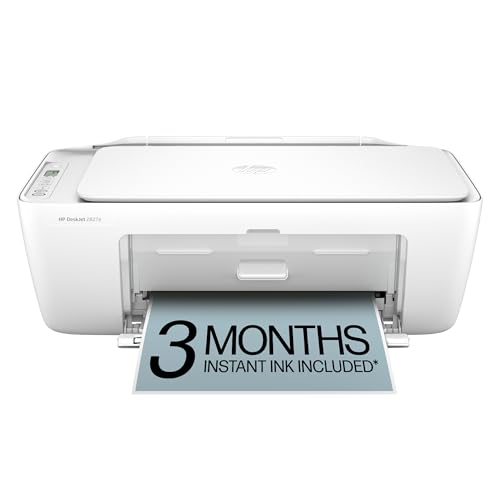
If you’re a home user focused on everyday printing without burning through ink, the HP DeskJet 2827e strikes a smart balance-especially if you value low ongoing costs and space-saving design. I’ve found it handles to-do lists, letters, and recipes cleanly, with print speeds up to 7.5 ppm black and 5.5 ppm color. Its 60-sheet tray and Icon LCD make operation simple, while wireless printing via the HP app works reliably. I appreciate the automatic Wi-Fi fixes and AI formatting that cuts clutter from web prints. It uses up to 60% recycled plastic and meets Energy Star standards, which matters to me. Just know: HP+ enrollment includes three free Instant Ink months, but it locks you into HP-only cartridges-firmware blocks third-party ones-so ongoing costs depend heavily on that subscription.
Best For: Home users who want a compact, reliable all-in-one printer with low running costs and eco-friendly design, especially those comfortable enrolling in HP+ for ink savings.
Pros:
- Space-saving design with full functionality including printing, scanning, copying, and faxing
- Reliable wireless printing with automatic Wi-Fi diagnostics and AI-powered formatting for clean web prints
- Eco-conscious build with up to 60% recycled plastic and Energy Star/EPEAT compliance
Cons:
- Requires HP+ enrollment with mandatory Instant Ink subscription after trial, locking users into HP cartridges
- Firmware blocks third-party ink cartridges, limiting cost-saving alternatives
- Small 60-sheet input tray may require frequent refilling for larger print jobs
Brother Work Smart 1360 Wireless Printer

The Brother Work Smart MFC-J1360DW stands out as a strong pick for home and home office users who need reliable, all-in-one functionality without overspending on ink over time. I’ve found its automatic duplex printing and 150-sheet tray boost efficiency, while the 20-sheet ADF simplifies scanning multi-page documents. It prints up to 16 ppm black or 9 ppm color-solid for the class. The 1.8-inch display and Brother Mobile Connect app make wireless printing from phones or cloud services like Dropbox easy. I appreciate the ink level monitoring and included Refresh trial for LC501 cartridges. Just note: it lacks fax support, and actual ink costs depend on usage patterns.
Best For: Home and home office users seeking an affordable, efficient all-in-one printer with wireless connectivity and automatic duplex printing.
Pros:
- Automatic duplex printing and 150-sheet paper tray enhance productivity
- Wireless and mobile printing via Brother Mobile Connect app and cloud services
- Includes ink monitoring and Refresh trial subscription for LC501 cartridges
Cons:
- Lacks fax functionality
- Color print speed is relatively slow at 9 ppm
- Ongoing ink costs may add up depending on usage
HP Envy 6155e All-in-One Printer (714L5A)
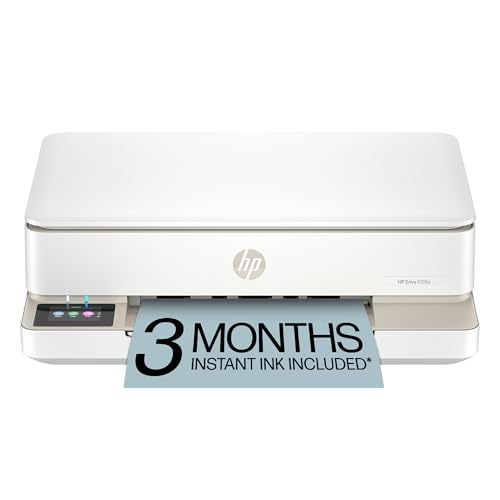
I’ve found the HP Envy 6155e All-in-One Printer (714L5A) works best for home office users who print frequently but want to keep ink costs low through HP Instant Ink-a subscription that delivers cartridges automatically based on usage. It prints, scans, copies, and handles double-sided documents quickly, with speeds up to 10 ppm black and 7 ppm color. The 2.4-inch touchscreen makes navigation smooth, and AI formatting smartly adjusts web pages and emails to fit the page. Dual-band Wi-Fi guarantees stable connections, and remote printing works well via the HP app. I appreciate its 60% recycled plastic build and forest conservation efforts. Just know: HP+ requires a subscription, firmware blocks third-party cartridges, and you’re locked into HP’s ecosystem-so weigh that against the lower per-page cost.
Best For: Home office users who print regularly and want to reduce ink costs with HP Instant Ink’s usage-based subscription model.
Pros:
- Fast print speeds up to 10 ppm black and 7 ppm color with automatic duplex printing
- AI-enabled formatting optimizes web pages and emails for clean, waste-free prints
- Eco-conscious design with 60% recycled plastic and forest conservation support
Cons:
- HP+ subscription required to access full features and discounts
- Firmware blocks use of non-HP ink cartridges, limiting third-party options
- Ongoing reliance on HP’s ecosystem and Instant Ink subscription for best value
Canon PIXMA TR4720 Wireless Printer

You’ll get reliable performance and low ink costs with the Canon PIXMA TR4720 if you need a compact, wireless all-in-one printer for light to moderate home or small office use. I’ve found it handles everyday tasks well, with duplex printing, a 100-sheet tray, and decent 8.8 ppm black print speeds. Its dye and pigment inks deliver sharp text and vibrant photos up to borderless letter size. ENERGY STAR certification keeps power use low, and Alexa integration lets me reorder ink automatically. It’s not fast or built for heavy volume, but with a 1-year warranty and simple setup for smartphones, it’s a practical, space-saving pick for occasional printing, scanning, copying, and faxing.
Best For: Home users and small office workers seeking an affordable, compact, all-in-one wireless printer with easy mobile connectivity and low running costs for light to moderate printing needs.
Pros:
- Reliable 4-in-1 functionality (print, copy, scan, fax) with automatic 2-sided printing and a 100-sheet tray
- ENERGY STAR certified with low power consumption and Alexa integration for convenient ink monitoring and reordering
- Supports borderless photo printing and handles both dye and pigment inks for sharp text and vibrant image quality
Cons:
- Print speeds are modest (8.8 ppm black, 4.4 ipm color), not ideal for high-volume tasks
- Limited to basic media sizes up to letter (8.5 x 11 inches) with no support for larger formats
- Only one USB port and minimal expandability for networked or multi-device environments
Canon MegaTank G3270 Wireless All-in-One Printer

For anyone tired of constantly replacing ink cartridges and watching costs add up, the Canon MegaTank G3270 stands out as a smart long-term pick-especially if you handle frequent printing at home. I’ve found its refillable ink tanks cut costs dramatically, with one set lasting up to two years and supporting 6,000 black or 7,700 color pages. You could save up to $1,000 versus cartridge printers over time. It’s an all-in-one model with wireless printing, scanning, and copying, plus a small LCD for easy control. Just note: it only prints single-sided, which may slow you down if you need duplex often.
Best For: Home users who print frequently and want to save on long-term ink costs without sacrificing print quality or connectivity.
Pros:
- Comes with up to 2 years of ink, supporting 6,000 black and 7,700 color pages for significant cost savings
- Wireless printing, scanning, and copying with intuitive LCD control for convenient home use
- Refillable ink tanks reduce ongoing expenses-potential savings of up to $1,000 compared to cartridge-based printers
Cons:
- Single-sided printing only, which may be inefficient for users needing duplex output
- No automatic document feeder or advanced scanning features for multi-page documents
- Refilling ink requires careful handling to avoid spills and misalignment
HP Smart Tank 5101 All-in-One Printer

The HP Smart Tank 5101 All-in-One Printer stands out as a top pick for budget-conscious home users who print frequently and want to avoid the recurring expense of ink cartridges. I rely on its cartridge-free design, which includes up to two years’ worth of ink-about 6,000 pages in black or color. It handles printing, scanning, copying, and borderless photos, all with convenient wireless and mobile support. HP’s mess-free refill system uses plug-in bottles, so there’s no spilling. Its durable build delivers sharp text and rich colors reliably over time. HP AI helps format web pages and emails cleanly, saving paper. While it’s not built for heavy office duty, it excels in home use.
Best For: Budget-conscious home users who print frequently and want a low-cost, high-volume printing solution with reliable wireless performance.
Pros:
- Includes up to 2 years of ink (6,000 pages) for both black and color, reducing long-term printing costs
- Mess-free refill system with plug-in ink bottles eliminates spills and simplifies maintenance
- HP AI technology optimizes print formatting for web pages and emails, saving paper and improving layout
Cons:
- Not designed for high-duty-cycle office environments or heavy professional use
- Slower print speeds compared to laser printers, especially for large print jobs
- Larger footprint due to built-in ink tank system, which may not suit compact spaces
Canon PIXMA TS4320 Wireless Color Printer
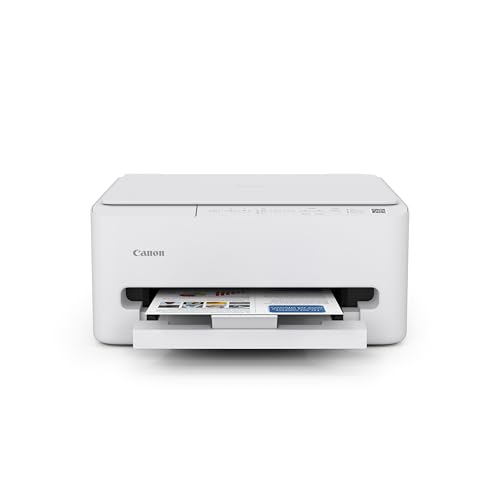
While it won’t handle heavy office volumes, I find the Canon PIXMA TS4320 Wireless Color Printer best suits home users who prioritize compact design and low ongoing ink costs without sacrificing print quality. I appreciate its crisp text and vibrant photo output, thanks to the 2-cartridge hybrid ink system. It’s an all-in-one with scanning, copying, and automatic duplex printing, so it saves paper and space. Dual-band Wi-Fi guarantees stable connections, and I can print easily from my phone using AirPrint or the Canon PRINT App. It’s EPEAT Silver and ENERGY STAR certified, which matters if you’re eco-conscious. Just know: cartridge yields are modest, so frequent printers may want a higher-capacity model. It comes with a 1-year warranty and fits neatly in small workspaces, making it practical for light, everyday use.
Best For: Home users seeking a compact, affordable, and energy-efficient all-in-one printer with solid print quality and wireless convenience for light to moderate printing tasks.
Pros:
- Compact design with full all-in-one functionality, including automatic duplex printing and an integrated scanner
- Reliable dual-band Wi-Fi and seamless mobile printing via Canon PRINT App, AirPrint, and Mopria
- ENERGY STAR and EPEAT Silver certified for eco-friendly, energy-conscious operation
Cons:
- Modest ink cartridge yields, making it less suitable for high-volume printing
- Limited to 8.5” x 11” media size with no automatic document feeder
- 2-cartridge system may lead to color imbalance or frequent replacements with heavy mixed-use printing
HP DeskJet 4255e Wireless All-in-One Printer

I’ve found the HP DeskJet 4255e stands out if you’re a home user who prints light to moderate volumes-think weekly to-do lists, household bills, recipes, or school assignments-without wanting to overspend on ink. It prints up to 8.5 ppm black and 5.5 ppm color, with a 19-second first-page-out time, so it keeps up with small jobs. The 3-month Instant Ink trial via HP+ helps cut long-term costs, but know it only works with HP’s proprietary cartridges, enforced by firmware. Its compact design fits tight spaces, and the 60-sheet tray suits occasional use. I appreciate the ENERGY STAR certification and 60% recycled plastic build. Just note: Wi-Fi is 2.4 GHz only, and duplex printing requires manual flipping.
Best For: Home users with light to moderate printing needs who want an affordable, compact, and eco-friendly all-in-one printer for everyday tasks like documents, recipes, and school work.
Pros:
- Compact design with 60% recycled plastic and ENERGY STAR certification for eco-conscious users
- Includes 3-month Instant Ink trial via HP+ for lower long-term printing costs
- Wireless 2.4 GHz Wi-Fi with HP Smart app support enables easy printing, scanning, and copying from mobile devices
Cons:
- Limited to 2.4 GHz Wi-Fi only, excluding 5 GHz network compatibility
- Manual duplex printing requires flipping pages by hand
- Works only with HP-branded ink cartridges due to firmware restrictions, reducing third-party ink options
HP Smart Tank 5000 All-in-One Printer
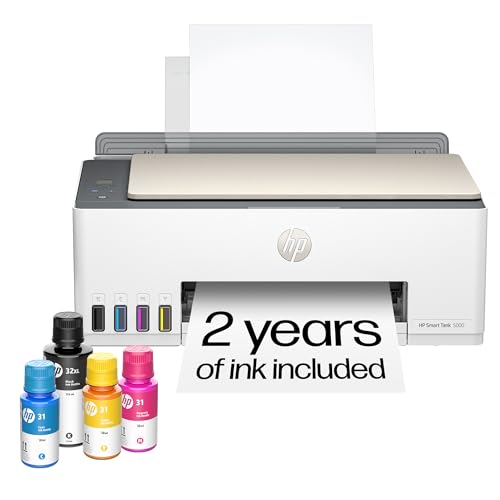
You’re getting serious value with the HP Smart Tank 5000 All-in-One Printer if you print frequently and hate replacing cartridges. I’ve used it for months, and the refillable ink system delivered on its promise-no cartridges, just bottles that last up to 6,000 pages. The print quality stays sharp, with richer colors and precise text, thanks to HP’s AI-enhanced formatting. It handles copying, scanning, and borderless prints effortlessly. The spill-free refill design works well, though you must align bottles carefully. Wireless printing is reliable, but setup can be fussy. It’s bulky, so it needs space. Still, if you want low-cost, high-volume printing with minimal refills, this tank-style printer earns its place.
Best For: Home offices and frequent printers who want low-cost, high-volume output without the hassle of frequent cartridge replacements.
Pros:
- Cartridge-free, refillable ink system provides up to 6,000 pages, reducing long-term printing costs
- Sharp print quality with richer colors and AI-enhanced formatting for precise text and borderless printing
- Mess-free ink refills and seamless wireless, mobile printing with reliable performance
Cons:
- Bulky design requires significant desk space
- Initial wireless setup can be finicky and time-consuming
- Ink bottles must be carefully aligned during refills to avoid errors
Canon PIXMA TS3720 Wireless Printer
The Canon PIXMA TS3720 Wireless Printer is a solid pick for students, home users, and small office workers who need reliable, low-cost printing without sacrificing wireless convenience. I use it daily, and it handles print, copy, and scan tasks smoothly. It prints up to 7.7 black or 4 color pages per minute-slower than lasers but fine for light use. Dual-band Wi-Fi and AirPrint work flawlessly, and setup takes minutes without a computer. The 1.5” screen helps navigation, and ink replacement is mess-free with two separate cartridges. It doesn’t do duplex or high-volume jobs, but for photos up to 5” x 7” and occasional banners, it’s capable. POSTERARTIST Online adds value, and the 1-year warranty covers basic needs.
Best For: Students, home users, and small office workers needing affordable, wireless all-in-one printing for light to moderate tasks.
Pros:
- Easy setup with dual-band Wi-Fi and no computer required
- Supports mobile printing via Canon PRINT app, AirPrint, and Chromebook
- Includes free POSTERARTIST Online for creating banners, posters, and signage
Cons:
- No automatic duplex (double-sided) printing
- Slower print speeds compared to laser printers
- Limited to single-sided scanning and copying
Factors to Consider When Choosing Printer Low Cost Ink
You’ll save serious money over time when you pick a printer with high-yield ink and a design that supports easy refills. Look for models with pigment-based ink and verified cartridge compatibility-cheap knockoffs might fit but often clog heads or void warranties. And while wireless connectivity adds convenience, make sure it doesn’t come at the cost of print cost per page or reliable refill system design.
Ink Type And Yield
While ink type and page yield might seem like minor details, they directly impact how much you’ll spend over time and how well prints hold up. You’ll find dye-based inks deliver vivid color photos but can smudge or fade within months, especially in sunlight. Pigment-based inks, on the other hand, produce sharper text and resist water, making them better for documents you plan to keep. If you print a lot, high-yield refillable ink tank systems are your best bet-some support up to 6,000 pages right out of the box, with full sets lasting over 7,000 color or 6,000 black pages. These systems often cover up to two years of regular printing. Just keep in mind: while tank printers save substantially over time, they usually have a higher upfront cost.
Print Cost Per Page
A smart choice in printers slashes your long-term ink expenses without sacrificing output quality, and one of the sharpest ways to gauge that value is by calculating the cost per page. You divide the cartridge or tank cost by its estimated yield-often $0.01 to $0.20 for black pages, $0.05 to $0.50 for color. Printers with refillable tanks cut costs dramatically, sometimes as low as $0.0015 per black page. High-yield cartridges trim per-page costs by 30% to 50% over standard ones, despite higher upfront pricing. Keep in mind, yields are rated at 5% page coverage under ISO standards, so real-world printing-especially dense text or graphics-can raise costs. Printing full-page images or borderless photos may spike your effective cost per page up to fourfold. Always check independent yield tests and factor in your typical print mix to avoid surprises.
Refill System Design
Refill system design directly affects both cost efficiency and user experience in low-ink-cost printers. You want sealed ink bottles that insert directly into the tank-no squeezing-because they limit spills and keep air out, preserving ink quality. Printers with wide tank openings make refilling faster and reduce overflow risks, which matters during frequent top-ups. Color-coded bottles and ports are essential; they prevent mismatched ink placement, a common error that ruins print quality. Look for bottles with a plug-and-drain mechanism-they empty nearly all the ink, cutting waste. Built-in drip trays or reservoirs catch leaks, keeping your workspace clean. These features add convenience, but remember: mess-free refills only work if you follow the process carefully. Even the best system can fail with rushed handling, so take your time. Clean refills mean reliable prints and lower long-term costs.
Cartridge Compatibility Issues
Though you’re focused on cutting ink costs, your printer’s cartridge compatibility can undercut those savings if you don’t check for restrictive firmware and chip-based authentication. Many models only accept cartridges with proprietary chips, blocking third-party or refilled options even when they fit physically. Some printers push updates that suddenly disable non-OEM cartridges, causing unexpected stoppages. Authentication systems may reject refilled cartridges despite proper ink levels, limiting reuse. Ink monitoring tied to chips often gives false “empty” alerts, forcing premature replacements. Also, unique cartridge designs lock you into specific brands, raising long-term costs. Choose models known for open compatibility or disable chip checks if possible. Still, weigh risks: bypassing safeguards might void warranties or affect print quality. Always verify real-world performance with alternative supplies before committing.
Wireless Connectivity Options
How much do you value printing from your phone or laptop without fumbling with cables? You’ll want a printer with solid wireless connectivity. Dual-band Wi-Fi (2.4GHz and 5GHz) gives you a more stable connection, cuts through interference, and keeps printing smooth, especially on busy networks. Wi-Fi Direct lets you print without a router-handy in a pinch or when network access isn’t available. Most models support mobile apps that pull files directly from cloud storage, email, or web pages, so you skip the computer entirely. Some printers even auto-detect and fix connection issues, reducing downtime. But don’t assume all wireless systems are equal-cheaper models may lag or drop signals. Test reliability during setup, and confirm app compatibility with your devices. Strong wireless features save time, but only if they work consistently where you do.
Monthly Print Volume
If you’re printing more than 300 pages a month, a printer with a bulk or refillable ink system is almost essential to keep costs under control. Models with continuous ink supply systems (CISS) deliver thousands of pages per ink set, often reducing the cost per page to under a cent. You’ll save substantially over time, especially if your monthly volume exceeds 500 pages. These systems rely on high-yield ink tanks, rated using ISO standards for page yield, so you can compare performance across brands. But if you print fewer than 50 pages a month, bulk systems aren’t ideal-ink may sit too long and dry out. While CISS printers cut long-term expenses, they often have higher upfront prices and require careful maintenance. Choose based on your actual print habits, not just potential savings. A high-yield model only pays off with consistent use.
Environmental Impact And Standards
Sustainability starts with smart hardware choices. You cut environmental impact by picking printers made with at least 60% recycled plastic, which slashes demand for virgin materials. Look for ENERGY STAR certification-it means lower electricity use in both active and standby modes, saving energy without sacrificing performance. An EPEAT Silver or Gold rating goes further, verifying strong standards in energy, materials, and end-of-life recyclability. If you print often, choose models with refillable ink systems; they generate less plastic waste than disposable cartridges. Also, consider paper: using pulp from forests certified by sustainable forestry practices helps protect biodiversity and boost carbon capture. Just remember-while eco-friendly models reduce waste and energy, they may cost more upfront or need more maintenance. Weigh long-term savings and environmental benefits against initial price and reliability to make the best choice for your home or office.
Frequently Asked Questions
Can These Printers Handle High-Volume Printing?
Yes, they can handle high-volume printing, especially models with high-yield cartridges or tank systems. You’ll get thousands of pages per fill, reducing interruptions. But frequent heavy use may strain smaller mechanisms over time. Opt for duty cycles rated 10,000+ pages monthly. Choose duplex and tray upgrades for efficiency. Still, maintenance and paper quality matter-skip cheap media to avoid jams and faded output.
Do They Work With Third-Party or Refilled Ink?
Yes, you can use third-party or refilled ink with most of these printers, and it’ll save you money over time. But be careful-cheap ink sometimes clogs print heads or delivers inconsistent quality. Some brands, like Epson with EcoTank, design their systems to work best with genuine ink, and using alternatives might void parts of the warranty. You get reliable results when you stick to reputable refill kits or trusted aftermarket brands, but always check recent user reports for your specific model before deciding.
Are These Printers Suitable for Photo Printing?
You can print photos with these printers, but don’t expect pro-grade results. Ink-efficient models like EcoTanks or laser printers save money on text-heavy jobs, yet often lack the color accuracy and photo resin inks found in dedicated photo printers. If you occasionally print family pics or simple graphics, they’ll work fine at 4800 x 1200 dpi. For frequent, vibrant photo prints, invest in a standalone photo printer instead-better pigment inks and glossy paper handling make a visible difference.
How Often Do I Need to Replace Ink Bottles?
You only replace ink bottles every few months or longer, depending on your printing volume. With high-yield pigment inks, you’re getting thousands of pages per set-some even hit 6,000 black pages. Print density and page coverage directly affect lifespan, so text-heavy docs last longer. Bottles click in easily, and low-waste design means you use nearly every drop. Just don’t expect instant-dry photos.
Is Mobile Printing Supported on All Models?
No, you can’t assume mobile printing works on every model. Most modern ink-efficient printers support it, but you’ve got to check for built-in Wi-Fi and compatible apps like Apple AirPrint or Google Cloud Print. Some budget models skip these features to cut costs. If you rely on printing from phones or tablets, verify the specs first-otherwise, you’ll face setup headaches or unexpected limitations during daily use. Don’t overlook driver support across devices.