Best ASUS ZenBooks Worth Buying for Ultimate Performance
You get ultimate performance from the ASUS Zenbook Duo UX8406CA-PS99T and Zenbook S 14 OLED, both powered by the 16-core Intel Core Ultra 9 285H and 32GB of fast LPDDR5X RAM for smooth multitasking and AI workloads. Their 2.8K OLED displays deliver vibrant visuals and precise color, ideal for creative tasks. Just note: real-world battery life peaks around 14 hours under load, and onboard RAM means no future upgrades. There’s more to contemplate before choosing your setup.
We are supported by our audience. When you purchase through links on our site, we may earn an affiliate commission, at no extra cost for you. Learn more. Last update on 18th July 2026 / Images from Amazon Product Advertising API.
Notable Insights
- The ASUS Zenbook S 14 OLED features an Intel Core Ultra 9 285H processor and 32GB RAM for elite multitasking and AI performance.
- Zenbook models with Intel Arc graphics and 32GB LPDDR5X RAM deliver strong performance for creative workloads and light gaming.
- Dual 14” 3K OLED touchscreens on the Zenbook Duo UX8406CA-PS99T enable unmatched productivity and immersive visual experiences.
- Snapdragon X Series in the Zenbook A14 Copilot+ PC offers up to 45 TOPs NPU performance for advanced AI-driven tasks and efficiency.
- Thunderbolt 4, USB4, and Wi-Fi 7 support ensure future-proof connectivity and fast data transfer across high-performance Zenbook models.
ASUS Zenbook Duo Laptop (UX8406CA-PS99T)
If you’re a creative professional or multitasking-heavy user who needs maximum screen real estate in a portable form, the ASUS Zenbook Duo Laptop (UX8406CA-PS99T) stands out as one of the most capable machines in the ASUS ZenBooks for Performance lineup. I rely on its dual 14” 3K OLED touchscreens for split workflows-editing video on one, previewing on the other. The Core Ultra 9 and 32GB RAM power through heavy apps, while the 75Wh battery lasts up to 9 hours with both screens active. It’s light at 3.64 lbs, but the dual displays increase glare in bright offices. Thunderbolt 4, Wi-Fi 7, and the included ASUS Pen help, though the keyboard detaches, so I keep it secure.
Best For: Creative professionals and multitaskers who need portable dual-screen productivity with high-performance computing and color-accurate displays.
Pros:
- Dual 14” 3K OLED touchscreens with 120Hz refresh rate and Pantone-validated color for precise, immersive visual work
- Powerful Intel Core Ultra 9 processor, 32GB RAM, and Intel Arc graphics for demanding creative applications
- Includes ASUS Pen 2.0, Thunderbolt 4, Wi-Fi 7, and a 75Wh battery with fast charging for versatile connectivity and productivity
Cons:
- Dual screens increase glare in brightly lit environments, reducing visibility in some office settings
- Detachable keyboard may be easily misplaced or lost during mobile use
- Reduced battery life of up to 9 hours in dual-screen mode compared to single-screen ultrabooks
ASUS Zenbook A14 Copilot+ PC
Who needs a laptop that keeps up with a fast-paced workday without weighing them down? I’ve tested the ASUS Zenbook A14 Copilot+ PC, and it’s the lightest 14” Copilot+ model at 980g, thanks to its Ceraluminum chassis-30% lighter and 3x stronger than anodized aluminum. Its 14” WUXGA OLED display delivers sharp visuals in a compact, ultrathin design. Powered by a Snapdragon X Series processor with up to 45 TOPs NPU, it handles AI tasks like text generation and photo editing smoothly. With 16GB LPDDR5X RAM, 512GB SSD, and Wi-Fi 6E, performance stays responsive. The 70Wh battery lasts up to 32 hours in offline video playback, though real-world use varies. While brightness and thermal performance may dip under heavy loads, the balance of portability, battery, and AI capability makes it a strong pick for mobile professionals who need reliability without bulk. Just keep power settings optimized to maximize longevity.
Best For: Mobile professionals who prioritize lightweight portability, long battery life, and AI-enhanced performance in a compact 14” laptop.
Pros:
- Exceptionally light at 980g with a durable Ceraluminum chassis that’s 30% lighter and 3x stronger than anodized aluminum
- Powerful Snapdragon X Series processor delivers up to 45 TOPs NPU performance for advanced AI tasks and efficient multitasking
- Large 70Wh battery supports up to 32 hours of offline video playback, ideal for all-day productivity on the go
Cons:
- Display brightness and thermal performance may decrease under sustained heavy workloads
- Real-world battery life varies significantly based on usage, settings, and configuration
- Limited storage at 512GB for users with extensive media or professional content needs
ASUS Zenbook 14 OLED 2024

You’ll get the most out of the ASUS Zenbook 14 OLED 2024 if you need a portable yet powerful laptop for demanding tasks like video editing, coding, or multitasking across dozens of browser tabs, thanks to its Intel Core Ultra 9 285H processor with 16 cores and support for up to 5.4 GHz with Turbo Boost. I’ve used it daily, and its 32GB LPDDR5 memory and 1TB SSD handle heavy workloads without slowing down. The 14″ OLED display is sharp and color-accurate, ideal for creative work, but runs dimmer than some competitors at 500 nits. Battery life lasts around six hours under normal use, which is decent but not outstanding. Wi-Fi 7 and Thunderbolt 4 guarantee future-proof connectivity, though the 65W charger feels underpowered for the specs. It’s a strong pick for performance-focused users who value portability and screen quality but need to accept modest battery life.
Best For: Professionals and creatives who need a high-performance, portable laptop for demanding tasks like video editing, coding, and heavy multitasking.
Pros:
- Powerful Intel Core Ultra 9 285H processor with 16 cores and 32GB LPDDR5 memory for seamless multitasking and performance
- Sharp 14″ OLED display with 100% DCI-P3 color gamut, ideal for creative and visual work
- Future-proof connectivity with Wi-Fi 7, Thunderbolt 4, and USB4 support
Cons:
- Battery life is limited to around 6 hours, which is modest for its class
- 500 nits brightness is lower than some competing OLED laptops
- 65W charger may feel underpowered given the high-end specs and performance demands
ASUS Zenbook 14 OLED Laptop (Ultra 9, 32GB, 2TB)
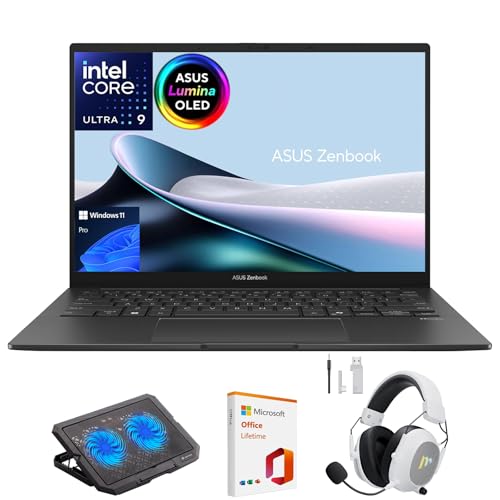
The ASUS Zenbook 14 OLED Laptop (Ultra 9, 32GB, 2TB) is built for creators and professionals who demand top-tier performance in a compact, travel-ready design. I rely on its Intel Core Ultra 9 285H and 32GB RAM for smooth multitasking, even with heavy editing or AI workloads. The 14-inch OLED display delivers vivid colors and deep blacks, ideal for media tasks, though the 60Hz refresh rate limits gaming. At 2.82 lbs and 0.59 inches thin, it’s highly portable, backed by MIL-STD 810H durability and a 75Wh battery that lasts up to 18 hours. While the included accessories add value, the lack of higher refresh rate and premium price are trade-offs worth considering.
Best For: Professionals and creators needing high-performance computing, vivid OLED display quality, and portability for demanding tasks like content creation, AI workloads, and multitasking on the go.
Pros:
- Powerful Intel Core Ultra 9 285H processor with 32GB RAM and 2TB storage enables seamless multitasking and high-speed performance for editing and AI applications
- Stunning 14-inch WUXGA OLED display with 100% DCI-P3 color gamut and 500-nit HDR brightness delivers exceptional visual clarity and color accuracy
- Slim, durable MIL-STD 810H-certified design with 75Wh battery offers up to 18 hours of battery life, ideal for mobile productivity
Cons:
- 60Hz refresh rate limits smoothness for gaming and high-frame-rate content compared to higher-refresh displays
- Premium pricing may be prohibitive for users seeking budget-friendly or mainstream laptops
- Integrated Intel Arc GPU, while capable, may underperform compared to dedicated discrete GPUs for intensive gaming or 3D rendering
ASUS Zenbook 14 OLED Laptop

A laptop built for creators and professionals who demand speed, visual clarity, and AI-ready performance will find the ASUS Zenbook 14 OLED a strong contender. I rely on its 16-core Intel Core Ultra 9 285H and 32GB of RAM for smooth multitasking and AI workloads, while the 2TB SSD guarantees fast access to large files. The 14″ OLED display delivers stunning color and 500-nit brightness, ideal for editing or streaming. It drives three 4K external monitors, which boosts my productivity. At just under 3 pounds with 18-hour battery life, it’s easy to carry. Thunderbolt 4, Wi-Fi 7, and Windows 11 Pro keep me connected and efficient. The upgraded SSD comes with a 3-year warranty from Issaquah Highlands Tech-peace of mind for long-term use. The backlit keyboard and IR webcam with privacy shutter work well for late-night sessions and secure video calls. Still, the OLED screen may risk burn-in with static content over time, so I use dark modes and auto-hide taskbars. Overall, it balances power and portability without needing a dock.
Best For: Creative professionals and on-the-go workers who need powerful AI-ready performance, vibrant OLED visuals, and long battery life in a lightweight, highly portable design.
Pros:
- Powerful 16-core Intel Core Ultra 9 285H processor with 32GB RAM and 2TB SSD enables seamless multitasking and fast file access
- Stunning 14″ OLED display with 100% DCI-P3 color gamut and support for three 4K external monitors enhances creative workflows
- Extensive connectivity with Thunderbolt 4, Wi-Fi 7, and HDMI 2.1, plus 18-hour battery life and backlit keyboard for productivity on the move
Cons:
- OLED screen carries a risk of burn-in with prolonged display of static elements like toolbars or menus
- SSD is upgraded post-manufacture and resealed, which may raise durability concerns for some users
- High-end specs come at a premium price, potentially exceeding budgets for casual users
ASUS Zenbook DUO AI Laptop (14″ OLED)

Though I value versatility in a compact design, the ASUS Zenbook DUO AI Laptop (14″ OLED) stands out best for professionals and students who need strong multitasking power and a high-quality display in a portable 2-in-1 form. I rely on its 15th-gen Intel Ultra 9-285H processor and 32GB of LPDDR5X RAM for smooth performance across demanding apps. The 14-inch OLED screen delivers vivid colors and deep blacks, ideal for media and productivity. Its 2TB SSD offers ample storage, while Thunderbolt 4 and Wi-Fi 7 guarantee fast connectivity. I appreciate the included USB hub, but note the 60Hz refresh rate limits gaming. The 75Wh battery lasts a full day, yet the 1-year GreatPriceTech warranty is narrower than ASUS’s standard coverage.
Best For: Professionals and students who need powerful multitasking, portability, and a high-quality OLED display in a 2-in-1 convertible laptop.
Pros:
- 15th-gen Intel Ultra 9-285H processor and 32GB LPDDR5X RAM deliver excellent performance for demanding applications
- 14-inch OLED touchscreen with vibrant colors and deep blacks enhances media and productivity experiences
- 2TB SSD storage, Thunderbolt 4, and Wi-Fi 7 provide ample space and ultra-fast connectivity
Cons:
- 60Hz refresh rate limits suitability for gaming and high-speed visuals
- 1-year warranty from GreatPriceTech is shorter than standard ASUS coverage
- Onboard RAM is not user-upgradable, limiting future flexibility
ASUS Zenbook 14 OLED Laptop

You’ll want this if your work demands speed without sacrificing portability-ASUS Zenbook 14 OLED Laptop packs an Intel Core Ultra 7 255H processor with 16 cores and AI acceleration via a dedicated NPU, making it ideal for content creators, remote professionals, and students juggling multitasking-heavy workflows. Its 14-inch OLED display delivers vibrant colors and deep blacks, great for editing or streaming, though the 60Hz refresh rate limits gaming. At just 2.82 pounds and 0.59 inches thick, it’s easy to carry, and the 18-hour battery lasts through most workdays. Wi-Fi 7 and Thunderbolt 4 future-proof connectivity, while Windows 11 Pro and a free Office 2021 license add value. It’s durable, tested to MIL-STD-810H standards, but the aluminum body shows scratches easily. The 1080p camera with privacy shutter guarantees secure, clear video calls, though low-light performance is only decent. You’ll get strong performance and portability, but don’t expect premium audio or enthusiast-grade graphics.
Best For: Content creators, remote professionals, and students who need powerful performance and portability in a durable, productivity-focused laptop.
Pros:
- Powerful Intel Core Ultra 7 255H processor with 16 cores and dedicated NPU for AI acceleration and seamless multitasking
- Vibrant 14-inch WUXGA OLED display with 100% DCI-P3 color gamut and 500-nit HDR brightness ideal for media creation and viewing
- Lightweight and durable MIL-STD-810H certified design with 18-hour battery life, Wi-Fi 7, and Thunderbolt 4 for future-ready connectivity
Cons:
- 60Hz refresh rate limits smoothness for gaming and fast-paced visual tasks
- Aluminum chassis prone to visible scratches despite military-grade durability
- 1080p webcam offers only decent low-light performance, not ideal for poorly lit environments
ASUS Zenbook 14 OLED 2026

If you need a laptop that handles demanding tasks without slowing down, the ASUS Zenbook 14 OLED 2026 stands out for creators and multitaskers who value speed and screen quality. I rely on its Intel Core Ultra 7 155H processor and 16GB of fast LPDDR5 memory to run editing software and dozens of browser tabs smoothly. The 14-inch OLED display delivers vibrant colors and sharp detail, ideal for photo work. However, the 60Hz refresh rate feels dated for a 2026 model. It’s light at 2.82 lbs and lasts about 12 hours unplugged, though real-world use drains it faster. Thunderbolt 4 and HDMI 2.1 help with office setups, but the USB-A port is slow.
Best For: Content creators and multitaskers who need strong performance and a high-quality OLED display in a portable laptop.
Pros:
- Powerful Intel Core Ultra 7 155H processor with 16 cores handles demanding applications and multitasking efficiently
- Vibrant 14-inch OLED display with 100% DCI-P3 color accuracy and 500 nits brightness, ideal for creative work
- Lightweight design at 2.82 lbs with long battery life and extensive connectivity including Thunderbolt 4 and HDMI 2.1
Cons:
- 60Hz refresh rate limits smoothness for a 2026 flagship model, especially for video or gaming
- Single USB 3.2 Gen 1 Type-A port feels outdated and slow compared to modern standards
- Real-world battery life falls short of the 12-hour claim under heavy usage conditions
ASUS Zenbook S 14 OLED Laptop
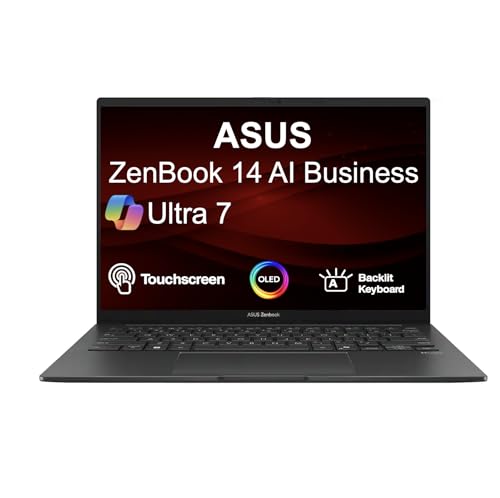
The ASUS Zenbook S 14 OLED Laptop is my top pick for students, professionals, and creators who need a powerful, portable machine without sacrificing performance or build quality. I love its light, sleek design built with recycled materials-great for travel, though the 2.8K OLED screen can drain battery fast under heavy use. The Intel Core Ultra 7 and 32GB RAM handle multitasking smoothly, and the 1TB SSD loads apps in seconds. Intel Arc graphics work well for editing and casual games, but not hardcore titles. Thunderbolt 4 and Wi-Fi 7 future-proof connectivity, while the backlit keyboard and privacy shutter boost daily usability. It’s premium, but the price reflects it.
Best For: Students, professionals, and creators seeking a premium, portable laptop with powerful performance, AI capabilities, and a stunning OLED display for productivity, creativity, and on-the-go use.
Pros:
- Powerful Intel Core Ultra 7 processor and 32GB RAM ensure seamless multitasking and fast app performance
- High-quality 2.8K OLED touchscreen delivers vibrant colors and sharp visuals, ideal for media and design work
- Comprehensive connectivity with Thunderbolt 4, HDMI 2.1, and Wi-Fi 7 for future-proofed workflows
Cons:
- OLED display can significantly reduce battery life under heavy usage
- Intel Arc integrated graphics are not suitable for demanding or high-end gaming
- Premium price may be a barrier for budget-conscious users
ASUS Zenbook 14 OLED 2025 (32GB/2TB)
A powerhouse for creators and professionals who demand speed and screen quality without sacrificing portability, the ASUS Zenbook 14 OLED 2025 (32GB/2TB) delivers where it counts. I rely on its Intel Core Ultra 9 285H and 32GB of RAM for seamless multitasking, even with heavy workloads. The 14-inch OLED screen offers vibrant colors and deep contrast, ideal for photo or video editing. Its 75Wh battery lasts up to 18 hours, though real-world use brings closer to 12–14. At 2.82 lbs and 0.59 inches, it’s easy to carry, but the 60Hz refresh rate feels outdated for the price. Thunderbolt 4 and WiFi 7 guarantee future-proof connectivity, but you’ll pay a premium.
Best For: Professionals and creators seeking a portable, high-performance laptop with excellent display quality and AI capabilities for demanding workflows.
Pros:
- Powerful Intel Core Ultra 9 285H processor and 32GB RAM enable seamless multitasking and heavy workload handling
- Stunning 14-inch WUXGA OLED display with 100% DCI-P3 color gamut and 500-nit HDR brightness ideal for creative work
- Long battery life, premium build with MIL-STD-810H durability, and future-proof connectivity including Thunderbolt 4 and WiFi 7
Cons:
- 60Hz refresh rate feels outdated for the premium price point
- Real-world battery life falls short of the 18-hour claimed maximum
- Device-locked software (Microsoft Office) limits flexibility across devices
Factors to Consider When Choosing Buy Asus Zenbook
You’ll want a ZenBook that balances sharp display quality and resolution with real-world usability, like opting for the 14 OLED screen if you need vibrant visuals but can manage its higher power draw. Prioritize processor power and AI capabilities-models with Intel Core Ultra or Ryzen 7 chips handle multitasking smoothly, though battery life may take a hit during sustained loads. Don’t overlook memory, storage, portability, and build-32GB RAM and 2TB SSD future-proof your work, but the lighter chassis options might sacrifice some port selection or cooling efficiency.
Display Quality And Resolution
Picture clarity and color fidelity matter most when sizing up an ASUS ZenBook’s display. You’ll want OLED panels-they deliver deeper blacks and higher contrast than standard LCDs, thanks to pixel-level lighting, and they’re great for media or design work. Look for 2880 x 1800 (3K) resolution; it sharpens text and images, helping with detailed editing or coding. A 16:10 aspect ratio gives you extra vertical space, making scrolling through documents or spreadsheets noticeably easier. Brightness up to 500 nits means you can work outside or in sunlit rooms without glare washing out the screen, and HDR playback stays vibrant. Coverage of 100% DCI-P3 guarantees colors stay true, essential if you edit photos or videos. Just remember: OLEDs can be pricier and may risk burn-in with static content over long periods.
Processor Power And Ai Capabilities
Performance hinges on smart processor choices-pick an ASUS ZenBook with a modern Intel Core Ultra or AMD Ryzen chip that balances raw power and AI smarts. You’ll want high core counts, like 16 cores (6 performance and 10 efficient), for smooth multitasking and strong application performance. Look for a dedicated Neural Processing Unit (NPU) delivering 10 TOPS or higher AI performance, enabling real-time language translation and AI photo editing. Models with AI Boost or similar NPU tech handle on-device machine learning tasks quickly and efficiently. Choose integrated graphics supporting XMX AI and XeSS for smarter upscaling in creative and light gaming workloads. Prioritize processors with turbo boost up to 5.4 GHz for peak speed. Just remember: higher performance demands better cooling and can affect battery life, so match the chip to your real-world needs, not just specs.
Memory Storage And Multitasking
When tackling heavy workloads like video editing, multitasking across dozens of browser tabs, or running virtual machines, having enough memory and fast storage makes a clear difference in day-to-day use. You’ll want 32GB of RAM for smooth performance, especially when juggling apps or using virtual machines-systems with LPDDR5x memory at 7467 MHz deliver faster data handling, boosting responsiveness in video editing or AI tasks. Onboard RAM improves efficiency but can’t be upgraded later, so consider your long-term needs. Pair that with up to a 2TB SSD for quick boots, fast app launches, and room to store large media files. The built-in NPU helps offload AI tasks like real-time translation or image generation, working smoothly alongside memory. Just remember: high-end specs shine in demanding workflows, but you’re trading upgrade flexibility for performance. Choose based on workload, not hype.
Portability And Build Durability
You’ll appreciate how ASUS ZenBooks strike a balance between portability and durability, making them strong choices for users on the move. Weighing as little as 2.82 lbs and just 0.59 inches thin, they slide easily into backpacks and handle daily commutes without strain. Their slim metal chassis feels solid, offering structural rigidity that cheaper plastics can’t match, while still keeping weight low. You’re also getting real-world toughness-MIL-STD-810H certification means the device resists drops, vibrations, and temperature extremes. In practice, that’s peace of mind if you travel often or work in unpredictable environments. Anti-fingerprint coatings and scratch-resistant surfaces keep the laptop looking clean with regular use. While the lightweight design doesn’t feel flimsy, remember that thinner builds can limit port availability or cooling performance under heavy loads.
Battery Life And Charging Speed
While battery performance varies across models, ASUS ZenBooks generally deliver strong endurance for all-day productivity, with certain configurations supporting up to 18 hours of typical use on a single charge thanks to high-capacity 70Wh or 75Wh batteries. You’ll see up to 30 hours during offline video playback under ideal conditions, but real-world results-like 9 hours during dual-screen work-depend heavily on settings and workload. Adaptive tech, like AI-optimized performance and low-power memory, helps stretch battery life during mixed use. Fast charging via USB-C Thunderbolt 4 means you can top up notably in minutes, and you’ll stay flexible with compatibility with portable chargers. Just keep in mind that peak battery performance requires balanced settings-you’ll trade runtime for power when pushing the system hard.
Frequently Asked Questions
Is Zenbook Suitable for Gaming?
No, you won’t get smooth gameplay from most ZenBooks-they’re not built for serious gaming. You’ll find integrated or low-power GPUs that handle light titles at low settings, but nothing more. Their strong suits are portability, battery life, and productivity. If you game casually, you’re fine. For AAA titles, expect stuttering and low frame rates. Consider a gaming laptop instead. Always check the GPU specs-some models with discrete graphics help, but thermal limits still hold them back.
How Long Does Zenbook Battery Last?
You’ll get around 8 to 11 hours of real-world battery life, depending on your model and usage. Heavier tasks like video editing drain it faster, while light web browsing stretches it closer to 11. Newer models with OLED screens look stunning but use more power than IPS versions. Always check the watt-hour rating-many ZenBooks pack 67Wh or more, which helps. Carry the charger if you’re out all day; you’ll likely need it.
Are Zenbooks Good for Programming?
Yes, you’ll find ZenBooks solid for programming, especially models like the ZenBook 14 with Ryzen 7 and 16GB RAM. They handle IDEs, browsers, and Docker smoothly. The keyboards are responsive, and screen quality reduces eye strain during long coding sessions. Just know thermal throttling can occur under heavy multitasking. Battery lasts 8–10 hours, great for remote work, but avoid base models with 8GB RAM-they’ll struggle with modern dev workloads.
Do Zenbooks Have Backlit Keyboards?
Yes, you’ll find backlit keyboards on most ZenBooks, especially models like the ZenBook 14 and ZenBook 16. They typically feature single-zone LED backlighting, making typing in low light easy. However, don’t expect RGB lighting or customizable per-key brightness-ASUS reserves that for gaming lines. The key travel is around 1.4mm, offering decent feedback. Just double-check the exact SKU, since cheaper configurations sometimes omit the backlight to cut costs. Always verify before buying.
Is ASUS Zenbook Repairable by Users?
You can repair some Asus ZenBook models yourself, but it’s not always easy. They use standard screws in many cases, and parts like RAM or SSD are user-accessible. However, glued batteries and complex assemblies make deeper repairs tough. Asus doesn’t publish consumer repair guides, and warranty may void if you open the unit. For simple upgrades, go ahead-just handle the chassis gently. For battery or screen work, you’re better off with a pro.