The Role of Proper Desk Height Adjustability in Promoting Healthy Posture Among Remote Workers
Proper desk height adjustability helps you maintain neutral posture, reducing strain on your neck, back, and wrists. It lets you set the desk so elbows stay at 90 degrees and eyes align with the top of the screen. Too high or low causes long-term discomfort. Sit-stand desks with quiet motors, 250+ lb capacity, and memory presets offer reliable support-if used correctly. Fixed desks can work with chair and foot adjustments, but flexibility beats compromise. There’s more to optimizing your setup than height alone.
Notable Insights
- Proper desk height aligns elbows at 90 degrees, promoting neutral wrist and shoulder positions to reduce strain.
- Adjustable desks support dynamic postures, helping maintain spinal alignment during sit-stand transitions throughout the day.
- Correct desk height prevents hunching or overreaching, minimizing neck and lower back discomfort in remote workers.
- Electric height-adjustable desks with memory presets enable consistent, personalized ergonomic setups for long-term posture health.
- While temporary fixes exist, only precise, adjustable desks ensure sustained postural support without compromise.
Why Desk Height Matters for Remote Workers
While it might seem like a small detail, getting your desk height right actually plays a big role in how comfortable and productive you feel during long workdays at home. Proper desk height promotes ergonomic alignment, meaning your wrists stay level, shoulders relax, and arms bend naturally at 90 degrees when typing. This setup also guarantees better spinal support by keeping your spine neutral, reducing strain on your neck and lower back. You don’t need an expensive adjustable desk to achieve this-many fixed desks work fine if your chair allows your feet to be flat and knees just below hip level. However, if you frequently switch between sitting and standing, a height-adjustable desk with a minimum range of 24 to 48 inches and sturdy build quality offers real benefits. Just note: stability at higher settings varies across models, so check frame thickness and motor strength before buying. For those not ready to replace their entire desk, a standing desk converter can offer similar sit-stand flexibility with easier installation and lower cost.
How the Wrong Desk Height Hurts Your Posture
Poor posture isn’t just the result of slouching-it’s often baked into your workspace setup, starting with a desk that’s too high or too low. When your desk forces your arms above or below the ideal 90-degree angle, it triggers shoulder strain and spinal misalignment over time. These issues develop quietly, but their long-term effects on your comfort and health are significant.
| Desk Too High | Desk Too Low | Risk Level |
|---|---|---|
| Raised shoulders, tight trapezius | Hunched back, forward head | High |
| Wrist extension | Slumped posture | High |
| Shoulder strain | Spinal misalignment | High |
| Reduced circulation | Neck tension | Medium |
| Limited mobility | Eye strain | Medium |
Even minor height mismatches can compound into chronic discomfort. While adjustable desks help, their effectiveness depends on correct use-not just the mechanism. There’s no universal fix, and results vary by body type and daily use. Always verify range of motion and stability in real-world testing. Choosing one of the top-rated height-adjustable tables can significantly improve ergonomic alignment and long-term comfort.
Find Your Ideal Desk Height by Height and Build
You can find your ideal desk height by starting with your body, not the furniture. Proper ergonomic alignment depends on your body proportions-taller people usually need higher desks, shorter individuals lower ones. When seated, your elbows should rest at 90 degrees, with forearms parallel to the floor and wrists neutral while typing. This typically means desk heights between 20 and 28 inches, depending on your stature. If you’re around 5’8″, a 24–26 inch desk often works; shorter or taller builds need adjustments. Standard fixed desks rarely suit everyone, which can compromise posture over time. Adjustable desks allow fine-tuning for alignment, but verify their range matches your needs-some claim full adjustability but lack reach at extremes. Measure your seated elbow height to confirm. Real-world testing beats estimates. There’s no one-size-fits-all, so prioritize personal fit over product claims. A well-designed standing desk can significantly improve long-term comfort and posture for remote workers.
How Sit-Stand Desks Prevent Pain and Fatigue
Though standing periodically throughout the day won’t magically erase all discomfort, using a sit-stand desk can particularly reduce lower back pain and leg fatigue if used consistently and correctly. The key lies in dynamic posture shifts that promote muscle engagement and distribute physical stress. When you alternate between sitting and standing every 30–60 minutes, you gain ergonomic benefits like improved spinal alignment and reduced static load. Over time, this movement helps prevent stiff joints and circulation issues.
| Feature | Benefit |
|---|---|
| Smooth height adjustment | Reduces shift effort |
| Weight capacity (250+ lbs) | Supports multiple devices |
| Electric lift mechanism | Guarantees quiet, stable motion |
| Memory presets | Saves ideal ergonomic positions |
| 5-year warranty | Reflects long-term reliability |
Still, improper use-like standing too long-can cause new fatigue. Balance is essential.
3 Quick Fixes for the Wrong Desk Height at Home
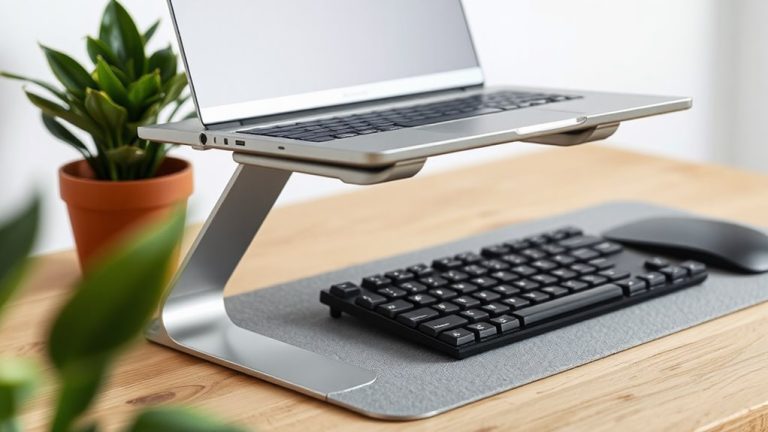
Getting your desk height right matters just as much as having a sit-stand option in the first place-because even the best adjustable frame can’t fix a setup that misaligns your arms, wrists, and screen. If your desk’s too low, try DIY risers under your monitor to bring the top third of the screen to eye level-wooden blocks or sturdy boxes work, but check stability first. For a keyboard that’s too high, stack folded mats underneath to reduce wrist extension, though this only helps temporarily. These fixes adjust alignment without buying new gear, but they’re not ideal long-term. DIY risers lack height precision and may wobble, while folded mats compress unevenly over time. They’re affordable stopgaps, not permanent solutions. Test them for a few hours to see if discomfort drops, but plan for an adjustable desk if issues persist. Safety and consistency matter most-don’t sacrifice either for short-term convenience.
On a final note
You should get a desk with height adjustability to support healthy posture, especially if you work remotely. An ideal desk helps align your elbows at 90 degrees and keeps your screen at eye level, reducing neck and back strain. Sit-stand desks can cut fatigue, but they cost more and need space. Test stability and check the warranty-cheap models often wobble or wear fast. Measure your body first, then choose a reliable range-usually 22 to 48 inches-to fit your needs.