Designing an Energy-Efficient HVAC System for Optimal Climate Control in Your Home Office
You’ll cut energy waste and boost comfort by sealing air leaks and sizing your HVAC right-because even efficient systems fail with drafts or wrong capacity. Use caulk or spray foam on windows and add R-13 to R-19 insulation in walls. A mini-split with 18+ SEER2 and inverter compressor suits most offices under 200 sq ft. Smart thermostats learn your schedule and cut idle run time. Zone your system to heat just your office-motorized dampers can save 20–30%, though installation runs $2,000–$4,000. Annual tune-ups, filter changes, and refrigerant checks add 5–7 years to system life and prevent costly breakdowns. Balancing ducts and verifying AHRI performance data guarantees real-world efficiency. You’ll find the best results come from combining proper installation with consistent habits-details on each step follow.
Notable Insights
- Seal air leaks around windows, doors, and ducts to prevent up to 30% of HVAC energy loss.
- Size your HVAC system correctly using Manual J calculations to ensure efficiency and comfort.
- Install a mini-split heat pump with SEER2 18+ for efficient, zoned heating and cooling.
- Use smart thermostats to automate temperature schedules and monitor energy usage remotely.
- Maintain your system annually, including filter replacement and professional tune-ups, to extend lifespan and efficiency.
Seal Leaks and Insulate to Cut HVAC Waste
While you might not see it, air leaks around windows, doors, and ductwork can waste up to 30% of your HVAC output, so sealing them and adding proper insulation is one of the most cost-effective upgrades you can make for your home office. Air sealing with caulk or spray foam stops drafts, especially around window frames and baseboards, while thermal insulation in walls and attics maintains stable temperatures. Fiberglass batts or rigid foam boards work well, depending on your space. Without both, even efficient systems struggle. You’ll likely feel fewer cold spots and save on energy bills, though the effort varies-older homes need more attention. DIY kits cost under $50, but professional blower door tests ($150–$300) pinpoint hidden leaks. Results depend on climate and building age, so don’t expect miracles in unregulated spaces. Still, proper air sealing and insulation deliver measurable comfort and efficiency-just don’t skip moisture controls to avoid trapped dampness.
Size and Select an Efficient Home Office System
You’ve sealed the leaks and added insulation-now it’s time to pick an HVAC system that actually matches your home office’s needs without overworking or wasting energy. Proper system sizing guarantees your unit efficiently handles heating and cooling loads without short-cycling or overrunning. Oversized units cost more upfront and perform poorly, while undersized ones can’t maintain comfort. For most home offices under 200 sq ft, a mini-split heat pump with a SEER2 rating of 18+ delivers strong efficiency and quiet operation. Your equipment selection should prioritize inverter-driven compressors and variable-speed fans-they adjust output based on demand, cutting energy use up to 30%. Check AHRI-certified performance data, not just marketing claims. Installation quality matters as much as the unit-poor ductwork or refrigerant lines ruin efficiency. Always get a Manual J load calculation before deciding.
Automate Comfort With Smart Thermostats
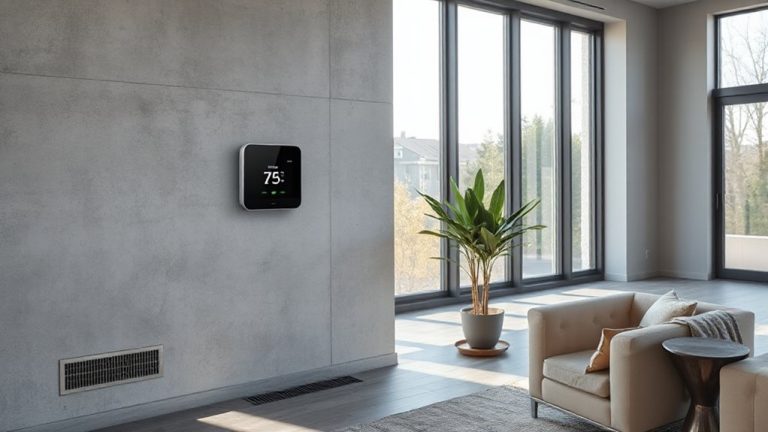
How often do you adjust the temperature in your home office? A smart thermostat can reduce manual changes by learning your habits and adjusting automatically. With smart scheduling, it programs itself based on your typical work hours, turning down the heat when you’re away and warming the space before you return. Remote access lets you tweak settings from your phone, useful if your schedule shifts. Most models work with standard HVAC systems and include energy reports showing actual usage trends. Units like the Nest or Ecobee have earned strong marks in third-party efficiency tests, though savings depend on your climate and routine. Installation is usually DIY, but compatibility with older systems varies. Always check warranty terms-some require professional setup to remain valid. While they aren’t magic, these tools offer measurable control, provided you use their features consistently.
Use Zoning to Heat Only Your Office Space
If you’re looking to cut heating costs while keeping your home office comfortable, zoning systems let you condition only the space you’re using instead of the whole house. This smart room separation means you’re not wasting energy heating empty rooms. Motorized dampers in the ductwork direct warm air where it’s needed, but proper duct balancing is essential-uneven airflow can cause pressure issues or strain your system. Zoning works best with a variable-speed furnace and a compatible thermostat in each zone. While installation can cost $2,000–$4,000 and may require minor construction, energy savings of 20–30% in targeted use cases justify the investment. However, poor design leads to hot or cold spots, so hire a technician certified in Manual J and D calculations. It’s a powerful upgrade-just know it demands precise setup to deliver steady comfort without side effects.
Extend HVAC Life With Simple Maintenance Tasks
A single hour of annual maintenance can save hundreds in long-term repairs and extend your HVAC system’s lifespan by up to 5–7 years when done right. You should replace air filters every 1–3 months, depending on usage, since clogged filters reduce airflow and force the system to work harder. Check refrigerant levels each year-low levels indicate a leak and reduce cooling efficiency, while overcharging can damage the compressor. Schedule a professional tune-up to inspect coils, electrical components, and thermostat calibration. While DIY checks help, certified technicians spot issues early, ensuring performance stays consistent. However, maintenance won’t fix a poorly sized unit or offset poor insulation. These tasks are cost-effective, but only when paired with proper system design. Consistent upkeep means fewer breakdowns, better air quality, and stable temperatures-critical when your home office is in constant use.
On a final note
You’ll save energy and stay comfortable by sealing leaks, insulating well, and choosing a correctly sized, high-efficiency mini-split system with a SEER2 rating of 16 or higher. A smart thermostat helps, but set realistic schedules-over-automation can backfire. Zoning reduces waste, yet improper setup increases strain. Annual filter changes and coil cleaning extend system life. No solution fits all; room size, climate, and usage affect outcomes.