Combining Cable Trays With Integrated LED Task Lighting Strips
You’ll save space and energy by combining cable trays with integrated LED task lighting, which delivers 800–1,200 lumens per meter and clean power routing in one sleek system. It’s ideal for home offices where clutter and poor light are problems, but make sure you have 2–3 inches of clearance and proper 12V or 24V DC power. LEDs last 50,000 hours, cut HVAC load, and lower long-term costs, though upfront prices are higher. Install level, test before finalizing, and mind the warranty-details on performance and setup follow.
Notable Insights
- Cable trays with integrated LED lighting combine power management and task lighting in a single streamlined system.
- LEDs snap into standard cable tray channels, offering shadow-free illumination with minimal heat output.
- Ideal for home offices and workspaces, they save space and reduce visual clutter from cords and fixtures.
- Most systems use 12V or 24V DC LEDs, requiring a compatible transformer and adherence to electrical codes.
- Expect energy-efficient performance with 800–1,200 lumens per meter and a 50,000-hour LED lifespan.
What Are Cable Trays With Integrated LED Task Lighting?
Task lighting matters when you’re staring at blueprints or typing late into the night, and cable trays with integrated LED lighting are a smart way to combine function and illumination. You get clean power routing alongside consistent, shadow-free light exactly where you need it. These systems boost design aesthetics by eliminating dangling cords and cluttered lamps, giving your workspace a streamlined, professional look. The LEDs are energy efficient, drawing as little as 5–10 watts per foot, so you won’t see a spike in energy consumption. Most units use 3000K to 4000K color temperatures, balancing warmth and clarity. They’re easy to install, often snapping into standard cable tray channels. Just be sure the voltage matches your setup-some require a separate low-voltage driver. While they last 50,000 hours or more, color shift can occur over time. They’re solid upgrades, but not always cheaper than basic task lights upfront.
Where LED-Integrated Cable Trays Work Best
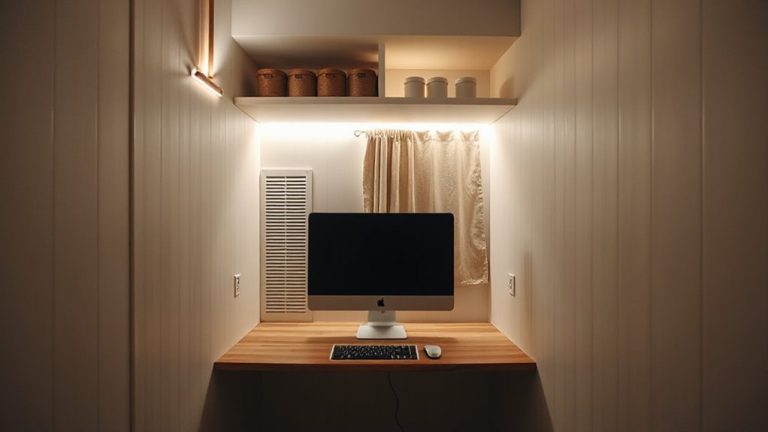
Where should you actually use LED-integrated cable trays? They work best in home offices and workspaces where both aesthetic design and space optimization matter. You’ll keep cables off the floor while adding targeted light exactly where you need it-over desks or workbenches. The clean lines of the tray improve room appearance without bulky fixtures. Since the lighting mounts directly to the tray, you save ceiling or wall space, which helps in compact areas. But be sure your ceiling height allows clearance-some units add 2–3 inches in depth. LED brightness typically ranges from 400–800 lumens per foot, so check output specs based on task needs. Look for fixtures with 50,000-hour lifespans and 5-year warranties for reliability. They’re great for modern setups, but avoid them in damp or high-vibration areas unless rated for such use. For optimal results, consider pairing these with cable hiding options to further streamline your desk setup.
Boost Efficiency With Built-In Task Lighting
While you’re rethinking how light and wires move through your workspace, consider that built-in LED lighting in cable trays isn’t just about looks-it’s a functional upgrade that cuts down clutter and puts illumination exactly where your tasks demand it. You get energy savings from efficient LEDs that draw less power and generate minimal heat, reducing strain on HVAC. Space optimization comes from combining two systems-power delivery and task lighting-into one streamlined overhead unit, freeing desk and floor space. These strips typically offer 800–1,200 lumens per meter, adjustable in color temperature, so you can tune light for focus or comfort. Just make sure your cables and LEDs are independently accessible for maintenance; some models make swaps harder. Also, confirm dimming compatibility with your controls. While setup time’s slightly longer, the long-term workflow gains and cleaner layout usually justify the effort-especially in dense or multi-use areas. For top performance and reliability, consider choosing best LED light strips known for consistent brightness and color accuracy.
Cut Costs With Unified Power and Lighting
A single integrated system could save you hundreds over time by combining power distribution and LED lighting into one retrofit-friendly cable tray setup. You’ll gain energy savings from efficient LEDs while cutting installation labor and material expenses. This unified approach delivers real cost reduction, especially in industrial or commercial spaces where overhead access is frequent. Proper cable management for clean desk aesthetics ensures the setup remains organized and visually appealing, even in high-traffic environments. Below are key benefits and trade-offs:
| Benefit | Trade-off |
|---|---|
| Reduced material needs | Higher upfront fixture cost |
| Lower energy use | Limited dimming options |
| Streamlined maintenance | Requires compatible voltage |
While ideal for warehouses or workshops, it may not suit spaces needing ambient lighting. You’ll save most where task lighting and power runs align. Verify fixture lumen output (typically 800–1,200 lumens per foot) and check warranty length-many last 50,000 hours.
How to Install Combined Power and Lighting
You’ve seen how combining power and lighting in a cable tray can cut long-term costs-now let’s walk through installing the system. Start by confirming voltage compatibility between your LED strips and building supply-most run on 12V or 24V DC, so include a transformer if needed. Mount the tray level, then secure cables first, leaving space for airflow and maintenance. Attach LED strips along the tray’s inner edge, ensuring fixture alignment for even task lighting-misaligned strips create glare or shadows. Use clips or adhesive backing rated for long-term heat exposure. Test lights before final fastening. Keep power and data cables separated within the tray to reduce interference. While setup is straightforward, mistakes in voltage compatibility or fixture alignment can reduce lifespan or performance. Most quality LED systems include 3–5-year warranties, but improper installation voids coverage. Check local electrical codes-this isn’t a DIY job if you’re not confident.
On a final note
You should consider LED-integrated cable trays for your home office if you want cleaner setups and focused task lighting. They save space by combining power delivery and lighting in one system, cutting wiring clutter and installation time. Units typically include 4000K LED strips with 80 CRI, offering bright, accurate light. Just confirm your ceiling or wall can support the weight-usually 3–5 lbs per foot-and check dimming compatibility. Warranties often cover 3–5 years, but moisture exposure shortens lifespan.