How to Position Monitors for a Writer Using Grammar Tools on a Secondary Screen
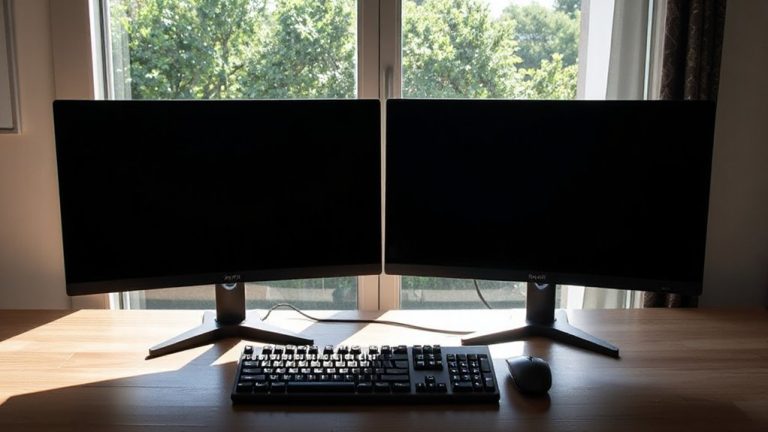
Place your main monitor centered in front of your keyboard, about 20–30 inches away, with the top at or slightly below eye level to maintain focus and reduce strain. Use a matte screen to cut glare, and angle both monitors inward about 30 degrees to minimize reflections. Keep grammar tools like Grammarly on your secondary screen, positioned slightly inward and matching the primary in brightness and height. Avoid extreme tilts that distort text. Test the setup during long writing sessions-small adjustments improve comfort and workflow over time.
Notable Insights
- Position the primary monitor directly in front of the keyboard at eye level for optimal focus.
- Place the grammar tool on the secondary screen slightly inward to minimize neck strain.
- Align the top third of both screens with your natural line of sight when seated.
- Angle both monitors inward to form a shallow V, reducing glare and eye movement.
- Maintain a viewing distance of 20 to 30 inches from the primary screen for comfort.
Position Your Main Monitor for Writing Focus
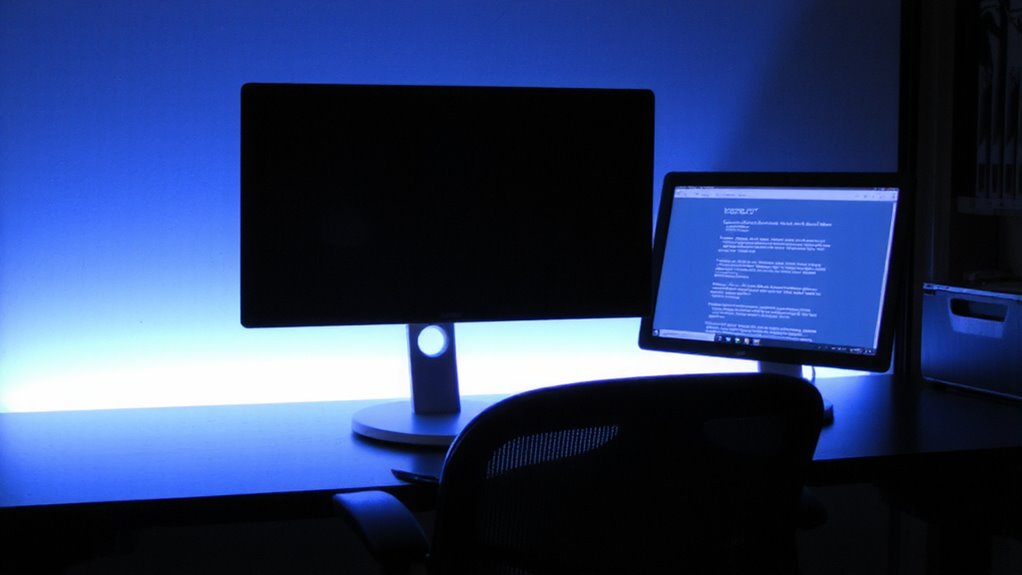
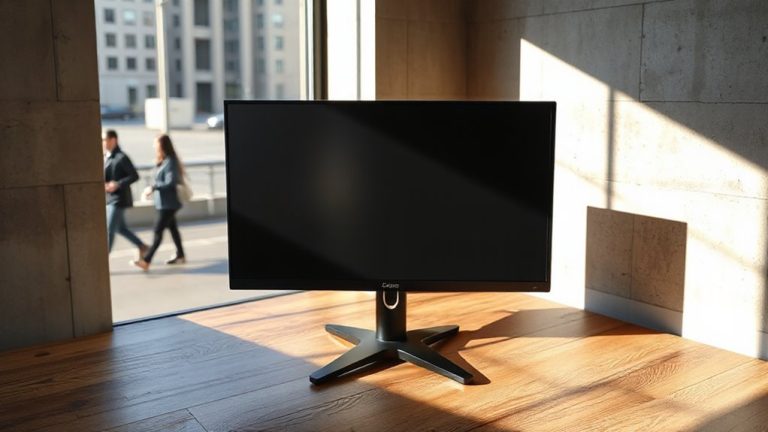
While you might be tempted to place your main monitor wherever it fits, centering it directly in front of your keyboard markedly improves focus during long writing sessions. Proper ergonomic alignment reduces neck strain and keeps your posture stable, especially when typing for hours. Position the top of the screen at or slightly below eye level-about 20 to 30 inches from your face-for ideal visual clarity. A matte display helps minimize glare, while a height-adjustable stand lets you fine-tune the fit. Avoid tilting the screen too far up or down, as this distorts viewing angles and can blur text over time. Even with ideal setup, prolonged use demands breaks; the 20-20-20 rule remains essential. Monitor arms offer flexibility, but stable desk mounts work fine for fixed setups. Ultimately, small adjustments make noticeable differences, but real gains come from consistency, not gear. A best monitor mount can further enhance adjustability and free up desk space for a cleaner writing environment.
Put Grammar Tools on Your Secondary Screen
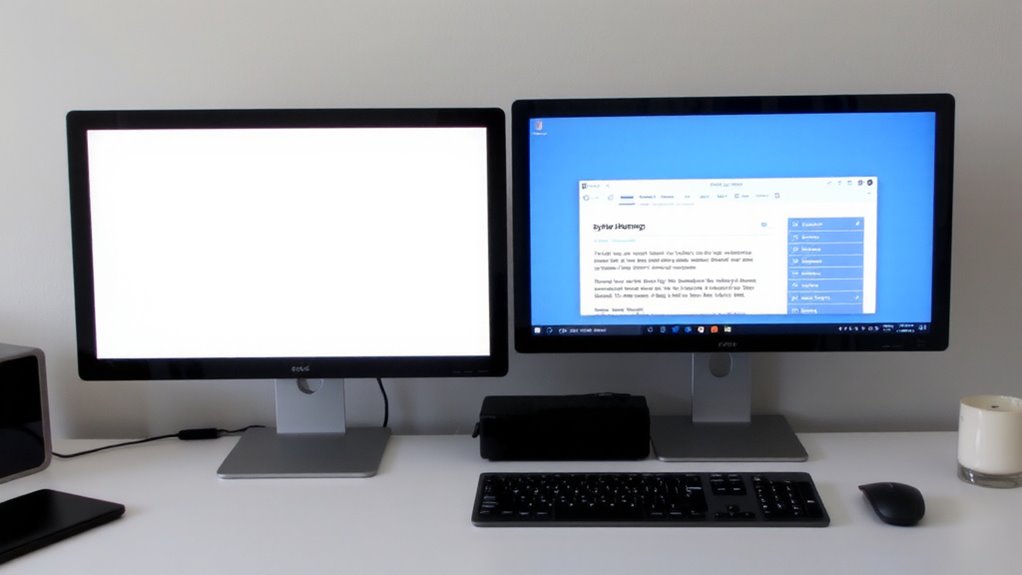
Set your grammar and editing tools on a secondary monitor to keep your primary screen clear for drafting, giving you a cleaner workflow without constant window switching. Good screen placement guarantees you can glance sideways to check software visibility without losing focus on your main text. Position the secondary screen slightly inward so tools like Grammarly or Hemingway Editor remain readable but don’t dominate your view. This setup boosts efficiency, especially during revisions, but only if both monitors have similar brightness and color settings to reduce eye strain. Keep the grammar tool window fixed and unobtrusive-avoid full-screen mode. While dual monitors improve workflow, they also demand more desk space and precise alignment. Test different placements to find what reduces neck movement and supports sustained concentration. It’s not about having more screens; it’s about using them wisely. For even greater flexibility, consider a triple monitor stand to support expanded multitasking with proper ergonomics.
Set Both Screens at Eye Level
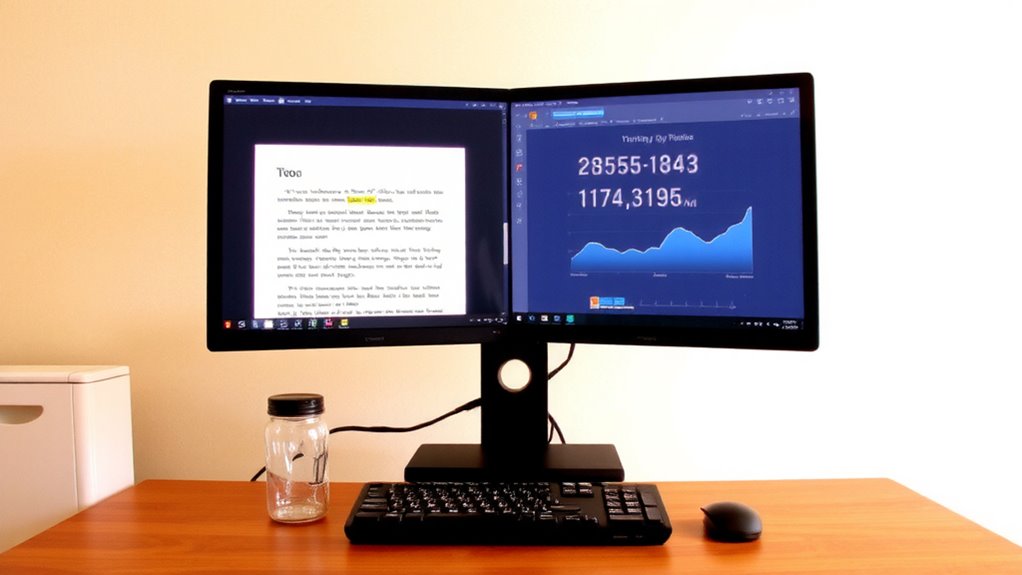
When both monitors sit at eye level, you’re far less likely to strain your neck or slump forward during long writing sessions, so aim to align the top third of each screen with your natural line of sight-roughly at or just below eye height when sitting properly. Proper ergonomic alignment reduces fatigue and supports consistent visual comfort throughout the day. Adjustable monitor arms or risers give you precise control over height, though desk depth and chair position can limit ideal setups.
| Feature | Benefit | Trade-off |
|---|---|---|
| Monitor arm | Full height adjustability | Higher cost, needs clamp space |
| Wooden riser | Stable, natural look | Fixed height, less flexibility |
| Laptop stand | Portable solution | Limited to one device |
| Built-in base | No extra cost | Minimal adjustability |
| Wall mount | Saves desk space | Permanent installation needed |
Balance function with your workspace limits to maintain long-term comfort and posture.
Angle Monitors to Reduce Glare
How often do you squint at your screen because of harsh reflections? Adjusting your screen orientation is key to cutting down light reflection and boosting focus. Position each monitor so the face is slightly angled toward you, forming a shallow V-about 30 degrees from perpendicular to your line of sight. This angle reduces glare from ceiling lights and windows. Avoid placing screens directly opposite or under bright lights, since even anti-glare coatings have limits. Tilting the monitor too far can distort text clarity, especially on TN panels. For best results, pair correct screen orientation with room adjustments like dimmable lighting or blackout curtains. While matte screens help, they can’t fix poor placement. The trade-off? Angling too sharply may require more head movement across dual screens, so balance comfort with function.
Sit at the Right Distance for Dual Screens
Why do some dual-monitor setups feel cramped while others leave you constantly turning your head? Sitting at the right distance fixes this-ideally 20 to 30 inches from your primary screen. This range supports screen alignment and visual symmetry, letting both monitors fit within your natural field of view without neck strain. Position the inner edges of both screens roughly aligned, forming a curved plane facing you. If monitors are too close, text feels crowded; too far, and you waste energy turning. A desk depth of at least 30 inches helps maintain this balance. Larger screens (27-inch or more) need more space to avoid crowding. Test by typing while glancing between screens-movement should feel smooth, not exaggerated. While ultrawide monitors reduce seams, dual flats offer better flexibility. Adjust based on comfort, not ideals-your posture and eyes will tell you when it’s right. A spacious and ergonomic foundation starts with choosing the right best desks for 3 monitors.
Keep Grammar Software in Your Periphery
Placing your grammar-checking software on a secondary screen or split view to the side keeps it active without stealing focus. This setup supports peripheral awareness, letting your eyes catch suggested edits while keeping attention on your primary document. Visual scanning becomes faster when you’re not toggling windows or minimizing programs. Position the grammar tool on a monitor angled 30 to 45 degrees from your main screen, about 18–20 inches to the side, so it’s visible but not central. You’ll notice corrections in real time, yet maintain deeper focus on writing flow. Just be careful-relying too much on peripheral input can lead to overlooked context errors. Use tools like Grammarly or ProWritingAid with split-pane layouts, but verify all suggestions. High refresh rates (60Hz or above) and IPS panels improve readability during side-glance checks. This method balances efficiency and accuracy, as long as you stay mindful.
Fine-Tune Your Setup While Writing
While you’re in the middle of drafting, small adjustments to your monitor setup can make a noticeable difference in comfort and focus-so don’t wait until everything feels off to tweak things. Slight angle or height changes reduce neck strain, especially during long writing sessions. Pair your screen position with proper ergonomic lighting: use a daylight-balanced lamp behind the primary monitor to cut glare and eye fatigue. Avoid overhead lights that create screen reflections. Tidy cable management isn’t just about looks-securing power and USB cables with sleeves or clips reduces distractions and prevents accidental disconnections. While a clean desk helps maintain workflow, avoid overly complex organizers that limit future device changes. Adjustable monitor arms with VESA compatibility offer flexibility but check weight limits. Most come with 3–5-year warranties, tested for 10,000+ tilt cycles. Balance ease of use with durability-smooth motion matters, but so does long-term stability.
On a final note
You’ll write more efficiently with your main monitor centered for focus and the grammar tool on your secondary screen just off to the side. Keep both displays at eye level and about 20–30 inches away to reduce strain. Use a matte screen filter if glare persists. While positioning helps, remember: no setup fixes poor posture alone-take breaks every 30 minutes. Adjustable arms let you tweak angles, but they’re worth it only if you switch tasks often.