Correcting Winged Scapulae Appearance Via Targeted Row Variations at Desk
You can improve winged scapulae with targeted row variations at your desk, especially resistance band rows that activate the serratus anterior and lower trapezius. Perform them 3–4 times weekly, focusing on controlled form: pull with your elbows, keep shoulders down, and avoid shrugging. Weakness from poor posture often responds well, but if nerve damage is the cause, exercises won’t fix it-see a professional. Consistency and proper ergonomics, like eye-level screens and lumbar support, boost results. There’s more to optimizing your setup effectively.
Notable Insights
- Weak serratus anterior and tight pectorals contribute to winged scapulae, especially with prolonged desk posture.
- Perform seated cable or resistance band rows to target serratus anterior and lower trapezius effectively.
- Use a neutral grip and pull with elbows to avoid shrugging and ensure proper scapular engagement.
- Do 3–4 weekly desk-friendly row sessions with controlled reps to build neuromuscular control.
- Combine exercises with ergonomic adjustments to support posture and maximize correction over time.
What Causes Winged Scapulae?
Weak or imbalanced muscles are usually to blame when your shoulder blades stick out like wings at the back-especially if you spend hours at a desk. You likely have a muscle imbalance where your serratus anterior is weak compared to tight pecs and upper traps. That imbalance pulls your scapulae into winging. Poor posture from slouching in office chairs worsens it over time. Nerve damage, though less common, can also cause winged scapulae-specifically long thoracic nerve injury-which paralyzes the serratus and requires medical diagnosis. You won’t fix nerve-related cases with exercise alone. For most people, though, targeted strengthening helps. You’ll need consistent effort; real change takes weeks, not days. Results vary based on your setup, like seat height and desk depth, which affect form. No gadget replaces proper mechanics. Skip gimmicks promising quick fixes. Real progress comes from precise, controlled movement, not gear.
Best Row Variations to Fix Winged Scapulae
If you’re dealing with winged scapulae from desk work, the right row variations can make a real difference-especially when they target the serratus anterior and lower trapezius while calming overactive upper traps. Focus on seated cable rows with a neutral grip and resistance just high enough to challenge scapular retraction without shrugging. You’ll build muscular endurance gradually, which is key for lasting posture correction. Bent-over dumbbell rows work too, but only if you maintain a flat back and pull through the elbows, not the hands. Avoid heavy loads that shift emphasis to the lats or traps. For real progress, perform 3 sets of 15–20 reps slowly, emphasizing control over speed. These variations aren’t quick fixes-they require consistent form and time. Some people see improvement in 6–8 weeks, but long-term results depend on daily posture habits, not just exercise.
How to Do Desk-Friendly Resistance Band Rows
You can effectively train the serratus anterior and lower trapezius right at your desk using resistance band rows, making them a practical addition to your daily routine. Start with an ergonomic setup: sit tall, shoulders relaxed, feet flat-your spine should stay neutral. Secure your resistance band at about waist height; this is essential for proper band anchoring. Use a sturdy desk leg, drawer pull, or door anchor. Grip the handles, arms extended, then pull elbows back and down, squeezing your shoulder blades. Keep movements controlled. Bands vary in resistance-lighter ones suit higher reps, heavier offer strength gains but may strain joints if form slips. Most quality bands last 6–12 months with daily use. Replace if fraying appears. Results build over weeks, not days.
How to Avoid Common Form Mistakes During Rows
While it’s tempting to rush through resistance band rows during a packed workday, cutting corners on form can undermine the benefits and increase injury risk over time. Avoid elbow flaring by keeping your arms close to your sides-this guarantees your mid-back muscles do the work, not your shoulders. Don’t let shoulder shrugging creep in; keep your neck long and shoulders down throughout the movement. Pull with your elbows, not your hands, and squeeze your shoulder blades together at the back. Move slowly and control the band’s tension-especially when returning to start. If you feel strain in your neck or upper traps, your form’s likely off. These adjustments take focus but build real strength. Over time, consistent, clean reps yield better posture and scapular stability without needing special gear. Resistance bands vary in resistance level, so pick one that challenges you without compromising technique. Poor form, even daily, won’t fix winged scapulae-precision will.
How Often Should You Do Rows at Work?
Ideally, performing resistance band rows at your desk 3 to 4 times per week delivers measurable improvements in scapular control and posture, especially when paired with proper form and consistent tension. Your workplace frequency should prioritize regularity over volume-short 10-minute sessions beat one long weekly set. Exercise consistency matters more than intensity; skipping days disrupts neuromuscular adaptation, slowing progress. Aim for sets of 12–15 reps using moderate resistance (e.g., a band with 15–20 lbs of peak tension), gradually increasing as strength improves. Daily isn’t necessary and may increase fatigue without added benefit. Stick to seated positions with a neutral spine to avoid compensating. Results typically show within 4–6 weeks if sessions are spaced evenly and form stays sharp. Missed days? Resume immediately-don’t double up. This schedule fits most desk routines without requiring extra gear, space, or setup, making it practical long-term.
How to Combine Rows With Better Posture Habits
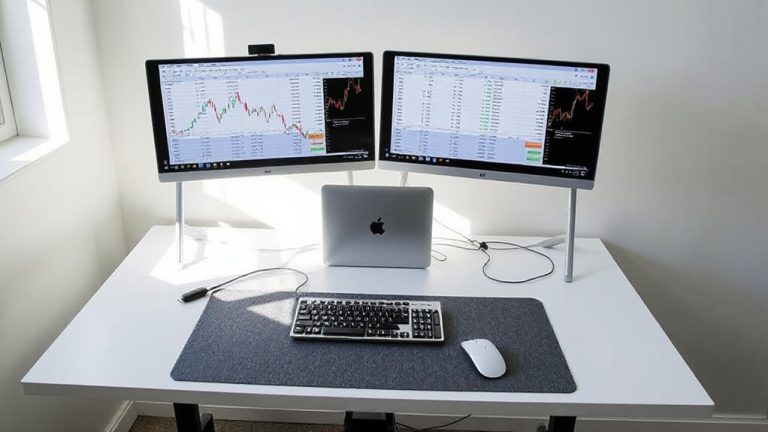
Though resistance band rows strengthen the muscles behind your shoulder blades, pairing them with consistent posture habits is key to lasting improvement. True progress comes from combining row exercises with an ergonomic setup and daily muscle activation cues. Don’t rely on gear alone-adjust your chair, monitor height, and keyboard position to support alignment, then use posture prompts every 30 minutes. A well-designed workspace starts with choosing the right foundation, such as a best standing desk, which can greatly enhance your ability to maintain proper alignment throughout the day.
| Habit | Benefit | Caveat |
|---|---|---|
| Sit with feet flat, back supported | Reduces strain on scapulae | Requires proper chair height |
| Activate lower traps every hour | Improves muscle activation | Needs mental discipline |
| Perform rows hourly | Reinforces posture | Overuse may cause fatigue |
| Align monitor at eye level | Prevents forward head | Limited by desk space |
| Use lumbar support | Stabilizes spine | Poor quality inserts fail quickly |
Consistency beats fancy equipment.
On a final note
You can reduce winged scapulae with targeted row variations, especially resistance band rows done correctly. Focus on squeezing your shoulder blades together to activate the lower traps and serratus anterior. Do them 3–5 times a week at your desk for best results. But don’t expect changes overnight-consistency matters. Pair rows with real posture adjustments, not just desk gear. Bands wear out, so replace them every 6 months with moderate use.