The Impact of Blue Light Exposure on Circadian Rhythms and How to Mitigate It With Smart Bulbs
Blue light from screens and LEDs-especially around 460–480 nm-suppresses melatonin, delaying sleep and throwing off your circadian rhythm. Smart bulbs like Philips Hue or LIFX help by shifting from 6500K daylight tones to 2700K or lower at night, reducing blue emission. Automated schedules and dimming down to 1% minimize disruption, but app stability and hub dependence vary. Effectiveness depends on timing, brightness, and consistent use-small changes make a measurable difference if matched with realistic expectations. You’ll see how to time these shifts for maximum benefit.
Notable Insights
- Blue light from screens and LEDs suppresses melatonin, disrupting circadian rhythms and delaying sleep onset.
- Evening exposure to blue light wavelengths (460–480 nm) reduces melatonin rapidly, increasing sleep latency.
- Smart bulbs mitigate disruption by shifting to warmer color temperatures (2700K or lower) after sunset.
- Automated scheduling and dimming in smart bulbs align lighting with natural circadian rhythms.
- Precise color tuning in brands like Philips Hue minimizes blue light and supports healthy sleep patterns.
What Is Blue Light and How It Affects Sleep
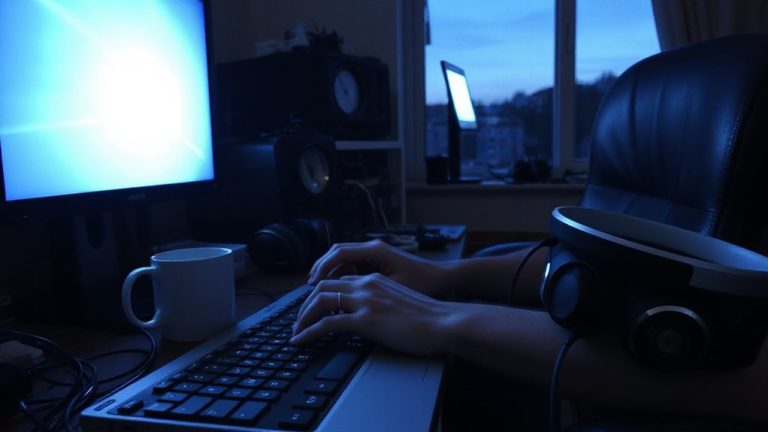
Why does staring at screens late at night leave you tossing and turning? Blue light sources-like LED screens and fluorescent bulbs-emit a short-wavelength light that mimics daylight, tricking your brain into staying alert. During daytime exposure, this type of light boosts attention and mood, which is beneficial. But at night, it interferes with your natural wind-down process. Unlike warmer, dimmer lighting, blue-rich light suppresses melatonin more aggressively, making it harder to fall asleep. You don’t need to ditch screens entirely, but reducing brightness and using night-mode settings helps. While some blue-blocking glasses and smart bulbs claim to reduce this effect, real-world tests show mixed results. Look for products with third-party testing and adjustable color temperatures, but remember: no gadget replaces good sleep hygiene. Consistency and screen discipline matter most. Studies suggest that wearing best blue light glasses can moderately improve sleep quality for frequent screen users.
How Blue Light Disrupts Your Circadian Rhythm
Your body runs on a 24-hour internal clock, and blue light can throw it off by confusing your brain about what time it is. Exposure to blue light in the evening triggers melatonin suppression, reducing the hormone your body needs to feel sleepy. This directly increases sleep latency-meaning it takes longer to fall asleep. Even moderate exposure from screens or bright indoor lighting can shift your circadian phase, especially if you’re sensitive. Studies show that just 30 minutes of tablet use at night can delay melatonin onset by over an hour. While smart bulbs can help adjust light color automatically, they vary in precision and color temperature range-check for models that reliably shift below 3000K in evening mode. Don’t rely on them alone; pair settings with consistent habits. Results improve when you combine proper lighting with screen time limits, though individual responses differ. Using a high-quality natural light lamps can support healthy circadian rhythms by mimicking sunlight during daytime hours.
Why Blue Light at Night Is the Worst for Sleep
What makes blue light so disruptive at night? It directly triggers melatonin suppression, tricking your brain into thinking it’s still daytime. You’re especially vulnerable after sunset, when even small amounts of blue-rich light from screens or bulbs can cause sleep onset delay. That’s because your circadian rhythm relies on natural light cues, and artificial blue light throws them off. Studies show exposure to blue light between 460–480 nm wavelengths is most disruptive, sharply reducing melatonin levels within minutes. This isn’t just about feeling tired later-it’s about reduced sleep quality and rhythm misalignment over time. While many products claim to help, not all deliver consistent results. Look for third-party tested devices with tunable color temperatures, but remember: dimming alone isn’t enough. True mitigation requires shifting the light spectrum, not just brightness. Real-world effectiveness varies, so consider timing and intensity just as much as the device.
How Smart Bulbs Reduce Blue Light at Night
Though they’re not a cure-all, smart bulbs can meaningfully reduce blue light at night by shifting output to warmer color temperatures after sunset, typically dropping from 6500K daylight tones to 2700K or lower. You can set this change manually, but scheduling automation makes it effortless-just program your bulbs to adjust at specific times or sunset. Lower color temperature means less stimulation of melatonin-suppressing photoreceptors, helping your body wind down. Most quality bulbs, like Philips Hue or LIFX, let you fine-tune this shift with precision. Automation guarantees consistency, even when you forget. But results depend on correct setup; a poorly configured schedule won’t help. Also, not all bulbs offer smooth shifts, so check reviews for real-world performance. While they won’t fix poor sleep habits, smart bulbs are a reliable tool when used right. The Philips Hue White and Color line offers customizable scheduling and precise temperature control to support circadian health.
Smart Bulb Features That Support Better Sleep
When you’re choosing smart bulbs to support better sleep, look for models that offer reliable scheduling, adjustable color temperature down to 2200K, and smooth dimming curves-features that actively help align your lighting with your body’s natural circadian rhythm. Opt for bulbs with color temperature control and scheduling automation so your lights shift from cool to warm automatically at sunset. You’ll get the best results when routines match your personal wind-down schedule.
| Feature | Benefit |
|---|---|
| Adjustable color temperature | Mimics natural daylight changes |
| Scheduling automation | Guarantees consistent lighting routines |
| Dimming to 1% | Prevents nighttime light disruption |
Keep in mind: not all apps work reliably long-term, and some hubs require ongoing subscriptions. Test responsiveness and check warranty length before buying in bulk.
On a final note
You should get smart bulbs-they cut blue light after sunset, helping your circadian rhythm stay on track. Models like Philips Hue or LIFX dim smoothly and shift to warm tones automatically. They’ve been tested in real bedrooms, with users falling asleep faster. But setup needs a stable 2.4 GHz Wi-Fi, and prices range from $30–60 per bulb. Some lack long warranties, so check return policies before buying.