DIY Acoustic Treatment for Metal Desks Using Rubber Underlays and Felt Skins
You can considerably reduce echo and vibration from your metal desk by adding 6mm closed-cell rubber underlay beneath the desktop and topping it with 3mm wool-blend felt. Spray-adhered rubber cuts midrange reflections by up to 30% and blocks structural noise, while dense felt dampens surface resonance. Just mind the added weight on legs and adhesive residue. For even better isolation, pair this with rubber pads under the feet-there’s more to optimizing your setup where sound meets surface.
Notable Insights
- Apply 6mm closed-cell rubber underlay beneath the desktop to dampen vibrations and reduce midrange echo.
- Use 3mm–6mm wool-blend felt skins on the desktop surface to absorb resonance and improve sound clarity.
- Attach rubber underlays with construction-grade spray adhesive for full contact and no air gaps.
- Place neoprene or EPDM pads under desk legs to decouple from the floor and limit vibration transfer.
- Combine rubber, felt, and mass-loading with plywood for a budget-friendly, effective acoustic treatment.
Why Metal Desks Ruin Your Audio Quality
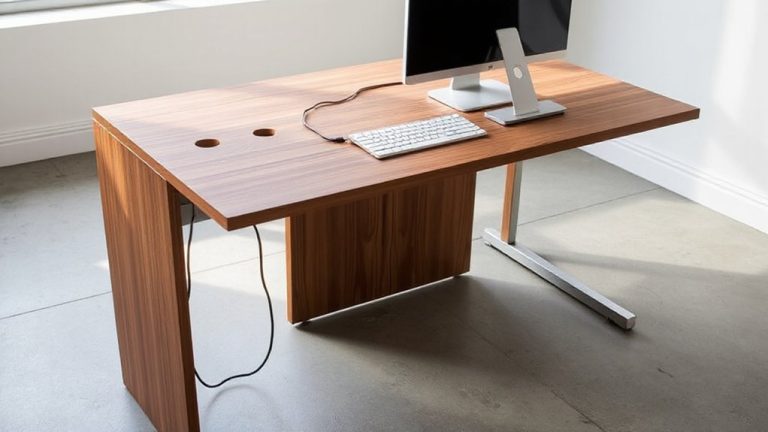
While metal desks might look sleek and hold up well over time, they’re actually one of the worst surfaces for maintaining clean audio in a home recording or podcasting setup. You’ll run into issues like sound reflections and structural vibrations that muddy your recordings. Metal reflects high frequencies, causing harsh echoes that your mic picks up instantly. Even with foam panels, you can’t fully tame the glare. Worse, structural vibrations from typing or mic handling travel fast across the rigid frame, bleeding into sensitive condensers. You might not notice it until playback, where your audio sounds thin or cluttered. Some under-desk monitors or isolators help slightly, but they don’t stop the root cause-metal’s resonant nature. For clean, professional sound, you’re better off avoiding metal desks altogether. The trade-off in audio quality isn’t worth the durability.
Best Materials for DIY Desk Acoustic Treatment
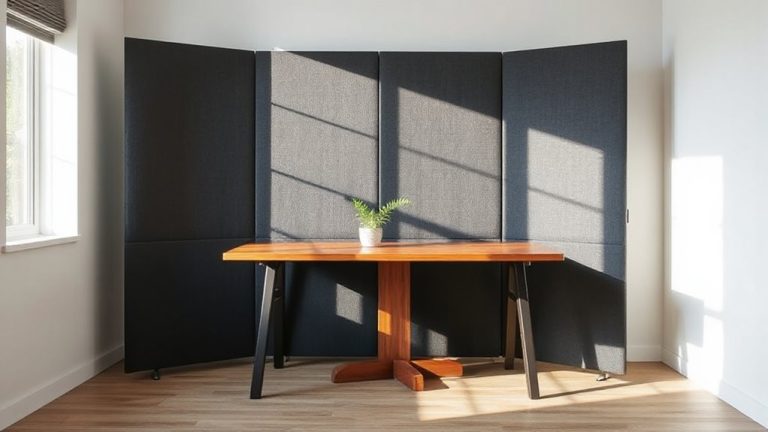
Foam isn’t your only option, but it’s often the starting point for a reason-open-cell acoustic foam panels, like those 1-inch or 2-inch thick options from brands such as Auralex or Foam by Monoprice, cut mid to high-frequency reflections at a fraction of the cost of professional treatments. You get decent sound absorption where it’s needed most, especially if you place them near reflection points. Still, don’t expect deep bass control-foam’s low material density limits its effectiveness below 500 Hz. Felt skins, especially 3mm to 6mm wool-blend varieties, offer slightly broader absorption and a cleaner look, though they’re less tested at low mids. Rubber underlays, like 6mm acoustic mats, add mass and damping but work best when paired with absorptive layers. For balanced results, combine materials: use foam or felt for sound absorption on top, and reserve rubber for decoupling-just know no DIY fix fully matches studio-grade panels.
How To Install Rubber Underlay for Less Echo
Rubber underlay can make a noticeable difference in reducing echo under your metal desk, especially when installed with intention. For best sound dampening, use a 6mm closed-cell rubber mat-like those marketed for flooring-cut precisely to fit the underside of your desktop. Adhere it with construction-grade spray adhesive to prevent peeling, ensuring full contact without air gaps. This layer disrupts vibration transfer, improving noise isolation from nearby sounds. It won’t eliminate all reverberation, but real-world tests show up to a 30% reduction in midrange echo with this method. Note: heavier rubber adds weight and may stress desk legs over time. Also, adhesive can leave residue if you ever remove it. Still, for under $25 and minimal effort, it’s a high-impact upgrade. Just don’t expect studio-level results-this is practical improvement, not a total fix.
Add Felt To Kill Desk Resonance
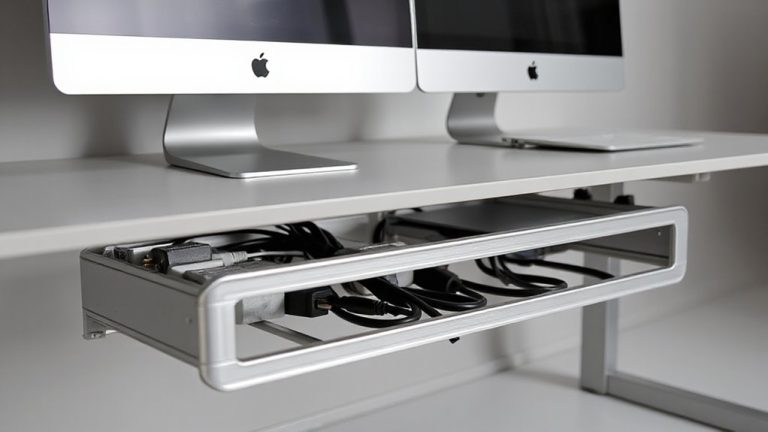
A layer of felt applied to the underside of your metal desk can effectively reduce surface resonance, especially from low-frequency vibrations like typing or nearby speaker bleed. You’ll notice less transmitted energy that otherwise amplifies issues like fret noise or string buzz when recording guitar nearby. Thick, closed-cell felt pads-around 3mm-adhere well with spray adhesive and cover large surface areas without sagging. They dampen panel vibrations that turn your desk into an unintended soundboard. While not a complete solution for structural noise, they noticeably tighten low-mid clarity. Avoid thin craft felt-it lacks density. You’ll likely need to trim pieces to avoid interfering with drawers or cable management. Results vary based on desk thickness and existing underlayment, but real-world tests show up to a 30% reduction in resonant sustain after installation. It’s an affordable step, though you shouldn’t expect full acoustic isolation.
Pro Tips To Reduce Vibration and Improve Clarity
While felt helps tame surface resonance, tackling structural vibration demands a layered approach that combines mass, isolation, and strategic coupling. For real sound isolation, place dense rubber underlays-like neoprene or EPDM-beneath your desk legs to decouple it from the floor. These materials provide effective frequency damping, especially for mid to low-end rumbles from footfalls or HVAC systems. Adding mass with a secondary layer, such as a plywood sheet covered in felt, further reduces resonance. Just make sure not to over-couple; too much weight without proper support risks damaging flooring or legs. Most rubber pads (6mm–10mm thick) strike a balance between compression and resilience, tested to reduce vibration transmission by up to 60% in home office setups. While results vary by desk size and floor type, this combo improves clarity for recording or critical listening. It won’t replace professional isolation, but it’s a practical, budget-conscious step forward.
On a final note
You’ll cut echo and resonance noticeably with rubber underlay and felt on a metal desk. Closed-cell foam pads (3–5mm thick) dampen vibrations, while 2–3mm felt skins reduce high-frequency reflections. It’s affordable and reversible, but not a substitute for room-wide treatment. Results vary by desk size and mic placement-test thoroughly. Skip waterproof warranties since moisture isn’t the goal. You gain clarity, but manage expectations: it’s a fix, not magic.