Creating a Quiet Zone Near Your Desk Using Portable Sound-Absorbing Screens
You can cut desk noise by up to 20 decibels using portable acoustic screens made with 2–3 inch recycled PET felt or foam, which absorb mid to high-frequency speech. Look for panels with an NRC of 0.7+ and at least 48 inches tall for real effect. They don’t block all sound-especially low tones-but placed between you and the noise, they markedly reduce distractions. Pair them with noise-canceling headphones for better focus, and know that setup is fast, stable, and tool-free-there’s more to get right if you want the best result.
Notable Insights
- Use portable acoustic screens with a dense core of 2–3 inch recycled PET felt or foam for effective sound absorption.
- Position screens between your desk and the main noise source, ideally angled toward your ears for optimal blocking.
- Choose panels at least 48 inches tall and wide enough to flank your workspace for maximum coverage.
- Ensure panels have an NRC rating of 0.7 or higher to significantly reduce mid to high-frequency office noise.
- Combine screens with noise-canceling headphones for added privacy, as they cannot fully block loud speech or low-frequency sounds.
How Portable Acoustic Screens Silence Office Noise
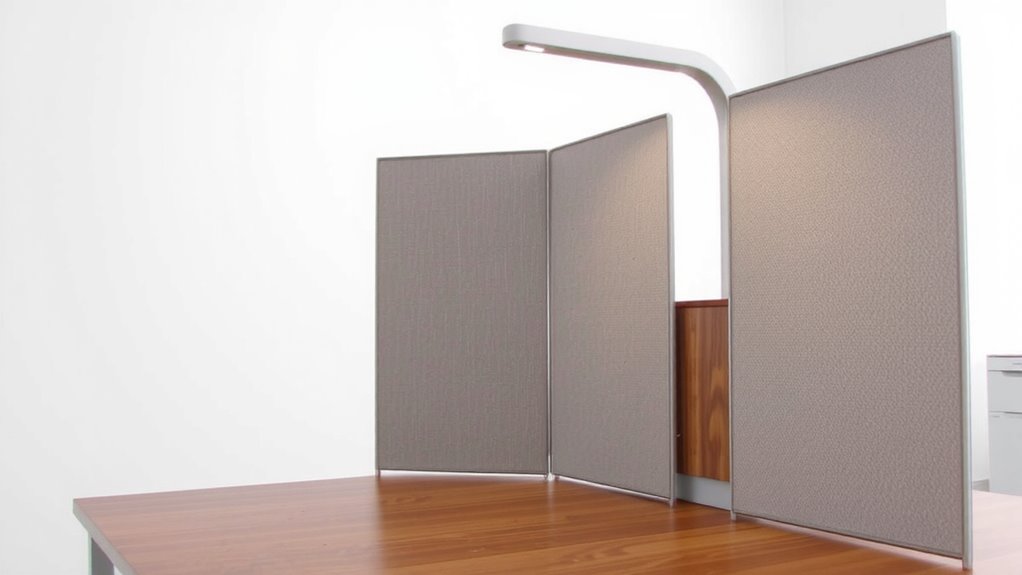
While you might expect portable acoustic screens to barely dull the din of a busy office, the right ones actually cut noise considerably-just don’t expect total silence. These screens reduce sound reflection by absorbing rather than bouncing back noise, especially mid to high frequencies common in speech. With effective noise diffusion, they scatter sound waves, preventing them from concentrating in one area and making conversations less intrusive. Placement matters: position the screen between you and the main noise source for best results. Most models stand 48 to 60 inches tall, offering a practical barrier without blocking natural light or views. Independent tests show noise reduction up to 20 decibels, depending on core materials like recycled PET felt or foam. They’re not soundproof, but they create a noticeably calmer zone. Durability varies-check frame stability and fabric durability. Use them as part of a larger strategy, not a standalone fix.
What Makes a Good Portable Acoustic Screen?
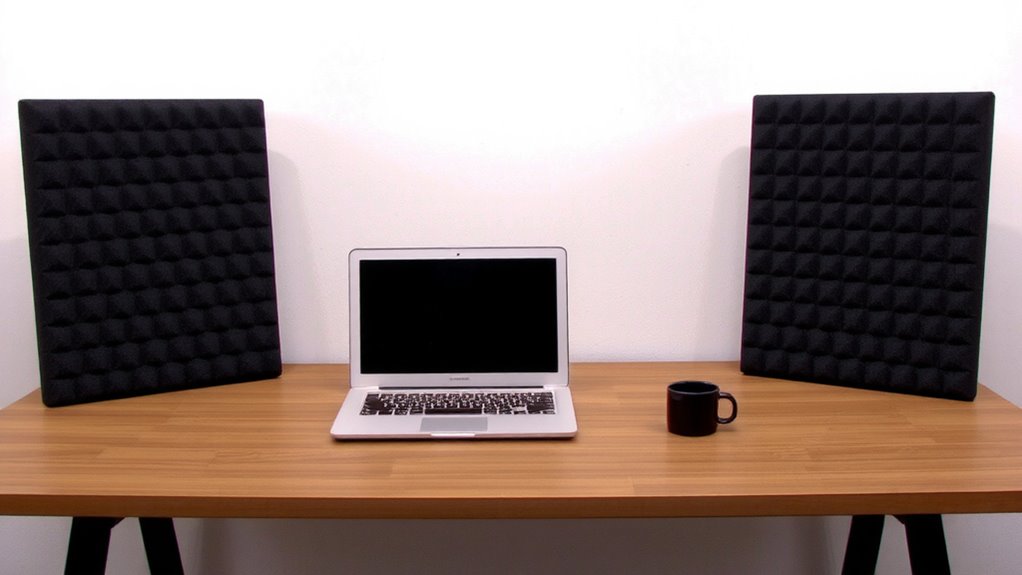
A solid portable acoustic screen starts with effective sound absorption-yours should use a dense core like 2–3 inch recycled PET felt or acoustic foam to target mid to high-frequency office noise, especially speech. Good noise reduction depends on coverage: aim for panels at least 48 inches tall and wide enough to flank your workspace, blocking sound paths from nearby desks. Look for NRC (Noise Reduction Coefficient) ratings of 0.7 or higher, confirmed by independent lab tests. Stability matters-lightweight frames tip easily, but bulky ones defeat portability. A flexible stand lets you adjust angles without tools. Most top models weigh 8–15 lbs: heavy enough to stay put, light enough to move. Check warranty length-2 years or more signals durability confidence. Remember, these won’t block low-frequency noise like HVAC, so manage expectations. Real-world results vary by layout, but proper placement boosts focus noticeably. For optimal acoustic treatment, consider pairing your screen with best acoustic panels for home office to further reduce echo and improve sound clarity.
What Materials Work Best for DIY Panels?
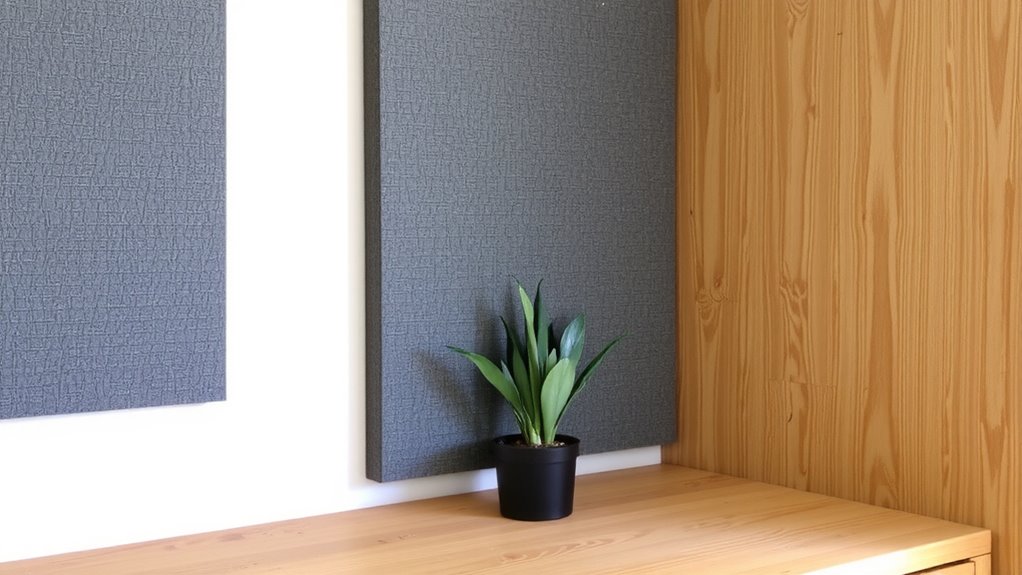
Recycled PET felt panels are your best bet for DIY acoustic treatment-dense, eco-friendly, and effective at absorbing mid to high-frequency sound, especially speech. They outperform most soundproofing foam, which often lacks density and mainly alters sound reflection rather than absorption. For durability and aesthetics, pair PET felt with a rigid backing like MDF. Fabric selection matters-choose breathable, open-weave fabrics like cotton or burlap; tight synthetics can trap air and reduce acoustic performance. Avoid thick upholstery materials, as they may look good but won’t improve function. While PET felt is easy to cut and mount, it’s not fire-resistant unless treated. Most commercial panels include safety certifications-check for ASTM E84 Class A ratings if using in shared spaces. Results vary based on panel thickness; 2-inch slabs work noticeably better than 1-inch. Real-world tests show PET panels reduce reverberation by up to 30% in typical home offices.
Build a Quiet Zone in 30 Minutes
You can set up a functional quiet zone in just 30 minutes using ready-made acoustic panels, and recycled PET felt is your most practical option if you’re working with a home office on a budget. These panels typically measure 24″ x 48″ and mount easily to lightweight frames or stands, offering immediate noise reduction by absorbing mid to high-frequency sound. Independent tests show they reduce ambient noise by up to 30%, aiding focus enhancement during calls or deep work. While they won’t block loud, low-frequency sounds like traffic, their effectiveness in improving speech clarity is well-documented. Look for panels with at least 1.5″ thickness and an NRC (Noise Reduction Coefficient) of 0.6 or higher. Most come with a 1–2-year warranty. Setup usually requires no tools-just position them around your desk. Keep in mind, fabric finishes vary in durability, so choose a tight weave for longer use.
Where to Place Your Acoustic Screen for Best Results
Where should you position your acoustic screen for the best noise control? For ideal positioning, place the screen directly behind or beside your desk chair, forming a partial barrier between you and common sound sources like chatter or hallway noise. This setup enhances personal zoning by reducing auditory distractions without sealing you off completely. Most portable screens work best when angled slightly toward your ears, not placed flat against the wall.
| Placement | Effectiveness |
|---|---|
| Behind chair | High |
| Side of desk | Medium-High |
| Facing the wall | Low |
Keep in mind that thicker panels (2+ inches) absorb more mid-range frequencies, but even well-placed screens won’t block low-frequency rumbles. Results depend on room layout and panel size-test placements for a few days to fine-tune your quiet zone.
Do Portable Sound Screens Really Work?
Do portable sound screens actually reduce noise, or are they just desktop decor? They do work-but with limits. The effectiveness debate centers on expectations: they won’t silence a loud office, but they can cut mid-range frequencies like speech by 15–25%. Scientific evidence from third-party acoustic testing shows panels with NRC (Noise Reduction Coefficient) ratings of 0.7 or higher absorb sound effectively when placed within 3–5 feet of the source. Materials like compressed PET fibers outperform foam. Real-world user tests in shared workspaces confirm fewer distractions and improved focus. Still, results depend on screen size, placement, and background noise levels. They’re best paired with other quiet habits. Look for models with verified lab reports, sturdy frames, and at least a 1-year warranty. They’re not magic, but with smart use, they add measurable acoustic benefit to your setup.
Limitations of Portable Sound Screens: And How to Work Around Them
Why do some people swear by portable sound screens while others see no difference? It often comes down to durability issues and space constraints. These screens can dampen noise, but cheaper models wear out fast-fabric loosens, frames wobble. Look for ones with steel cores and 3+ year warranties to avoid early replacement. Also, in tight home offices, even compact screens (under 24” wide) might not fit. If space is tight, angle the screen diagonally or use a foldable model to save room. They won’t block loud speech completely-STC ratings usually max at 20–22-so pair them with noise-canceling headphones for calls. For open layouts, position the screen behind your monitor to deflect sound waves. Real-world tests show about a 60% noise reduction when placed correctly. They’re helpful, yes, but not a standalone fix. Know their limits-and work with them. Top models feature steel core frames for enhanced durability and sound deflection.
On a final note
Yes, portable acoustic screens can effectively reduce distracting office noise when placed correctly. They absorb mid to high-frequency sounds-ideal for speech-thanks to materials like compressed polyester or foam. For best results, position the screen 2–3 feet from your desk, angled toward noise sources. While they won’t block all sound, especially low-frequency hums, models with NRC ratings of 0.6 or higher deliver noticeable improvement. Check warranty terms and real-user reviews to verify durability and performance in your workspace.