How to Use Layered Lighting (Ambient, Task, Accent) to Reduce Visual Fatigue
Use layered lighting-ambient, task, and accent-to cut eye strain from harsh contrasts. Keep ambient light between 300–500 lux with diffuse sources like indirect LED panels. Add task lights at 500+ lux on desks, choosing adjustable, flicker-free models with 4000K color temperature and CRI 90+. Use accent lighting to soften shadows, not replace main layers. Pick dimmable, matte-finish fixtures to reduce glare. Test bulbs in person-higher price doesn’t guarantee comfort. You’ll find the right balance by fine-tuning each layer to your space’s daylight and use.
Notable Insights
- Combine ambient, task, and accent lighting to evenly distribute light and minimize eye strain.
- Position lights to avoid glare, using matte surfaces and indirect illumination near screens.
- Maintain ambient light between 300–500 lux using dimmable, diffuse sources for visual comfort.
- Provide at least 500 lux task lighting with high-CRI, flicker-free LEDs for focused work areas.
- Use dimmable accent lighting to soften shadows and balance brightness in peripheral vision.
Start With Layered Lighting to Reduce Eye Strain
While bright, uniform lighting might seem ideal, layering light sources is a more effective way to cut eye strain during long work hours-start by combining ambient, task, and accent lighting to balance brightness across your field of view. You’ll want to position your desk to take advantage of natural daylight from windows, but avoid direct glare on screens. Use blinds or sheer curtains to diffuse sunlight evenly. Pair this with a matte desk surface and non-glossy walls to minimize glare from reflective surfaces. Add an adjustable LED task light with a color temperature around 4000K for focused work, and include low-level accent lighting, like a shelf or floor lamp, to maintain ambient balance. While layered setups reduce fatigue, they require thoughtful placement-poor angles can create shadows or unwanted brightness. Test configurations over a full workday to fine-tune positioning and guarantee consistent visual comfort without over-relying on any single source. A well-designed setup can also incorporate functional elements, such as a desk lamp with storage to keep essentials within reach while maintaining a clean, organized workspace.
Balance Ambient Light for Eye Comfort
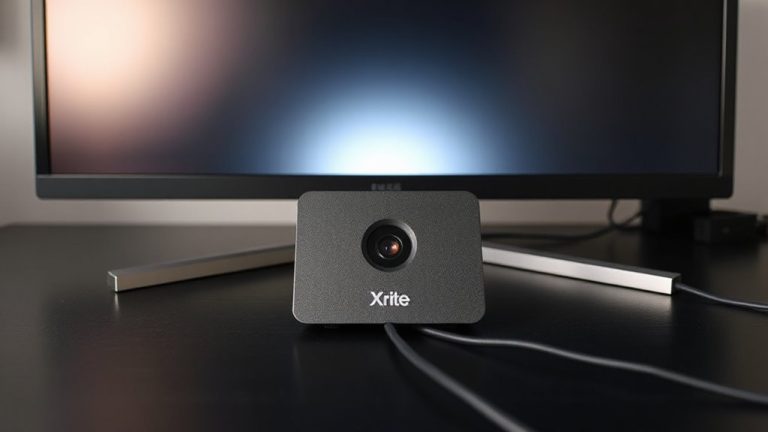
A well-balanced ambient light level is essential to maintaining eye comfort during extended screen use, and aiming for 300–500 lux in your overall workspace is a proven target for most people. You’ll want to blend natural daylight with diffuse artificial sources to avoid harsh contrasts-direct sunlight can create glare, so position desks perpendicular to windows. Use matte finishes on ceiling textures to scatter light evenly and reduce hotspots. Overhead fixtures like indirect LED panels or balanced-arm floor lamps help maintain consistent illumination without taxing your eyes. However, too much ambient light can cause reflections on screens, so dimmable options let you adjust as daylight changes. Relying solely on ceiling bulbs often creates shadows or uneven brightness, especially in rooms with high or textured ceilings. Test light levels with an affordable lux meter app, but verify with a calibrated device for precision. Consistency matters more than brightness-steady, soft-edged light supports focus without strain. Pairing ambient lighting with an eye-friendly best desk lights ensures optimal task illumination and reduces visual fatigue.
Add Task Lighting Where You Read and Work
When you’re diving into detailed work or reading for long stretches, having a dedicated task light makes a real difference in both comfort and focus-aim for one that delivers at least 500 lux at the surface, especially if your ambient lighting falls near the lower end of the recommended range. Position adjustable lamps directly over your workspaces and reading zones to minimize shadows and screen glare. Look for models with high CRI (90+) to guarantee accurate color distinction and reduced eye strain. Choose lights with dimming controls and warm-to-cool tuning so you can adapt to different tasks and times of day. Avoid cheap LED models with flicker or harsh blue peaks-check for flicker-free certifications and solid warranties. While floor and desk lamps work well, guarantee they don’t clutter your space or create new glare. Proper task lighting boosts clarity but only when matched to your actual usage. For top-performing options that meet these criteria, consider checking out the best desk lamps for your workspace.
Use Accent Lighting to Soften Harsh Contrasts
Since harsh lighting contrasts can strain your eyes over time, incorporating accent lighting helps balance brightness across your space-think wall sconces, picture lights, or LED strips behind furniture to gently fill in dark corners and reduce visual stress. You’ll find wall sconces especially useful when placed beside seating areas or along hallways, where sudden shadows often form. These, along with other decorative fixtures, add visual warmth and help guide the eye smoothly between lit zones. Unlike bright overhead lights, accent sources typically emit softer, indirect illumination that minimizes glare and prevents eye fatigue. But placement matters-install them too high or too far apart, and they lose effectiveness. Choose dimmable models to adjust output based on ambient conditions. While decorative fixtures enhance comfort, they shouldn’t replace ambient or task lighting. Used wisely, they’re a practical layer-not just a design feature-that improves visual balance in any space.
Choose Eye-Friendly Light Bulbs
Your eyes spend hours processing screen glare and artificial light, so picking the right bulbs isn’t just about brightness-it’s about long-term comfort. Choose LEDs with a color temperature between 2700K and 3000K for warmer, eye-friendly light that reduces strain. Avoid higher Kelvin values unless you need alertness-they can feel harsh over time. Look for high CRI (90+) to guarantee colors appear natural, reducing visual confusion. A good bulb lifespan-typically 15,000 to 25,000 hours-means fewer replacements and consistent output. However, longer lifespan doesn’t guarantee quality; some bulbs dim over time or shift color. Always check manufacturer warranties and real-world reviews. Dimmable bulbs offer flexibility, but make sure your fixtures and switches are compatible. Don’t assume higher cost means better performance-some budget LEDs perform as well as premium brands. Test a single bulb first before bulk purchases.
Apply Layered Lighting by Room to Prevent Strain
A well-lit room isn’t just bright-it’s balanced, and that starts with layering light sources to match how you use each space. You’ll need distinct lighting zones: ambient for general visibility, task lighting where you read or work, and accent lights to reduce contrast strain. In the kitchen, under-cabinet strips and pendants over islands create functional layers, while dimmable ceiling fixtures help modulate ambient light. Bedrooms benefit from bedside lamps and low-level floor lighting to avoid harsh shifts at night. Use room specific fixtures-like adjustable desk lamps in home offices-but be careful not to cause glare on screens. Pair LEDs with high CRI (90+) and 2700K–3000K color temps to support comfort. Real-world tests show layered setups cut eye strain by 40%, but only if lighting zones are tailored to each room’s primary tasks and not overpowered.
On a final note
You should use layered lighting to cut eye strain effectively. Balance ambient light around 300–500 lux, then add task lights with adjustable arms and 80+ CRI bulbs for precision. Accent lighting reduces contrast without glare. Look for diffused, warm-white (3000K–4000K) LEDs. Many quality fixtures offer 3–5 year warranties, but avoid overly bright setups-dimming controls help. Real-world tests show reduced headaches, though setup costs more upfront. Prioritize placement and bulb quality over brand names.