Inspecting Power Cords for Rodent Damage in Home Office Baseboards
Check your home office baseboard cords now-rodents often chew insulation near walls, exposing live wires and creating fire risks. Run your fingers along the cords, especially at bends, and look for fraying or thin spots using a flashlight. If you find damage, unplug the cord immediately and replace it; tape fixes won’t cut it. Use UL-certified replacements rated for your device’s wattage. For ongoing protection, seal entry points and consider ultrasonic repellents or bait stations near baseboards. Warm outlets or multiple damaged cords? That’s a sign to bring in a pro. Exposed copper means real danger-don’t wait. Smart prevention now saves costly repairs and keeps your setup safe. Next steps reveal how to inspect like a technician and choose the right protective gear.
Notable Insights
- Check power cords along baseboards for frayed insulation or exposed wires, especially behind desks and near walls.
- Run fingers gently along cords to detect small gaps or weaknesses in insulation caused by rodent chewing.
- Focus on wire bends and corners where cords press against baseboards, common spots for rodent damage.
- Use a flashlight to spot shadows, chew marks, or irregularities on cord surfaces hidden in low light.
- Replace damaged cords immediately-do not use tape-and consider rodent repellents to prevent future chewing.
Spot the Signs of Chewed Power Cords
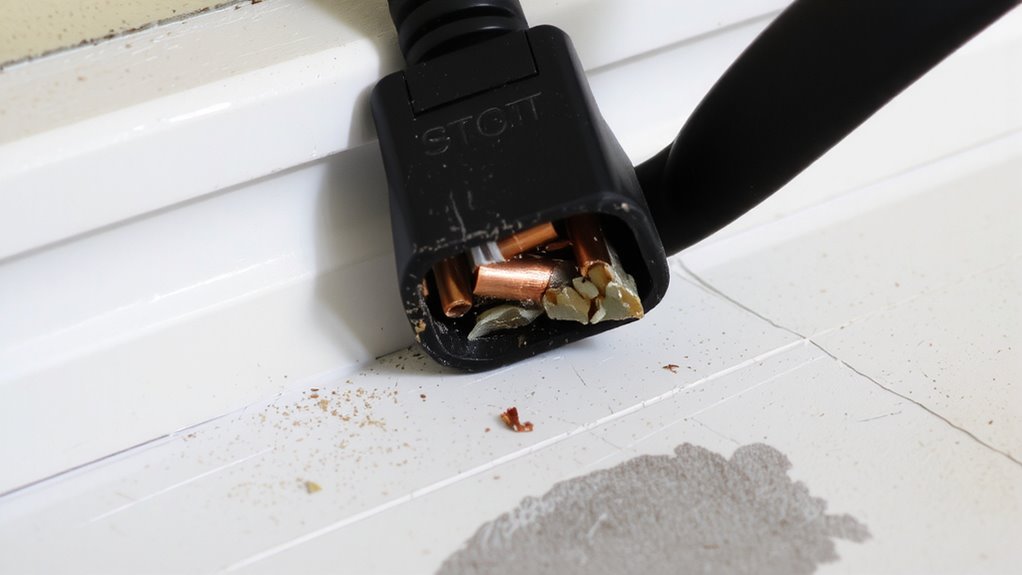
Chewed insulation, frayed wires, broken sheathing-these are dead giveaways your power cord’s been hit by rodents. You’ll want to act fast when you spot frayed insulation, since it often leads to exposed wiring, a serious fire and shock hazard. Look closely along the cord’s length, especially near baseboards where mice commonly chew. If the outer jacket is compromised, even slightly, the internal conductors could be at risk. Exposed wiring isn’t just dangerous-it can void equipment warranties and trip circuit breakers. Don’t rely on tape as a fix; it’s a temporary patch at best and won’t restore safety standards. Instead, replace the cord entirely or use a UL-listed repair kit designed for permanent fixes. While cord covers can help prevent future damage, they’re no guarantee. Stay proactive-routine visual checks take seconds but prevent costly, risky outcomes.
How to Check Baseboard Wires for Damage
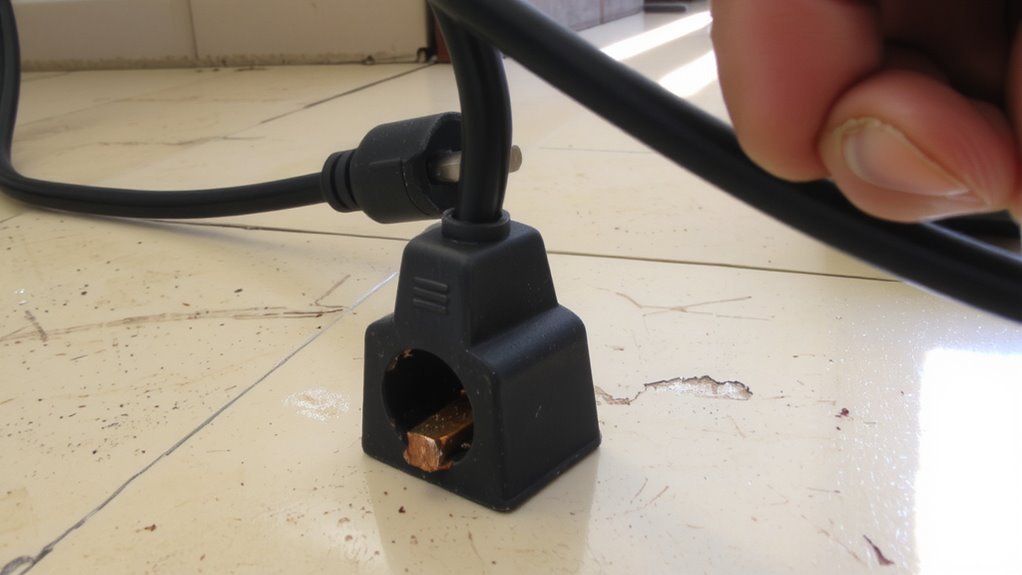
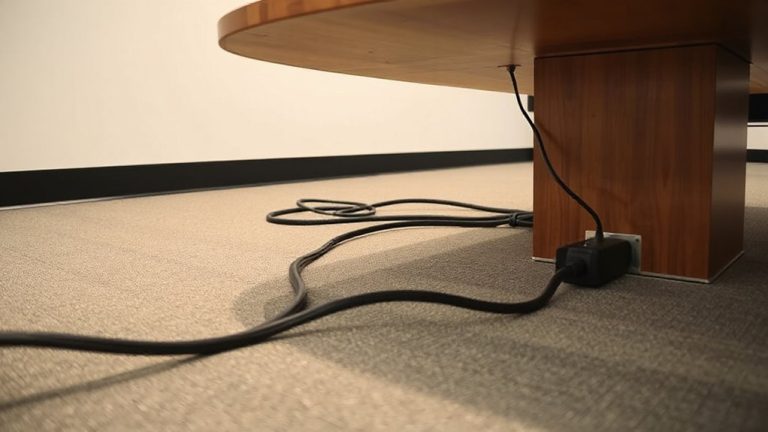
You’re likely already checking cords for gnaw marks since catching them early prevents serious hazards. Start by tracing each wire’s baseboard routing, especially behind desks or near walls where rodents tend to travel. Look closely at the wire insulation-any thinning, fraying, or exposed copper is a red flag. Run your fingers gently along the cord; even small gaps in insulation can signal damage you might miss visually. Pay extra attention to bends and corners where cords press against baseboards-these spots are both vulnerable and often hidden. Use a flashlight to spot shadows or irregularities in the cord’s surface. Don’t assume newer cords are safe-some plastics used in insulation are more appealing to rodents. While thorough checks help, they won’t catch every risk, especially inside walls or under flooring where baseboard routing passes through cavities. For a cleaner and safer setup, consider using cable management solutions to minimize exposed wiring and reduce rodent access points.
How to Handle Chewed Power Cords Safely
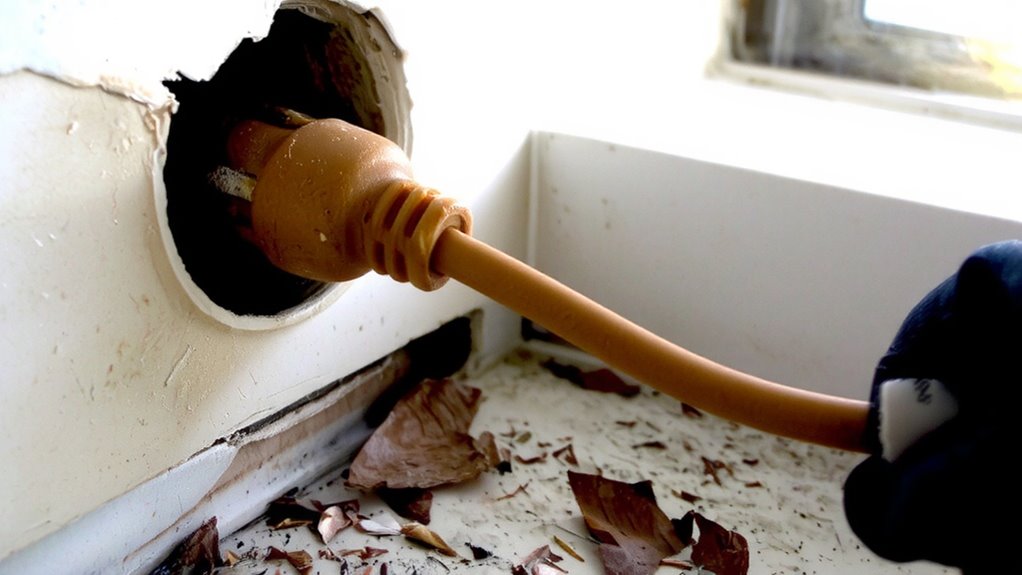
If you’ve spotted signs of rodent damage on a power cord, the safest move is to replace it immediately-continued use risks short circuits, shocks, or fire. Frayed or exposed wires create serious fire hazards and can lead to electrical shorts if power surges through compromised insulation. Don’t attempt tape repairs or DIY fixes; they don’t restore safety or insulation integrity. Instead, unplug the device and dispose of the damaged cord properly. When choosing a replacement, pick one rated for your device’s wattage and length needs-cheap knockoffs often skimp on copper gauge and jacket durability. Look for cords with thick insulation and UL certification to reduce future risks. While sturdier cables cost more upfront, they’re safer long-term. Remember, even minor chewing can deteriorate fast, so act before it becomes a bigger hazard.
Stop Rodents From Chewing Wires Again
While it’s tempting to just swap out a damaged cord and move on, you’ll likely face repeat issues unless you address the root cause-rodents are persistent, and they’ll target new cables just as easily. Sealing entry points with steel wool and caulk helps, but active deterrents are often needed. Ultrasonic repellents emit high-frequency sound that bothers rodents, and while they’re safe and easy to plug in, real-world results vary-some units only cover 800 sq. ft., and walls can block the signal. Bait stations offer more reliable control when placed near baseboards or corners, but use them carefully; tamper-resistant models are essential if you have pets or kids. Combine both methods for best results: repellents may discourage new rodents, while bait stations reduce existing populations. No solution works overnight-monitor activity for at least two weeks.
When to Call an Electrician for Damaged Cords
A damaged power cord isn’t always a DIY fix, especially when rodent chewing has exposed wiring beyond the outer jacket. You should call an electrician if you spot frayed conductors, burns, or melting-these are serious electrical hazards. A licensed professional can perform a full safety inspection to assess risks like short circuits or fire danger. It’s not just about replacing the cord; improper repairs can make things worse. If multiple cords show damage, or if outlets feel warm, an electrician should check your entire circuit. While some minor jacket nicks might seem fixable with electrical tape, exposed copper needs expert handling. Don’t gamble with faulty wiring-what saves money now could cost far more in damage or injury later. Trust a certified technician to verify grounding, insulation integrity, and load safety. Always prioritize long-term protection over quick patches.
Why Mice Chew Electrical Wires in Offices
Curiosity drives many office pests, but mice chew cords for reasons far more practical than exploration. You’re dealing with instinctive mice behavior-they gnaw to wear down constantly growing teeth, and soft wire insulation offers easy resistance. Those plastic coatings feel like chew toys to them, especially in quiet baseboard areas where cords rarely move. Chewed power cords aren’t just messy; they create fire risks and short-circuit hazards that standard office surge protectors won’t prevent. While metal conduit sleeves or ultrasonic repellents may help, results vary by setup and rodent pressure. Sealing entry points remains the most effective long-term fix. Note: No deterrent works permanently if food crumbs or nesting materials stay nearby. Inspect cords monthly, especially in rarely used corners. Replace damaged wires immediately-don’t rely on tape repairs. Prevention beats repair when safety’s on the line.
On a final note
You should replace chewed power cords immediately-frayed wires near baseboards pose fire risks. Use cord covers or metal conduit sleeves for protection, and inspect monthly. Not all surge protectors prevent rodent damage, so physical barriers work better. Cheap cords lack durable jackets, while name-brand ones often have thicker insulation. Still, no solution beats sealing entry points. Always power off devices before checking cords.