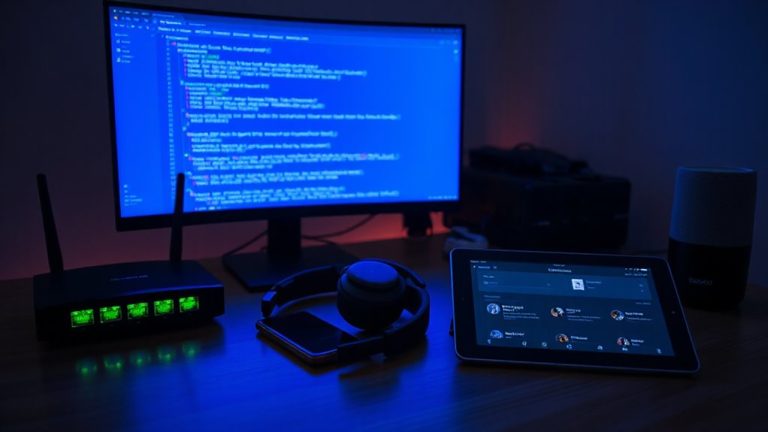
Selecting LED Lights With Low Melatonin Suppression for Evening Work Sessions
Choose warm-white LED bulbs at or below 2700K to reduce melatonin disruption during evening work. These emit less blue light than cool-white LEDs, though even warm LEDs have trace blue emissions-position them to the side or behind your monitor to minimize exposure. Opt for flicker-free models from reliable brands like Philips or LIFX, which publish spectral data and offer at least a 3-year warranty. Use dimmable, color-tunable LEDs with high CRI (90+) for flexibility. Keep task lighting between 300–500 lumens to maintain focus without glare. Lower brightness below 3000K and avoid over-dimming below 100 lux to prevent eye strain. Pair with matte surfaces and ergonomic setup for a calmer environment. More details on optimizing your setup follow.
Notable Insights
- Choose LED bulbs with a color temperature of 2700K or lower to minimize melatonin suppression during evening work.
- Opt for warm white or red-tinted LEDs, as they emit less blue light and better support circadian rhythm.
- Select flicker-free LED models verified by oscilloscope testing to reduce eye strain and maintain focus.
- Use dimmable, color-tunable LEDs to adjust brightness and shift to warmer tones as evening progresses.
- Position warm LEDs to the side or behind workstations to reduce direct exposure and blue light impact.
Choose LED Lights That Won’t Disrupt Your Sleep
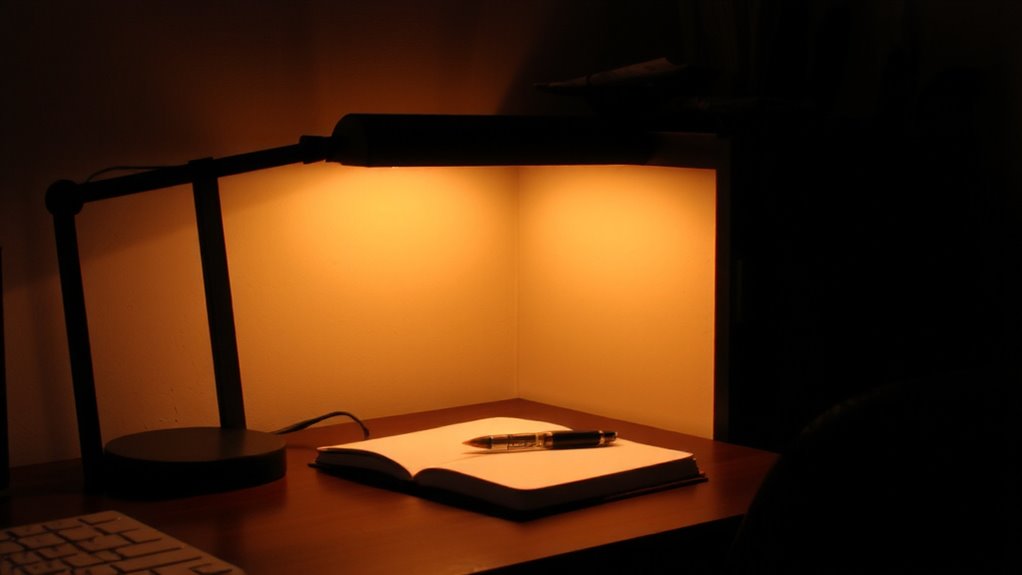
While warmer LED lights can help you stay alert during evening work without wrecking your sleep, you’ll want to pick bulbs carefully to avoid unintended side effects. Look for LEDs with color temperatures at or below 2700K-they mimic natural finishes of sunset light and reduce melatonin disruption. Pair these with fixtures designed for ergonomic placement, like adjustable desk lamps or wall-mounted options that minimize glare and shadows. Avoid overly bright lumens; aim for 300–500 to maintain a comfortable visual field. Dimmable models let you tailor brightness as evening deepens. Keep in mind that even warm LEDs emit some blue spectrum light, so distance matters-position lights to the side or behind your monitor. Reliable brands like Philips and LIFX offer solid warranties and real-world tested performance. However, no bulb is perfect; balance quality light with smart workspace design. For targeted lighting solutions, consider using a best light therapy lamp that’s designed to support circadian health without overexposure in the evening.
Avoid Blue Light From LEDs at Night
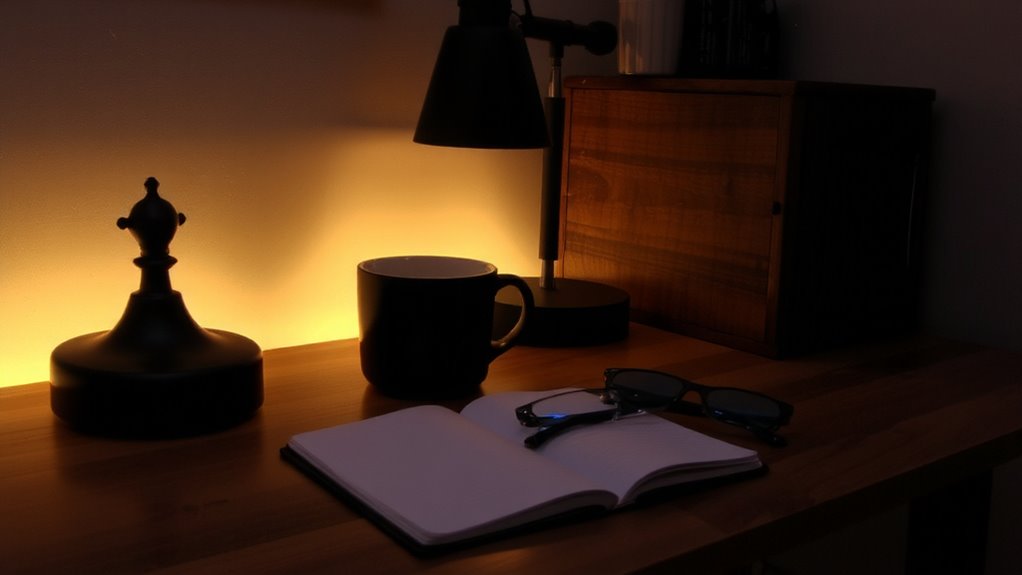
Why does it matter what kind of light you’re staring at during late-night work sessions? Because exposure to the blue spectrum in standard LEDs tricks your brain into thinking it’s daytime, suppressing melatonin and messing with your sleep. You might stay alert now, but pay for it tomorrow. Most cool-white LEDs emit strong blue light, and many also produce subtle light flicker-imperceptible but potentially disruptive to focus and eye comfort over hours. While flicker-free models exist, they’re not always labeled clearly. Look for lights tested with oscilloscopes and verified low in blue output. Even then, reducing screen and ambient LED brightness after 8 PM helps. Avoid ultra-bright task lighting unless needed. There’s a real trade-off: visibility now versus rest later. You can’t eliminate all risk with gear alone-behavior matters just as much. Consider wearing blue light glasses to further reduce exposure during evening screen use.
Pick Warm, Amber or Red-Toned Bulbs
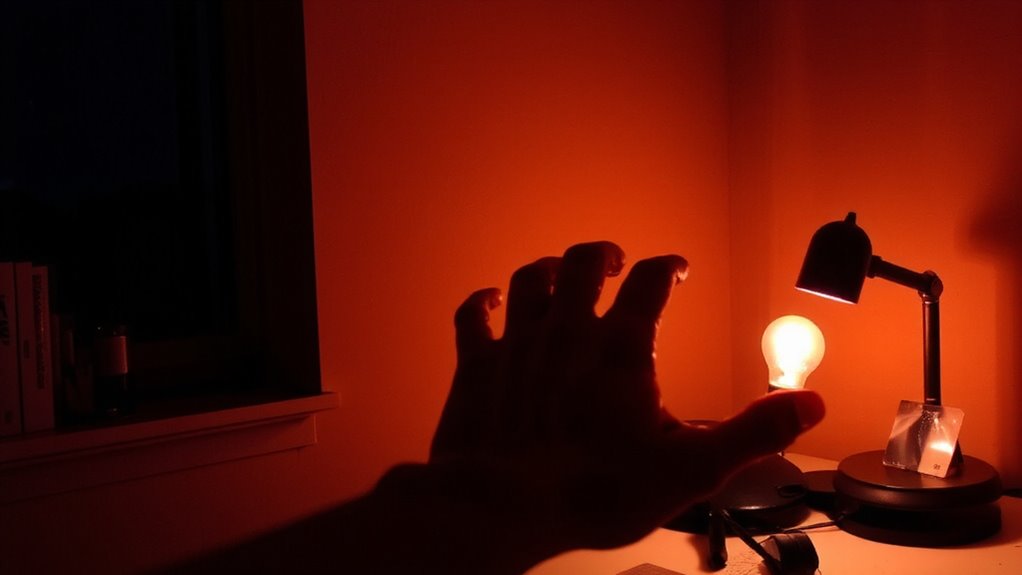
If you’re working late, switching to warm, amber, or red-toned LED bulbs makes a measurable difference in preserving your natural sleep rhythm. These bulbs emit a color temperature below 3000K, shifting the light spectrum away from sleep-disrupting blue wavelengths. Research shows that warmer tones suppress melatonin less than cool white LEDs, helping you stay alert without wrecking your circadian timing. Unlike standard office LEDs peaking around 450nm (blue), amber and red-toned lights operate at 600–700nm, where melatonin sensitivity drops sharply. Practical trade-offs exist: warm lighting may reduce visual clarity for detailed tasks, so pair it with task-specific fixtures if needed. Look for LEDs labeled “warm white” (2700K–3000K) or “red-tinted” for evening use. Check packaging for spectral distribution data-some brands publish this in their product specs. While these bulbs support better sleep hygiene, they’re not a fix-all; brightness and duration of exposure still matter.
Use Dimmable LEDs With Color Control
Dimmable LEDs with color control give you direct influence over both light intensity and color temperature, letting you adapt your workspace as evening hours set in. You can lower the color temperature to warmer tones-below 3000K-and reduce dimming levels to minimize melatonin disruption during late tasks. These fixtures let you fine-tune lighting dynamically, matching physiological needs without switching bulbs. Most quality models use PWM or constant current reduction for smooth dimming, though some may flicker at low levels-check manufacturer specs for compatibility with leading-edge or trailing-edge dimmers. Look for CRI values above 90 and a warranty of at least 3 years to guarantee lasting performance. While pricier than static LEDs, the flexibility supports both focus and circadian health. Just avoid over-dimming, which can strain eyes if illumination falls below 100 lux on task surfaces.
Lower Brightness With Task Lighting
A well-placed task light with adjustable brightness is often all you need to maintain visibility during evening work without flooding your space in harsh overhead illumination. Using lower brightness where you actually need it reduces eye strain and helps preserve natural melatonin levels. Task lighting directs light precisely onto your desk, letting you work comfortably at 300–500 lux, which is enough for reading or typing but low enough to avoid overstimulation. Plus, a focused beam means you can keep ambient lights off, further minimizing blue light exposure. Many modern LED task lights offer dimming and color tuning, supporting both focus and circadian health. Just make sure the fixture is adjustable for posture support-swing arms and pivot heads let you position light without hunching. Avoid overly bright settings; even warm LEDs can cause glare or discomfort if too intense. Look for models with stable bases and wide dimming ranges tested by independent labs for flicker and accuracy. A top-performing office water dispenser can contribute to overall workplace wellness by encouraging proper hydration without disrupting circadian rhythms with unnecessary light exposure.
Set Up a Sleep-Friendly Evening Workspace
You’re already using a dimmable task light to limit brightness and blue light during evening work-that same control is your starting point for building a sleep-friendly workspace. Pair that light with ergonomic furniture, like a height-adjustable desk and supportive chair, to reduce physical strain without overstimulating your senses. These pieces help maintain posture and comfort, but prioritize models with muted finishes and minimal backlighting to avoid visual clutter. Integrate natural decor-think wooden trays, stone coasters, or potted plants with matte, non-reflective surfaces-to soften the space and stabilize mood. Avoid glossy or metallic finishes; they reflect residual light, disrupting circadian cues. While wood and fabric add warmth, make sure they’re low-VOC to prevent air quality issues. Real plants improve humidity but require upkeep-opt for low-maintenance varieties like snake plants. Every item should serve function and calm, not novelty. Test arrangements over three nights to gauge true impact on alertness and comfort.
Combine Good Lighting With Healthy Night Habits
How can you make evening work both productive and rest-friendly? You’ll want to align your light exposure with your circadian rhythm by using LED lights that minimize blue wavelengths, ideally below 3000K color temperature. These settings reduce melatonin suppression, helping you stay alert without disrupting sleep later. Pair this with consistent habits-like stepping away from screens 60 to 90 minutes before bed and avoiding bright overhead lighting during wind-down time. Dimmable LEDs with warm color tuning let you adjust brightness and hue as the night progresses. While warmer lights support better sleep cycles, remember that even low-impact lighting can interfere if used too late or too brightly. Combine your setup with routine-based cues-regular meal times, limited caffeine after 4 p.m., and scheduled breaks-to strengthen your body’s internal clock. Good lighting isn’t a fix-all, but it’s a proven part of smarter, healthier evening work.
On a final note
Choose warm-colored, dimmable LEDs below 3000K to reduce melatonin suppression during evening work. Bulbs with high red or amber output-like those labeled “circadian-friendly”-show measurable benefits in sleep studies. Look for flicker-free models with a CRI above 90 for accuracy without eye strain. Pair with task lighting to limit overall brightness. Note: warmer lights may slightly lower visibility, so adjust placement or add supplemental lighting where needed.