Using a Shelf Desk That Doubles as a Bookshelf for Space Efficiency
You save space by using a shelf desk that doubles as a bookshelf, especially in tight rooms where floor area matters. Pick a unit with 20–24-inch depth to keep walking space clear and guarantee shelves clear your head when seated. Solid wood or steel frames typically support 30–50 lbs per shelf and often come with a five-year warranty. Avoid overloading particleboard models. Use modular bins and clip-on lights to stay organized and boost function-there’s more to get right.
Notable Insights
- Combine desk and bookshelf to save floor space, ideal for small rooms or apartments.
- Choose a desk depth of 20–24 inches to avoid obstructing walkways and ensure ergonomic comfort.
- Use floating or corner shelf desks to maximize vertical space and minimize floor footprint.
- Opt for adjustable shelves and modular storage to customize organization and reduce clutter.
- Select durable materials like solid wood or steel, and ensure wall anchoring for stability and safety.
Why Combine a Desk and Bookshelf?
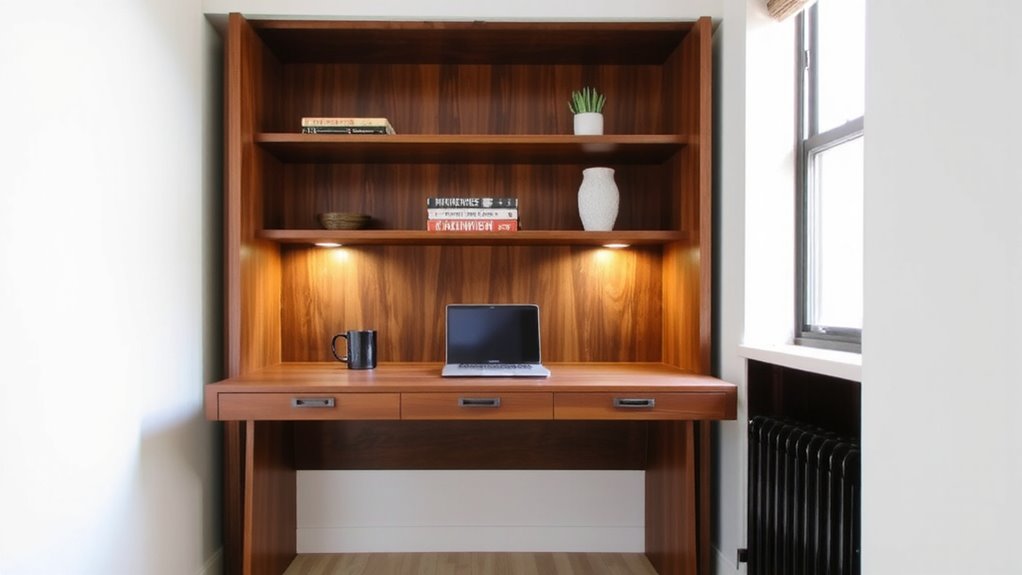
While you might be tempted to buy a separate desk and bookshelf for your home office, combining the two can save significant floor space-especially in apartments or compact rooms. This furniture integration maximizes your layout through smart space optimization, letting you fit a workstation and storage where a single piece alone might dominate. You’ll often free up corners or wall sections for other uses, like seating or movement. Most combo units fit within standard depths-around 20–24 inches-so they don’t push into walking space. Just make certain the shelf height allows comfortable head clearance when seated. While some models sacrifice sturdiness or load capacity, tested solid-wood or steel-framed options support up to 50 lbs per shelf. Check warranty length-five years is typical for mid-tier brands. Assembly time averages 60 minutes. Still, if you need expansive work surfaces or deep storage, separate pieces may suit better. For compact rooms, consider a corner desk as it efficiently utilizes often-wasted角落 space.
Choose the Right Size and Style
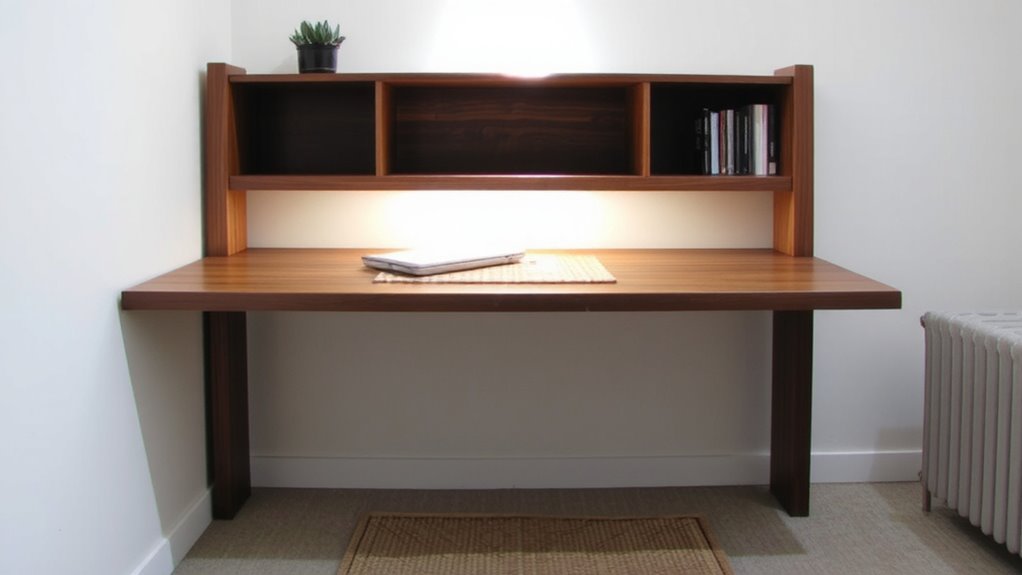
Most shelf desks work best when they match your room’s dimensions and your storage needs, so measure your space and plan accordingly. Choose desk dimensions that leave at least 24 inches of walking clearance and fit under windows or ceilings without blocking outlets or vents. A desk too large crowds the room; one too small limits workspace and shelf capacity. Go for a depth of 20–24 inches and a height around 29–30 inches for standard ergonomics. Style matching matters-pick a finish and design that complements your existing furniture to avoid a disjointed look. Whether modern, rustic, or minimalist, consistent style matching strengthens the room’s cohesion. Watch for materials: solid wood lasts longer but costs more; laminate resists scratches but can chip. Some models offer adjustable shelves, which help fit taller books or decor. Always check weight limits and assembly difficulty before buying. A well-chosen shelf desk can be one of the best home office desks for maximizing both productivity and space efficiency.
Use Smart Storage to Beat Clutter
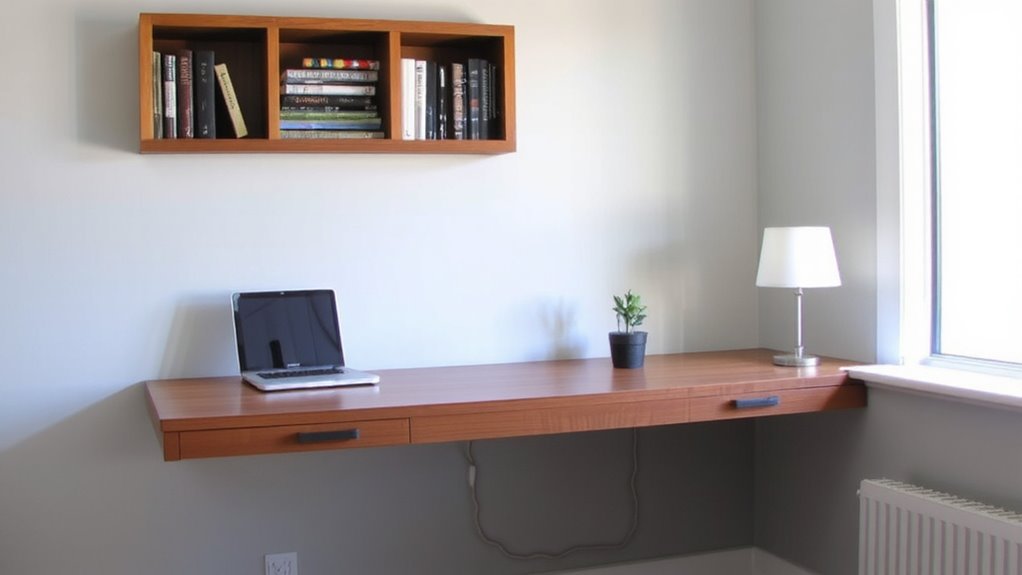
Since shelf desks double as both workspace and storage, you’ll want to keep clutter under control by organizing strategically. Smart storage isn’t just about fitting more in-it’s about making everything easier to find and use. Modular containers let you customize shelf spaces, while stackable bins maximize vertical room without tipping hazards. But don’t overcrowd; overloading bins can make access frustrating and look messy.
| Storage Type | Best For | Watch Out For |
|---|---|---|
| Modular containers | Custom compartmentalizing | Misaligned sizing |
| Stackable bins | Vertical expansion | Instability when tall |
| Drawer dividers | Small office supplies | Limited adjustability |
| Magnetic strips | Metal tools & clips | Weak hold on thick items |
Balance function with form-efficient storage should reduce stress, not add visual noise.
One effective way to enhance functionality is by choosing from the best desktop shelves for your workspace, which are designed to integrate seamlessly with shelf desks.
Find Shelf Desk Designs That Save Small Spaces
If you’re tight on square footage, a well-chosen shelf desk can be a game-changer-just make sure it’s built for real-world use, not just small-space hype. Floating shelves mounted above your desk surface boost vertical storage without crowding floors, ideal for books, bins, or decor. Corner units fit snugly into unused angles, turning dead space into functional work zones-especially helpful in studios or tight bedrooms. Look for desks with built-in shelving units that align with standard book heights (around 9–12 inches per shelf) to avoid wasted gaps. Solid wood or steel-framed models typically support more weight (up to 30 lbs per shelf) than cheap particleboard. Check weight ratings and assembly reviews-some floating designs require wall anchors. While corner units save space, they may limit legroom if depth exceeds 24 inches. Balance design with durability and real room dimensions.
Customize Your Shelf Desk Without Tools
A no-tool upgrade path makes shelf desks a practical fit for renters and minimalists who need flexibility without sacrificing function. With DIY customization and tool free assembly, you can reconfigure your shelf desk in minutes using modular bins, fabric drawers, or magnetic boards. These changes adapt your workspace to tasks without damaging walls or voiding rentals agreements. Still, avoid overloading shelves past manufacturer weight limits-most support 20–30 lbs per shelf. Here’s how small changes create real impact:
| Change | Emotion Evoked | Practical Benefit |
|---|---|---|
| Add greenery | Calm, focus | Improves air quality, reduces stress |
| Use woven baskets | Warmth, order | Hides clutter, softens sharp lines |
| Clip-on lights | Energy, precision | Boosts task lighting, no wiring |
Results vary by model-check fit and clearance. Tool free assembly doesn’t mean permanent stability; periodically check shelf alignment.
On a final note
You’ll save space without sacrificing function by choosing a shelf desk that doubles as a bookshelf. Solid back panels and adjustable shelves handle daily wear, while sturdy brackets support up to 50 lbs per shelf. Just avoid overloading the top-thinner desktops may sag under heavy monitors. Pick one with a depth of at least 20 inches for comfortable typing. Assembly is straightforward, but check return policies in case sizing doesn’t fit your room.