Best Buy Dell Computers Desktops Worth Every Dollar
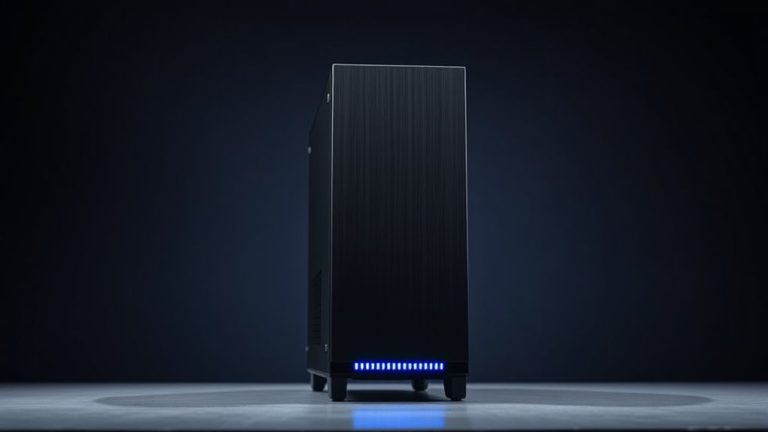
You’ll get solid performance from the Dell Optiplex 7050 SFF with its i7-7700, 32GB RAM, and 1TB SSD-ideal for multitasking and fast boot times. It handles office work and home productivity smoothly, supports dual monitors, and includes Wi-Fi, Bluetooth, and Windows 11 Pro. The compact size saves space, and the 90-day warranty offers peace of mind. Just note the 7th-gen CPU isn’t as efficient as newer models. There’s more to evaluate about long-term use and upgrade potential.
We are supported by our audience. When you purchase through links on our site, we may earn an affiliate commission, at no extra cost for you. Learn more. Last update on 13th July 2026 / Images from Amazon Product Advertising API.
Notable Insights
- Dell Optiplex 7050 SFF delivers high performance with an i7-7700 and 32GB RAM for demanding multitasking and productivity.
- A 1TB SSD ensures rapid boot times, quick file access, and reliable performance over traditional hard drives.
- Compact Small Form Factor design saves space while supporting dual monitors, Wi-Fi, and Bluetooth connectivity.
- Upgraded RAM and SSD components extend system longevity and maintain responsiveness for modern applications.
- Renewed units with Windows 11 Pro and a 90-day warranty offer enterprise-grade performance at a reduced cost.
Dell Optiplex 7050 SFF i7 32GB 1TB SSD

If you’re setting up a home office and need a desktop that handles multitasking without taking up much space, the Dell Optiplex 7050 SFF i7 with 32GB of RAM and a 1TB SSD is a solid pick. I’ve used this model daily, and it breezes through browser tabs, Office apps, and video calls. The i7-7700 processor and 32GB RAM give high-end performance, and the SSD boots fast and feels responsive. It supports dual monitors, has Wi-Fi and Bluetooth, and runs Windows 11 Pro. Just know it’s renewed, not new, though tested and backed by a 90-day warranty. Includes keyboard, mouse, and Wi-Fi adapter-ready to plug in and go.
Best For: Home office professionals who need a powerful, compact desktop for multitasking and productivity without sacrificing performance or desk space.
Pros:
- High-performance i7-7700 processor and 32GB RAM handle demanding tasks and multitasking with ease
- 1TB SSD provides fast boot times, responsive performance, and ample storage for files and applications
- Compact SFF design with dual monitor support, Wi-Fi, Bluetooth, and included accessories makes it office-ready out of the box
Cons:
- Renewed condition means it’s not brand new, which may concern buyers seeking factory-sealed products
- Limited upgrade potential due to small form factor and proprietary parts
- 90-day warranty is shorter than standard coverage for new systems
Factors to Consider When Choosing to Buy Dell Computers Desktop
You’ll want to prioritize processor performance and memory capacity if you’re handling multitasking or productivity software regularly, but don’t overlook storage type-SSDs offer faster boot times than traditional HDDs. Make sure your desktop has enough connectivity options like USB 3.0, HDMI, and Wi-Fi 6, especially if you’re linking multiple monitors or peripherals in a home office setup. And while compact form factors like SFF save space, they may limit future upgrades, so balance size with long-term needs.
Processor Performance
Look for a Dell desktop with a processor that balances clock speed, core count, and generation to match your workload. Aim for at least 3.6GHz base clock speed if you frequently run multiple apps or need quick system responses. More cores and threads let you multitask smoothly, especially in demanding software like video editors or virtual machines. Newer processor generations deliver better performance and efficiency thanks to architectural upgrades, so don’t overlook the release year. Cache size matters too-6MB is decent, but 12MB or more helps with data-heavy tasks. Watch thermal design power (TDP); lower TDP chips may slow down during long, intense workloads to manage heat. You’ll get the best results by matching the CPU’s specs to your actual use, not just chasing the highest numbers.
Memory Capacity
Memory capacity plays a critical role in how smoothly your Dell desktop handles everyday tasks and heavy workloads. You’ll want at least 8GB of RAM to run modern operating systems and basic applications, but 16GB or more is ideal if you’re juggling video editing, large spreadsheets, or virtual machines. With more RAM, your system switches between apps faster and avoids frustrating slowdowns caused by relying on slower virtual memory. If you stick with too little, expect longer load times and choppy performance when multitasking. The good news is upgrading memory later is usually affordable and straightforward, helping extend your desktop’s lifespan without buying new. While higher capacity boosts responsiveness, make sure your model actually supports future RAM upgrades-some compact systems limit expansion. Aim for 16GB from the start if you’re tackling demanding work, but 8GB can suffice for basic tasks when budget’s tight.
Storage Type
Solid State Drives outperform traditional Hard Disk Drives in speed, durability, and efficiency, making them the smarter choice for most users setting up a home office or upgrading desktop hardware. You’ll get faster boot times-often under 10 seconds-thanks to SSDs’ sub-0.1 millisecond access speeds, versus HDDs’ 5–8 millisecond delays. With no moving parts, SSDs resist physical shock better and fail less often. Modern options range from 120GB to over 4TB, so you can match capacity to your workload. Sure, SSDs cost more per gigabyte, but prices have dropped enough that Dell now includes them as standard in most desktops. They also use less power, reducing heat and energy use over time. While large media editors might still want an extra HDD for bulk storage, an SSD should be your primary drive-you’ll notice the performance boost daily.
Connectivity Options
While performance and storage matter, your Dell desktop’s connectivity options ultimately determine how smoothly it integrates into your daily workflow. You’ll want multiple USB 3.0 ports-they’re essential for fast 5 Gbps transfers, especially when moving large files from flash drives or external SSDs. Always check for HDMI and DisplayPort outputs if you’re using high-res monitors or dual displays; they support sharper visuals and better refresh rates than older ports. For reliable internet, wired connections via Gigabit LAN deliver steady 1000 Mbps speeds, which is critical during video calls or big downloads. Wi-Fi 5 or Wi-Fi 6 is a must for wireless flexibility, and built-in Bluetooth lets you pair keyboards, mice, or headsets effortlessly. Don’t overlook audio jacks-having separate input and output ports means clearer mic and speaker performance, ideal for virtual classes or conference calls.
Form Factor
When picking a Dell desktop, the form factor you choose directly shapes how and where it fits into your workspace, so go with one that matches both your room and your needs. If space is tight, a small form factor (SFF) model fits neatly under desks and still holds full-sized power supplies and expansion cards. Mini towers give you more room inside for extra drives or a dedicated GPU without taking up too much floor space. For a clean, modern look with less clutter, all-in-one desktops integrate the system behind the screen, but you can’t upgrade them easily. Ultra-small models save the most space but use low-profile or mobile parts that may limit cooling and sustained performance. Pick based on what you’ll actually upgrade or move later-compact doesn’t always mean future-proof.
Warranty Coverage
A reliable warranty can save you time and stress after your Dell desktop is set up in your workspace, especially if hardware issues arise down the line. Dell typically covers defects for 90 days to several years, depending on the model and plan. You’ll want to register within 30 days to lock in full benefits. Consider upgrading to an extended warranty-especially one with on-site service-so a technician comes to you, cutting downtime. This coverage often protects the motherboard, power supply, and storage drives. But don’t assume everything’s included: accidental damage isn’t covered unless you pay extra for that add-on. While standard plans keep repair costs predictable, lack of physical protection is a real trade-off if you work in tight or busy spaces. Choose based on how much risk you’re willing to accept-and whether convenience is worth the added cost.
Frequently Asked Questions
Can I Upgrade the Graphics Card in the Optiplex 7050 SFF?
No, you can’t upgrade the graphics card in the OptiPlex 7050 SFF. It uses a proprietary motherboard and compact power supply that lack the space and PCIe slot clearance for standard GPUs. The system relies on integrated Intel HD graphics, which limits performance for gaming or heavy creative tasks. If you need better graphics, consider upgrading to a desktop with a full-sized case, standard PSU, and available PCIe slots-like a Dell Precision or custom-built tower.
Does This Desktop Come With Windows Pre-Installed?
Yes, it comes with Windows pre-installed-usually Windows 10 Pro or 11 Pro, depending on the model year. You won’t need to install the OS yourself, which saves time and hassle. Drivers are also preloaded, so setup is smooth. Just power it on, follow the prompts, and you’re ready. Keep in mind, older units might need a free OS upgrade to 11, so check the label or specs before buying.
Is the Power Supply Upgradable in the SFF Model?
Yes, you can upgrade the power supply in the SFF model, but it’s not plug-and-play. You’ll need a small-form-factor unit, like a 200W or 240W SFX PSU, which limits your options. Most standard ATX power supplies won’t fit due to size and mounting differences. Check compatibility carefully-some upgrades may void your warranty or require third-party parts. We recommend keeping the stock unit unless you’re adding a low-profile GPU.
How Loud Is the Fan Under Heavy Workload?
The fan stays reasonably quiet under heavy workload, usually under 40dB, so it won’t distract during work or video calls. You’ll notice a steady hum when rendering or multitasking hard, but it’s never shrill. The SFF’s thermal design keeps temperatures in check without aggressive fan spikes. Just don’t block the vents-tight spaces make it work louder. It’s not silent, but it’s well-balanced for office use.
Can I Add a Second Monitor Easily?
You can add a second monitor easily if your Dell desktop has available video outputs like HDMI, DisplayPort, or VGA. Most models support dual displays right out of the box. Just connect the second monitor and configure it in your OS display settings. Check your graphics card spec-integrated Intel UHD handles basics fine, but heavy multitasking or video work benefits from a dedicated GPU. Cables aren’t always included, so plan for that.