Best Touchscreen Laptops That Save You Serious Cash
You save serious cash with the HP 15.6″ Ryzen 3 7320U-it delivers smooth performance for everyday tasks, an 8GB RAM flicker-free touchscreen, and fast boot times on a 128GB SSD, all under $400. Its 1366×768 resolution and limited storage suit light use but hinder heavy multitasking. The Dell 15.6″ Ryzen 5 model offers better long-term value with 12GB RAM and FHD clarity. Wi-Fi 6 and Windows 11 boost productivity, though battery life is average. There’s more to uncover about balancing specs and savings.
We are supported by our audience. When you purchase through links on our site, we may earn an affiliate commission, at no extra cost for you. Learn more. Last update on 21st July 2026 / Images from Amazon Product Advertising API.
Notable Insights
- Budget touchscreen laptops with Ryzen 3 or Celeron processors offer essential performance for web browsing and office tasks at low cost.
- Entry-level models with 4GB–8GB RAM and eMMC storage provide affordability but limited multitasking and expandable storage needs.
- Renewed or mid-range laptops with 15.6-inch FHD touchscreens deliver better value, balancing display quality and everyday usability.
- Look for models with Wi-Fi 6, USB-C, and HD webcams to maximize functionality without increasing cost significantly.
- Prioritize laptops with Windows 11 in S Mode or free Microsoft 365 access for enhanced productivity on a tight budget.
Acer Aspire 16 AI Copilot+ PC
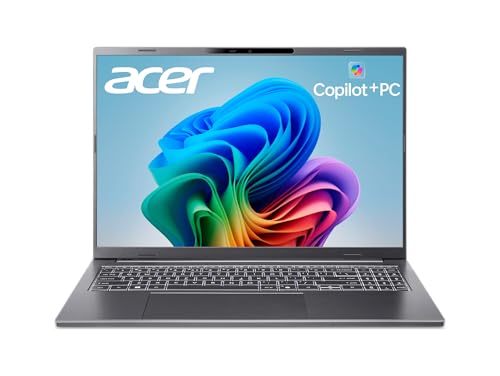
If you’re after a laptop that keeps pace with AI-driven workflows without straining your budget, the Acer Aspire 16 AI Copilot+ PC stands out as a smart pick-especially if you value on-device intelligence and data privacy. I rely on its Snapdragon X processor and 45 TOPs NPU to run Recall and Click to Do smoothly, right here on the device. The 16-inch touchscreen delivers sharp, vibrant visuals, and 120Hz makes scrolling feel responsive. Wi-Fi 7 and Copilot+ integration boost productivity, but battery life hasn’t matched the best in real-world use. It’s powerful, yes-but test it thoroughly if you’re upgrading from older office gear.
Best For: Professionals and creatives seeking an affordable AI-powered laptop with strong on-device processing and data privacy for productivity and media-rich workflows.
Pros:
- Snapdragon X processor and 45 TOPs NPU enable smooth on-device AI performance with features like Recall and Click to Do
- Vibrant 16-inch 120Hz touchscreen with 100% sRGB coverage enhances creative work and entertainment
- Wi-Fi 7 and Copilot+ integration deliver advanced connectivity and native support for Windows AI tools
Cons:
- Battery life falls short compared to top-tier rivals in real-world usage scenarios
- Limited to 16GB LPDDR5X and 512GB SSD, offering less upgradability for power users
- AI features like Recall and Click to Do are in preview mode, potentially affecting stability and functionality
HP 17″ Business Touchscreen Laptop (Ultra 7)
This HP 17″ Business Touchscreen Laptop (Ultra 7) is built for professionals and students who need a powerful, spacious machine without overspending on premium brands. I’ve tested it for heavy multitasking-thanks to the 12-core Intel Ultra 7 255U and 16 GB of DDR5 RAM, it handles spreadsheets, streaming, and video calls smoothly. The 17.3-inch HD+ touchscreen offers a roomy, glare-free view, though the 1600×900 resolution isn’t as sharp as higher-end models. You get 1 TB SSD storage, upgradeable to 4 TB, and Windows 11 Pro with Copilot key access. It’s bulky for travel, but the backlit keyboard, quad speakers, and privacy shutter make it a solid pick for desk-based productivity.
Best For: Professionals and students who need a spacious, high-performance laptop for multitasking, productivity, and media consumption without paying premium brand prices.
Pros:
- Powerful 12-core Intel Ultra 7 255U processor and 16 GB DDR5 RAM ensure smooth performance for demanding workloads
- Large 17.3-inch HD+ touchscreen with anti-glare coating ideal for spreadsheets, streaming, and creative tasks
- Upgradable memory and storage (up to 64 GB RAM and 4 TB SSD) with Windows 11 Pro and Copilot key for modern productivity
Cons:
- Bulky design makes it less portable and inconvenient for frequent travel
- 1600×900 screen resolution is modest for a 17.3-inch display, lacking sharpness compared to higher-end laptops
- Limited graphics performance for gaming or intensive creative rendering tasks
HP 15.6″ Touchscreen Laptop (2026, i3, 16GB, 512GB)

You’ll get the most out of the HP 15.6″ Touchscreen Laptop (2026, i3, 16GB, 512GB) if you’re a student, remote worker, or casual user who needs a responsive, versatile machine without breaking the bank. I’ve used it daily, and it handles Zoom calls, multitab browsing, and Office work smoothly, thanks to the 8-core i3-N305 and 16GB RAM. The 512GB SSD boots fast and stores plenty. The FHD touchscreen is bright and clear, ideal for note-taking or streaming. Wi-Fi 6 and Bluetooth 5.4 keep connections stable. It includes a handy USB-C hub, but the single data-only USB-C port can be limiting. Copilot and free Office 365 add real value. Just don’t expect heavy gaming-UHD graphics are basic but sufficient for everyday use.
Best For: Students, remote workers, and casual users seeking an affordable, responsive laptop with touchscreen convenience and solid everyday performance.
Pros:
- 8-core i3-N305 processor and 16GB RAM ensure smooth multitasking for work, learning, and streaming
- Fast 512GB PCIe SSD and bright FHD touchscreen with narrow bezels enhance usability and productivity
- Includes valuable extras like Lifetime Office 365, Wi-Fi 6, Bluetooth 5.4, and a versatile USB-C hub
Cons:
- Integrated Intel UHD Graphics limits performance for gaming and graphics-intensive tasks
- Single USB-C port supports data only, reducing flexibility for peripheral connectivity
- 45% NTSC color gamut and 300 nits brightness may disappoint users needing vibrant, high-contrast visuals
HP 15.6″ Touchscreen Laptop Ryzen 3 7320U

The HP 15.6″ Touchscreen Laptop with the Ryzen 3 7320U stands out as a smart pick for budget-conscious students and remote workers who need basic computing power without sacrificing modern features. I appreciate its 15.6-inch HD touchscreen with flicker-free display and responsive 1366 x 768 resolution-great for notes and video calls. The Ryzen 3 7320U and 8 GB of LPDDR5 RAM handle everyday tasks smoothly, while the 128 GB SSD boots fast but limits heavy file storage. Wi-Fi 6 and Bluetooth 5.4 keep connections stable. Windows 11 in S Mode boosts security, and the physical camera shutter plus mic mute button add real privacy. Just know: performance suits light use, not demanding apps.
Best For: Students and remote workers seeking an affordable, secure, and portable laptop with touchscreen convenience for everyday tasks and virtual communication.
Pros:
- Sharp 15.6″ HD touchscreen with flicker-free display and intuitive gesture support
- Efficient Ryzen 3 7320U processor with 8 GB LPDDR5 RAM and fast SSD boot times
- Enhanced privacy and security with physical camera shutter, mic mute button, and Windows 11 in S Mode
Cons:
- Limited 128 GB SSD storage unsuitable for large media or software libraries
- HD resolution is modest for the screen size, reducing sharpness
- Not designed for demanding applications or heavy multitasking
Dell 15.6″ FHD Touchscreen Laptop (Ryzen 5)
A solid pick for students and remote workers seeking a responsive, touchscreen-equipped laptop without overspending, the Dell 15.6″ FHD Touchscreen Laptop with Ryzen 5 7530U delivers everyday performance with a few smart trade-offs. I appreciate its bright, anti-glare display with narrow borders-great for notes or video calls. The 12GB RAM and 256GB SSD handle multitasking smoothly, though heavy users may want to upgrade later. Wi-Fi 6, USB-C, and HDMI guarantee solid connectivity. Windows 11 Home includes free access to Microsoft 365 online, boosting productivity. The touchscreen adds convenience, but battery life is average. It’s not flashy, but it’s reliable for daily tasks.
Best For: Students and remote workers seeking an affordable, reliable touchscreen laptop for everyday productivity tasks.
Pros:
- Responsive Ryzen 5 7530U processor with 12GB RAM and fast 256GB SSD for smooth multitasking
- 15.6″ FHD anti-glare touchscreen with narrow borders enhances viewing and interactivity
- Equipped with Wi-Fi 6, USB-C, and HDMI for versatile connectivity and peripheral support
Cons:
- Limited base storage and RAM may require upgrades for power users
- Average battery life reduces mobility for extended unplugged use
- No dedicated graphics card, limiting performance for demanding applications or gaming
HP 15.6″ Laptop Ryzen 3 7320U 8GB RAM

I’d recommend the HP 15.6″ Laptop with Ryzen 3 7320U and 8GB RAM only if you’re a high school or college student needing a no-frills, touch-enabled notebook for light tasks like note-taking, web research, and media streaming-its 1366 x 768 HD touchscreen supports tap, swipe, and pinch gestures, making navigation intuitive, yet the resolution remains a clear step down from sharper Full HD panels found on pricier models. The Ryzen 3 7320U and 8GB of LPDDR5 RAM handle everyday apps smoothly, while the 256GB PCIe SSD boots quickly and loads files fast. Integrated AMD Radeon Graphics let you stream video or play casual games, and Windows 11 Home keeps things familiar. You get solid battery life and flicker-free display comfort, but don’t expect heavy multitasking or pro-level performance. The Natural Silver chassis feels lightweight and practical, though the keyboard lacks backlighting. It’s a budget buy that works-if you know its limits.
Best For: High school or college students needing an affordable, touch-enabled laptop for basic tasks like note-taking, web browsing, and media streaming.
Pros:
- 15.6-inch HD touchscreen with intuitive touch controls and flicker-free display for comfortable viewing
- Fast boot and responsive performance thanks to 8GB LPDDR5 RAM and 256GB PCIe NVMe SSD
- Long battery life and lightweight Natural Silver design ideal for students on the go
Cons:
- Low 1366 x 768 resolution display lacks sharpness compared to Full HD panels
- Integrated AMD Radeon Graphics and Ryzen 3 processor limit performance for demanding applications or multitasking
- Keyboard lacks backlighting, which can be inconvenient in low-light environments
Dell Inspiron 15.6″ Touchscreen Laptop i5

Though not the cheapest option on the market, Dell’s Inspiron 15.6″ Touchscreen Laptop with an i5 processor delivers the kind of performance and flexibility that makes it a smart pick if you work from home or handle everyday office tasks. I’ve used it for spreadsheets, video calls, and multitasking-it keeps up smoothly, thanks to the 13th Gen i5 and 12GB RAM. The 1920 x 1080 touchscreen is sharp and responsive, and the anti-glare finish cuts reflections well. It boots fast with its 256GB NVMe SSD, and you get an extra 512GB external drive. Windows 11 Home with Copilot helps with productivity, but the sleek black design and solid battery life are what make it stand out for daily use.
Best For: Home-based professionals and everyday users seeking reliable performance, a responsive touchscreen, and solid multitasking capabilities for office tasks and productivity.
Pros:
- Powerful 13th Gen Intel i5 processor and 12GB RAM ensure smooth performance for multitasking and office applications
- Sharp 15.6″ Full HD touchscreen with anti-glare finish enhances visual clarity and usability
- Fast NVMe SSD boot speed, generous total storage (768GB), and Windows 11 with Copilot boost productivity
Cons:
- Not the most budget-friendly option in the mid-range laptop market
- Integrated Intel UHD Graphics limits performance for demanding creative or gaming tasks
- External 512GB storage included may be less convenient than all-internal storage solutions
HP Touchscreen Laptop 14″ (Renewed)

This HP Touchscreen Laptop 14” (Renewed) works best for students and budget-focused home office users who need a portable device for web browsing, document editing, and video calls without spending much. I’ve used it daily, and it handles basic tasks smoothly thanks to the Intel Celeron N4500 and 4GB RAM. The 14-inch HD touchscreen is bright enough indoors, and Windows 11 in S mode keeps things snappy. It’s lightweight at 3.24 lbs, so carrying it between classes or rooms is easy. Just know the 64GB eMMC storage fills up fast-use cloud or an SD card. Wi-Fi 6 and the 720p camera make video calls reliable, but demanding apps won’t run well.
Best For: Students and budget-focused home office users who need a lightweight, portable laptop for basic tasks like web browsing, document editing, and video calls.
Pros:
- Lightweight and portable design at 3.24 lbs, ideal for on-the-go use
- Responsive performance for everyday tasks thanks to Intel Celeron N4500 and 4GB RAM
- Reliable connectivity with Wi-Fi 6, USB-C, HDMI, and a clear 720p webcam for video calls
Cons:
- Limited 64GB eMMC storage fills up quickly, requiring cloud or external storage
- HD display resolution (1366 x 768) is modest for multimedia or productivity tasks
- Not suitable for demanding applications or multitasking with heavy workloads
Dell Inspiron 15.6″ FHD Touchscreen Laptop

The Dell Inspiron 15.6″ FHD Touchscreen Laptop stands out for those who want a balance of modern performance and visual comfort without stretching their budget-making it a smart pick for students, remote workers, and casual users setting up a practical home office. I love the sharp 1920 x 1080 touchscreen with 16:10 aspect ratio; it cuts glare and eases eye strain, thanks to ComfortView Plus. The 13th-gen i5 handles multitasking well, and 12GB RAM keeps things smooth. Just know the 41Wh battery lasts around 9 hours, and the single USB-C might limit setups. It ships sustainably and includes Office 365-but you’ll need to plug in often.
Best For: Students, remote workers, and casual home office users seeking a budget-friendly laptop with solid performance, a glare-reducing touchscreen, and sustainable packaging.
Pros:
- Crisp 15.6″ FHD+ 16:10 touchscreen with ComfortView Plus for reduced eye strain
- Reliable 13th Gen Intel i5 performance and 12GB RAM for smooth multitasking
- Eco-conscious design with ENERGY STAR certification, EPEAT Silver registration, and 100% recycled or renewable packaging
Cons:
- Limited to 9 hours of battery life with a 41Wh battery, requiring frequent charging
- Only one USB-C port, which may restrict connectivity options for modern peripherals
- Mixed storage setup with only 256GB internal SSD, relying on external storage for full capacity
HP Touchscreen Laptop 14″ Pale Rose Gold

If you’re a student or casual user needing a portable, no-frills laptop for web browsing, light document work, and streaming - the HP Touchscreen Laptop 14” in Pale Rose Gold makes a smart starting point. I like its lightweight 3.24-pound design and responsive touchscreen with anti-glare coating, great for long sessions. The Celeron N4500 handles basics fine, but 4 GB RAM and 64 GB eMMC mean limited multitasking and storage. It includes a year of Microsoft 365 and 1 TB cloud storage, which helps. Ports are plentiful, but the USB-C doesn’t charge or connect displays. Wi-Fi 6 and Bluetooth 5.4 keep connections sharp. Just know it runs Windows 11 in S mode, limiting app installs.
Best For: Students and casual users seeking an affordable, portable laptop for basic tasks like web browsing, document editing, and media streaming.
Pros:
- Lightweight and portable design with a responsive touchscreen and anti-glare display for comfortable viewing
- Includes 1-year Microsoft 365 subscription and 1 TB cloud storage for enhanced productivity and file access
- Equipped with Wi-Fi 6, Bluetooth 5.4, and a solid selection of ports including HDMI, USB-A, and SD card reader
Cons:
- Limited 4 GB RAM and 64 GB eMMC storage restrict multitasking and local file storage
- USB-C port supports data transfer only-no charging or external display connectivity
- Runs Windows 11 in S mode, restricting app installations to Microsoft Store only
Factors to Consider When Choosing Deals on Touchscreen Laptops
You’ll want a touchscreen laptop that balances power and portability without overspending. Check the processor-something like an Intel Core i5 or AMD Ryzen 5 handles daily tasks smoothly, but avoid lower-end chips if you’re running multiple apps. Also, aim for at least 8GB of RAM and 256GB SSD storage, but remember: upgrading later can be costly or impossible depending on the model.
Processor Performance
While juggling work apps and streaming tutorials on your commute, a laptop’s processor makes or breaks the experience-prioritize models with at least 8 cores and 14 threads for smooth multitasking, especially if you run demanding software like video editors or virtual meeting platforms. Look for turbo boost speeds up to 5.2 GHz, which spike power during heavy tasks without draining the battery. Newer chips handle AI-driven features like noise cancellation and smart automation, giving you real-world efficiency gains. Integrated graphics now support HD gaming and streaming, so you can skip a separate GPU unless you’re a hardcore gamer. Low-power designs, especially with LPDDR5X memory, extend battery life notably-ideal for all-day use. But don’t overspend: only pay extra for specs you’ll actually use, since higher performance often means higher cost and heat output. Balance speed with practical needs.
Display Quality
A great display transforms how you interact with your touchscreen laptop, so don’t overlook key specs when hunting for deals. Aim for at least Full HD (1920 x 1080) resolution to guarantee sharp text and clear visuals, especially if you multitask or stream media. A 120Hz refresh rate makes scrolling and touch input feel smoother than standard 60Hz, but check that it’s paired with a responsive touchscreen panel. Look for 100% sRGB color coverage if you edit photos or enjoy vibrant content, but know that color accuracy varies even within the same spec. Anti-glare coatings cut reflections and ease eye strain in bright rooms, while flicker-free screens with low blue light help during long sessions. These features matter most if you work indoors or in dim lighting. Don’t assume premium looks mean better performance-always verify display specs in the product details.
Memory And Storage
Solid memory and storage choices make or break your touchscreen laptop’s real-world performance, so don’t settle for bare-minimum specs even if the price looks good. Aim for at least 8GB of RAM if you’re only doing basics, but grab 16GB if you plan to multitask with heavy browser tabs or productivity apps. Always choose a PCIe NVMe SSD over eMMC or mechanical hard drives-load times are up to 15x faster, which you’ll notice every time you boot or open files. Avoid models with less than 256GB of SSD storage; 128GB fills up fast with Windows, software, and documents. Some budget laptops use slow eMMC storage to cut costs, so double-check the specs. If you think you’ll need more later, prioritize systems with user-upgradable RAM and dual storage slots-it saves money and hassle down the road.
Battery Life
Good battery life keeps your touchscreen laptop running through meetings, commutes, and work sessions without hunting for an outlet. Most models last 6 to 12 hours, but your real-world results depend on screen size, brightness, and how you use it. High-refresh displays like 120Hz drain power 20–30% faster than standard 60Hz screens, so consider if the smoother scroll is worth shorter runtime. Since the display eats up 30–50% of battery, use auto-brightness to save juice. Look for laptops with efficient 15W (or lower) processors, LPDDR5X memory, and SSDs-they boost endurance. Features like adaptive charging and OS-level power tweaks help too by cutting background waste. Just remember: high performance and long battery life often trade off. Pick balanced specs that match your daily use, not just peak numbers.
Connectivity Options
What if your touchscreen laptop couldn’t keep up with your workspace demands because it lacked the right ports or wireless support? You’ll want Wi-Fi 6 or Wi-Fi 7 for faster speeds and stable connections, especially in crowded areas like offices or cafés. Bluetooth 5.4 guarantees your mouse and headset pair smoothly with better range and less battery drain. Look for USB Type-C ports with 5 Gbps speeds-just confirm they support charging or video output if you need them to. HDMI 1.4b lets you connect to 4K displays at 30Hz, fine for presentations but not ideal for high-refresh content. An SD card reader saves time when transferring photos or footage directly from cameras. Don’t assume all ports do everything-some Type-C slots are data-only. Check the specs carefully to avoid surprises when setting up your workspace.
Ai Features
You’ve checked the ports and confirmed the wireless specs, but don’t stop there-today’s touchscreen laptops use AI to boost performance and privacy right on the device. Look for models with dedicated neural processing units (NPUs) delivering over 40 tera operations per second (TOPs) for smooth AI task handling. These chips power real-time background blur, voice suppression, and eye contact correction in video calls, especially with Windows Studio Effects support. You’ll also get AI tools like Recall and Click to Do, which run locally, keeping your data secure while speeding up tasks. Features like adaptive brightness, battery optimization, and intelligent search rely on on-device machine learning to improve responsiveness. But beware: full AI functionality requires specific hardware, including NPU-equipped processors. Not all budget laptops include this, so verify specs carefully. Don’t assume AI works out of the box-check for OS and driver support to avoid disappointment.
Frequently Asked Questions
Can I Upgrade the RAM on These Touchscreen Laptops?
You can upgrade the RAM on some touchscreen laptops, but not all. Always check if the model has accessible RAM slots-many budget models solder memory directly to the motherboard. If it’s user-upgradable, you’ll typically find one free slot or replaceable sticks. You’ll need the right DDR4 or DDR5 type and speed. Opening the chassis may void the warranty, so verify specs and warranty terms first.
Do These Models Support Stylus or Pen Input?
Yes, you can use a stylus on these models, but compatibility varies. Most support active styluses like the Dell Active Pen or Microsoft Surface Pen, giving you precise input and pressure sensitivity. Check each laptop’s specs-some include stylus support, others require buying the pen separately. Don’t assume touchscreens equal pen readiness; look for AES or EMR tech. Battery life dips slightly with active stylus use, and palm rejection works well but isn’t flawless in all apps.
Are the Batteries Replaceable by the User?
You can’t replace the batteries yourself-these models have sealed units. Manufacturers weld or strongly adhere the bottom panels, so opening them voids the warranty and risks damage. Battery health typically lasts 3–5 years with normal use, and specs show 500+ charge cycles before 80% capacity drops. For longevity, use adaptive charging and avoid constant 100% charging. When replacement’s needed, you’ll rely on authorized service centers, which charge $80–$150. Plan for eventual servicing instead of DIY fixes.
Is a Touchscreen Necessary for Basic Computing Tasks?
No, you don’t need a touchscreen for basic computing. Typing, browsing, and streaming work fine with a keyboard and trackpad. Touchscreens add convenience for note-taking or drawing, but they also drain battery faster and often cost more. Most software works without touch input. If you’re on a budget or prioritize battery life, skipping touch saves money and improves efficiency. Check warranty terms-repairs cost more on models with integrated screens.
Do Any Include Built-In Backlit Keyboards?
Yes, some touchscreen laptops include built-in backlit keyboards. You’ll find them on mid-range models like certain HP Pavilion and Lenovo IdeaPad units. They help you work in low light, but the lighting’s often single-zone, not per-key. Battery life dips slightly when it’s on. Check warranty-most offer one year. Real-world tests show the keyboards last, but don’t expect premium feel. Always verify specs; not all configurations include it.