Best Hard Drive Enclosures for Speed, Security, and Style
You get top speed, solid security, and sleek style with enclosures like the Sabrent EC-KSL3 and Terramaster D4-320, delivering up to 1,016 MB/s via USB 3.2 and rugged aluminum builds with active cooling. They support drives up to 20TB and include UASP for faster transfers, but require external power-no bus-powered operation. Ideal for heavy workloads, just mind the noise and cable clutter. There’s more to think about if you want the best fit for your setup.
We are supported by our audience. When you purchase through links on our site, we may earn an affiliate commission, at no extra cost for you. Learn more. Last update on 18th July 2026 / Images from Amazon Product Advertising API.
Notable Insights
- Aluminum alloy enclosures deliver top speed and durability while efficiently dissipating heat for sustained performance.
- UASP support boosts transfer speeds by up to 70%, enabling real-world rates near 550 MB/s with compatible drives.
- Tool-free, hot-swappable bays allow easy drive replacement and support plug-and-play use across OS platforms.
- Dual temperature-controlled fans and vented designs maintain optimal cooling, reducing noise and extending drive life.
- Sleek, space-saving builds with metal housings and shock absorption combine style, security, and rugged reliability.
Sabrent USB 3.0 to SATA Docking Station
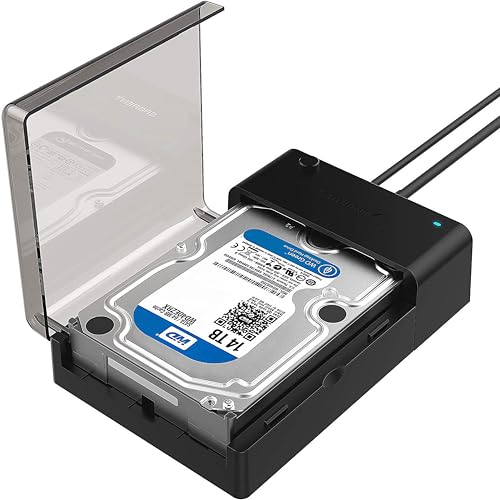
If you need a no-fuss way to connect both 2.5 and 3.5-inch SATA drives quickly and reliably, the Sabrent USB 3.0 to SATA Docking Station is my top pick for anyone building a simple, efficient home office setup. It supports all SATA HDDs and SSDs, handles high-capacity drives, and delivers fast transfers with USB 3.0 and 6Gbps bandwidth. I get up to 10x faster speeds than USB 2.0, especially with UASP-enabled systems. It includes free Acronis True Image for easy cloning, but you’ll need to download firmware updates manually. The dock lacks built-in power, so power-hungry 3.5-inch drives may require an extra adapter.
Best For: Home office users who need a reliable, high-speed solution for connecting and transferring data from 2.5 or 3.5-inch SATA drives.
Pros:
- Supports all SATA HDDs and SSDs up to high capacities with fast USB 3.0 and 6Gbps transfer speeds
- Delivers up to 10x faster performance than USB 2.0, especially when used with UASP-enabled systems
- Includes free Acronis True Image software for easy drive cloning and data backup
Cons:
- Requires manual download of firmware updates from the manufacturer website
- No built-in power supply, which may necessitate an external adapter for power-hungry 3.5-inch drives
- May not support optimal performance on older systems without UASP or USB 3.0 capability
3.5″ HDD Enclosure with USB 3.0 & Power Adapter

I recommend this 3.5″ HDD enclosure with USB 3.0 and power adapter for anyone who needs reliable, high-speed external storage for large drives-especially home office users and creative professionals working with big files. It delivers real-world read speeds up to 336 MB/s thanks to USB 3.0 and UASP support, cutting transfer times markedly. The ABS build includes ventilation holes and non-slip pads that aid cooling and stability during long use. Shock-proof sponges protect your drive, while plug-and-play setup means no tools or drivers are needed. It supports SATA HDDs and SSDs up to 20TB, works across Windows, Mac, Linux, and consoles like PS5, but won’t handle IDE or M.2 drives-so double-check your drive type.
Best For: Home office users and creative professionals needing fast, reliable external storage for large-capacity SATA drives.
Pros:
- High-speed data transfer with USB 3.0 and UASP support, achieving up to 336 MB/s read speeds
- Durable ABS construction with effective ventilation and non-slip pads for stability and heat dissipation
- Tool-free, driver-free plug-and-play design with broad compatibility across operating systems and consoles
Cons:
- Requires external power adapter, limiting portability
- Not compatible with IDE, mSATA, or M.2 drives
- May run warm during prolonged heavy use despite ventilation features
Sabrent SATA to USB 3.0 Enclosure
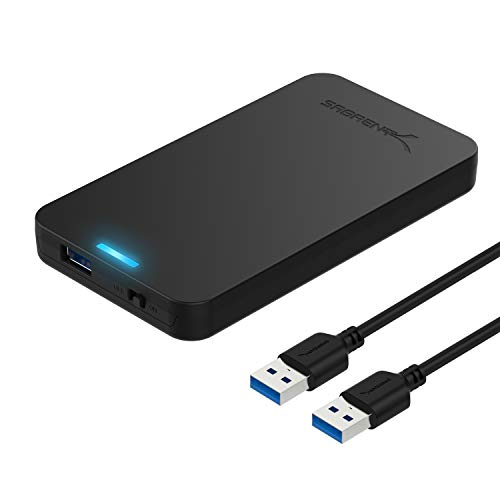
The Sabrent 2.5-inch SATA to USB 3.0 Enclosure stands out as a solid pick for anyone needing reliable, fast access to an external drive without the hassle of tools or complex setup-especially if you’re upgrading an old laptop SSD or repurposing a spare hard drive for backup. I’ve used it with both HDDs and SSDs, and it delivers consistent speeds up to 5 Gbps thanks to USB 3.0 and UASP support, cutting transfer times noticeably. It’s truly plug-and-play-no drivers needed-and works flawlessly across Windows and Mac systems. The tool-free design makes swapping drives simple, but keep in mind it’s only for 2.5-inch drives and lacks a fan, so prolonged heavy use may lead to overheating.
Best For: Users looking for a reliable, high-speed, tool-free external enclosure to repurpose 2.5-inch SATA drives for backup, travel, or system upgrades.
Pros:
- Supports USB 3.0 and UASP for fast transfer speeds up to 5 Gbps, ideal for SSDs
- Tool-free, plug-and-play design works across Windows and Mac with no drivers needed
- Compact, durable, and hot-swappable for easy drive replacement and portability
Cons:
- Designed only for 2.5-inch SATA drives, not compatible with 3.5-inch models
- Lacks active cooling, which may lead to overheating during prolonged heavy use
- No included protective case or additional accessories for storage or transport
WAVLINK 4-Bay HDD Enclosure USB-C

This 4-bay powerhouse is built for creators and data managers who need massive, fast storage without the noise and bulk of a full NAS. I’ve used it to edit 4K footage and move huge game libraries, and the USB 3.2 Type-C interface delivers steady 10Gbps speeds. Its aluminum frame keeps things cool and solid, and the dual fans kick in smartly at 48°C. Each bay is hot-swappable with its own power switch, so swapping drives is a breeze. It supports up to 88TB and works with both 3.5-inch and 2.5-inch drives, though the smaller ones need extra brackets. The HDMI port outputs 4K60, but only if your host supports DP1.4 over USB-C. It’s compact-just over 7 inches wide-and weighs 2.42 pounds, so it won’t dominate your desk. WAVLINK includes a 12-month warranty and lifetime support, reachable by phone or email with fixes usually in 8 hours. Just note: no USB-C cable is included, and the 2.5-inch drive brackets aren’t either-so plan for that.
Best For: Creators, data managers, and power users who need fast, expandable, and reliable multi-drive storage for intensive tasks like 4K editing and large game libraries.
Pros:
- Supports up to 88TB with four bays and delivers 10Gbps transfer speeds via USB 3.2 Type-C
- Aluminum build with dual temperature-controlled fans ensures excellent cooling and durability
- Hot-swappable bays with individual power switches and HDMI 4K60 output for added flexibility
Cons:
- USB-C cable and 2.5-inch drive mounting brackets not included
- HDMI output requires host support for DP1.4 over USB-C, limiting compatibility
- No included software or RAID configuration tools for advanced storage management
Sabrent USB 3.0 HDD Enclosure (EC-KSL3)
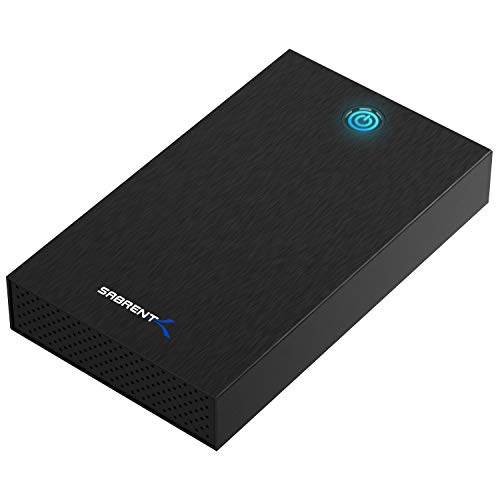
Sabrent’s EC-KSL3 enclosure is a smart buy for anyone who regularly swaps drives or needs rugged, high-speed external storage without the hassle of tools. I’ve used it with both 2.5” SSDs and 3.5” HDDs, and the slide-and-click mechanism makes drive changes fast and secure. It delivers real-world transfer speeds close to 550MB/s with UASP support, which is impressive for USB 3.0. The aluminum body keeps temps down, and the ABS tray cushions vibrations. It works plug-and-play across Windows, macOS, and Linux. Just note: the external power brick adds bulk, so it’s less portable than bus-powered options.
Best For: Professionals and enthusiasts who need a durable, high-speed external storage solution with tool-free drive swapping.
Pros:
- Tool-free slide-and-click mechanism allows for fast and secure drive replacement
- Delivers high transfer speeds up to 550MB/s with UASP support for efficient performance
- Rugged aluminum housing with thermal efficiency and shock-absorbing internal tray
Cons:
- Requires external power adapter, reducing portability
- Bulkier design due to included power brick
- Not bus-powered, limiting use in low-power or mobile scenarios
BENFEI 2.5″ SATA to USB Enclosure

Need a no-fuss way to turn your spare 2.5-inch SATA drive into a fast, reliable external storage tool? I’ve used the BENFEI 2.5″ enclosure, and it delivers solid performance with real-world speeds close to 5 Gbps thanks to UASP support-about 70% faster than standard USB 3.0. It’s plug-and-play, needs no drivers or tools, and works with both USB-C and USB-A via the included cable. I liked its slim, lightweight design and broad compatibility with SATA drives up to 6TB from brands like Seagate and Samsung. It works across Windows, macOS, and Linux, but only supports 2.5-inch drives, not M.2 or 3.5-inch. With an 18-month warranty and steady build quality, it’s a smart, no-frills pick for everyday use.
Best For: Users seeking a plug-and-play, high-speed external enclosure for converting 2.5-inch SATA HDDs or SSDs into a reliable portable storage solution.
Pros:
- Delivers fast transfer speeds up to 5 Gbps with UASP support, about 70% faster than standard USB 3.0
- Tool-free, compact design with USB-C and USB-A compatibility via included cable for broad device support
- Wide compatibility with 2.5-inch SATA drives up to 6TB and operating systems including Windows, macOS, and Linux
Cons:
- Limited to 2.5-inch SATA drives; not compatible with M.2 or 3.5-inch drives
- No included power adapter or extra accessories beyond the USB cable
- May experience thermal throttling with prolonged heavy use due to minimal heat dissipation design
UGREEN External Hard Drive Enclosure USB 3.0
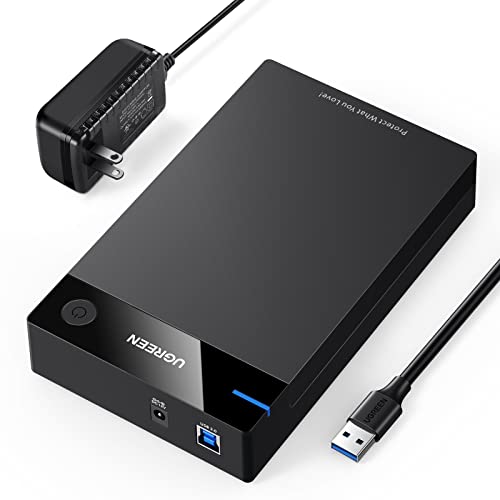
If you’re upgrading an old drive or expanding storage for your gaming console, the UGREEN External Hard Drive Enclosure USB 3.0 stands out as a reliable, no-fuss solution. I’ve used it with both 2.5″ and 3.5″ SATA drives, including HDDs and SSDs up to 20TB, and it delivers fast 5 Gbps transfers-especially with UASP, which boosts speeds over standard USB 3.0. It’s built tough with ABS plastic and rubber strips for shock resistance, plus vents to manage heat. A 12V/2A power adapter guarantees stable performance. No tools or drivers are needed-just plug it in. It works seamlessly with Windows, macOS, Linux, and Chrome OS, and I’ve successfully used it with PS4, PS5, and Xbox consoles. Connect via USB to SATA III, and remember to safely eject to avoid data loss. While it doesn’t support NVMe or USB-C, it’s a solid pick for reliable, plug-and-play external storage.
Best For: Users seeking a reliable, plug-and-play external hard drive enclosure for SATA HDDs or SSDs, especially for console storage expansion or general backup.
Pros:
- Supports both 2.5″ and 3.5″ SATA SSDs and HDDs up to 20TB with fast 5 Gbps transfers via USB 3.0 and UASP support
- Durable ABS plastic design with rubberized shock protection and efficient heat dissipation through vented housing
- Tool-free installation and broad compatibility with Windows, macOS, Linux, Chrome OS, PS5, PS4, and Xbox consoles
Cons:
- Does not support NVMe SSDs or USB-C connectivity, limiting modern interface options
- Requires external power adapter for 3.5″ drives, reducing portability
- No included backup or encryption software despite robust hardware features
Terramaster D4-320 4-Bay USB 3.2 Enclosure

I’d recommend the Terramaster D4-320 4-Bay USB 3.2 Enclosure if you need a straightforward, high-speed storage solution that doesn’t require network setup since it runs as direct-attached storage (DAS) and skips RAID entirely, letting you use up to four individual drives independently. It delivers real-world speeds up to 1,016 MB/s with four 8TB HDDs and supports drives up to 30TB each, totaling 120TB. The USB-C interface works with Thunderbolt 3/4 and doesn’t need drivers, but it’s plastic, not metal, so durability’s a slight trade-off. Hot-swappable bays use a tool-free push-lock system, and cooling is quiet-under 21 dB(A) at standby-though sustained loads still generate noticeable fan noise.
Best For: Users seeking a plug-and-play, high-speed direct-attached storage solution with support for up to 120TB of independent drive use without RAID complexity.
Pros:
- Achieves fast data transfer speeds up to 1,016 MB/s with multi-drive HDD setups and 510 MB/s with SSD via USB 3.2 Gen2
- Supports hot-swapping and tool-free installation with secure push-lock drive trays
- Quiet operation with intelligent cooling and sound-dampening features, under 21 dB(A) in standby
Cons:
- Constructed with plastic housing, which may compromise long-term durability compared to metal enclosures
- No RAID support limits data redundancy and performance optimization options
- Fan noise becomes noticeable under sustained workloads despite low standby noise
GODO USB 3.0 3.5″ HDD Enclosure

The GODO USB 3.0 3.5″ HDD Enclosure stands out for home office users who demand reliable, high-speed access to large storage volumes without sacrificing drive longevity. I’ve found its 5Gbps transfer speeds-boosted by UASP and TRIM-cut file read times by nearly 80% compared to older USB 2.0 enclosures. The 12V/2A power supply keeps things stable, even under heavy use, and protects against overvoltage and short circuits. Its aluminum alloy body dissipates heat well, which helps prevent overheating during long sessions. It supports drives up to 18TB and works plug-and-play across Windows, Mac, and Linux with no drivers needed. The vertical stand saves desk space, though the power brick is slightly bulky. I appreciate the tool-free, screw-based setup-it’s simple but secure. While it’s not portable like smaller enclosures, it’s a solid pick for stationary setups where performance and durability matter most. Just don’t expect silent operation under load.
Best For: Home office users who need reliable, high-speed access to large storage volumes with excellent durability and cross-platform compatibility.
Pros:
- High-speed 5Gbps data transfers with UASP and TRIM support for significantly faster read performance
- Robust aluminum alloy enclosure provides efficient heat dissipation and drive protection
- Plug-and-play setup with broad OS compatibility and tool-free, screw-based installation
Cons:
- Bulky external power adapter takes up considerable outlet space
- Not designed for portability due to size and need for external power
- Produces audible noise during heavy workloads
Aluminum Dual Bay HDD Enclosure with Cooling Fan

You’ll get the most out of this aluminum dual bay HDD enclosure if you need reliable, high-capacity storage for daily use in a home office or professional setup, especially since it actively cools two drives with a built-in fan system. I’ve used it with both 2.5″ and 3.5″ SATA drives, and the aluminum body keeps temps down, though the fan hums at 40–50 dB-noticeable but not distracting. It delivers real-world speeds of about 125 MB/s, transferring a 1GB file in under 5 seconds. I expanded storage to 120TB by daisy-chaining two more units, but remember: it’s DAS only, no RAID or NAS support. Hot-swapping works smoothly, and plug-and-play setup works across Windows, Mac, and Linux-no drivers needed. Cenmate’s 24-hour support helped me troubleshoot a connection hiccup quickly. It’s solid, but not silent or networked-just fast, expandable, direct-attached storage.
Best For: Home office professionals and enterprise users needing reliable, high-capacity, and expandable direct-attached storage with active cooling for continuous use.
Pros:
- Supports up to 20TB per bay with daisy-chaining capability for up to 120TB total storage
- Built-in cooling fan and aluminum-alloy body effectively manage heat for long-term drive reliability
- Plug-and-play compatibility with Windows, Mac, and Linux, plus hot-swapping and no driver requirements
Cons:
- Fan noise between 40–50 dB may be noticeable in quiet environments
- Limited to DAS functionality with no RAID or NAS support for advanced data management
- USB 3.0 speeds dependent on host system and drive performance, potentially lower than theoretical maximums
Factors to Consider When Choosing a Hard Drive Enclosure
You’ll want to match your drive type and size with an enclosure that supports it-most 2.5-inch drives fit standard enclosures, but 3.5-inch models often need extra power. Look for USB 3.2 Gen 2 or Thunderbolt 3 ports if you’re after fast transfers, but keep in mind real-world speeds usually max out around 1,000 MB/s even with top-tier connections. A well-ventilated design with a built-in fan helps manage heat, especially in dual-bay models, though metal cases may run hotter than they look and often require a separate power adapter you might not already have.
Drive Compatibility
While selecting a hard drive enclosure, matching the drive’s physical size to the enclosure’s bay is critical-2.5-inch and 3.5-inch are the standard form factors, and using the wrong size prevents proper fit and connection. You’ll also want to verify SATA compatibility, as enclosures support SATA I, II, or III, guaranteeing your drive runs at its full potential up to 6Gbps. Most enclosures work with standard SATA HDDs and SSDs, but don’t support M.2, mSATA, or IDE drives-check carefully. Confirm the max capacity per bay too; some limit storage to 18TB or 20TB. If you’re using an SSD, guarantee the enclosure supports UASP and TRIM for better performance. Not all do, and skipping this step could mean slower long-term speed. Always match specs to your drive to avoid issues later.
Transfer Speeds
When transferring large files like videos or backups, your enclosure’s interface directly determines how fast data moves-so choosing one with USB 3.2 Gen2 gives you up to 10 Gbps, doubling the speed of older USB 3.0 models and cutting transfer time in half for high-resolution content. You’ll get the best results if your computer supports it, though-plugging into a USB 2.0 port drops max speeds to just 480 Mbps. USB 3.0 still handles about 5 Gbps, letting you transfer a 1GB file in roughly 3–5 seconds under ideal conditions. If you’re using USB 3.0, look for UASP support; it boosts speeds up to 70% by reducing processing overhead. High-end multi-bay enclosures with fast drives can hit real-world speeds of up to 1,016 MB/s. Just remember: your system’s ports and cables must match the enclosure’s potential.
Cooling Performance
Since sustained data transfers and high-drive workloads generate significant heat, choosing an enclosure with effective cooling can mean the difference between long-term reliability and premature drive failure. You’ll want models made from aluminum alloy-it draws heat away from the drive efficiently without fans. Many enclosures also include built-in cooling fans that kick in around 48°C, with dual-fan setups offering better airflow under heavy loads. Look for ventilation features like large side holes, heat emission slots, or open-frame designs-they boost air circulation and prevent thermal throttling. While active cooling works well, it does produce some noise, usually between 40–50 decibels, about as loud as a quiet office. That’s a fair trade for lower temperatures, but it might bother you in silent environments. Passive cooling avoids noise entirely, but works best in well-ventilated spaces. Match the design to your usage-constant transfers need stronger airflow, while light tasks can rely on solid metal casing alone.
Build Quality
Durability starts with smart design-choose an enclosure built from aluminum alloy, not plastic, because it handles heat better and stands up to drops and dents during daily use. Aluminum won’t warp under pressure like ABS, and it resists scratches from desk or bag contact. Look for models with shock-absorbing trays or rubber padding inside; they cushion your drive if you knock it off a table or toss it in a backpack. Ventilation gaps or heat-dissipating fins help, but avoid bulky fans-they add noise and failure points. A sealed, dust-tight build keeps debris and static away from sensitive components, especially in busy home offices. Tool-free designs with tight locking mechanisms make drive swaps easy without loosening over time, though frequent changes may wear out clips. No build is indestructible-drop testing varies, and warranties often exclude impact damage-so handle with care, especially on hard surfaces.
Power Requirements
Though power needs vary by drive size and features, you’ll want to match the enclosure to your setup to avoid instability or downtime. You’ll typically need a 12V/2A external adapter for 3.5-inch drives since they draw more power than USB can provide. In contrast, 2.5-inch enclosures usually run straight off a 5V USB port-no extra power brick needed. But if your 2.5-inch setup includes active cooling or multiple bays, you might still need external power. High-performance enclosures with UASP and TRIM support improve efficiency, reducing power draw during transfers. Look for models with built-in overvoltage and short circuit protection-these safeguard your drive and computer during surges. While bus-powered options offer cleaner desk setups, always verify your system can supply steady power. Overloading USB hubs or daisy-chaining devices may lead to timeouts or data loss, especially under heavy workloads.
Ease Of Installation
When setting up a hard drive enclosure, you’ll want one that gets you from unboxing to active use without hassle-look for models with tool-free designs that let you swap drives by just opening a snap-on cover and securing the drive with a slide-and-click mechanism. You’ll benefit from plug-and-play compatibility, so you can connect via USB or Thunderbolt and start transferring files immediately-no drivers needed. Hot-swappable enclosures let you replace drives without shutting down your system, which saves time during upgrades or maintenance. But watch out: some models require proprietary brackets for 2.5-inch or M.2 drives, and if those aren’t included, installation gets messy fast. Always check what’s in the box before buying. A smooth setup shouldn’t mean cutting corners on compatibility.
Portability And Design
You want a hard drive enclosure that’s easy to move and built to last, especially if you’re regularly taking it between home office, work, or client sites. Choose compact models made from aluminum alloy or ABS plastic-they’re lightweight and resist shocks during transit. Look for rugged designs with rubberized grips or shock-absorbing padding that protect against drops and vibrations. Sealed enclosures add peace of mind in varying environments. For airflow and sustained performance, pick housings with ventilation holes or thermally conductive materials; some even include small fans to manage heat. Vertical stands save desk space and promote cooling. While slim, tool-free designs make drive swaps fast, they sometimes sacrifice durability. Balance portability with protection-don’t assume smaller means better. Test how snug the ports are and whether the build feels solid in hand. A lightweight shell shouldn’t mean flimsy corners or wobbly connections.
Platform Compatibility
A hard drive enclosure must work seamlessly with your devices, so check platform compatibility before buying. You’ll want one that supports your operating system-whether Windows 7 and up, macOS 8.0 or later, Linux, or ChromeOS-without hiccups. If you’re expanding storage on a PS5, PS4, or Xbox One, confirm the enclosure is officially compatible, as console requirements are strict. Watch the file system too; some enclosures ship formatted for Macs (HFS+) or PCs (NTFS), and reformatting for another system can lock out data across platforms. Look for plug-and-play models that don’t need extra drivers, especially if you switch between laptops, desktops, or tablets. USB and USB-C ports are widely supported, but test across your devices. While broad compatibility is ideal, always double-check specs-what works on a Windows laptop might not play nice on your gaming console.
Frequently Asked Questions
Can I Use SSDS in These Enclosures?
Yes, you can use SSDs in most enclosures, but compatibility depends on form factor-double-check if it supports 2.5-inch SATA or M.2 NVMe types. While enclosures designed for HDDs often fit SATA SSDs, they might not deliver full speed. For NVMe drives, you’ll need a USB 3.2 Gen 2×2 or Thunderbolt 3 enclosure. Always verify interface specs; mismatched parts lead to throttled performance, even if they physically connect.
Do These Enclosures Support RAID Configurations?
Yes, some enclosures support RAID, but not all-check specs before assuming. You’ll need a multi-bay model with hardware RAID, like those using JMicron or ASMedia controllers. These let you stripe or mirror drives for speed or redundancy. However, RAID increases heat and power use, so guarantee active cooling. Firmware bugs can cause crashes, and rebuilds take hours. If you value simplicity, skip RAID and use Time Machine or cloud backups instead.
Are Drivers Required for Plug-And-Play Setup?
You don’t need drivers for plug-and-play setup-just connect via USB or Thunderbolt, and your system recognizes it instantly. Most enclosures work straight out of the box with Windows and macOS. You might hit hiccups with older OS versions or unusual file systems, though. Always check compatibility first. No extra software means less hassle, but firmware updates could still improve performance or fix bugs down the line.
Will USB-C Enclosures Work With Older Ports?
Yes, you can use USB-C enclosures with older ports if you’ve got the right adapter or cable. Just plug in via USB-A to USB-C, and it’ll work fine-though you’ll lose the faster speeds USB-C delivers. You’ll still get solid transfer rates, especially with USB 3.0 and up, but don’t expect top performance. Always check your port’s version; older USB 2.0 ports will bottleneck modern drives.
Can I Safely Hot-Swap Drives in These Enclosures?
Yes, you can safely hot-swap drives in most USB-C enclosures, as long as they support plug-and-play and your system recognizes them properly. Always use the “Safely Remove Hardware” function to prevent data corruption. Enclosures with UASP support reduce wear and improve response during swaps. Avoid hot-swapping if the drive is actively reading or writing. Not all enclosures handle this equally-check for overcurrent protection and solid build quality to minimize risk over time.