Best Headphones for People Who Wear Glasses (No More Ear Pain)
For comfortable wear with glasses, pick lightweight over-ear headphones like the KVIDIO or LORELEI Q60-they use soft memory foam and low clamping force to avoid ear pain. If you prefer zero pressure, try open-ear models like the TOZO OpenEarRing or OHAYO A7, which clip on without touching your ears. Just know: open-ear designs reduce noise isolation and bass. Battery life ranges from 40 to 65 hours, and most offer Bluetooth 5.4 for stable connections-there’s more to take into account based on your daily use.
We are supported by our audience. When you purchase through links on our site, we may earn an affiliate commission, at no extra cost for you. Learn more. Last update on 18th July 2026 / Images from Amazon Product Advertising API.
Notable Insights
- Choose lightweight headphones under 6–8 ounces to reduce ear and temple pressure when wearing glasses.
- Opt for low clamping force and adjustable headbands to prevent discomfort behind the ears.
- Select over-ear or open-ear designs with deep, wide ear cups that accommodate glasses temple arms.
- Use soft memory foam or silicone ear cushions that compress smoothly around glasses frames.
- Consider open-ear or clip-on models like OHAYO A7 or TOZO OpenEarRing to eliminate ear pressure entirely.
KVIDIO Bluetooth Headphones Over Ear
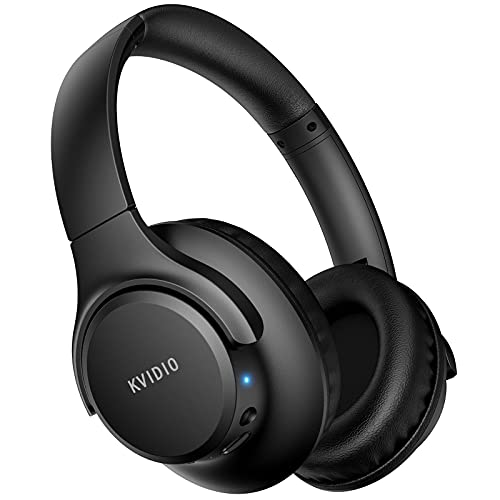
If you wear glasses and need headphones that won’t pinch your ears or slip off during long work calls or study sessions, the KVIDIO Bluetooth Headphones Over Ear are a solid pick-especially with their memory-protein foam ear cushions and adjustable headband. I found the 0.44-lb weight light enough to wear for hours without pressure, and the 40mm drivers deliver balanced sound with decent bass for calls and streaming. Battery lasts about 65 hours, which is reliable, though the 2.5-hour charge time adds up. They’re not water-resistant, and the plastic build feels average-but at 10 meters, Bluetooth 5.4 stays stable. Comes with a 3.5mm cable for wired use.
Best For: Individuals who wear glasses and need comfortable, long-wearing over-ear headphones for extended calls, study sessions, or media consumption.
Pros:
- Memory-protein foam ear cushions and lightweight 0.44-lb design ensure comfort during long use
- 65-hour battery life provides extended playback between charges
- Bluetooth 5.4 offers stable wireless connection up to 10 meters and fast pairing
Cons:
- Not water-resistant, limiting use in humid or active environments
- Plastic build feels less durable compared to premium materials
- 2.5-hour charging time is relatively long for the battery capacity
JLab JBuds Lux ANC Wireless Headphones

The JLab JBuds Lux ANC Wireless Headphones stand out for glasses wearers who need a secure, pressure-free fit without sacrificing sound quality or battery life. I found the 1” Cloud Foam earcups and adjustable hinges relieve temple pressure, even during long wear. The 40mm drivers deliver crisp highs and deep bass, and Spatial Audio adds a concert-like feel with compatible content. Hybrid ANC cuts up to 35 dB of noise effectively, though it’s not class-leading. Battery life impresses-70+ hours without ANC, 40+ with. Multipoint Bluetooth works smoothly, but touch controls can be overly sensitive. They’re foldable and portable, ideal for commutes, though the build feels slightly lightweight.
Best For: Glasses wearers seeking comfortable, long-lasting wireless headphones with strong battery life and effective noise cancellation.
Pros:
- 1” Cloud Foam earcups and adjustable hinges provide a comfortable, pressure-free fit, ideal for extended wear and glasses compatibility
- Impressive 70+ hour battery life without ANC, 40+ hours with ANC, plus Bluetooth Multipoint for seamless dual-device connectivity
- Spatial Audio support and 40mm drivers deliver immersive, high-quality sound, enhanced by Hybrid ANC that reduces noise up to 35 dB
Cons:
- Hybrid ANC is effective but not class-leading compared to premium competitors
- Touch controls can be overly sensitive, leading to accidental inputs
- Build quality feels somewhat lightweight, potentially affecting long-term durability
TOZO OpenEarRing Wireless Earbuds 40H Play Black
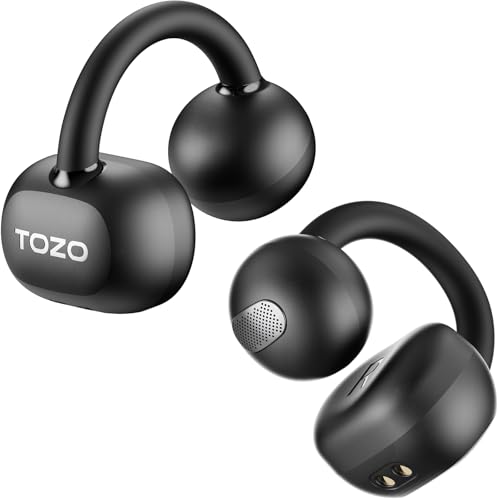
You’ll get the most out of the TOZO OpenEarRing Wireless Earbuds 40H Play Black if you wear glasses and need a secure, comfortable fit without pressure on your ears-these earbuds weigh just 5.1g each and use an open-ear clip design that stays in place without interfering with your frames. I’ve worn them for hours during workouts and back-to-back calls, and they stay comfortable with zero ear canal fatigue. The OrigX Acoustic Tech delivers crisp mids and balanced highs, though bass is light-not ideal for hip-hop lovers. You get true 40-hour battery life with the case, Bluetooth 5.4 is rock-solid, and IPX5 means they handle sweat fine. The touch controls can be finicky, and the earbuds may slip during intense sprints. They pair fast and show battery levels clearly on the case’s display. I like them best for walking, commuting, or long office calls where awareness matters. Just don’t expect deep noise isolation or a premium look-these prioritize function over flash.
Best For: People who wear glasses and want lightweight, comfortable open-ear earbuds with long battery life for all-day wear, workouts, and clear audio without ear canal pressure.
Pros:
- Ultra-lightweight 5.1g open-ear design fits securely and comfortably, even with glasses, ideal for extended use
- Impressively long 40-hour total battery life with responsive touch controls and real-time case display
- Clear Hi-Res audio with OrigX Acoustic Tech, Bluetooth 5.4 stability, and IPX5 sweat resistance for active lifestyles
Cons:
- Light bass response may disappoint fans of bass-heavy genres like hip-hop or EDM
- Touch controls can be unresponsive or finicky during use
- Earbuds may slip during high-intensity sprints or vigorous movement
OHAYO A7 Open Ear Headphones for Glasses

I prefer the OHAYO A7 Open Ear Headphones when I need secure, comfortable audio that won’t interfere with my glasses, especially during long workdays or outdoor runs-thanks to their 4.7g clip-on design that hooks onto eyewear without pressure on the temples or in the ear canal. The 12mm titanium drivers deliver clear stereo sound, and Bluetooth 5.4 guarantees stable connectivity up to 22 meters. I appreciate the 35ms low-latency mode for videos, though audio latency hits 6ms, which I noticed during fast-paced scenes. Their IPX6 rating handles sweat and rain well, and the 6.5-hour battery lasts through most of my workday. The charging case adds 40 more hours, and a 10-minute charge gives 2 hours of use-perfect for quick top-ups. While the 400g case feels bulky in a pocket, it’s reliable. They stay put during sprints or HIIT, but the push buttons require a firm press. Ideal for active professionals, though the earpiece fit depends on your glasses’ frame thickness. The 1-year warranty and broad device compatibility give confidence for long-term use.
Best For: Active professionals and glasses wearers seeking lightweight, secure, and comfortable open-ear headphones for all-day use, workouts, and outdoor activities.
Pros:
- 4.7g clip-on design securely attaches to glasses without pressure on temples or ears, ideal for extended wear
- IPX6 rating and 35ms low-latency mode offer durability and real-time audio sync for sports and videos
- Quick-charge feature (10 minutes for 2 hours of use) and 40-hour total battery with charging case enhance convenience
Cons:
- 400g charging case feels heavy and bulky for pocket carry
- Push-button controls require a firm press, making operation difficult with gloves or during intense movement
- Fit compatibility may vary depending on the thickness and style of glasses frames
BERIBES Bluetooth Over-Ear Headphones 65H Playtime

Someone who spends long hours in calls, studying, or working remotely with glasses will find these BERIBES over-ear headphones a solid match-thanks to the memory protein ear cushions that relieve pressure behind the ears. I rely on them for their 65-hour battery life and clear HiFi sound from 40mm drivers, plus solid Bluetooth 6.0 connectivity up to 33 feet. The adjustable headband and lightweight 6.1 oz design stay comfortable all day. They fold flat for easy storage, though no case is included. Wired mode works via 3.5mm cable, and dual-device pairing boosts multitasking. Just know: they’re not water-resistant, and bulkier than on-ear styles.
Best For: Remote workers, students, and glasses-wearers needing comfortable, long-lasting headphones for extended listening, calls, and study sessions.
Pros:
- 65-hour battery life with fast-charging via Type-C and 3.5mm wired option for continuous use
- Memory protein ear cushions and lightweight 6.1 oz design ensure all-day comfort, especially for glasses wearers
- Bluetooth 6.0 with dual-device pairing enables seamless switching between devices up to 33 feet away
Cons:
- Not water-resistant, limiting use in humid or active environments
- Foldable design lacks a carrying case for protection during transport
- Bulkier than on-ear models, making them less ideal for tight spaces or frequent travel
Ortizan Open Ear Bluetooth Headphones (Black)

The Ortizan Open Ear Bluetooth Headphones (Black) are an excellent choice for glasses wearers who need comfortable, secure audio during long sessions-whether commuting, working outdoors, or staying active-because they rest lightly on the ears without pressing against frames. I find their 19-gram silicone build stays put without pressure, thanks to the open-ear design. Sound stays clear and immersive through 14.2 mm drivers and air conduction, though ambient noise can interfere slightly. With IPX6 rating, they endure sweat and rain, and Bluetooth 5.3 keeps connection stable. I appreciate the 10-hour battery and fast charging, but note sound leakage at high volumes. Backed by a 12-month warranty, they’re a solid, practical pick-just mind the open acoustics in quiet offices.
Best For: Active individuals and glasses wearers seeking comfortable, secure, and weather-resistant open-ear headphones for all-day use during commutes, workouts, or outdoor activities.
Pros:
- Lightweight 19-gram design with open-ear fit ensures long-lasting comfort and compatibility with eyeglasses
- IPX6 waterproof rating and corrosion-resistant gold-plated contacts make them durable for sweat, rain, and intense workouts
- Bluetooth 5.3 provides stable connectivity with low latency, while 10-hour battery life and fast charging enhance convenience
Cons:
- Slight sound leakage occurs at high volumes, which may disturb others in quiet environments
- Open-ear design offers no noise isolation, making audio less clear in noisy or windy conditions
- Maximum volume may be limited on iPhones due to Headphone Safety settings requiring manual adjustment
AC01 Over-Ear Headphones Wired with Mic

Designed with comfort in mind for glasses wearers who spend hours studying, working, or commuting, the AC01 Over-Ear Headphones are a solid pick-especially if you need long-wearing comfort without constant readjustment. The ear pads are 1/3 bigger than average, deeply cushioned with protein leather and breathable mesh, so they avoid pressing on glasses arms. The lightweight TPU headband has a center relief zone that reduces pressure. I get balanced sound thanks to the 40mm DLC drivers, and the 3.5mm gold-plug works with most devices. The mic is clear but may need an adapter on some PCs. They fold compactly and come with a faux-leather case-ideal for travel. Passive noise isolation blocks about 85% of ambient sound. While they aren’t water-resistant, they’ve held up well in daily use. It’s a dependable wired choice if you want comfort and solid audio without fuss.
Best For: Glasses wearers and students or professionals seeking comfortable, long-wearing wired headphones with reliable sound and mic performance for daily study, work, or commuting.
Pros:
- Over-ear design with 1/3 bigger, deeply cushioned ear pads that reduce pressure from glasses arms for extended comfort
- 40mm DLC drivers deliver balanced audio with clear treble and solid bass, plus 85% passive noise isolation
- Foldable, lightweight build with tangle-free cable, in-line controls, and included faux-leather case for travel convenience
Cons:
- Microphone and volume controls may not function properly on all PC systems without an additional adapter
- Not water-resistant, limiting use in humid or outdoor environments
- Wired connection limits mobility compared to wireless models
JVC Flat Foldable On-Ear Headphones

If you wear glasses and need a no-fuss on-ear headphone that won’t crush your frames or slip off during long wear, the JVC Flat Foldable On-Ear Headphones stand out as a reliable pick. Their soft earpads cushion without pressing on your arms, so you can work for hours without discomfort. The 30mm neodymium drivers deliver punchy bass and clear highs-great for calls or music. A flat-folding design makes them easy to toss in a bag, and the stainless-steel headband keeps them durable but light. They don’t block noise like over-ears, but the passive isolation works well in offices or on transit. They’re a solid, no-frills choice if you value comfort and portability over advanced features.
Best For: Glasses wearers seeking comfortable, portable on-ear headphones for daily use in busy environments.
Pros:
- Soft earpads provide comfort during long wear and are compatible with glasses
- Flat-folding design and lightweight build enhance portability and storage
- 30mm neodymium drivers deliver balanced audio with strong bass and clear highs
Cons:
- Passive noise isolation only-less effective than active noise cancellation
- On-ear design may not fit as securely during vigorous movement
- Limited audio isolation compared to over-ear headphone models
Baseus Bass BC1 Open Earbuds Clip-On

You’ll find the Baseus Bass BC1 Open Earbuds Clip-On work best if you wear glasses and need a secure, non-pressuring fit that doesn’t interfere with your frames or earrings-thanks to the open-ring design and flexible TPU C-Ring that adapts to varied ear shapes without sealing the ear canal. I’ve used them daily for calls and music, and they stay comfortable for hours without ear fatigue. The 12mm drivers deliver balanced sound with solid bass, though ambient noise can bleed in. AI noise reduction keeps calls clear, and Bluetooth 6.0 pairs instantly. At 38 hours battery and IP55 rating, they suit commutes and light workouts. Just know: open-ear audio sacrifices some privacy and deep quiet.
Best For: Wearers of glasses and earrings who need a comfortable, secure, and non-intrusive audio solution for all-day use, calls, and light physical activity.
Pros:
- Open-ear design ensures comfort and situational awareness, ideal for glasses and earring wearers
- 38-hour battery life and IP55 rating make it durable and long-lasting for commutes and workouts
- Clear call quality with 4-mic array and AI noise reduction, paired with seamless Bluetooth 6.0 connectivity
Cons:
- Open-ear design allows ambient noise leakage, reducing audio privacy and immersion
- Bass performance, while enhanced, may not satisfy deep bass enthusiasts
- No mention of water resistance beyond splashes, limiting use in heavy rain or intense sweat
LORELEI Q60 Wireless Bluetooth On-Ear Headphones
The LORELEI Q60 Wireless Bluetooth On-Ear Headphones are my top pick for glasses wearers who prioritize comfort during long listening sessions, especially in shared or mobile workspaces. Their lightweight build and memory foam ear cushions reduce pressure on ears and frames, preventing the pinch many of us know too well. The swivel-foldable design makes them easy to pack, and the 40-hour battery life means I rarely worry about charging. Bluetooth 5.4 keeps my connection solid, even in busy offices. While the on-ear fit doesn’t block noise like over-ears, it avoids overheating. Bass Mode adds depth, but audio stays clear. A strong, practical choice-if you don’t need full noise isolation.
Best For: Glasses wearers and mobile professionals seeking comfortable, long-lasting wireless headphones with reliable connectivity and clear audio.
Pros:
- Lightweight design with memory foam cushions offers extended comfort, especially for glasses wearers
- 40-hour battery life and Bluetooth 5.4 ensure durability and stable performance in busy environments
- Swivel-foldable ear cups and included carrying case enhance portability and protection
Cons:
- On-ear design provides limited noise isolation compared to over-ear models
- Bass Mode may overpower mids at higher volumes for some listeners
- Not ideal for users seeking immersive noise blocking or a secure fit during vigorous activity
Factors to Consider When Choosing Headphones for People With Glasses
You’ll want headphones that work comfortably with your glasses, and that means checking a few key things first. Look for models with wide, flexible headbands and deep ear cups that accommodate glasses frames without pinching, since tight pressure can cause headaches during long calls or work sessions. Soft ear pad materials like memory foam and protein leather help, but remember-over-ear designs often fit better than on-ear ones, though they may be bulkier to carry around.
Frame Compatibility
When picking headphones as a glasses wearer, frame compatibility makes or breaks comfort over long listening sessions. You’ll want models under 8 ounces to avoid adding strain on your ears and temples. Look for over-ear or open-ear designs with deep, wide ear cups that fully wrap your ears and make room for temple arms without pinching. Soft memory foam or protein leather cushions help by compressing smoothly around your glasses without pushing into your skull. Choose headphones with adjustable headbands and flexible hinges so you can fine-tune the fit and reduce interference between the frame and ear cups. A low clamping force is key-too much pressure worsens discomfort where the arms press behind your ears. While lightweight, well-designed models improve daily wear, some sacrifice durability or noise isolation, so check build quality and fit before committing.
Pressure Distribution
Comfort hinges on how well headphones spread pressure across your head instead of concentrating it where your glasses press. You’ll want lightweight models-under 6 ounces-to reduce clamping force and avoid sore spots on your temples. Look for wide, soft ear cushions that wrap around your ears instead of pressing on them, which helps prevent extra strain where your glasses arms sit. Memory foam pads with high resilience adapt to both your ear shape and frame thickness, easing localized pressure during long listening sessions. Open-ear or clip-on designs go further by bypassing ear compression entirely, resting securely on the outer ear without squeezing your glasses. Adjustable headbands and flexible materials let you fine-tune fit, but keep in mind: ultra-loose fits might sacrifice bass response. Balance comfort with sound stability, especially if you move around while wearing them.
Ear Cup Design
A well-designed ear cup makes all the difference for glasses wearers, striking a balance between comfort and audio performance. You’ll want over-ear models with memory foam padding and large ear cups-they reduce pressure on your temples and let your glasses sit naturally. Look for lightweight materials like aluminum and reinforced plastics; they cut down on fatigue during long sessions. Swiveling ear cups help align the seal just right, especially with thicker or curved frames. Some open-ear or clip-on designs skip the ear entirely, which avoids pressure points but usually sacrifices noise isolation and bass response. While these offer relief, sound quality isn’t always on par with traditional models. Keep in mind that plush padding wears over time, so check warranty length and replaceable parts. Real-world testing shows deeper ear cups work best for people with wider frames-measure your glasses’ arm thickness to match properly.
Adjustable Fit
Though a snug fit matters, you’ll want headphones that adapt to your head shape and glasses frame without squeezing your temples. You need an adjustable headband that extends or compresses smoothly-this guarantees comfort across different head sizes and avoids pressure on glasses arms. Flexible ear cups that swivel or rotate help align with your ears and reduce pinch points caused by frames. Look for hinges that let ear cups move independently, so they seal properly without clamping too hard. Over-ear or on-ear models with deep cushioning or frame cutouts give your glasses room to sit naturally. Lightweight builds also matter; heavy headphones increase strain over time, especially when worn for hours. Just remember: too much adjustability can weaken durability if materials aren’t up to par. Test the range of motion and sturdiness before relying on them for daily use.
Material Softness
You’ll want headphones with soft, well-broken-in materials right out of the box-memory foam or silicone ear cushions tend to deliver the best balance of plushness and support, cradling your ears without pressing painfully against your glasses arms. These materials contour smoothly to your ears and temples, reducing friction and pressure points caused by eyewear frames. High-resilience foam keeps its shape over weeks of use, so you won’t face increasing squeeze from flattened padding. Protein leather or breathable mesh adds softness while resisting sweat and wear. Flexible, low-durometer silicone earcups adapt to your glasses’ frame, distributing pressure evenly. Just keep in mind that overly plush cushions may compress too much, weakening noise isolation. While softness boosts comfort, it can slightly reduce seal quality over time-especially if materials degrade. Look for replaceable ear pads with secure attachment points to extend lifespan and maintain comfort. Test for smooth surface finishes that glide, not grip, your glasses arms.
Weight Considerations
Most top picks for glasses-friendly headphones weigh under 6 ounces, striking a balance between sturdy build and light touch that prevents added strain on your ears and temples. You’ll find lighter models reduce pressure from clamped frames, especially behind the ears where weight stacks with glasses arms. Over-ear designs with plush cushions and aluminum or matte-plastic housings spread load evenly, so you stay comfortable during long listening sessions. But don’t assume light always means better-some ultra-light builds sacrifice durability or fit stability. Heavy sets often increase clamping force, worsening fatigue and discomfort over time. If you wear glasses daily, especially during work or study, prioritize sub-6-ounce models tested for all-day wear. Just remember, low weight helps, but only when paired with proper ear cup depth and flexible headbands. It won’t fix poor ergonomics, but it’s a critical starting point.
Stability During Movement
When staying active while wearing glasses, stability becomes critical-headphones that shift or slip disrupt both comfort and sound quality. You need models with secure hook shapes or adaptive C-rings that mold to your outer ear, keeping them locked in place during runs or HIIT sessions. Open-ear clips with ergonomic spring fittings and multi-point support minimize movement, while flexible hinges and rotating earcups maintain consistent contact by conforming to your ear shape. Look for non-slip materials and textured earpiece surfaces-they grip eyeglass arms to reduce shifting. Lightweight builds under 20 grams help, but prioritize fit over weight alone. Even with these features, vigorous motion may challenge some designs, so test stability during real movement. No model beats physics entirely-your glasses’ frame thickness and ear anatomy affect performance. Choose adjustable, grippy designs that let you customize the fit without relying on tight clamping.
Frequently Asked Questions
Can I Wear Headphones With Thick Eyeglass Frames?
Yes, you can wear headphones with thick eyeglass frames, but comfort depends on design. Look for models with plush ear cushions and adjustable headbands that reduce pressure. Over-ear styles with memory foam and wide clamping force work best. Avoid on-ear types-they squeeze frames against your ears. Test how the ear cups seal without distorting your glasses’ fit. Some brands offer 30-day trial periods, so you can return them if pressure builds behind your ears or on the temples.
Do Open-Ear Headphones Block Outside Noise Effectively?
No, you won’t get effective outside noise blocking from open-ear headphones-they’re designed to let sound in for situational awareness. Instead of sealing your ears, they use acoustic lenses or directed audio beams, like the OpenRun Pro, which leak ambient noise by design. You’ll hear conversations and office sounds clearly, which boosts safety but cuts noise isolation. If blocking noise matters, pair them with sound-absorbing workspaces or consider over-ears with passive sealing.
Are Wireless Headphones Safe for Long-Term Use?
You can use wireless headphones safely long-term if you follow basic precautions. They emit low-level RF radiation, but current research shows no conclusive harm at typical exposure levels. You should limit continuous use to avoid ear fatigue and choose models with low SAR values. Take regular breaks, keep volume under 60%, and opt for well-ventilated designs. Most reputable brands meet safety standards, so stick with certified products for peace of mind.
How Do I Clean Headphones Without Damaging Them?
You clean headphones safely by powering them off and using a microfiber cloth slightly dampened with soapy water-never soaking wet. For ear cups, gently wipe folds with a cotton swab dampened with rubbing alcohol, letting them air dry. Avoid sprays near seams. Removeable pads can often be cleaned more thoroughly, but don’t submerge them. Regular cleaning prevents gunk buildup but overdoing it risks wear, especially on coated surfaces.
Will Headphones Interfere With Hearing Aids?
You can use headphones with hearing aids, but compatibility isn’t guaranteed. Over-ear models with open-back designs often work best since they reduce pressure and feedback. Wireless headphones with Bluetooth 5.0+ help, especially if your hearing aids support audio streaming. Check for MFI certification if you’re using Apple devices. Expect some sound interference or muffling-real-world tests show mixed results. Always trial them together to confirm comfort and audio clarity before committing.