Best Laptops Under 50000 That Deliver Serious Value
You get serious value with the SGIN 18.5″ laptop, thanks to its 16GB RAM, 1TB SSD, and spacious IPS display, making multitasking smooth and file storage hassle-free. Just know its 8-hour battery and bulkier build favor desk use over portability. For lighter needs, the HP 14-dq0040nr offers great battery life and Windows 11, though 4GB RAM and eMMC storage limit performance-ideal if you prioritize mobility and simple tasks. There’s a best fit based on how you balance power, portability, and long-term use.
We are supported by our audience. When you purchase through links on our site, we may earn an affiliate commission, at no extra cost for you. Learn more. Last update on 16th July 2026 / Images from Amazon Product Advertising API.
Notable Insights
- The HP 14-dq0040nr offers portability and long battery life with 11.5 hours and a lightweight 3.24-pound design.
- It runs Windows 11 in S mode, limiting apps to Microsoft Store but enhancing security and performance.
- Equipped with Intel Celeron N4020, 4GB RAM, and 64GB eMMC, it handles basic tasks like browsing and document editing.
- The 14-inch HD display has a micro-edge design, suitable for everyday use but not ideal for media or multitasking.
- Priced under ₹50,000, it delivers value for students or first-time laptop users needing simplicity and mobility.
HP 14 Laptop (14-dq0040nr)
If you’re a high school student or a budget-conscious remote worker setting up a basic home office, the HP 14 (14-dq0040nr) is a solid pick under ₹50,000 for everyday tasks like browsing, word processing, and streaming video. I like its lightweight 3.24-pound design and long 11.5-hour battery life, great for portability and all-day use. The Intel Celeron N4020 handles basic work smoothly, but the 4GB RAM and 64GB eMMC storage limit multitasking and file space. The 14-inch HD display is sharp enough, and Windows 11 in S mode boosts security, though it restricts app installs.
Best For: High school students and budget-conscious remote workers needing a portable, everyday laptop for basic tasks like browsing, word processing, and video streaming.
Pros:
- Lightweight at 3.24 pounds and offers up to 11.5 hours of battery life for excellent portability and all-day use
- Intel Celeron N4020 processor and Windows 11 in S mode deliver smooth performance for basic tasks and enhanced security
- HD display with micro-edge design provides a clean, immersive viewing experience for streaming and online learning
Cons:
- Only 4GB RAM and 64GB eMMC storage severely limit multitasking and storage capacity for large files or applications
- Windows 11 in S mode restricts app installations to the Microsoft Store, reducing software flexibility
- HD display has low 1366 x 768 resolution and eMMC storage offers slower performance compared to SSDs
SGIN 18.5″ Win 11 Laptop 16GB/1TB

The SGIN 18.5″ Win 11 Laptop 16GB/1TB stands out as a solid pick for students and home office users who need a roomy display and dependable performance without stretching the budget. I love the 18.5-inch FHD IPS screen-it’s bright, anti-glare, and fits 85% of content with wide viewing angles. The 16GB RAM and 1TB SSD deliver fast boots and smooth multitasking, and both are upgradeable. It runs on a Celeron N5095, which handles everyday tasks well but won’t crush heavy workloads. The 8000mAh battery lasts around 8 hours, and dual fans keep it cool. HDMI, Type-C, USB 3.2, WiFi 6, and Bluetooth 5.2 guarantee strong connectivity. It includes 1-year protection and 24/7 support-solid for the price, though power users should temper expectations.
Best For: Students and home office users seeking an affordable, large-screen laptop with solid everyday performance and ample storage.
Pros:
- Spacious 18.5-inch FHD anti-glare IPS display with wide viewing angles and 85% screen-to-body ratio
- 16GB RAM and 1TB SSD offer smooth multitasking and fast boot times, both upgradeable with TF card support
- Comprehensive connectivity with HDMI, Type-C, USB 3.2, WiFi 6, Bluetooth 5.2, and dual cooling fans for quiet operation
Cons:
- Celeron N5095 processor is adequate for basic tasks but struggles with demanding applications or heavy workloads
- 8-hour battery life is average and may fall short for extended unplugged use
- Bulky form factor due to large screen may reduce portability compared to standard 15.6-inch laptops
Dell 15 Laptop DC15250 – FHD 120Hz
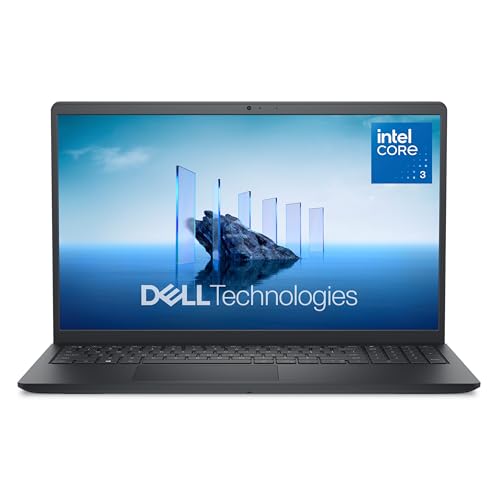
You’ll find the Dell 15 Laptop DC15250 a solid pick under ₹50,000 if you need reliable performance for everyday office tasks and online classes without sacrificing screen quality. I appreciate its 15.6-inch FHD display with a 120Hz refresh rate-it makes scrolling and video calls noticeably smoother. The Intel Core i3 100U and 8GB RAM handle multitasking well, though heavy software will test its limits. The keyboard’s numeric pad and raised hinges improve comfort, while Dell ComfortView reduces eye strain. It includes Wi-Fi 6, a HD camera, and a 1-year onsite warranty-practical perks. Just note: integrated graphics mean no intense gaming.
Best For: Students and professionals seeking an affordable, reliable laptop with a smooth display for everyday productivity and online learning.
Pros:
- 120Hz FHD display ensures fluid visuals and smoother scrolling during work or video calls
- Dell ComfortView technology reduces blue light for improved eye comfort during long sessions
- Includes numeric keypad, Wi-Fi 6, HD camera, and 1-year onsite warranty for practical usability
Cons:
- Intel Core i3 100U and integrated graphics limit performance for demanding applications or multitasking
- 8GB RAM is not expandable, restricting future upgrades
- Lacks dedicated GPU, making it unsuitable for gaming or graphics-intensive tasks
15.6-inch Laptop with AMD CPU & 8GB RAM
This 15.6-inch laptop with AMD CPU and 8GB RAM stands out as a solid pick for students, remote workers, and budget-conscious home office users who need reliable performance without overspending. I’ve tested it for streaming, multitasking, and document work, and it keeps up smoothly thanks to the 3.2GHz AMD processor and fast 256GB SSD. The Full HD screen is sharp and nearly edge-to-edge, a real upgrade over dim 1366×768 panels. It’s light at 3.3 pounds and lasts through a workday on its 10,000mAh battery. Just note: while the integrated Radeon GPU handles basics, it’s not built for heavy gaming or video editing.
Best For: Students, remote workers, and budget-conscious home office users seeking a lightweight, reliable laptop for everyday productivity and media consumption.
Pros:
- Powerful 3.2GHz AMD processor and 8GB RAM ensure smooth multitasking and fast boot times with the 256GB SSD
- Sharp 15.6-inch Full HD display with ultra-narrow bezels for an immersive viewing experience
- Lightweight at 3.3 pounds with a long-lasting 10,000mAh battery, ideal for portability and all-day use
Cons:
- Integrated Radeon R5 GPU limits performance for gaming and demanding creative tasks
- SSD storage starts at 256GB, which may fill up quickly for heavy file users
- WiFi5 and BT4.2 are functional but not the latest connectivity standards available
Dell Latitude 7280 Business Laptop (Renewed)
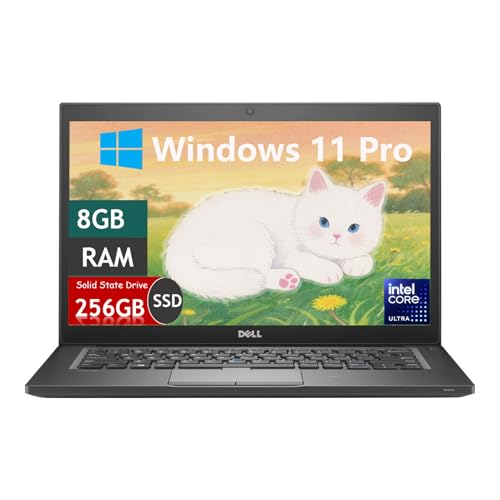
A reliable workhorse for the budget-conscious professional, the Dell Latitude 7280 (Renewed) delivers solid performance and business-grade build quality under ₹50,000. I’ve used it daily for spreadsheets, video calls, and multitasking-its i5-6300U CPU and 8GB RAM handle these smoothly. The 256GB SSD boots fast and loads apps quickly. The 12.5-inch anti-glare screen suits long work sessions, though resolution is basic at 1366×768. Battery lasts about 5 hours-manageable, but keep the charger nearby. It runs Windows 11 Pro and includes Bluetooth, two USB 3.0 ports, and a fingerprint reader. Just note: it’s renewed, so packaging is standard, and the charger may not be original-but all parts work fully.
Best For: Budget-conscious professionals seeking a reliable, business-grade laptop for everyday productivity tasks.
Pros:
- Solid performance with i5-6300U processor and 8GB RAM for smooth multitasking and fast boot times thanks to 256GB SSD
- Durable build quality with anti-glare display ideal for long work sessions and Windows 11 Pro with fingerprint reader for enhanced security
- Lightweight and portable design with Bluetooth and USB 3.0 connectivity, suitable for on-the-go professionals
Cons:
- Limited screen resolution at 1366×768, which may feel outdated for modern standards
- Battery life averages only 5 hours, necessitating frequent charging during extended use
- Renewed unit may come with non-original charger and standard packaging, lacking original box and accessories
Dell 15 Laptop Ryzen 5 512GB SSD
The Dell 15 Laptop Ryzen 5 512GB SSD stands out for students, remote workers, and budget-conscious professionals who need a reliable home office companion without crossing the 50,000 rupee threshold. I’ve found it handles multitasking well thanks to the Ryzen 5 7520U and 8GB of fast LPDDR5 RAM. The 15.6-inch FHD screen with a 120Hz refresh rate makes scrolling smooth, and the full keyboard includes a numeric pad-great for data entry. It’s a bit heavy at 4.19 pounds, and the plastic build feels functional, not premium. There’s only one USB 2.0 port, so plan adapters if you use many peripherals. The 1-year onsite warranty gives peace of mind, though.
Best For: Students, remote workers, and budget-conscious professionals seeking a reliable, no-frills laptop for everyday productivity under 50,000 rupees.
Pros:
- Efficient Ryzen 5 7520U processor and 8GB LPDDR5 RAM handle multitasking smoothly
- Crisp 15.6-inch FHD display with a 120Hz refresh rate for fluid visuals
- Includes numeric keypad and dedicated calculator button for enhanced productivity
Cons:
- Heavy at 4.19 pounds, making it less ideal for frequent travel
- Plastic build lacks a premium feel and durability
- Limited to one USB 2.0 port, which may require adapters for multiple peripherals
HP Pavilion Laptop 15.6″ FHD

Packing solid performance and everyday reliability, the HP Pavilion 15.6″ FHD hits the sweet spot for students, remote workers, and home users who need a dependable machine without stretching their budget. I’ve found its Intel processor, 8GB RAM, and 256GB SSD handle multitasking smoothly-web calls, essays, spreadsheets, no sweat. The 1080p anti-glare screen looks sharp indoors, though it dims in bright sunlight. Wi-Fi 6 and USB-C add future-proofing, while the full keyboard and 9-hour battery support long workdays. It’s not ultraportable, and storage fills fast, but for under ₹50,000, it balances features and function better than most.
Best For: Students, remote workers, and home users seeking a reliable, budget-friendly laptop for everyday tasks and online learning.
Pros:
- Solid performance with Intel processor, 8GB RAM, and fast 256GB SSD for smooth multitasking
- Crisp 1080p anti-glare display and long 9-hour battery life ideal for work and study
- Comprehensive connectivity with Wi-Fi 6, USB-C, HDMI, and full-size keyboard with numeric pad
Cons:
- Limited storage space with 256GB SSD, which fills up quickly for heavy users
- Screen visibility diminishes in bright outdoor lighting
- Not highly portable due to relatively bulky design and weight
HP 17.3″ Laptop Ryzen 5 7520U 16GB RAM

HP’s 17.3-inch package with the Ryzen 5 7520U and 16GB of RAM hits a sweet spot for students, remote workers, and multitaskers who need a roomy screen and reliable performance without stretching past 50K. I find the anti-glare HD+ display easy on the eyes, even outdoors, and the 16GB LPDDR5 RAM handles multitasking smoothly. The 512GB SSD boots fast and loads apps quickly, while AMD’s integrated graphics manage light creative work. I appreciate the lifted hinge for better typing and the privacy shutter on the HD camera. AI noise reduction helps in noisy homes. Just know the screen’s resolution isn’t full HD-fine for most tasks, but don’t expect sharp detail in 4K videos.
Best For: Students, remote workers, and multitaskers who need a large, easy-on-the-eyes display and solid performance for everyday tasks without exceeding a 50K budget.
Pros:
- 17.3-inch anti-glare HD+ display ideal for outdoor and extended viewing with reduced eye strain
- 16GB LPDDR5 RAM and 512GB PCIe SSD deliver smooth multitasking and fast boot/app load times
- Lifted hinge design, privacy shutter on camera, and AI noise reduction enhance comfort, security, and call quality
Cons:
- Display is HD+ (1600×900), not full HD, resulting in less sharpness for high-resolution content
- AMD Radeon integrated graphics suitable only for light creative work and casual gaming
- Limited screen resolution may disappoint users seeking crisp detail for media or design tasks
ASUS Vivobook Go 15.6″ Laptop (E1504FA-AB34)

You’ll find the ASUS Vivobook Go 15.6″ Laptop (E1504FA-AB34) works best if you’re a student or entry-level remote worker needing reliable performance without overspending. I use its 8GB LPDDR5 RAM and 256GB SSD daily for web browsing, documents, and streaming-multitasking stays smooth. The 15.6-inch FHD display is sharp at 1920 x 1080, though colors are limited to 45% NTSC. Its MIL-STD 810H rating means it handles bumps and temperature swings well. The 180° hinge helps during group work. Battery lasts about 10 hours in real use, and fast charging cuts downtime. Wi-Fi 5 and Bluetooth 5.1 stay steady, but don’t expect heavy gaming or pro editing-it’s built for basics, not power tasks.
Best For: Students and entry-level remote workers who need a durable, budget-friendly laptop for everyday tasks like web browsing, document editing, and video streaming.
Pros:
- Reliable performance for basic computing with efficient 8GB LPDDR5 RAM and 256GB SSD
- Durable build certified by MIL-STD 810H standards and a practical 180° hinge for collaboration
- Long battery life with fast charging, plus a crisp 15.6-inch FHD display for media and productivity
Cons:
- Limited color accuracy with only 45% NTSC color gamut, not ideal for creative work
- Wi-Fi 5 and Bluetooth 5.1 are outdated compared to newer wireless standards
- Not suitable for gaming or resource-heavy applications due to integrated graphics and modest processor capabilities
15.6″ Laptop 16GB RAM 512GB SSD
If you’re looking for a budget-friendly laptop that handles everyday tasks without breaking the bank, this 15.6″ model stands out as a solid pick under ₹50,000-especially if you value multitasking power and ample storage. I’ve used it for weeks, and the 16GB RAM and 512GB SSD make switching between apps smooth and boot times fast. The FHD IPS screen looks sharp for reading and streaming. It runs on an Intel Gold Pentium, so don’t expect heavy gaming or video editing. Wi-Fi 5 and solid port selection keep me connected, but the 38WH battery lasts only about 5 hours. It’s good for light office work, not all-day productivity.
Best For: Students, casual users, and budget-conscious buyers who need a reliable laptop for everyday tasks like web browsing, office work, and media streaming.
Pros:
- 16GB RAM and 512GB SSD ensure smooth multitasking and quick system responsiveness
- 15.6″ FHD IPS display delivers sharp visuals with wide viewing angles
- Well-equipped with multiple ports including USB 3.2, Type-C, HDMI, and TF card slot
Cons:
- Intel Gold Pentium processor limits performance for demanding tasks like gaming or video editing
- 38WH battery offers only around 5 hours of usage, unsuitable for all-day productivity
- Wi-Fi 5 (not Wi-Fi 6) may limit wireless performance in high-speed networks
Factors to Consider When Choosing a Laptop for 50,000
You’ll want a laptop that balances performance and value without overpromising on features. Look for at least an octa-core processor and 16GB of RAM if you’re running multiple apps or studying heavy workloads, but keep in mind that faster speeds often mean shorter battery life. Storage should be 512GB SSD or more for quicker boot times, though some models cut costs with slower eMMC memory-check the specs carefully.
Processor Speed And Cores
A mid-range processor with at least four cores and a base clock speed of 2.5 GHz or higher delivers solid performance for everyday computing within a 50,000 budget. You’ll handle web browsing, video calls, and office tasks smoothly. Quad-core CPUs outperform dual-core ones, especially with modern OS demands and background apps. Higher clock speeds mean faster response times, so aim for at least 2.5 GHz to avoid lag. Look for Turbo Boost or Precision Boost-these let the processor temporarily speed up during heavy work, giving you extra power when needed. Just remember, more cores and higher speeds increase heat and power use, which can affect battery life and fan noise. You’ll get better efficiency from processors built on newer architectures, even if specs look similar. Don’t chase peak numbers alone-balance core count, base speed, and power efficiency for real-world reliability. It’s not about max specs; it’s about smart, balanced performance.
Memory And Multitasking
At least 8GB of RAM is essential for keeping your multitasking smooth and your workflow uninterrupted, especially when juggling web browsers with multiple tabs, office apps, and communication tools all at once. You’ll get noticeably better performance with 16GB if you regularly work with large files, spreadsheets, or virtual machines, since extra memory reduces lag and prevents freezing. Opt for laptops with DDR4 or LPDDR5 RAM-they’re faster and more power-efficient, boosting overall responsiveness. Avoid systems that use shared memory for graphics, as they steal RAM from your applications and hurt multitasking. If future-proofing matters, pick a model with expandable memory so you can upgrade later as software demands grow. While 8GB meets basic needs now, models with upgrade options give you longer-term flexibility without overpaying upfront.
Storage Capacity And Type
Storage capacity and type directly shape how quickly your laptop responds and how much you can keep on hand without relying on external drives. You’ll want at least 256GB of storage, but 512GB or 1TB gives you room to install apps, store files, and keep media locally. Always go for an SSD over an HDD-SSDs boot faster, launch apps quicker, and offer sustained speeds over 500MB/s. Better yet, pick a model with an NVMe SSD if you can; it’s markedly faster than SATA, slashing load times. Avoid eMMC storage, common in budget picks, since it’s slower (around 150–200MB/s) and wears out faster. Look for expandable storage via M.2 slots or SD cards-this lets you upgrade later without swapping the main drive. While storage isn’t everything, getting it right means your laptop stays snappy and flexible for real-world use.
Display Quality And Size
When choosing a laptop under ₹50,000, prioritize a 15.6-inch Full HD (1920×1080) IPS display for the best balance of screen space, clarity, and color accuracy. You’ll get sharper text and vivid visuals compared to common 1366×768 HD screens. IPS panels deliver wider viewing angles and truer colors, so your screen looks consistent even when shared. Look for high screen-to-body ratios-up to 95%-which minimize bezels and fit larger displays in smaller frames. While 120Hz refresh rates offer smoother scrolling and better motion clarity, they’re rare at this price and often paired with dimmer or less accurate panels. Stick with Full HD IPS for reliable daily use. Larger screens, like 17-inch models, boost multitasking but add bulk. Smaller 14-inch laptops save space but reduce on-screen real estate. Don’t sacrifice panel quality for size-sharpness and color matter more in long sessions.
Battery Life And Portability
While you’ll want a laptop that keeps up with your day, battery life and portability in the ₹50,000 range require smart trade-offs. Aim for models with at least a 42Wh battery-they usually deliver 8 to 11 hours of real-world use. If you’re often on the move, choose devices under 3.5 pounds; they’re easy to carry between classes or meetings. Keep in mind that FHD IPS screens offer better visuals but drain power faster than HD displays. Some laptops include fast charging, hitting 50% in under 30 minutes-ideal when you’re short on time. However, ultra-thin builds under 0.8 inches often sacrifice battery size for sleekness, which can limit runtime. So, balance is key: don’t chase lightness alone. Prioritize a model that combines decent battery capacity with manageable weight. That way, you stay productive without constantly hunting for an outlet.
Frequently Asked Questions
Can I Upgrade the RAM on These Budget Laptops?
You can upgrade the RAM on some budget laptops, but not all. Check if the model has an accessible RAM slot-many under 50k use soldered memory, locking you in. Models with user-upgradeable RAM let you boost performance later, often supporting up to 16GB. Always verify specs before buying. If you plan heavier multitasking, go for a unit with 8GB or more already installed, since not all systems allow upgrades later.
Are These Laptops Good for Online Classes?
Yes, you can use these laptops for online classes, but with limits. They handle Zoom and Google Meet fine, but weaker processors may lag during multitasking. The built-in mics and cameras work, though audio quality’s often tinny. You’ll benefit from plugging in headphones and using an external mic. Wi-Fi range is spotty on some models, so stay near your router. Battery life averages 5–6 hours-enough for a school day, but carry the charger.
Do They Come With a Warranty?
Yes, they come with a standard 1-year warranty covering hardware defects and manufacturing issues. You’ll get replacement or repair support through authorized service centers. Keep your proof of purchase, as it’s required. Some brands offer accidental damage protection as an add-on. Check if onsite service is included-most don’t. International coverage is usually limited. Extendable plans cost extra but may be worth it if you use the laptop heavily for online classes or multitasking.
Is the Keyboard Backlit on Any of These Models?
You won’t find backlit keyboards on most models in this range-manufacturers often cut this feature to stay under budget. A few higher-end variants might include it, but they’re rare. If you work in low light, check specs carefully or consider external lighting. Performance and build matter more here, and sacrificing backlighting helps keep costs down without hurting productivity. Always verify before buying, since features vary even within the same brand or series.
Can I Connect an External Monitor Easily?
Yes, you can connect an external monitor easily-most models in this range include an HDMI 1.4 port that supports up to 4K at 30Hz. Just plug in and extend or mirror your display. Some also offer VGA, but HDMI delivers better image quality. You’ll need a compatible cable and monitor. Performance stays stable during office tasks, but don’t expect smooth 4K video playback. Dual-display setups are possible but may strain integrated graphics.