Best Laptops for Online Teaching That Elevate Your Virtual Classroom
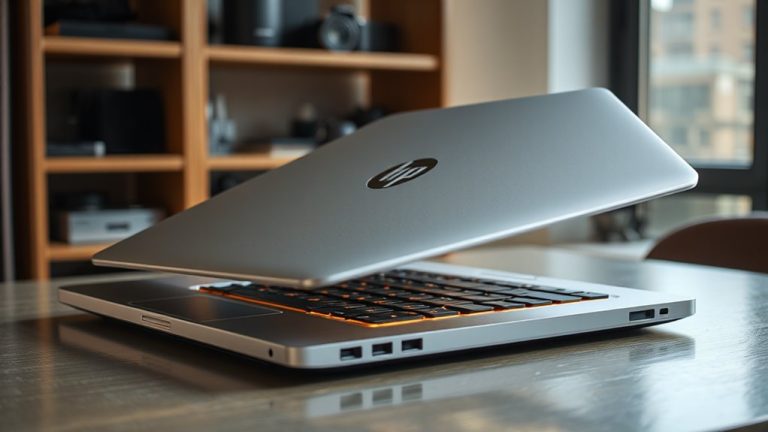
You’ll teach with confidence on the HP 17″ Laptop with the 8-core i3-N305, 16GB RAM, and 512GB SSD-its strong multitasking, sharp FHD display, and Wi-Fi 6 handle back-to-back classes smoothly. Just know the 9.5-hour battery may require midday charging. Avoid models with less than 8GB RAM or eMMC storage-they lag under real teaching loads. The HP Chromebook 11 G9 also stands out if you need all-day battery and enterprise-grade reliability in a compact design. Your setup’s success hinges on balancing power, display quality, and real-world endurance.
We are supported by our audience. When you purchase through links on our site, we may earn an affiliate commission, at no extra cost for you. Learn more. Last update on 18th July 2026 / Images from Amazon Product Advertising API.
Notable Insights
- Choose laptops with at least an Intel Core i3 or equivalent quad-core processor for smooth teaching app performance.
- Opt for 16GB RAM and 256GB NVMe SSD to handle multitasking and store teaching materials efficiently.
- Prioritize Full HD anti-glare displays with 250+ nits brightness for clear visuals during long virtual classes.
- Ensure 10+ hours battery life and fast charging to support uninterrupted teaching throughout the day.
- Look for 720p webcams with privacy shutters, noise-canceling mics, and Wi-Fi 6 for professional, secure video sessions.
Lenovo IdeaPad 1 Student Laptop

If you’re a high school or college student juggling online classes, part-time teaching, or tutoring gigs, the Lenovo IdeaPad 1 Student Laptop delivers solid performance without breaking the bank. My Celeron N4500 handles video calls and multitab browsing fine, though heavy apps lag. The 20GB RAM helps, but the dual-core chip has limits under pressure. I love the 15.6-inch FHD anti-glare screen-it’s bright enough indoors and cuts reflections well. The 1TB SSD boots fast and stores plenty, plus the extra 128GB eMMC is handy for backups. Windows 11 and Office 365 run smoothly, and Wi-Fi 6 keeps me connected. Just note: USB-C doesn’t charge, and the webcam is basic.
Best For: High school or college students needing an affordable, reliable laptop for online classes, light multitasking, and everyday productivity.
Pros:
- 20GB RAM and 1TB SSD provide ample memory and fast storage for smooth multitasking and quick boot times
- 15.6-inch FHD anti-glare display offers clear visuals and reduced reflections for comfortable indoor and outdoor use
- Includes Windows 11 Home and 1-year Office 365 subscription, with Wi-Fi 6 for strong connectivity
Cons:
- Celeron N4500 is a dual-core processor with limited performance under heavy workloads or demanding applications
- USB-C port supports data transfer only, not charging, which reduces port versatility
- Integrated webcam is basic and delivers subpar video quality in low-light conditions
HP 14″ Laptop 2025 Business Slim (16GB RAM, Win 11 Pro)

I’d recommend the HP 14″ Laptop 2025 Business Slim to online educators who need a secure, no-fuss machine for daily virtual instruction without the cost of a premium ultrabook. It runs smoothly on a quad-core Intel N150 processor and 16GB RAM, handling Zoom, Google Classroom, and multitab browsing without lag. The 14-inch near-bezel-free display looks sharp, and the built-in 720p camera with dual mics delivers clear audio and video. Windows 11 Pro adds solid security, while the included 500GB external drive and 6-in-1 dock boost storage and connectivity. Just note: 128GB internal storage is tight, so rely on the included expandable options.
Best For: Online educators and remote professionals seeking a secure, affordable, and efficient laptop for virtual teaching and everyday productivity tasks.
Pros:
- Powerful 16GB RAM and quad-core Intel N150 processor ensure smooth multitasking across video conferencing, browsing, and office applications
- Includes valuable accessories like a 500GB external drive and 6-in-1 USB-C dock for expanded storage and connectivity
- Windows 11 Pro provides robust security features ideal for business and educational environments
Cons:
- Only 128GB of internal UFS storage, which is limited for heavy file storage without reliance on external drives
- UFS storage, while power-efficient, is slower than SSD options found in higher-tier laptops
- 720p webcam lacks autofocus and low-light enhancements, potentially affecting video quality in less ideal lighting conditions
Lenovo IdeaPad Slim 3 Chromebook
The Lenovo IdeaPad Slim 3 Chromebook stands out as a smart choice for high school teachers and college instructors who need a dependable, lightweight machine for daily online classes and remote grading. I love its 2.87-lb chassis-easy to carry, and the 14″ HD display is sharp enough for screen sharing and grading papers. The 720p camera with a privacy shutter and mute key gives me control over my virtual presence. Powered by the MediaTek Kompanio 520 with 4GB RAM, it handles Google Classroom and Docs smoothly, though heavy multitasking slows it down. Battery lasts about 13.5 hours, and Wi-Fi 6 keeps me connected. The 3-month Google AI Pro bonus helps with organizing lessons. Just know-64GB storage limits offline files, so cloud use is a must.
Best For: High school teachers and college instructors who need a lightweight, reliable Chromebook for online teaching, grading, and remote learning.
Pros:
- Lightweight at 2.87 lbs with a durable, portable design ideal for on-the-go educators
- Clear 14″ HD display and 720p camera with privacy shutter enhance virtual class quality
- Up to 13.5 hours of battery life and Wi-Fi 6 support ensure all-day connectivity and productivity
Cons:
- 4GB RAM and MediaTek Kompanio 520 may struggle with heavy multitasking or demanding apps
- Limited 64GB eMMC storage requires reliance on cloud services for file storage
- Entry-level performance not suited for resource-intensive software or advanced workflows
HP Chromebook 14 Laptop (2022, N4120)
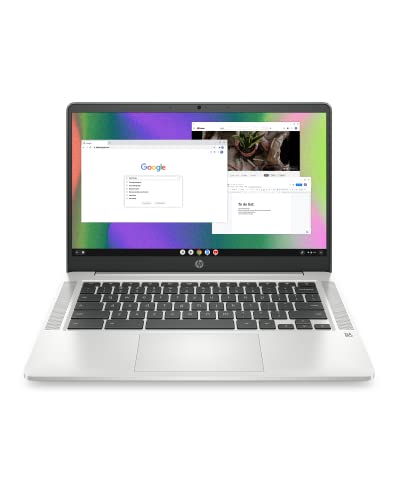
This HP Chromebook 14 Laptop (2022, N4120) is a solid fit for teachers on a budget who need a lightweight, no-fuss device for daily online classes and basic productivity tasks. I rely on its 14-hour battery and fast charging to get through back-to-back lessons without hunting for outlets. The HD display is clear in sunlight, and the speakers deliver clean audio for videos and calls. Its Celeron processor and 4 GB RAM handle Google Classroom, Zoom, and Docs smoothly, though heavy multitasking slows it down. With 64 GB storage and Wi-Fi 5, it’s capable but limited for large files. It’s ENERGY STAR and EPEAT Silver certified, and backed by a one-year warranty.
Best For: Budget-conscious teachers needing a lightweight, reliable Chromebook for online teaching and basic productivity.
Pros:
- Long 14-hour battery life with fast charging supports all-day classroom use
- Clear HD display and strong audio quality ideal for video calls and streaming
- ENERGY STAR and EPEAT Silver certified for eco-friendly performance
Cons:
- 4 GB RAM and Celeron processor limit performance during heavy multitasking
- 64 GB eMMC storage is insufficient for large media or offline file storage
- Wi-Fi 5 (not Wi-Fi 6) may result in slower connectivity in high-network environments
HP 14″ Business Laptop with Office 365
Packing Office 365 and a reliable 11.5-hour battery into a lightweight 4.6-pound chassis, the HP 14″ Business Laptop suits high school teachers and adjuncts who need basic productivity tools without overspending. I rely on its Windows 11 S mode for smooth, secure lessons, and the included Office 365 helps me grade and plan efficiently. The 14-inch HD screen is clear for video calls, and the built-in HD audio works well with the bundled PLUSERA earphones. USB-C, HDMI, and an SD card reader let me connect to projectors and share materials easily. Just know: 64GB eMMC storage is tight, so I use the included 256GB SD card for extra space. It’s not for heavy editing, but for lectures, grading, and prep, it’s practical and dependable.
Best For: High school teachers and adjunct faculty who need an affordable, lightweight laptop with essential productivity tools for lesson planning, grading, and virtual teaching.
Pros:
- Includes a 1-year Office 365 subscription and Windows 11 S for secure, efficient productivity
- Lightweight design with 11.5-hour battery life, ideal for mobile use throughout the school day
- Multiple ports including USB-C, HDMI, and SD card reader for easy connectivity to projectors and peripherals
Cons:
- Limited 64GB eMMC storage requires reliance on the included 256GB SD card for additional space
- Entry-level Intel Celeron N4120 processor is not suited for demanding tasks like video editing
- HD display resolution (1366 x 768) is lower than modern Full HD standards
HP 15 Laptop 16GB RAM 512GB SSD
You’ll find the HP 15 Laptop with 16GB RAM and 512GB SSD especially well-suited if you’re a high school or community college instructor prioritizing screen clarity and multitasking during live lessons. I use it daily, and the 15.6-inch Full HD IPS display with narrow bezels and anti-glare coating cuts eye strain during long classes. The 16GB RAM handles multiple browser tabs, Zoom, and Office 365 smoothly, though the Intel N4120 isn’t ideal for heavy video editing. Battery lasts a full workday, and Wi-Fi 6 keeps me stable online. Just note: storage fills fast, so I offload files regularly.
Best For: High school or community college instructors who need a reliable, comfortable-to-use laptop for teaching, multitasking, and video conferencing with excellent screen clarity and all-day battery life.
Pros:
- Sharp 15.6-inch Full HD IPS display with anti-glare coating and narrow bezels reduces eye strain during long lessons
- 16GB RAM ensures smooth multitasking with web browsers, Zoom, and Microsoft Office 365
- Long battery life and Wi-Fi 6 support keep you connected and productive throughout the workday
Cons:
- Intel N4120 processor limits performance for demanding tasks like video editing or advanced software
- 512GB SSD fills quickly, requiring regular file management or cloud offloading
- Integrated Intel UHD Graphics lack power for graphic-intensive applications or gaming
HP Chromebook 14 Laptop (14a-na0021nr)
The HP Chromebook 14 Laptop (14a-na0021nr) stands out as a dependable, no-frills choice for online high school teachers who prioritize battery life and basic performance over heavy multitasking or software flexibility. I rely on its 13.5 hours of wireless streaming during long teaching days, and the 14-inch HD anti-glare screen reduces eye strain during video lessons. The Intel Celeron N4000 and 4 GB RAM handle Google Classroom and Zoom comfortably, though complex apps lag. With just 32 GB eMMC storage, cloud reliance is a must. It’s lightweight at 3.24 lbs, connects via Wi-Fi 5 and Bluetooth 5.0, and the HP camera delivers clear video. It’s ENERGY STAR certified, EPEAT Silver registered, and backed by a 1-year hardware warranty-solid for budget-conscious setups, but not for power users.
Best For: Online high school teachers seeking an affordable, portable Chromebook with long battery life for basic teaching tasks and video conferencing.
Pros:
- Up to 13.5 hours of battery life supports full-day teaching without frequent charging
- Lightweight design (3.24 lbs) and HD anti-glare display enhance portability and reduce eye strain
- ENERGY STAR certified and EPEAT Silver registered for environmental efficiency
Cons:
- Limited 32 GB eMMC storage requires constant reliance on cloud services
- Intel Celeron N4000 and 4 GB RAM struggle with complex or multitasking applications
- HD camera and display are functional but lack premium quality for high-demand video use
HP 2026 17″ Laptop i3-N305 16GB RAM
I’d recommend the HP 2026 17″ Laptop i3-N305 16GB RAM for online teachers who need a roomy display and steady performance without paying for high-end specs. The 17.3-inch Full HD IPS screen gives clear visuals and wide viewing angles, great for sharing slides or student work. With an 8-core Intel i3-N305 processor and 16GB RAM, it handles video calls, multitasking, and light editing smoothly. The 512GB SSD boots fast and loads files quickly. It’s a bit heavy at 4.6lbs, and battery life is just okay at 9.5 hours, but Wi-Fi 6, USB-C, and HP Fast Charge keep you connected and powered. Windows 11 Pro and Copilot help streamline tasks, while the privacy shutter and mic mute add security.
Best For: Online teachers and remote professionals who need a large, clear display and reliable performance for video conferencing, multitasking, and light productivity work without requiring premium specs.
Pros:
- Spacious 17.3-inch Full HD IPS display with wide viewing angles ideal for sharing content and reducing eye strain
- Efficient 8-core Intel i3-N305 processor with 16GB RAM and 512GB SSD ensures smooth multitasking and fast boot/load times
- Strong privacy features including HP True Vision HD camera with physical shutter and dedicated microphone mute button
Cons:
- Relatively heavy at 4.6lbs, making it less ideal for frequent travel or on-the-go use
- Battery life of up to 9.5 hours is modest for its class, especially under heavy video use
- Limited to mid-tier performance, not suitable for intensive tasks like advanced video editing or gaming
Factors to Consider When Choosing a Laptop for Online Teaching
You’ll want a laptop that keeps up with back-to-back classes without slowing down, so aim for at least an Intel Core i3 or AMD Ryzen 3 processor and 8GB of RAM-16GB is better if you run multiple apps at once. A solid-state drive (SSD) with 256GB storage guarantees faster boot times and smoother file access, while a 1080p display makes shared screens easier to read, even in low light. Just remember, even the best specs won’t help if the battery dies mid-lesson, so check for at least 6 hours of real-world use and consider keeping a charger handy.
Processor Performance
Performance starts with the processor, and for online teaching, you need one that keeps up without breaking a sweat. You should pick a model with at least 4 cores and a boost clock of 2.6 GHz or higher-it handles video calls, screen sharing, and streaming smoothly. Avoid dual-core chips under 1.5 GHz; they lag when running multiple apps, harming your delivery. A larger cache, like 4MB or more, boosts efficiency when you’ve got many tabs and teaching tools open. Look for Turbo Boost Technology-it ramps up speed during heavy tasks like recording lectures or using digital whiteboards. Just remember, even a strong processor can slow down if the laptop overheats. An efficient thermal design prevents throttling, so your system stays responsive during long classes. Don’t sacrifice cooling for portability-sustained performance matters more than peak speed.
Memory Capacity
When it comes to smooth multitasking during online teaching, memory capacity plays a decisive role. You’ll want at least 8GB of RAM to handle video calls, web browsing, and grading apps without lag. If you regularly run virtual classroom software, slide decks, and stream media at once, stepping up to 16GB gives you room to breathe and keeps everything responsive. Systems with less than 8GB often struggle, stalling when you switch tabs or share your screen-something you can’t afford mid-lesson. More RAM means faster app launches, quicker boot times, and smoother performance on cloud platforms like Google Classroom or Zoom. It also reduces delays during live student interactions, keeping engagement high. While 8GB works for basic needs, 16GB future-proofs your setup if your teaching tools grow more demanding. Don’t compromise here-tight memory slows you down more than any other hidden bottleneck.
Storage Type
Speed is everything when launching lesson plans and switching between teaching apps, and solid-state storage makes the difference. You’ll want an SSD-especially an NVMe SSD-since it loads your materials and programs faster than older SATA models, keeping your lessons smooth and responsive. Avoid eMMC storage if you can; it’s in cheaper laptops but drags performance when you’re juggling video calls, slides, and grading tools at once. UFS is better than eMMC and works okay for light multitasking, but still can’t match SSD speeds. If you’re on a tight budget, pairing limited local storage with reliable cloud services like Google Drive or OneDrive helps-you can access lesson files from anywhere without overloading your device. Just don’t rely solely on cloud access if your internet dips during class. Aim for at least 256GB NVMe SSD storage-it’s the sweet spot for speed, capacity, and value.
Display Quality
A crisp, clear display makes a real difference when you’re teaching online-choose a laptop with at least a 1920×1080 (Full HD) resolution to guarantee text stays sharp and videos look clean, whether you’re sharing slides or grading assignments. Go for an IPS-level panel; it delivers wide 178° viewing angles and consistent colors, so students won’t see washed-out screens during in-person reviews. A 14-inch display is the sweet spot, balancing screen space and portability for long teaching sessions. Look for at least 250 nits brightness to keep visuals clear in well-lit or sunlit rooms. An anti-glare coating is a must-it cuts reflections and helps reduce eye fatigue, especially if you’re near windows or teaching outdoors. Don’t assume bigger or brighter is always better; higher specs can increase cost and power use without noticeable gains in typical classroom conditions.
Battery Life
You’ll want a laptop that keeps up with your teaching schedule without constantly hunting for an outlet, so aim for at least 10 hours of battery life to cover long days of back-to-back classes and prep work. Models offering up to 14 hours give you a comfortable buffer, especially when teaching remotely through lunch or between meetings. Look for wireless streaming battery ratings-they reflect real-world performance with Wi-Fi on and the screen active, which is how you’ll actually use it. Fast-charging tech is a practical bonus; reaching 50% in about 45 minutes cuts downtime during short breaks. You’ll also get longer runtimes from energy-efficient parts like low-power LED displays and modern processors designed to reduce drain. Just keep in mind that actual battery life dips under heavy use, so relying solely on manufacturer claims can mislead. Test results or verified user reports help set realistic expectations.
Webcam Clarity
While many laptops come with built-in cameras, not all deliver the clarity needed for effective online teaching. You’ll want at least a 720p HD webcam so your facial expressions and gestures remain clear and natural on screen. Cameras with low-light correction and noise reduction keep your image sharp, even in dim or uneven lighting. Anti-reflective screen coatings and wide viewing angles help maintain consistent video quality by reducing glare and distortion. Some models include physical privacy shutters-great for security, letting you block the lens when you’re off-camera. Avoid webcams without optimization features, as they often produce grainy or washed-out images. Though built-in dual-array mics improve audio, that’s a separate upgrade-don’t assume better sound means better video. Prioritize true visual clarity, not just convenience. Test sample video feeds in real conditions before deciding.
Audio Features
Clear audio matters just as much as video when teaching online, so prioritize laptops with integrated dual-array digital microphones-they capture your voice accurately while filtering out keyboard clicks, fan noise, and other background distractions. Look for a dedicated microphone mute button; it gives you instant control, preventing unintended sounds from disrupting your lesson. Audio systems tuned by professional sound technologies, like Dolby Audio or DTS, deliver louder, clearer output, keeping students engaged without distortion. While built-in 720p HD cameras often include audio optimization, don’t rely on them alone-ensure the laptop supports Bluetooth 5.0 or higher for stable connections to external headsets or mics. Wireless accessories boost flexibility but require battery management and setup. Built-in mics work well in quiet spaces, but noisier environments may demand wired or wireless upgrades. Always test audio quality in real teaching conditions before committing.
Frequently Asked Questions
Can I Use a Tablet Instead of a Laptop for Online Teaching?
You can use a tablet for online teaching, but it’s limiting. You’ll handle video calls and slides fine, especially on iPads or high-end Android models with stylus support. However, you’ll struggle with multitasking-running a browser, document editor, and chat app at once gets clunky. Keyboard cases help, but they’re extra cost. Laptops still offer better ports, file management, and software flexibility. Pick a tablet only if your teaching is simple and mobile.
Do I Need Antivirus Software on My Teaching Laptop?
Yes, you need antivirus software on your teaching laptop-it’s essential for protecting student data and preventing malware during video calls or file sharing. Built-in tools like Windows Defender help, but third-party options like Bitdefender or Norton offer stronger real-time shields. Just remember, no antivirus catches everything, so avoid suspicious links. Balance security with system performance-some suites slow older laptops. Always enable automatic updates and use caution when downloading classroom materials.
How Often Should I Update My Laptop for Online Classes?
You should update your laptop’s software weekly to stay secure and compatible with teaching platforms. Enable automatic updates so you never miss critical patches. While major OS upgrades every 2–3 years help maintain performance, avoid rushing-wait a few weeks after release to dodge bugs. Older hardware may struggle with new software, so verify system requirements. Always back up before updating to prevent data loss during unforeseen issues.
Is a Dedicated Graphics Card Necessary for Online Teaching?
No, you don’t need a dedicated graphics card for online teaching. Integrated graphics on modern Intel or AMD processors handle video conferencing, screen sharing, and HD streaming just fine. You’ll save money and gain battery life without one. But if you edit videos or run graphic-heavy software alongside classes, a dedicated GPU helps. Just know it increases cost, heat, and power use-often unnecessarily for typical virtual instruction tasks.
Can I Teach Online Effectively With Just Built-In Laptop Speakers?
You can teach online effectively with built-in laptop speakers if you’re in a quiet space and keep volume moderate. Most modern laptops have clear audio output around 70–80 dB, enough for personal setups. But you’ll struggle in noisy environments or larger rooms. External speakers or headphones with a mic give better clarity and feedback control. Built-ins work in a pinch, but aren’t reliable long-term for consistent audio quality.