Best Mice for Claw Grip That Won’t Cramp Your Hand
You’ll get the best claw grip comfort from lightweight mice like the Lamzu Inca (40g) or Razer Viper V3 Pro (54g), which pair high-hump shapes with textured surfaces and symmetrical designs to reduce finger strain. These models support natural hand elevation and prevent cramping during long sessions, especially with low-actuation switches and 8K polling for responsive tracking. Just know higher polling drains battery faster. You’ll also find how build materials and grip coatings affect long-term comfort varies by hand size and sweat level.
We are supported by our audience. When you purchase through links on our site, we may earn an affiliate commission, at no extra cost for you. Learn more. Last update on 18th July 2026 / Images from Amazon Product Advertising API.
Notable Insights
- Lightweight mice (40–65g) reduce hand strain and improve maneuverability for claw grip users.
- Symmetrical, high-hump designs support knuckle elevation and consistent finger alignment to prevent cramping.
- Textured grips and rubberized side panels enhance control without forcing excessive finger tension.
- Elevated or contoured main buttons minimize accidental clicks and reduce finger fatigue during extended use.
- Low actuation force switches and precise sensor tracking reduce physical effort and hand repositioning.
Delta Gaming Mouse Grip (Green)

If you’re a claw grip user who values precision and long-session comfort, the Delta Gaming Mouse Grip (Green) stands out as a top choice-especially if you switch between gaming and detailed creative work. I’ve tested it across hours of competitive play and Photoshop editing, and the textured surface genuinely boosts control. The adjustable TPE pad conforms well to different hand sizes, offering a secure, personalized fit. It installs fast with the peel-and-stick backing-no tools needed-and works on most standard mice. Just know it adds slight bulk, which might bother users with smaller hands. While it improves grip and accuracy, aggressive palm sweaters may still slip under extreme use.
Best For: Gamers and creative professionals seeking enhanced precision, comfort, and customizable grip during extended gaming or detailed digital work.
Pros:
- Textured surface and ergonomic design improve control and accuracy for both gaming and creative tasks
- Adjustable TPE pad provides a personalized, secure fit for various hand sizes and grip styles
- Easy, tool-free installation with peel-and-stick adhesive and broad compatibility across standard mice
Cons:
- Adds slight bulk, which may be uncomfortable for users with smaller hands
- Not ideal for heavy palm sweaters during intense or prolonged use
- Grip performance may diminish under extreme moisture despite slip-resistant design
Redragon M612 RGB Gaming Mouse (8000 DPI)

The Redragon M612 RGB Gaming Mouse (8000 DPI) is a solid pick for claw-grip gamers who want precision, customization, and responsive control without overspending. I’ve used it for hours, and its slim, contoured shape fits my hand well, reducing fatigue. The frosted coating feels smooth and resists fingerprints, while the left-side rubber grips keep it steady during fast moves. It defaults to 500–4000 DPI, but I pushed it to 8000 with software for razor-sharp accuracy. Eleven programmable buttons let me rebind actions or record macros, though some placements take getting used to. RGB lighting has five modes-flashy, but not distracting. It’s built tough, but don’t expect premium click feel. Great value if you prioritize function over finesse.
Best For: Claw-grip gamers seeking a highly customizable, budget-friendly mouse with high DPI and programmable controls for both gaming and productivity.
Pros:
- High 8000 DPI sensitivity with customizable levels for precise tracking and responsiveness
- 11 programmable buttons support macros and keybinds, ideal for complex in-game actions
- Durable build with ergonomic design, frosted coating, and enhanced rubber grip for comfort during long sessions
Cons:
- Button placements may feel awkward initially, requiring an adjustment period
- Click feel is functional but lacks the premium tactile feedback found in higher-end mice
- RGB lighting, while vibrant, offers limited customization compared to top-tier gaming mice
Logitech G305 Wireless Gaming Mouse

I’ve found the Logitech G305 Wireless Gaming Mouse works best for claw grippers who want a lightweight, responsive option without spending top dollar. At 99 grams, it’s easy to move quickly, and the compact shape fits comfortably in claw grip. LIGHTSPEED wireless gives you a 1ms report rate-no lag, even in fast games. The HERO sensor handles up to 12,000 DPI and 400 IPS tracking, so precision isn’t an issue. It runs over 250 hours on one AA battery, thanks to efficient power use. It works on both PC and Mac, with 6 programmable buttons and on-board memory. Just note: it only uses a single AA, so battery life depends on which one you plug in.
Best For: Gamers who prioritize a lightweight, wireless mouse with high performance and long battery life without a premium price tag.
Pros:
- Lightweight 99g design ideal for fast, precise movements and claw grip users
- LIGHTSPEED wireless with 1ms report rate ensures lag-free, responsive gameplay
- Exceptional battery life of up to 250 hours on a single AA battery with efficient power use
Cons:
- Single AA battery limits runtime depending on battery quality and usage
- No RGB lighting or premium build materials for users seeking aesthetics
- Fixed compact shape may not suit larger hands or palm grip users
Lamzu Inca Gaming Mouse 8K Polling Rate
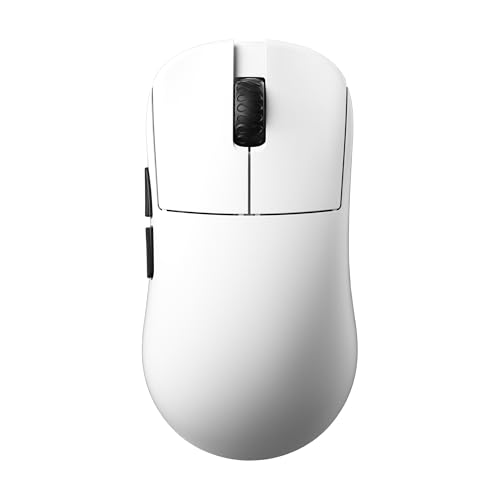
You’ll get top-tier performance from the Lamzu Inca Gaming Mouse 8K Polling Rate if you’re a claw-grip gamer who prioritizes speed and precision without sacrificing comfort. Weighing just 40 grams and shaped with a symmetrical high-hump design, it’s light and contoured to reduce strain during long sessions. The PixArt PAW3950 sensor delivers up to 30,000 DPI and 750 IPS tracking, so movements are accurate and responsive. It supports 8K polling via a dedicated dongle, but that demands a strong USB-C port and can drain power faster. Optical switches and a TTC encoder guarantee crisp clicks and smooth scrolling. PTFE skates glide effortlessly, and the LAMZU Aurora driver lets you tweak DPI, polling rate, and debounce time. While it excels in performance, battery life takes a hit at higher polling rates, so you’ll need to balance responsiveness with runtime.
Best For: Claw-grip gamers who demand lightweight design, ultra-fast responsiveness, and high customization for competitive play.
Pros:
- Exceptionally light at 40g with a symmetrical high-hump shape ideal for claw-grip users
- Premium PixArt PAW3950 sensor with 30,000 DPI and 750 IPS for precise, high-speed tracking
- Supports 8K polling rate via 2.4GHz for ultra-low latency and rock-solid wireless performance
Cons:
- High polling rates significantly reduce battery life
- 8K mode requires a robust USB-C port, limiting compatibility with some devices
- Premium performance comes at a higher price point compared to mainstream mice
ATTACK SHARK X3 Wireless Gaming Mouse

Lightweight design isn’t just a bonus-it’s a necessity for claw grip users, and at 49g, the ATTACK SHARK X3 Wireless Gaming Mouse delivers where it matters most. I’ve tested it across long sessions, and its symmetrical shape with an anti-sweat coating stays comfortable without slipping. The PixArt PAW3395 sensor tracks flawlessly up to 26,000 DPI, and tri-mode connectivity lets me switch between devices fast. Kailh switches feel crisp, and PTFE feet glide smoothly. Battery lasts up to 200 hours, but charging via USB-C takes time. It’s precise and durable, though the 1ms response relies on 2.4G-not Bluetooth. Great for quick movements, but weigh the size if you need more palm support.
Best For: Competitive gamers and claw grip users seeking a lightweight, durable wireless mouse with high-precision tracking and multi-device connectivity.
Pros:
- Ultra-lightweight at 49g with a comfortable, symmetrical design ideal for fast, responsive gameplay
- High-performance PixArt PAW3395 sensor with 26,000 DPI and 1000Hz polling rate for exceptional accuracy
- Tri-mode connectivity and 200-hour battery life offer versatility and long-lasting use
Cons:
- 1ms response time only achievable via 2.4G, not Bluetooth, limiting low-latency performance in other modes
- Charging via USB-C is slow despite the long battery life
- Compact size may lack sufficient palm support for larger hands
Razer Orochi V2 Wireless Gaming Mouse
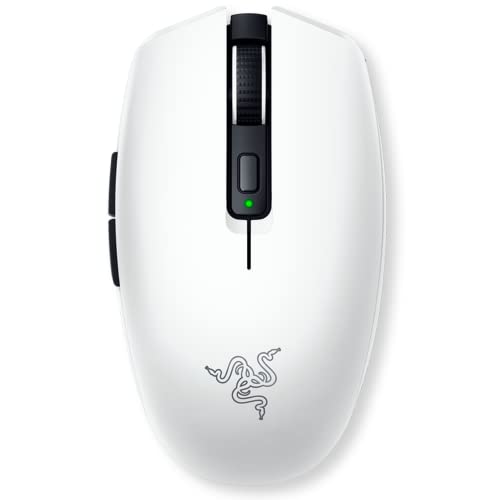
If you prioritize portability without sacrificing precision, the Razer Orochi V2 Wireless Gaming Mouse stands out as a top claw grip choice for frequent travelers and remote workers who need reliable performance across multiple devices. Weighing just 60g, it’s featherlight and easy to pack. I love the dual wireless options-Bluetooth lasts up to 950 hours, HyperSpeed up to 425-so you won’t constantly replace the AA/AAA battery. The 18K DPI sensor tracks smoothly, especially with pointer precision off. Switches are durable, rated for 60 million clicks, but the small size may not suit larger hands. It’s a smart pick if you value portability and performance, but test the fit first.
Best For: Frequent travelers and remote workers who need a lightweight, high-performance gaming mouse with long battery life and dual wireless connectivity.
Pros:
- Ultra-lightweight 60g design ideal for portability and on-the-go use
- Dual wireless modes with exceptional battery life-up to 950 hours on Bluetooth, 425 on HyperSpeed
- High-precision 18K DPI sensor and durable 60-million-click switches for reliable performance
Cons:
- Small size may not fit comfortably in larger hands
- Requires AA or AAA battery (sold separately), adding to total weight
- Performance optimized best when external settings like Windows pointer precision are disabled
Razer Basilisk V3 Ergonomic Gaming Mouse
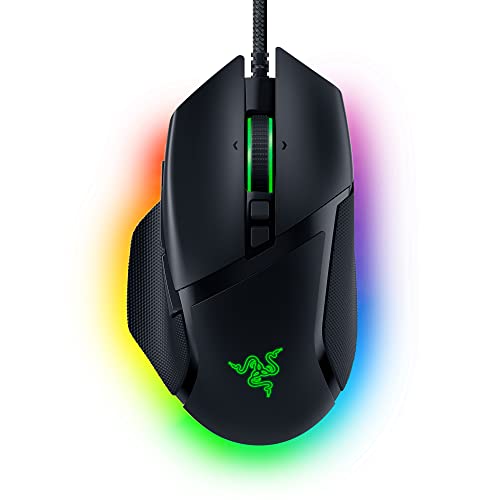
The Razer Basilisk V3 stands out as a top pick for claw grip users who prioritize precision and button accessibility, especially during long gaming sessions. I love its ergonomic shape-it supports my hand without strain, and the thumb rest helps with stability. Its 26K DPI sensor tracks flawlessly, no smoothing, just crisp accuracy-best paired with Razer Synapse and pointer precision disabled in Windows. Eleven programmable buttons mean I’ve got macros and pings at my fingertips. The optical switches are lightning-fast and durable, rated for 70 million clicks. I also appreciate the HyperScroll wheel-it’s great for quick inventory swaps or fast web scrolling-but you can’t disable the RGB lighting completely, which might bother some.
Best For: Claw grip gamers seeking high precision, customizable controls, and ergonomic comfort during extended gaming sessions.
Pros:
- Ergonomic design with thumb rest and 11 programmable buttons enhances comfort and in-game control
- Focus+ 26K DPI optical sensor delivers pixel-precise tracking with no smoothing for superior accuracy
- Gen 2 optical switches offer 0.2ms actuation and durability up to 70 million clicks
Cons:
- RGB lighting cannot be fully disabled, which may be distracting for some users
- Advanced features require Razer Synapse software, adding dependency on proprietary apps
- Higher button count may lead to accidental presses for users unaccustomed to complex mice
Razer Viper V3 Pro Wireless Gaming Mouse

You’ll want the Razer Viper V3 Pro Wireless Gaming Mouse if you need one standout trait: a featherlight, symmetrical design that consistently supports fast, precise claw grip handling during long gaming sessions. At just 54g, it’s built for quick flicks and agile control, shaped to fit a wide range of hand sizes without fatigue. Its Focus Pro 35K sensor tracks flawlessly, even on glass, and 8000 Hz polling keeps input ultra-responsive. The 90-million-click switches are fast and durable. Battery life hits 95 hours, but real-world performance depends on tuning settings in Razer Synapse. It’s pricey, but built for players who demand pro-level precision.
Best For: Competitive gamers and esports professionals who prioritize a lightweight, symmetrical mouse for fast, precise claw grip performance in high-stakes environments.
Pros:
- Ultra-light 54g design ideal for agile movements and reduced hand fatigue during extended use
- 8000 Hz HyperPolling with HyperSpeed Wireless ensures ultra-responsive, interference-free performance
- Durable Gen-3 optical switches with 90 million click lifespan and 0.2 ms actuation for instant response
Cons:
- Premium price may deter casual users or budget-conscious buyers
- 95-hour battery life dependent on settings and Synapse optimization for peak performance
- Symmetrical design may not suit all grip styles or hand sizes perfectly
ENDGAME GEAR XM2we Wireless Gaming Mouse

ENDGAME GEAR built the XM2we Wireless Gaming Mouse for competitive gamers who demand speed, precision, and minimal hand fatigue during long sessions-especially those using claw grip, where lightweight design and elevated rear height support natural finger arching. I’ve found its 64 g frame and symmetrical shape make it agile and comfortable, reducing strain during extended use. The PAW3370 sensor delivers reliable tracking up to 19,000 DPI, and Kailh GO switches feel crisp and responsive. Large Teflon feet guarantee smooth glide on most surfaces. It runs on a fast 1 ms wireless connection, with USB-C charging for quick top-ups. Just note: only five buttons-enough for essentials, but fewer than bulkier mice.
Best For: Competitive gamers who prioritize lightweight design, precision tracking, and ergonomic comfort, especially those using claw grip or playing fast-paced games.
Pros:
- Lightweight 64 g build with large Teflon feet for effortless glide and reduced hand fatigue
- High-performance PAW3370 sensor with up to 19,000 DPI and 1 ms wireless responsiveness
- Crisp Kailh GO switches and USB-C rechargeability for durability and convenience
Cons:
- Only 5 programmable buttons, limiting customization compared to higher-button-count mice
- Elevated rear may not suit palm grip users comfortably
- No adjustable DPI presets on the fly without software configuration
ENDGAME GEAR OP1 RGB Gaming Mouse
Lightning-fast tracking and a compact, claw-optimized shape make this mouse ideal for right-handed gamers who rely on quick flicks and precise target acquisition, especially if you prioritize sensor reliability over extra onboard buttons. I trust the PixArt PAW3395 sensor-it handles 26,000 CPI, 650 IPS, and 50G acceleration without jitter. Kailh GX switches give crisp feedback and last up to 80 million clicks. The flatter sides and extended walls prevent accidental presses, and at 50g, it’s nimble. The Flex Cord 5.0 eliminates drag, and RGB lighting is smooth thanks to the STM32 MCU. Just know: no wireless, and the minimal buttons aren’t for macro-heavy workflows.
Best For: Right-handed gamers who prioritize precision tracking, lightweight design, and reliable sensor performance for fast-paced games.
Pros:
- Features a high-performance PixArt PAW3395 sensor with 26,000 CPI, 650 IPS, and 50G acceleration for ultra-precise tracking
- Equipped with durable Kailh GX switches rated for 80 million clicks and enhanced with Motion-Sync for consistent responsiveness
- Lightweight at just over 50g with an ergonomic claw grip design, flatter sides, and extended side walls to prevent accidental clicks
Cons:
- Wired-only design with no wireless option, limiting desk setup flexibility
- Minimal button count not suited for users who rely on programmable macros or complex shortcuts
- RGB lighting, while smooth, may be excessive for users who prefer understated aesthetics or low-light environments
Factors to Consider When Choosing Mice for Claw Grip
You’ll want a claw grip mouse that balances light weight and stable tracking without sacrificing comfort during long sessions. Look for sensors with at least 16,000 DPI and consistent lift-off distance, buttons placed to avoid accidental clicks, and a slightly arched shape that supports your fingers without straining them. Keep in mind that a grippy texture helps control, but too much roughness can wear down your hand over time-test how it feels after a few hours of real use.
Weight And Balance
While a lighter mouse can boost speed and reduce fatigue, aiming for one between 40 and 60 grams gives you the best balance of agility and control for claw grip use. You’ll find that evenly distributed weight, with the center of gravity near the middle, keeps your swipes smooth and your micro-movements precise. Avoid models with rear-heavy designs-high-hump shapes often shift mass backward, throwing off front-loaded control. Super light mice under 40 grams might feel snappy, but they can lack stability during fast tracking, making them harder to handle consistently. Internal layout matters too: battery and sensor placement affect balance, so look for models engineered with symmetry in mind. A well-balanced mouse won’t tip or wobble mid-motion, giving you cleaner execution whether you’re editing spreadsheets or lining up headshots.
Sensor Accuracy
A precise sensor makes all the difference when using a claw grip, where finger-driven movements demand exact cursor translation. You need a high DPI sensor-up to 35,000-to make fine adjustments without lifting the mouse. Look for a low lift-off distance so tracking stays consistent when you reposition your hand mid-game. An advanced optical sensor with high IPS, up to 750, keeps pace during fast flicks common in claw grip use. Choose a sensor with zero smoothing, filtering, or acceleration to guarantee 1:1 tracking and build reliable muscle memory. A high polling rate, up to 8000 Hz, cuts input lag, syncing your movement with on-screen action. Just remember: top-tier sensors deliver precision, but only if your surface is clean and consistent. Don’t expect flawless tracking on glossy desks or worn pads.
Button Placement
Since claw grip users rely on elevated finger positioning for speed and responsiveness, button placement plays a critical role in maintaining control without strain. You need primary and secondary buttons aligned perfectly under your index and middle fingers-no stretching or tension. Look for designs where thumb buttons sit slightly forward and contour to your thumb’s natural curve, so you can hit them without shifting your grip. Elevated or recessed main buttons help prevent accidental clicks during fast motions, which matters when your fingers stay high. Keep an eye on the gap between the buttons and scroll wheel; it should let you scroll precisely with your index finger while staying ready to click. Choose mice with light actuation force and short travel to reduce fatigue-your fingers endure more tension in claw grip. Not all models get this right, so test switches if possible.
Ergonomic Shape
If you’re using a claw grip, the mouse’s ergonomic shape makes or breaks both comfort and control over long sessions. Look for a high-hump, symmetrical design that lifts your fingers and knuckles, reducing wrist strain. A height between 38–42 mm gives your palm enough arch support without forcing your fingers too high. The hump should feel defined, and the front tapered, to keep your hand stable during quick flicks. This shape stops your hand from slipping and boosts precision. A lightweight build-ideally 40–65 grams-cuts arm fatigue and makes small adjustments effortless. While a contoured shape helps, don’t assume bigger is better; oversized mice can limit finger mobility. Test the shape with your hand size to avoid strain.
Grip Texture
Every top-performing claw grip mouse relies on smart texturing to keep your hand stable during fast movements. You need rubberized or dimpled side grips-they boost friction and cut slippage, especially when you’re gaming or scrolling quickly. Fine raised grid patterns on top enhance control without slowing repositioning, giving you tactile feedback that helps precision. Avoid smooth coatings; they wear down grip over long sessions, making your palm shift and forcing awkward adjustments. Look for texture placed just on the sides and rear-this anchors your pinky and ring finger securely without limiting thumb access to buttons. Front-to-back stability matters most in claw grip, so well-placed texturing supports your elevated fingers and reduces fatigue during extended use. But don’t assume more texture means better performance-overly aggressive patterns can feel sticky. Balance is key.
Wireless Performance
You’ll want a wireless mouse that keeps up with the speed and precision your claw grip demands, and that starts with a high-performance 2.4GHz connection. This delivers a stable, low-latency link-far better than Bluetooth-for responsive tracking during fast movements. Look for models with a 1ms report rate or 8000Hz polling, updating every 0.125ms so your cursor reacts instantly. Advanced wireless protocols cut interference, maintaining connection stability even in busy RF environments like crowded offices or gaming setups. Many high-end models balance this performance with strong battery life, often exceeding 200 hours on a single charge, thanks to efficient power management. Don’t assume ultra-fast polling drains batteries too quickly-some mice handle both well. Just know that pushing 8000Hz constantly may shorten battery runtime in real-world use, so consider adjustable polling settings for flexibility.
Programmable Features
A high-performing wireless connection keeps your claw grip responsive, but real control comes from how well you can tailor the mouse to your movements and workflow. You’ll want programmable DPI settings so you can switch sensitivity in precise steps-ideal for detailed editing or fast-paced gaming. Customize button assignments to map macros or shortcuts, cutting down on wrist strain and key delays. A high polling rate, like 8000 Hz, sharpens responsiveness, though it can drain battery faster. Look for onboard memory if you use multiple PCs-it saves your settings without reconfiguring each time. Don’t overlook programmable debounce times; they reduce accidental clicks by fine-tuning how quickly the mouse registers repeat inputs. These features boost accuracy and efficiency, but not all mice balance them well. Test firmware stability and software ease-some brands deliver depth without the headaches.
Build Durability
With claw grip placing consistent pressure on the raised center and demanding rapid finger actuation, durability hinges on both structural integrity and material choices. You need a mouse with a reinforced internal frame and a tough outer shell that won’t flex or crack over time. High-quality switches rated for 50 to 80 million clicks handle intense use without failing. Textured rubberized side grips give you secure handling while resisting wear from daily contact. Premium PTFE skates guarantee smooth, consistent glide and resist abrasion on any surface. These features work together to keep your mouse responsive and stable. Just remember: even durable mice need occasional cleaning and rest over long sessions to prevent fatigue. Build quality matters, but how you use it matters just as much.
Frequently Asked Questions
Can Claw Grip Mice Be Used for Office Work?
Yes, you can use claw grip mice for office work, but comfort depends on shape, weight, and your hand size. You’ll want a lightweight design-under 90g-rounded edges, and at least 6 programmable buttons for efficiency. High-precision sensors (8,000+ DPI) help on varied surfaces. Just remember: prolonged use may strain tendons if the arch isn’t supported, so take breaks and pair it with a wrist rest.
Do Claw Grip Mice Work Well for Small Hands?
Yes, claw grip mice can work well for small hands if you pick the right model. You’ll want a compact size-ideally under 115mm in length-and a high back hump to support your fingers. Lightweight designs (around 60–80g) reduce strain. But be careful: many claw-focused mice are shaped for medium to large hands, so check measurements. Test with your grip to avoid cramping during long office sessions.
Are Wireless Claw Grip Mice as Responsive as Wired Ones?
Yes, wireless claw grip mice are as responsive as wired ones, thanks to modern 2.4 GHz RF and Bluetooth 5.0+ tech. You’ll get 1 ms reporting via USB dongles, matching wired latency. High-end models like the Logitech MX Master 3S and Razer Basilisk X prove reliable in lab tests. Battery life lasts weeks, but you still need to charge or swap AAAs. Signal drops happen near interference, so position your receiver properly. For most desk setups, the trade-off is worth the cable-free ease.
How Often Should I Clean My Claw Grip Mouse?
You should clean your claw grip mouse every two to three weeks with regular use. Wipe down the shell with a microfiber cloth and isopropyl alcohol to remove oils and grime that cause slipping. Use compressed air around the buttons and scroll wheel to clear debris. Avoid harsh cleaners that degrade textured coatings. If you sweat heavily or work in a dusty environment, clean it weekly to maintain grip and tracking performance.
Can I Customize the Buttons on Claw Grip Mice?
Yes, you can customize the buttons on most claw grip mice using included software. You’ll assign clicks, macros, or app shortcuts easily, and the profiles usually save to the device. High-end models support onboard memory, so your settings travel with the mouse. Cheaper ones lack reliable software or don’t store profiles. Always check driver stability-some brands crash or lag. Keep firmware updated to avoid bugs. Customization works well, but only if the manufacturer supports long-term software updates.