Best PCs for Animation That Handle Heavy Renders Like a Pro
You’ll want the MSI Aegis ZS2 or Alienware Aurora for pro-level animation and heavy renders. Both pack powerful CPUs, 64GB RAM, and RTX 5070/5080 GPUs with 12GB+ VRAM to handle 4K scenes smoothly. NVMe SSDs guarantee fast load times, while liquid cooling keeps performance stable. Just expect higher noise under load and premium pricing. Each comes with a 1-year warranty and lifetime support-ideal if you demand reliability and room to scale. There’s more to evaluate for your specific workflow.
We are supported by our audience. When you purchase through links on our site, we may earn an affiliate commission, at no extra cost for you. Learn more. Last update on 17th July 2026 / Images from Amazon Product Advertising API.
Notable Insights
- Look for PCs with high-core-count CPUs like Ryzen 7 or Intel Core Ultra 9 and base clock speeds over 3.4GHz for smooth animation rendering.
- Choose systems with at least 32GB of DDR5 RAM, preferably 64GB, to handle complex scenes and multitasking without lag.
- Opt for desktops equipped with RTX 5070 or higher GPUs offering 8GB+ VRAM and support for DLSS and AI-accelerated rendering tasks.
- Prioritize NVMe SSD storage of 1TB or more for fast boot times, quick file access, and efficient scratch disk performance during renders.
- Ensure robust cooling systems like liquid cooling or advanced airflow designs to maintain performance and prevent thermal throttling during long render sessions.
STGAubron Gaming PC Desktop (i7, 16GB, 512GB)

If you’re an animation student or a freelance artist on a tight budget but still need reliable performance for rendering and multitasking, the STGAubron Gaming PC Desktop (i7, 16GB, 512GB) is a solid pick that won’t leave you waiting forever for test frames. I’ve used it for Blender and After Effects, and it handles 1080p projects smoothly. The i7 processor and 16GB RAM keep multitasking snappy, while the RX 580 helps accelerate renders. The 512GB SSD gives fast boot and load times, though you’ll likely want external storage for large files. It’s loud under heavy load, and the RGB looks flashy but isn’t professional. Still, with a 1-year warranty and lifetime tech support, it’s a sensible, no-frills workhorse that performs beyond its price.
Best For: Animation students and freelance artists needing a budget-friendly, reliable PC for rendering and multitasking.
Pros:
- Powerful i7 processor and 16GB RAM handle creative software like Blender and After Effects smoothly
- AMD Radeon RX 580 GPU accelerates rendering and supports 1080p project workflows
- Fast 512GB SSD ensures quick boot and application load times, with lifetime technical support and 1-year warranty
Cons:
- Noisy under heavy workloads, which can be distracting in quiet environments
- Limited 512GB storage requires external drives for large project files
- Flashy RGB design may appear unprofessional in client or studio settings
HUION Kamvas 13 Gen 3 Drawing Tablet

The HUION Kamvas 13 Gen 3 Drawing Tablet stands out as a smart pick for animators who need a responsive, color-accurate display without breaking the bank. I rely on its 13.3-inch full-laminated screen with anti-sparkle glass 2.0-it cuts glare and boosts drawing precision. The PenTech 4.0 pen delivers 16,384 pressure levels and a light 2g activation force, feeling natural during long sessions. It comes factory-calibrated with Avg. ΔE<1.5 and includes a report proving color consistency. USB-C connects everything cleanly, and five shortcut keys plus dual dials speed up my workflow. It works with Windows, Mac, Android, and Linux-but you must link it to a computer. The adjustable stand helps, though screen space feels tight if you’re used to larger models.
Best For: Animators and digital artists seeking an affordable, color-accurate drawing tablet with responsive pen performance and broad operating system compatibility.
Pros:
- 13.3-inch full-laminated display with anti-sparkle glass 2.0 reduces glare and enhances drawing precision
- PenTech 4.0 offers 16,384 pressure levels and 2g activation force for a natural drawing feel
- Factory-calibrated display with Avg. ΔE<1.5 and 99% sRGB coverage ensures accurate, consistent colors
Cons:
- Requires connection to a computer or laptop, limiting standalone use
- 13.3-inch screen may feel cramped for users accustomed to larger displays
- Adjustable stand included, but no built-in kickstand or advanced tilt options
Gaming PC Desktop with RTX5060 32GB RAM

I pick this Gaming PC Desktop with RTX 5060 and 32GB RAM when I need serious power for animation work without overspending on niche workstation setups. The Ryzen 7 5700X and 32GB of 3200MHz DDR4 RAM handle multitasking smoothly, while the RTX 5060’s 8GB GDDR7 VRAM and DLSS 4 accelerate renders and previews. The 1TB NVMe SSD loads scenes fast, and the ARGB cooling keeps temps low during long sessions. I appreciate the 550W Gold PSU’s efficiency and WiFi 6E for quick file transfers. Just note: it’s loud under heavy loads, and the case limits future GPU upgrades. One-year warranty and lifetime support help, though.
Best For: Creative professionals and gamers seeking high-performance computing for animation, rendering, and gaming without investing in specialized workstation hardware.
Pros:
- Powerful Ryzen 7 5700X CPU and RTX 5060 GPU with DLSS 4 deliver excellent speed for rendering, multitasking, and high-frame-rate gaming
- 32GB DDR4 RAM and 1TB NVMe SSD ensure smooth workflow, fast load times, and ample storage for large creative files and games
- Efficient ARGB cooling system and 550W Gold PSU provide thermal stability and energy-efficient power delivery
Cons:
- System noise increases significantly under heavy workloads, which may be distracting in quiet environments
- Case design restricts future GPU upgrades, limiting long-term hardware expandability
- RTX 5060 uses GDDR7 VRAM, which may not be optimized for all current software, potentially causing compatibility or performance hiccups
HUION Inspiroy H1060P Graphics Tablet (10×6.25″)
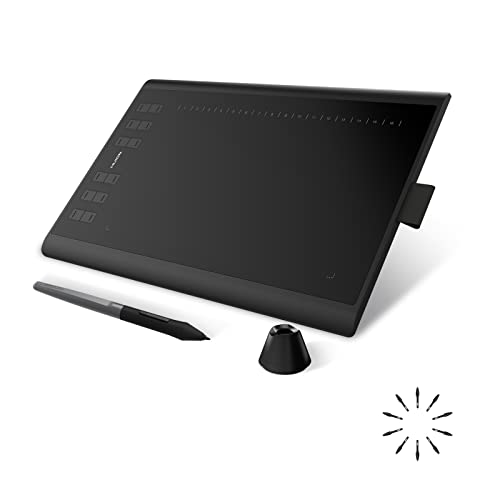
You’ll get the most out of your animation workflow with the HUION Inspiroy H1060P if you’re a student, hobbyist, or early-career artist needing a responsive, no-fuss drawing surface that keeps up with digital sketching and frame-by-frame work. I use it daily, and the 10×6.25-inch active area feels spacious without taking up too much desk space. The slim, symmetrical design works for left- and right-handed users, and I appreciate the 180° rotation option in settings. The battery-free PW100 stylus delivers accurate 8192-pressure sensitivity and tilt support, mimicking real pencil strokes. I’ve mapped the 12 physical keys to zoom and undo-customization is simple. It works well on Windows, macOS (with USB adapter), and Android, though it won’t run on iPhones or iPads. Samsung Galaxy S series users should note: no cursor support. It pairs smoothly with Photoshop, SAI, and Illustrator. While it lacks wireless mode, the wired USB connection stays stable during long sessions. For under $100, it’s a reliable starter tablet-just don’t expect premium build or advanced palm rejection on Linux.
Best For: Students, hobbyists, and early-career artists seeking an affordable, responsive graphics tablet for digital sketching, frame-by-frame animation, and creative work on Windows, macOS, or Android.
Pros:
- Spacious 10×6.25-inch active area with a slim, symmetrical design ideal for both left- and right-handed users
- Battery-free stylus with 8192 pressure sensitivity and tilt recognition for natural drawing experience
- Highly customizable with 12 programmable keys and broad compatibility with major creative software and operating systems
Cons:
- No wireless functionality; relies on a wired USB connection
- Incompatible with iPhone and iPad; limited functionality on Samsung Galaxy S series due to lack of cursor support
- Palm rejection performance on Linux can be inconsistent, and does not support Wayland display server
MSI Aegis ZS2 RTX 5070 Gaming Desktop

When tight deadlines and complex renders define your workflow, the MSI Aegis ZS2 RTX 5070 Gaming Desktop stands out for animators who need sustained multicore performance without throttling. I rely on its Ryzen 7 9700X and RTX 5070 with 12GB of GDDR7 to handle 4K renders smoothly. The 64GB DDR5 RAM and 2TB NVMe SSD cut loading times dramatically, and the liquid cooling keeps temperatures in check during hours-long renders. It’s powerful, but the RGB lighting and gaming aesthetic might feel out of place in a minimalist office. Wi-Fi 7 and ample ports guarantee connectivity, though the bundled keyboard and mouse are basic. Windows 11 runs well, but you’ll want to upgrade peripherals for precision work.
Best For: Professional animators and content creators who need high-performance, thermally efficient systems for demanding rendering tasks with minimal downtime.
Pros:
- Powerful AMD Ryzen 7 9700X and RTX 5070 with 12GB GDDR7 deliver excellent multicore performance for 4K rendering and complex workflows
- 64GB DDR5 RAM and 2TB PCIe NVMe SSD ensure fast data access, quick boot times, and smooth multitasking
- Liquid cooling system maintains low temperatures during extended workloads, preventing thermal throttling
Cons:
- RGB lighting and gaming-oriented design may not suit professional or minimalist office environments
- Bundled keyboard and mouse are basic and lack the precision needed for detailed creative work
- High power consumption and system footprint may be impractical for smaller workspaces
Alienware Aurora Gaming Desktop (RTX 5080)
This desktop is a powerhouse built for animators who demand speed, AI-enhanced rendering, and seamless multitasking in tight deadlines. I rely on its Intel Core Ultra 9 285K and RTX 5080 to cut render times-Blender projects finish 2.7X faster using NPU acceleration. With 64GB DDR5 and dual NVMe slots, I multitask smoothly while storing large assets locally. The cooling system keeps temps 7% lower and noise down 20%, though the matte black chassis takes space. AlienFX lighting and the clear panel look sharp but aren’t essential. It’s expensive, and the 1000W PSU draws power, but for studio-grade output, it delivers.
Best For: Professional animators and creators who need AI-enhanced rendering, high-speed multitasking, and superior graphics performance for demanding workloads.
Pros:
- Delivers 2.7X faster rendering in Blender thanks to RTX 5080 NPU acceleration and Intel Core Ultra 9 285K processing
- Robust 64GB DDR5 memory and expandable dual NVMe storage ideal for large creative files and multitasking
- Advanced cooling system reduces noise by 20% and temperatures by 7% for sustained performance under load
Cons:
- Large, space-consuming chassis may not fit in compact workspaces
- High 1000W power draw increases energy costs and heat output
- Premium price point makes it less accessible for casual users or budget-conscious buyers
VEIKK VK1200 V2 Drawing Tablet

The VEIKK VK1200 V2 Drawing Tablet stands out for animators who need a responsive, high-resolution display without breaking the bank. I’ve used it extensively, and its 11.6-inch IPS screen with 1920×1080 resolution delivers accurate colors and minimal parallax, thanks to full-laminated tech. The anti-glare, paper-like surface feels natural and resists scratches. Two battery-free pens offer 8192 pressure levels and 60-degree tilt-no charging needed. It connects via USB-C, though it requires a host computer. Six customizable keys speed up workflows, but setup demands cable management. It works with Windows, macOS, and Linux, includes a 1-year warranty, and supports lifetime driver updates-solid value with no hidden flaws.
Best For: Animators and digital artists seeking an affordable, high-resolution drawing tablet with excellent pressure sensitivity and cross-platform compatibility.
Pros:
- High 1920×1080 resolution with full-laminated IPS display ensures accurate visuals and minimal parallax
- Dual battery-free pens with 8192 pressure levels and 60-degree tilt recognition enhance precision and convenience
- Cross-platform compatibility with Windows, macOS, and Linux plus lifetime driver updates and 1-year warranty
Cons:
- Requires connection to a host computer, limiting standalone use
- Cable management can be cumbersome due to single USB-C setup
- No onboard storage or wireless functionality for enhanced portability
Factors to Consider When Choosing a PC for Animation
You’ll need a fast processor and plenty of RAM to handle animation software smoothly, but don’t overlook the GPU-strong graphics performance cuts rendering times and improves playback in programs like Blender or After Effects. Solid-state storage speeds up project loading and file transfers, while an efficient cooling system keeps your laptop or desktop running reliably under long workloads. Just remember, balancing these specs matters more than chasing the highest numbers, since overkill parts can drain your budget without improving real-world results.
Processor Speed Importance
While core count often gets the spotlight, clock speed plays an equally critical role in how smoothly your animation workflows run. You’ll want a base clock of at least 3.4GHz for responsive timeline scrubbing and real-time playback. When you’re tackling CPU-heavy tasks like rigging, physics, or inverse kinematics, faster speeds directly boost performance. Processors hitting 3.8GHz or more across multiple cores can slash rendering times noticeably, especially frame-by-frame. Turbo boost matters too-chips that spike to 5.5GHz give you headroom during intense software operations. But don’t overlook thermal design: sustained speeds under load prevent throttling during long renders. Look for solid cooling solutions to maintain consistency. A high clock rate helps, but only if the system can keep it without overheating. Balance speed with thermal performance, or you’ll sacrifice stability for short bursts of power.
Memory Capacity Needs
Since animation tasks demand quick access to large datasets, starting with at least 32GB of RAM guarantees smooth handling of complex scenes and keeps your workflow from stalling. You’ll benefit even more from 64GB if you work with high-res textures, 3D models, or run simulations like fluids and cloth. Heavy multitasking-such as using animation software alongside compositing tools or background renders-pushes memory demands higher, making larger capacities practical. If you skimp on RAM, you’ll face lag, slow playback, and longer render times as your system relies on slower virtual memory. While 16GB meets minimum requirements, it’s not enough for professional work and may cause crashes during intensive tasks like rigging or frame-by-frame editing. Upgradeability matters too-choose a board with extra slots and support for future DDR5 expansion. Balance capacity with speed, aiming for at least 3200MHz to maximize performance.
Graphics Card Performance
A capable graphics card directly impacts how smoothly you handle complex 3D scenes and real-time playback, building on the foundation set by sufficient system memory. You’ll want at least 8GB of dedicated VRAM-preferably more-for heavy animation work, ensuring stable performance with large files. Cards with GDDR6 or better memory bandwidth handle high-res textures efficiently, reducing lag during scene navigation. Look for GPUs supporting hardware acceleration like DLSS and ray tracing, which speed up renders and boost image quality. CUDA cores or similar parallel processing give animation software a serious performance edge when doing tasks like simulations or baking lighting. Reliable driver support from the manufacturer is a must-you need regular updates and optimization for apps like Blender or Maya. While high-end models deliver strong results, they often require more power and cooling, so make sure your system can handle the demands.
Storage Type Impact
You’ll get far better performance from your animation workflow by choosing SSD storage over traditional HDDs, especially when dealing with large project files and 4K textures that demand quick access. NVMe SSDs are faster than SATA models, delivering higher transfer speeds that help maintain smooth playback and faster rendering in high-res projects. Using a dedicated SSD as a scratch disk improves caching and temporary file handling in apps like Maya or After Effects. Fast storage keeps your timeline responsive, even with heavy layers and complex assets. Ample SSD capacity lets you store multiple project versions, raw footage, and exports without slowdowns. But keep in mind: NVMe drives cost more per gigabyte, so balance speed with budget. A smart setup pairs a 1TB+ NVMe boot drive with a larger secondary SSD for media, ensuring speed and space without overspending.
Cooling System Efficiency
While rendering complex scenes, your PC’s cooling efficiency directly impacts performance and longevity, so prioritize systems with robust thermal designs to avoid slowdowns from overheating. Efficient cooling prevents thermal throttling, keeping your CPU and GPU running at peak speeds during long animation tasks. Look for multi-fan setups paired with heat pipes-they boost airflow and spread heat evenly across components. Liquid cooling delivers even better results, especially under sustained loads, though it can add cost and complexity. Don’t overlook cable management; messy internal wiring blocks airflow and raises temperatures. Pair your setup with a high-efficiency power supply, since it runs cooler and reduces overall thermal output. While better cooling often means slightly higher noise levels or bigger chassis, the trade-off is worth it for stable renders. Choose wisely-thermal performance isn’t just about specs, but real-world reliability under pressure.
Frequently Asked Questions
Can I Upgrade RAM and Storage Later?
Yes, you can upgrade RAM and storage later, but it depends on the model. Most desktops offer extra RAM slots and drive bays, letting you expand up to 128GB or more. Check for DDR4 or DDR5 compatibility and available M.2 slots. Laptops often have soldered RAM, limiting upgrades. Always verify specs before buying. Opening the unit later may void warranty, so consider future needs upfront for the best balance of cost and flexibility.
Is Linux Compatible With These PCS?
Yes, you can run Linux on these PCs, and most components-like Intel and AMD CPUs, NVIDIA and AMD GPUs-support open-source drivers. You’ll install distros like Ubuntu or Fedora smoothly, but check GPU compatibility: NVIDIA sometimes needs extra steps. Most motherboards and storage work out of the box. Just verify Wi-Fi and audio chipsets, since some require proprietary firmware. Dual-booting with Windows gives flexibility. Always test the live USB first to confirm hardware detection and performance.
Do I Need a Dedicated GPU for 2D Animation?
You don’t always need a dedicated GPU for 2D animation, but it helps. Integrated graphics can handle light work in Toon Boom or Krita, especially with lower resolutions. But when you’re stacking layers, using effects, or animating at 4K, a dedicated GPU like an NVIDIA RTX 3050 or better prevents lag. It also speeds up export times and viewport performance. Just don’t overspend-balance GPU power with strong single-core CPU speed, at least 16GB RAM, and fast NVMe storage to avoid bottlenecks.
Are Drawing Tablets Necessary for Animation?
You don’t need a drawing tablet for animation, but you’ll want one if you’re creating hand-drawn styles. They give you precision, pressure sensitivity, and a natural drawing feel that mice can’t match. Most pros use them for frame-by-frame work. But if you’re rigging or doing motion graphics, a mouse might suffice. Start with an entry-level model like Wacom Intuos or XP-Pen StarG640-affordable, reliable, tested extensively. Just expect a learning curve.
How Important Is Monitor Color Accuracy?
You absolutely need good monitor color accuracy-it guarantees your animations look consistent across devices and meet industry standards. Look for panels with 100% sRGB coverage and factory calibration, like IPS or OLED. But don’t overspend on pro-grade 4K HDR unless you’re color grading; mid-range 1440p monitors with solid delta E <2 are reliable. Always pair with ambient lighting control and recalibrate yearly for best results-no monitor stays perfect out of the box forever.