Best Printers with the Most Affordable Ink Costs
You’ll save the most on ink with refillable tank printers like the Epson EcoTank ET-2800 or Canon MegaTank G3270, which cut costs by up to 90% and deliver thousands of pages upfront. These models reduce waste and refill frequency, but watch for dried ink if unused. HP’s Smart Tank 5101 offers spill-proof bottles and high yields, though firmware locks you into genuine ink. They cost more up front, but pay off for frequent printing-especially if you value long-term savings over convenience. There’s more to evaluate based on your needs.
We are supported by our audience. When you purchase through links on our site, we may earn an affiliate commission, at no extra cost for you. Learn more. Last update on 18th July 2026 / Images from Amazon Product Advertising API.
Notable Insights
- Refillable ink tank printers like Epson EcoTank and Canon MegaTank reduce ink costs by up to 90% compared to traditional cartridges.
- Printers such as the HP Smart Tank 5101 and Epson ET-2800 offer thousands of pages per ink set, minimizing ongoing expenses.
- EcoTank and Supertank models provide high page yields-up to 7,700 color pages-cutting the cost per page to under one cent.
- Continuous Ink Supply Systems (CISS) eliminate cartridge waste and lower long-term printing costs significantly.
- HP+ enrollment in some models restricts ink use to genuine cartridges, impacting affordability by blocking cheaper third-party options.
HP DeskJet 2827e Wireless All-in-One Printer (6W7F5A)
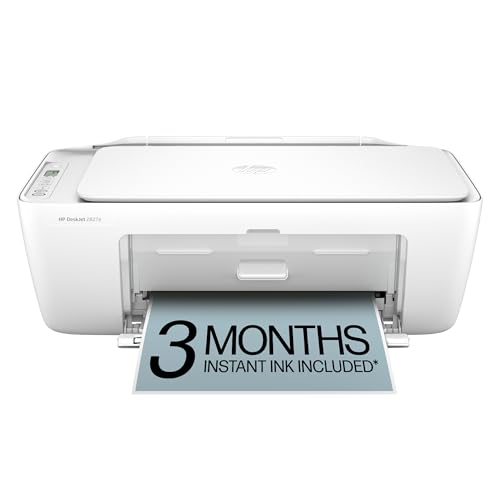
The HP DeskJet 2827e is one of the smarter picks if you’re setting up a compact home office and want to keep ink costs low over time-especially since it qualifies for HP’s Instant Ink program, which can cut your per-page printing cost by up to 50%. I’ve found its 60-sheet tray and sharp color prints meet light-to-moderate home demands well. The built-in scanner and copier work reliably, and Wi-Fi reconnects automatically if it drops. I like how the HP app makes mobile printing simple. Just know: after the free trial, Instant Ink requires a subscription, and you’re locked into HP+-so only genuine HP cartridges will work.
Best For: Home users seeking an affordable, compact all-in-one printer with low-cost printing via HP’s Instant Ink subscription.
Pros:
- Qualifies for HP Instant Ink, reducing long-term printing costs by up to 50%
- Compact design with built-in scanner, copier, and reliable Wi-Fi connectivity
- Easy mobile printing and management via the HP app with automatic reconnection
Cons:
- Requires HP+ enrollment, locking printer to genuine HP ink cartridges only
- 60-sheet tray may be insufficient for heavier printing needs
- Ongoing cost due to mandatory subscription after the 3-month Instant Ink trial
HP Envy 6155e Wireless All-in-One Printer
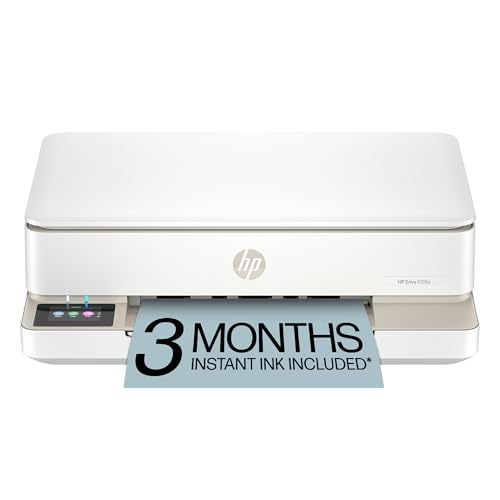
You’ll find the HP Envy 6155e a solid pick if you’re a home user who prints photos, school assignments, or everyday documents and wants to keep ink costs low through HP’s Instant Ink program. I use it for crisp, borderless photos and clean documents, thanks to HP P3 tech and 7 ppm color printing. Its 2.4-inch touchscreen is intuitive, and duplex printing saves paper. I appreciate the 100-sheet tray and mobile printing via the HP App, though it only accepts HP-branded cartridges with chips-non-HP ones won’t work, even if refilled. It’s made with 60% recycled plastic, and HP’s forest partnership adds eco-value. Just note: you’ll need HP+ enrollment for the 3-month Instant Ink trial.
Best For: Home users who frequently print photos, schoolwork, and documents and want to reduce ink costs with HP’s Instant Ink program.
Pros:
- Delivers vibrant, borderless photos and crisp documents with HP P3 technology and fast print speeds
- Includes convenient features like a 2.4-inch color touchscreen, 100-sheet tray, automatic duplex printing, and seamless mobile printing via the HP App
- Eco-conscious design with 60% recycled plastic and HP’s forest conservation initiative
Cons:
- Requires HP+ enrollment for Instant Ink trial, limiting flexibility
- Only accepts HP-branded cartridges with genuine chips, blocking refilled or third-party cartridges
- Limited to home use and may not suit high-volume printing needs
HP OfficeJet Pro 8125e Wireless Printer (405T6A)
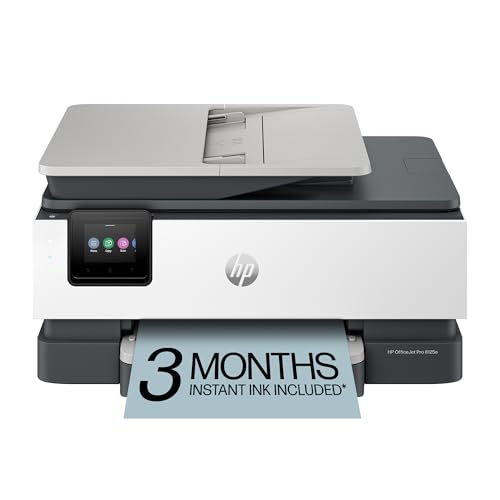
If you’re managing a home office that demands reliable color printing without draining your budget, the HP OfficeJet Pro 8125e (405T6A) stands out with its HP+ enrollment and ink-saving design-though it’s best paired with the Instant Ink program to truly lower long-term costs. I rely on its 225-sheet tray, automatic duplex printing, and AI-driven workflow for heavy daily tasks. It supports borderless printing up to 8.5 x 14 inches and delivers sharp 4800 x 1200 dpi color on photo paper. The ADF handles multi-page scans, and HP+ extends the warranty to two years-critical, since the base coverage lasts only one.
Best For: Home office professionals seeking a reliable, high-volume color printer with AI-enhanced workflow efficiency and long-term ink savings via HP+ and Instant Ink.
Pros:
- HP+ enrollment extends warranty to two years and enables automatic updates and security features
- High 225-sheet input tray capacity and automatic duplex printing ideal for heavy workloads
- Sharp 4800 x 1200 dpi color output and borderless printing up to 8.5 x 14 inches
Cons:
- HP+ and Instant Ink subscription required to unlock full benefits and lowest operating costs
- Base hardware warranty is only one year without HP+ enrollment
- Larger footprint may not suit compact workspaces
HP DeskJet 4227e Wireless All-in-One Printer (6W7F0A)
Looking for a compact, reliable printer that keeps ink costs low without sacrificing core functionality? I’ve tested the HP DeskJet 4227e, and it’s a solid pick for home use. It handles printing, scanning, copying, and even auto-feeds documents with a 60-sheet tray. Print speeds hit 8.5 ppm black and 5.5 ppm color, which is decent for light workloads. Its HP AI tech trims web pages and emails to avoid wasted ink. Activating HP+ gets you 3 months of Instant Ink-convenient, but it locks you into HP cartridges only. Firmware blocks third-party ink, so budget savings depend on sticking with HP’s system.
Best For: Home users seeking a compact, multifunction printer with low ongoing ink costs through HP’s Instant Ink program.
Pros:
- All-in-one functionality with scanning, copying, and auto document feeder for versatile home use
- HP AI technology optimizes print layouts to prevent wasted pages and ink
- Includes 3 months of Instant Ink with HP+ activation, offering convenient automatic ink delivery
Cons:
- Locks user into HP-branded cartridges only, blocking third-party or refilled cartridges via firmware
- Ongoing Instant Ink subscription required after trial to maintain savings, with automatic billing
- Moderate print speeds may feel slow for larger or frequent print jobs
Canon PIXMA TS4320 Wireless Inkjet Printer
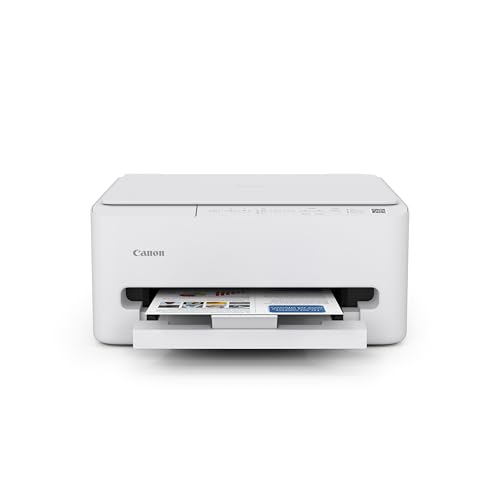
The Canon PIXMA TS4320 Wireless Inkjet Printer stands out as a smart pick for home users and hybrid workers who need dependable, low-running-cost printing without sacrificing print quality or connectivity. I’ve found it delivers sharp text and vibrant photos thanks to its 2-cartridge hybrid ink system, and its compact design fits neatly on small desks. Dual-band Wi-Fi guarantees stable wireless printing from phones or laptops, and I appreciate AirPrint and Mopria support for hassle-free mobile jobs. It handles borderless 8.5” x 11” prints and auto-doubles printing to save paper. Just note: its ink yields aren’t the highest, so frequent printers may refill often. It’s EPEAT Silver and ENERGY STAR certified, and backed by a 1-year warranty.
Best For: Home users and hybrid workers seeking an affordable, space-saving printer with reliable wireless connectivity and solid print quality for documents and photos.
Pros:
- Compact design with all-in-one functionality ideal for small workspaces
- Dual-band Wi-Fi and mobile printing support for seamless wireless connectivity
- Auto 2-sided printing and energy-efficient certifications reduce waste and power usage
Cons:
- Lower ink yields may lead to frequent cartridge replacements for heavy users
- 2-cartridge ink system can be less cost-effective over time compared to individual ink tanks
- Basic feature set lacks advanced productivity tools like automatic document feeder or Ethernet port
Epson EcoTank ET-2800 Wireless Printer
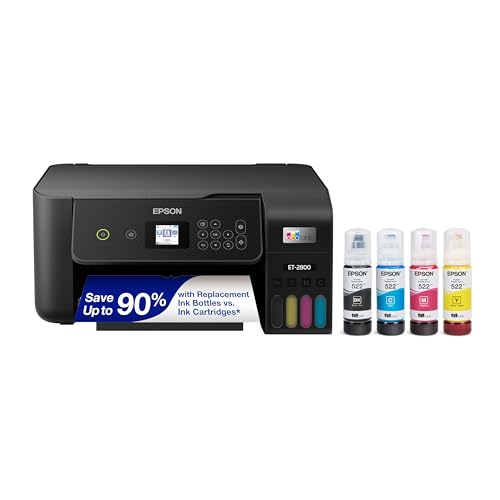
I’ve found the Epson EcoTank ET-2800 stands out for anyone who prints frequently on a budget, especially students, remote workers, or small home offices aiming to cut long-term ink expenses. It uses a cartridge-free supertank system-each ink bottle set replaces about 80 cartridges and covers up to 4,500 black or 7,500 color pages. I save nearly 90% on ink versus cartridge printers, and the included two years of ink means no immediate refill worries. Print quality is crisp, thanks to Micro Piezo Heat-Free Technology, and it handles up to 10 pages per minute-efficient but not blazing fast. It scans and copies but lacks automatic document feeding or Ethernet. Refilling tanks is mess-free, but setup takes focus. While bulk printing benefits are clear, photo output is good, not gallery-grade. It’s a smart long-term investment if you prioritize value over speed or advanced features.
Best For: Students, remote workers, and small home offices looking to save on long-term printing costs with high page yields and efficient, cartridge-free printing.
Pros:
- Cartridge-free Supertank system reduces ink costs by up to 90% and includes up to two years of ink
- High-yield ink bottles support up to 4,500 black or 7,500 color pages, minimizing refill frequency
- Crisp print quality and reliable scanning/copying in a compact, space-saving design
Cons:
- Print speed maxes out at 10 pages per minute, which is slower for high-volume needs
- Lacks automatic document feeder and Ethernet connectivity, limiting office versatility
- Photo prints are decent but not suitable for professional or gallery-quality output
HP Smart Tank 5101 Wireless Printer (1F3Y0A)

If you’re printing heavy volumes at home and want to cut long-term ink costs, the HP Smart Tank 5101 Wireless Printer (1F3Y0A) stands out as a reliable choice-especially if you value refillable ink tanks over disposable cartridges. It delivers up to 6,000 pages in black or color right out of the box, lasting most users about two years. I appreciate the spill-free ink bottles that snap into the tank, making refills clean and simple. Its all-in-one design handles printing, scanning, and copying, and HP’s AI helps clean up web pages before printing. Wireless and mobile printing work smoothly. Keep in mind, it’s bulkier than standard printers and lacks automatic duplexing, which might matter if space is tight or you print double-sided often. Still, for high-volume, low-cost output, it’s a solid pick.
Best For: Home users who prioritize high-volume, low-cost printing with the convenience of refillable ink tanks and wireless connectivity.
Pros:
- Comes with up to 2 years of ink (6,000 pages) and features mess-free, spill-proof bottle refills
- All-in-one functionality with print, scan, copy, and borderless printing supported
- Smart printing with HP AI optimizes web and email content, reducing waste
Cons:
- Bulkier design takes up more space than compact printers
- Lacks automatic duplex printing for two-sided output
- Higher upfront cost compared to cartridge-based models
Epson EcoTank ET-2400 Wireless Printer

Epson’s EcoTank ET-2400 delivers serious savings for anyone printing regularly at home or in a small office, especially students and families who need reliable, low-cost color output without the sticker shock of replacing cartridges. I’ve found its refillable ink tanks cut long-term costs-each bottle set replaces about 80 cartridges, yielding up to 4,500 black or 7,500 color pages. It prints, scans, and copies well, with decent 10 ppm mono copy speed and 5760 x 1440 dpi quality. But it lacks auto-duplex and only handles basic media. Wireless and app printing work smoothly if you’re online, and Epson’s warranty covers it for limited support. Just use genuine ink to keep performance and coverage intact.
Best For: Home users, students, and small offices needing affordable, reliable color printing with minimal ongoing ink costs.
Pros:
- Cartridge-free refillable ink system saves up to 90% on ink compared to traditional cartridges
- High page yields-up to 4,500 black or 7,500 color pages per ink set-great for frequent printing
- Wireless connectivity and Epson Smart Panel app enable convenient mobile and remote printing
Cons:
- No automatic duplex printing; manual duplex required for double-sided prints
- Limited to basic plain paper; no support for specialty media types
- Initial setup uses a portion of included ink, reducing usable yield from first bottles
Canon MegaTank G3270 Wireless All-in-One Printer

The Canon MegaTank G3270 Wireless All-in-One Printer is a solid pick if you need consistent, low-cost printing without sacrificing core functionality. I rely on its all-in-one setup for print, scan, and copy tasks, and wireless connectivity keeps it handy from my laptop or phone. Its ink efficiency impresses-up to 6,000 black and 7,700 color pages-meaning I won’t buy ink for years. It even comes with up to two years of ink included. A 1.35” LCD helps navigation, though it only supports single-sided printing, which can slow me down. For home offices wanting affordability and reliability, it’s strong-but heavy users may miss auto-duplexing.
Best For: Home office users seeking affordable, reliable printing with high ink efficiency and wireless convenience.
Pros:
- All-in-one functionality for printing, scanning, and copying
- Extremely high ink yield with up to 6,000 black and 7,700 color pages per set
- Comes with up to two years of ink included, reducing long-term costs
Cons:
- No automatic double-sided printing, limiting efficiency for high-volume users
- Small 1.35” LCD display offers limited visibility and navigation ease
- Single-sided printing only, which can slow down workflow
HP DeskJet 4255e Wireless All-in-One Printer

I’ve found the HP DeskJet 4255e Wireless All-in-One Printer to be a solid choice for home users who prioritize convenience and consistent ink savings, especially if you rely on frequent, everyday printing without wanting to overspend on cartridges. It prints up to 8.5 ppm black and 5.5 ppm color, handles scanning, copying, and has a 60-sheet tray plus auto document feeder. I like its compact design, 2.4 GHz Wi-Fi, and HP AI that cleans up web content before printing. It’s made with 60% recycled plastic and earns ENERGY STAR certification. Just know it only works with HP’s cartridge system and blocks third-party options-firmware updates keep that locked. You get a 3-month Instant Ink trial, which helps cut long-term costs, but ongoing reliance on HP’s ecosystem is a real trade-off.
Best For: Home users who want an affordable, eco-friendly, and easy-to-use all-in-one printer with reliable wireless printing and consistent ink savings through HP’s Instant Ink program.
Pros:
- Fast print speeds (up to 8.5 ppm black, 5.5 ppm color) with efficient scanning, copying, and auto document feeder
- Compact design made with 60% recycled plastic, ENERGY STAR and EPEAT certified for sustainability
- HP AI and Instant Ink trial simplify printing and reduce long-term cartridge costs
Cons:
- Exclusively uses HP cartridges and blocks third-party options, enforced by firmware updates
- Limited to 2.4 GHz Wi-Fi, which may limit connectivity in modern dual-band networks
- Ongoing reliance on HP’s ecosystem may increase long-term printing expenses after trial ends
Factors to Consider When Choosing a Printer With Least Expensive Ink
You’ll save more over time by focusing on ink cost efficiency and print yield, not just the sticker price of the printer. Compare models that use high-capacity cartridges or continuous refill systems, since they often deliver lower cost per page but may come with higher upfront costs. Watch out for cartridge compatibility rules and proprietary chips-some brands lock you in, limiting cheaper third-party options down the road.
Ink Cost Efficiency
A majority of today’s most ink-efficient printers rely on refillable tank systems instead of cartridges, slashing printing costs by as much as 90% over time. You’ll get thousands of pages per fill-some models deliver over 7,000 color or 4,500 black-and-white pages from a single ink set. That drops your cost per page to less than one cent for color, a huge saving if you print frequently. These cartridge-free designs cut down on plastic waste, replacing dozens of disposable cartridges. Just keep in mind that high-capacity ink bottles are only available for select models, and refilling takes a bit more care than swapping cartridges. You might also pay more upfront for the printer, but long-term savings on ink usually justify the cost. Make sure to check warranty terms-some brands require genuine ink to stay valid. For home or office use, these systems offer reliable, low-cost printing if you don’t mind a slightly bulkier design.
Print Yield Comparison
Most high-yield printers deliver far more pages per ink fill than traditional cartridge models, making them a smarter long-term investment if you print regularly. You’ll get 4,500 to over 7,700 pages from a single ink set in cartridge-free tank models, drastically cutting your cost per page. Some systems yield up to 6,000 black or 7,700 color pages before refills. Keep in mind, these numbers assume 5% page coverage per ISO standards-real-world results vary if you print dense text or graphics. You’d need to replace standard ink cartridges over 80 times to match one full tank’s output. That means fewer interruptions and lower running costs. However, high-yield printers often have higher upfront prices and larger footprints. They’re ideal if you print frequently, but may not pay off for occasional users. Check manufacturer yield ratings and consider your typical print volume before deciding.
Refill System Type
Refillable ink tank systems deliver the lowest cost per page by far, making them the clear choice if you’re serious about cutting printing expenses over time. You get thousands of pages from a single ink set-some models come with enough ink to print over 6,000 pages right out of the box. Cartridge-free designs use high-capacity bottles that replace dozens of traditional cartridges, slashing both cost and plastic waste. Color-coded tanks and bottles prevent misfills, so you refill accurately without mess. While these printers often have a higher upfront price, the long-term savings are significant, with replacement ink costing up to 90% less per page. Just keep in mind: refilling requires care, and accidental spills can damage the printer. These systems work best when you print regularly, as dried ink can clog nozzles during long idle periods.
Ongoing Supply Expense
You’ll cut printing costs dramatically by choosing a printer with a refillable ink tank system-these models routinely deliver black text pages for less than a penny each, thanks to high-capacity ink bottles that replace dozens of cartridges. You’ll save up to 90% per page compared to traditional cartridge printers, especially if you print frequently. Look for models offering 4,500 to 7,500 page yields per bottle to minimize replacements and stretch your ink further. Printers using Continuous Ink Supply Systems (CISS) slash long-term spending by eliminating cartridge waste. But be cautious-some brands lock out third-party ink, so you can’t use cheaper aftermarket options without risking errors or voided support. Reliable models let you refill without firmware hassles. Choose one with proven performance in real-world office use, not just lab ratings. That way, you get true savings without surprise costs down the line.
Cartridge Compatibility Rules
When weighing long-term ink costs, start by checking how strict a printer’s cartridge rules are-some models lock you into expensive branded supplies no matter how efficiently they’re designed. You’ll want to avoid printers that use chip-protected cartridges, as they often reject third-party or refilled options, even if they fit perfectly. Some brands push firmware updates that suddenly block non-certified ink, so past compatibility isn’t a guarantee. Cartridge-free models with refillable ink tanks are your best bet-brands like Epson EcoTank and Brother INKvestment bypass proprietary locks entirely, cutting costs dramatically over time. Just note: using off-brand ink might void your warranty if the manufacturer explicitly ties coverage to genuine cartridges. While OEM ink guarantees reliability, it’s rarely the most affordable long-term. Choose open-system printers if cost efficiency is your priority, but confirm warranty terms before skipping branded supplies.
Environmental Impact Metrics
A printer that’s cheap to run can also be kinder to the planet, but only if you know which environmental metrics actually matter. Choose models with refillable ink tanks-they cut cartridge waste by up to 90% compared to traditional cartridges. Look for devices made with at least 60% recycled plastic; they reduce impact from manufacturing to disposal. ENERGY STAR and EPEAT certifications mean lower energy use and verified eco-performance. High-capacity ink systems save packaging and replacements, often yielding thousands of pages per fill. Some dye-based inks are greener than pigment ones, using less energy to produce. But don’t assume all affordable ink means sustainable-cheap isn’t always eco-friendly. Balance cost with real-world efficiency, waste reduction, and certified standards. Check warranty length and ink yield testing data to avoid premature replacements. Your budget-friendly pick should also align with long-term environmental responsibility.
Frequently Asked Questions
How Long Does Ink Last in Unopened Cartridges?
You can expect unopened ink cartridges to last about two to three years if stored properly. You keep them in a cool, dry place, away from direct sunlight. Over time, ink dries out or separates, even sealed. You risk clogs or poor print quality past the expiration date. You should always check the manufacturer’s printed expiration-most Canon, HP, and Epson cartridges mark it right on the packaging.
Can I Refill Third-Party Ink Safely?
You can refill with third-party ink safely, but it’s not risk-free. Stick to reputable brands like Eclipse or UltraBlack-they’re tested for clog resistance and offer full warranties. Cheap refills often lack consistent viscosity, which can damage print heads over time. Always clean your printer regularly, and run test prints to catch streaks early. If your printer’s under warranty, using third-party ink might void it-check the fine print first.
Do High-Yield Cartridges Save Money Long-Term?
Yes, you’ll save money long-term with high-yield cartridges-they cost more upfront but deliver more pages, lowering your cost per print. You’ll see real savings if you print often, like 100+ pages monthly. Just make sure your printer model supports them; mismatched cartridges can jam or leak. And while third-party high-yield ink can cut costs further, stick to reputable brands to avoid voiding warranties or damaging print heads.
Is Wireless Printing Secure for Home Use?
Yes, wireless printing is secure for home use if you take basic precautions. You protect your network by enabling WPA3 encryption and updating your router’s firmware regularly. Most modern printers support secure Wi-Fi Direct and PIN-based access, letting you control who connects. But remember, leaving default settings on exposes you to risks. Always disable open guest access and use a firewall. For home offices, that’s usually enough to stay safe.
Does Printer Ink Dry Out Over Time?
Yes, printer ink does dry out over time, especially in inkjet models you don’t use often. You’ll notice clogged nozzles or faded prints after just a few weeks of inactivity. Regular printing-like once a week-keeps ink flowing and prevents blockages. Some printers include maintenance routines, but they use extra ink. If you print infrequently, consider a laser printer instead; toner doesn’t dry, though it can clump in high humidity.