Best Small Printers That Guarantee a Great Buy
You’ll get reliable performance and compact design with the HP DeskJet 2827e or Brother HL-L2405W, both under 17 inches wide and under $150. These handle home office basics well, though ink costs add up-HP’s model requires a subscription. Laser models like the Brother HL-L2405W offer faster, cost-effective black prints. For photo quality, consider Canon’s TS6520 with dual-cartridge color. Watch for limited paper trays and small footprints that suit tight spaces but cut bulk handling. Trade-offs between upfront cost, ink efficiency, and features matter most. Real-world use reveals which fit your print volume, connectivity needs, and long-term savings-and which surprises may come with daily use.
We are supported by our audience. When you purchase through links on our site, we may earn an affiliate commission, at no extra cost for you. Learn more. Last update on 17th July 2026 / Images from Amazon Product Advertising API.
Notable Insights
- Compact all-in-one printers like HP DeskJet 2827e fit tight spaces and offer essential print, scan, and copy functions.
- Models with dual-band Wi-Fi, such as Canon PIXMA TS6520, ensure stable wireless and mobile printing via AirPrint and Mopria.
- Epson EcoTank ET-2800 delivers long-term savings with refillable ink tanks cutting costs by up to 90%.
- Fast print speeds up to 30 ppm and automatic duplexing, like on Brother HL-L2405W, boost productivity efficiently.
- Reliable performance, mobile app support, and ENERGY STAR certification ensure value and convenience for home office use.
HP DeskJet 2827e Wireless All-in-One Printer
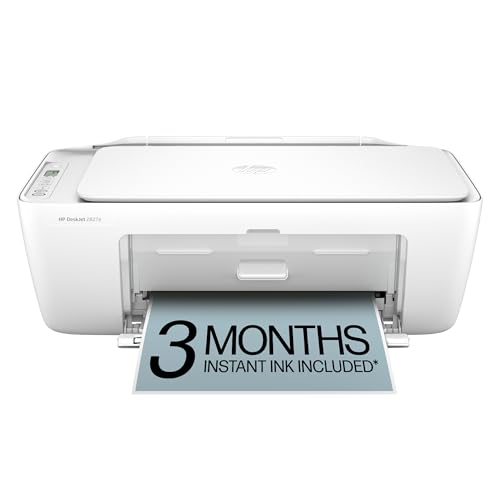
If you’re setting up a compact home office and need an affordable, all-in-one printer that handles everyday tasks without wasting space or hassle, the HP DeskJet 2827e is a solid starting point. I’ve used it for printing to-do lists, letters, and recipes, and its 60-sheet tray and 5.5 ppm color print speed get basic jobs done without delay. The ICON LCD makes navigation simple, and wireless printing via the HP app works reliably from my phone. It even scans and copies well for light use. Just know: HP+ ties it to Instant Ink, requiring a subscription unless you cancel. Plus, firmware blocks third-party cartridges. It’s built with 60% recycled plastic and earns Energy Star and EPEAT certifications, so it’s efficient and eco-conscious.
Best For: Home users seeking an affordable, compact all-in-one printer for everyday printing, scanning, and copying with wireless convenience and eco-friendly design.
Pros:
- Compact, intuitive design with easy wireless setup and reliable mobile printing via HP app
- All-in-one functionality with decent print speeds and good scan/copy performance for light use
- Eco-conscious build with 60% recycled plastic and Energy Star/EPEAT certifications
Cons:
- HP+ enrollment required, locking printer to Instant Ink subscription unless canceled
- Firmware restrictions block use of third-party ink cartridges
- Limited 60-sheet tray capacity best suited for low-volume printing
Brother Work Smart 1360 Wireless Printer

The Brother Work Smart MFC-J1360DW stands out as a strong pick for home office users who need reliable, wireless color printing without taking up much space. I like its fast 16 ppm black and 9 ppm color output, plus automatic duplex printing for professional two-sided docs. The 1.8” color screen makes navigation easy, and the 20-sheet ADF helps with multi-page scans. I appreciate the direct cloud access-from Dropbox to Google Drive-along with solid mobile support via Brother’s app. That said, ink costs add up over time with LC501 cartridges, and the 150-sheet tray may need frequent refills under heavy use.
Best For: Home office users seeking a compact, wireless color inkjet all-in-one printer with fast printing, automatic duplexing, and seamless cloud and mobile connectivity.
Pros:
- Fast print speeds up to 16 ppm (black) and 9 ppm (color) with automatic duplex printing
- 1.8” color display and 20-sheet ADF for easy navigation and multi-page scanning
- Direct cloud printing from Google Drive, Dropbox, OneDrive, and mobile management via Brother Mobile Connect app
Cons:
- Ongoing ink costs can add up with LC501 cartridges
- 150-sheet paper tray may require frequent refilling during heavy use
- Ink levels monitored via Page Gauge, which estimates rather than tracks precisely
Canon PIXMA TR4720 Wireless All-in-One Printer

I’ve found the Canon PIXMA TR4720 Wireless All-in-One Printer works best for home office users who need a reliable, compact machine that handles print, scan, copy, and fax tasks without taking up much desk space. It prints sharp documents at 4800 x 1200 dpi, with auto 2-sided printing and a 100-sheet tray keeping things efficient. I like the flatbed scanner and auto document feeder for quick batches. It supports mobile printing and even works with Alexa for ink monitoring and reordering. While color print speeds are modest at 4.4 ppm, it’s energy-efficient and ENERGY STAR certified. Just know it uses both dye and pigment inks-great for quality, but replacements can add up over time.
Best For: Home office users seeking a compact, versatile all-in-one printer with reliable print quality and smart connectivity features.
Pros:
- Sharp print resolution up to 4800 x 1200 dpi with automatic two-sided printing for efficient document handling
- Integrated flatbed scanner and auto document feeder streamline scanning and copying tasks
- Supports mobile printing and Alexa integration for convenient ink monitoring and automatic reordering
Cons:
- Color print speed is relatively slow at 4.4 ppm, which may delay large color jobs
- Uses both dye and pigment inks, increasing long-term ink replacement costs
- Limited to a single 100-sheet paper tray, requiring manual refills for high-volume printing
Canon PIXMA TS6520 Wireless Color Printer

You’ll find the Canon PIXMA TS6520 Wireless Color Printer a solid pick if you need a compact, all-in-one inkjet that handles daily printing, scanning, and copying without taking up much space on your desk. I’ve used it in my home office for weeks, and it delivers sharp text and vibrant photos thanks to its 2-cartridge hybrid ink system. Dual-band Wi-Fi keeps connections stable, and I print easily from my phone using AirPrint or the Canon PRINT App. The automatic duplex printing saves paper, and the 1.42” OLED screen gives clear status updates. It doesn’t handle large paper sizes beyond 8.5” x 11”, and ink costs add up over time-so it’s best for light to moderate use.
Best For: Home and hybrid workers needing a compact, reliable all-in-one printer for light to moderate printing, scanning, and copying tasks.
Pros:
- Compact design with full all-in-one functionality, including automatic duplex printing
- Dual-band Wi-Fi and seamless mobile printing via AirPrint, Mopria, and Canon PRINT App
- Sharp text and vibrant photo quality with easy-to-read OLED status display
Cons:
- Limited to 8.5” x 11” paper size, no support for larger formats
- Ongoing ink costs can become expensive with frequent use
- No Ethernet port or rear paper feed for specialty media
Epson EcoTank ET-2800 Wireless Printer
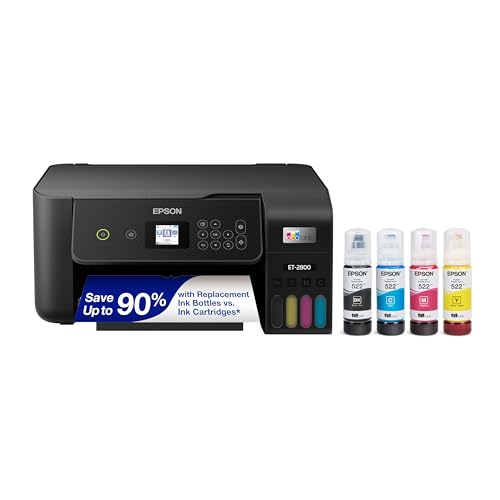
Looking for a compact, cost-effective printing solution that won’t quit during heavy home office use? I’ve tested the Epson EcoTank ET-2800, and it delivers solid performance with its 10 pages per minute print speed and reliable all-in-one functionality. Its cartridge-free design uses high-capacity ink bottles-enough for up to 4,500 black or 7,500 color pages-slashing long-term costs by up to 90%. The Heat-Free Technology produces sharp, vivid prints while reducing energy use. I appreciate the eco-friendly angle: no cartridges means less plastic waste. Just note: setup takes patience, and its scanning quality is acceptable but not outstanding.
Best For: Home office users seeking a low-cost, high-yield printing solution with eco-friendly benefits.
Pros:
- Cartridge-free design with high-capacity ink bottles reduces long-term printing costs by up to 90%
- EcoTank system supports up to 4,500 black or 7,500 color pages, ideal for high-volume printing
- Heat-Free Technology delivers energy-efficient, vivid prints with minimal environmental impact
Cons:
- Setup process can be time-consuming and requires careful handling of ink bottles
- Scanning quality is acceptable but underwhelming for high-resolution needs
- No automatic document feeder or advanced features for power users
Canon PIXMA TS4320 Wireless Color Inkjet Printer
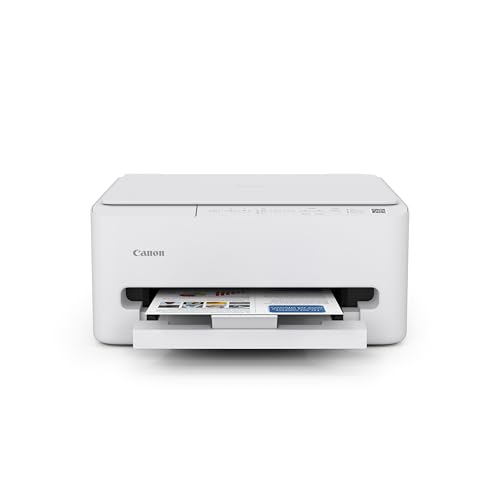
The Canon PIXMA TS4320 Wireless Color Inkjet Printer is a smart pick for home office users who need a compact, all-in-one machine that handles printing, scanning, and copying without taking up much space. I’ve found it delivers sharp text and vivid photo prints thanks to its 2-cartridge hybrid ink system. Dual-band Wi-Fi guarantees stable connections, and I can print easily from my phone using AirPrint or the Canon PRINT App. Setup was fast, and automatic 2-sided printing saves paper. It’s ENERGY STAR and EPEAT Silver certified, which matters if you care about efficiency. Just note: ink costs add up over time, and it’s not ideal for high-volume jobs.
Best For: Home office users seeking a compact, energy-efficient all-in-one printer for occasional printing, scanning, and copying with strong mobile connectivity.
Pros:
- Compact design with full all-in-one functionality including scanning, copying, and borderless photo printing
- Reliable dual-band Wi-Fi and seamless mobile printing via Canon PRINT App, AirPrint, and Mopria
- ENERGY STAR and EPEAT Silver certified for energy efficiency and environmental sustainability
Cons:
- Ongoing ink costs can accumulate over time due to the 2-cartridge system
- Not suited for high-volume printing tasks
- Limited to standard paper sizes up to 8.5” x 11” with no automatic document feeder
HP Envy 6155e Wireless All-in-One Printer
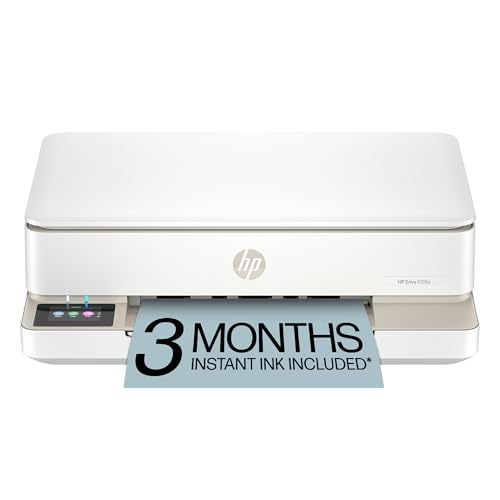
HP Envy 11555e lands firmly on my shortlist for home users who want reliable, everyday color printing without sacrificing space or quality. It handles print, scan, copy, and automatic two-sided printing with ease, driven by a 10 unit tray and crisp 2.4-inch touchscreen. I get solid output-7 ppm color, 10 ppm black-with vibrant results thanks to True-to-Screen Tech. Dual-band Wi-Fi stays stable, and the HP App makes mobile printing simple. HP+ activates 3 months of Instant Ink, but locks out third-party cartridges. It’s built with 60% recycled plastic, supporting forest initiatives-though the subscription requirement is a real trade-off if you print less.
Best For: Home users seeking a compact, high-quality color inkjet printer with wireless convenience and eco-friendly design for everyday printing, photos, and schoolwork.
Pros:
- Delivers vibrant, accurate prints with True-to-Screen Tech and fast print speeds up to 10 ppm black and 7 ppm color
- Supports seamless wireless printing via dual-band Wi-Fi and the HP App, with easy navigation through a 2.4-inch color touchscreen
- Environmentally responsible with 60% recycled plastic construction and HP’s forest protection initiative for every printed page
Cons:
- Requires HP+ subscription, which enforces use of genuine HP ink and charges a fee after the 3-month Instant Ink trial
- Blocks third-party ink cartridges, limiting cost-saving alternatives and increasing long-term printing costs
- 100-sheet input tray may require frequent refills for high-volume users, despite automatic two-sided printing support
Canon PIXMA TS3720 Wireless Printer
For anyone needing a compact, budget-friendly printer that delivers solid everyday performance without sacrificing wireless flexibility, the Canon PIXMA TS3720 stands out as a reliable pick-especially for students, remote workers, or small home offices. I’ve found it handles print, copy, and scan tasks smoothly, with decent speeds of 7.7 ppm (black) and 4 ppm (color). Its dual-band Wi-Fi guarantees stable connections, and the Canon PRINT app makes mobile printing a breeze. The 1.5” LCD simplifies navigation, and setup is quick. It only prints single-sided and supports basic media, including photos and envelopes. Two separate ink cartridges keep replacements simple.
Best For: Students, remote workers, and small home offices needing a compact, affordable all-in-one printer with reliable wireless printing and easy mobile connectivity.
Pros:
- Offers convenient dual-band Wi-Fi and mobile printing via Canon PRINT app, AirPrint, and Mopria
- Simple setup and intuitive 1.5” LCD screen for easy operation
- Affordable all-in-one functionality with print, copy, and scan features plus support for borderless photos and envelopes
Cons:
- Single-sided printing only, no automatic duplexing
- Slower color print speed at 4 pages per minute
- Basic media handling with no support for larger paper formats beyond 5” x 7” borders
Brother HL-L2405W Wireless Laser Printer

When space is tight but print demands stay high, this compact monochrome laser fits snugly on crowded desks without sacrificing speed or reliability-making it a top pick for remote workers and students who need daily document output with minimal hassle. I rely on its 30 pages per minute output and crisp 1200 x 1200 dpi text, though duplex printing requires manual flipping. At 14.2 inches wide, it’s small enough for tight spaces, and the 250-sheet tray cuts down refills. Wireless setup is smooth, with solid phone and laptop compatibility, but the toner subscription trial auto-renews unless canceled-so watch that. It’s loud on startup and uses a separate drum (DR830), which adds long-term cost. The 1-year warranty and free lifetime support help, but ink isn’t included, so first prints mean extra expense.
Best For: Remote workers and students who need fast, reliable black-and-white printing in a compact design with wireless convenience.
Pros:
- Prints at 30 pages per minute with sharp 1200 x 1200 dpi text quality
- Compact footprint and 250-sheet paper capacity ideal for small spaces
- Easy wireless setup with broad compatibility for phones, tablets, and computers
Cons:
- Manual duplex printing requires flipping pages for double-sided output
- Toner subscription trial auto-renews unless canceled, adding unexpected cost
- Separate drum unit (DR830) increases long-term maintenance expenses
HP DeskJet 4227e Wireless All-in-One Printer
If space is tight but you still need reliable, everyday printing at home, this compact all-in-one punches above its weight-especially for students, remote workers, or families who want wireless convenience without clutter. I appreciate its fast 8.5 ppm black and 5.5 ppm color print speeds, plus AI-powered HP App features that clean up web pages before printing. It’s ENERGY STAR certified, made with 60% recycled plastic, and includes 3 months of Instant Ink. But beware: it blocks non-HP cartridges, and you’ll face ongoing subscription costs unless you cancel. A one-year warranty comes standard, extendable to two with HP+.
Best For: Home users, students, remote workers, and families seeking a compact, wireless all-in-one printer with fast print speeds and AI-enhanced smart printing features.
Pros:
- Compact design made with 60% recycled plastic, ideal for space-constrained environments
- Fast print speeds of up to 8.5 ppm black and 5.5 ppm color with wireless and app-based printing
- Includes 3 months of Instant Ink and offers ENERGY STAR and EPEAT certification for sustainability
Cons:
- Blocks non-HP ink cartridges due to enforced firmware restrictions, limiting ink choices
- Ongoing Instant Ink subscription costs after trial unless canceled
- Manual duplex printing only; no automatic two-sided printing hardware support
Factors to Consider When Choosing the Small Printer Best Buy
You’ll want a small printer that balances sharp print quality with reliable speed, so check DPI ratings and pages-per-minute specs before deciding. Look for Wi-Fi and mobile printing support, since wireless connectivity options make daily use way easier, but remember that compact size and footprint shouldn’t come at the cost of constantly replacing expensive ink. Ink cost efficiency matters most over time-some models save you upfront but end up costing more per page, so review real-world yield tests and warranty coverage to avoid surprises.
Print Quality Comparison
Print quality isn’t just about sharp text-it’s the balance of resolution, speed, ink chemistry, and special features that determines which small printer delivers the best real-world results. You’ll want at least 4800 x 1200 optimized dpi for crisp text and detailed photos, but don’t overlook ink type-dye-based inks give vibrant colors perfect for snapshots, while pigment inks last longer and resist water. A 24-bit color depth guarantees smooth gradients and accurate tones, especially in shadows and skies. If you print photos, borderless printing is a must for a clean, full-bleed look on standard sizes. But keep in mind: high resolution and rich color don’t guarantee quality if the printer uses low-quality paper or lacks proper calibration. Check real-world test results, not just specs, and expect trade-offs between vibrancy and durability depending on your workload.
Speed And Performance
A top-tier small printer delivers speed and performance that match your workflow without sacrificing reliability. You’ll want to check pages per minute (ppm)-most models print 5 to 30 ppm, with black text faster than color. Look for quick first page out times, ideally under 10 seconds, so you’re not waiting during urgent jobs. High print resolution, like 4800 x 1200 optimized dpi, guarantees sharp output without slowing performance. If you print often, automatic duplexing saves time and paper, boosting efficiency. Keep in mind, faster speeds demand stable connectivity-dual-band Wi-Fi supports this better than single-band. But don’t assume speed guarantees consistency; some compact models throttle output under heavy loads. Choose a balance: strong ppm and resolution matter, but only if sustained during real use. Test consistency over bursts.
Wireless Connectivity Options
How well does your small printer stay connected when you need it most? Dual-band Wi-Fi (2.4GHz and 5GHz) keeps your connection stable by avoiding network congestion, especially in busy home offices. You’ll print smoothly from smartphones, tablets, or PCs using AirPrint or Mopria-no extra software needed. Many models detect and fix Wi-Fi issues automatically, so you avoid constant troubleshooting. Setup’s simple too: use WPS or an app to connect directly without a computer. Cloud printing lets you pull files from online storage, cutting reliance on a single device. But don’t assume all wireless features work flawlessly-older routers can cause hiccups. Test compatibility with your network before committing. While most brands offer solid wireless performance, stability often depends on your environment. Choose a model with strong signal retention and clear setup feedback to save time and frustration later.
Size And Footprint
Space-saving design matters most when your desk already feels crowded. Compact printers typically measure under 17 inches wide and 14 inches deep, fitting neatly into tight spots without sacrificing core functionality. You’ll find many all-in-one models stack scanning, copying, and printing into a single horizontal or vertical layout, reducing the footprint while keeping features accessible. Some even include fold-out trays and collapsible supports, letting you tuck them away when not in use. If you’re in a home office, you’ll appreciate how these units often weigh under 13 pounds-light enough to move around easily. Just keep in mind: smaller size often means smaller paper trays, usually holding 60 to 100 sheets. That’s enough for light use but could slow you down if you print in bulk.
Ink Cost Efficiency
Don’t let the compact size fool you-ink efficiency can make or break your small printer’s real-world value. You’ll save up to 90% per page with high-yield ink systems compared to standard cartridges. Supertank models come pre-filled with enough ink for thousands of prints, slashing recurring costs. Look for printers that use individual color cartridges so you can replace only the color that runs out-this cuts waste and stretches your ink further. Some brands offer subscription services that deliver ink automatically, but watch out: trial periods end, and fees add up if you’re not careful. Replacement ink bottles in cartridge-free systems can print thousands of color pages at a fraction of traditional cartridge costs. While the upfront price may be higher, long-term savings are clear-if you print regularly. Weigh your monthly volume carefully before deciding.
Smart Features Integration
Why should your small printer just print? Modern smart features make your device more efficient and adaptable. You can print directly from smartphones and tablets using mobile apps, AirPrint, or Mopria-no cables needed. Dual-band Wi-Fi (2.4GHz and 5GHz) guarantees stable, fast connections, minimizing dropouts during remote printing. AI-enhanced models clean up web pages and emails, removing ads before printing to cut down on wasted paper and ink. Voice assistant integration lets you check ink levels or reorder supplies hands-free, syncing with smart home systems for added convenience. Some printers even run automatic network diagnostics, fixing connectivity issues without your input. But not all smart features work seamlessly across platforms, and setup can be tricky with older routers. Choose models with clear app support and solid firmware to avoid frustration. Smart functionality helps, but only if it matches your daily workflow.
Media Handling Capacity
While compact size matters for a small printer, don’t overlook how well it handles different media-your workflow depends on it. You’ll want an input tray that holds at least 150 sheets to cut down on constant refills during big print jobs, though some models only fit 60. Output trays holding 50+ pages keep your space tidy, but smaller ones force frequent clearing. If you scan or copy multi-page documents, a 30+ page ADF saves time, though space-saving printers often skip this feature. Need borderless photos? Pick a model supporting edge-to-edge printing on 4×6 or 8×10 paper. Most handle standard 8.5×11 and legal sizes, but check if you use ledger or specialty media. Don’t assume all small printers manage varied paper types well-some jam with thick cardstock or glossy sheets.
Setup And Usability
A small printer should be easy to set up and simple to use every day, especially if you’re working from home or sharing the device in a busy office. Look for models with intuitive control panels-color LCD or OLED screens help you navigate settings fast. Pick printers offering guided setup through mobile apps, with automatic Wi-Fi detection to cut down on connection headaches. You’ll want built-in support for AirPrint, Mopria, or Google Cloud Print so you can print from phones or tablets without drivers. Opt for units with automatic paper feeders and cartridge-free ink systems to reduce jams and simplify refills. While sleek designs save space, don’t sacrifice usability for size-some compact models skimp on display quality or button layout, making daily tasks slower. Always test setup in your network environment, since real-world wireless performance varies. Prioritize ease of access and clear feedback over minor cost savings.
Frequently Asked Questions
How Much Do Replacement Ink Cartridges Cost for Each Model?
You’re looking at $20–$50 per ink cartridge, depending on the model and whether you choose standard or high-yield. Brother models usually cost less per page, around 4–6 cents for black, thanks to affordable replacements. HP’s Instant Ink can lower long-term costs if you enroll, but standalone cartridges run pricier. Epson’s tank systems slash cartridge expenses dramatically-often under 1 cent per page-but the upfront cost is higher. Always check per-page rates, not just cartridge price.
Are These Printers Compatible With Smartphones and Tablets?
Yes, you can connect these printers to your smartphone or tablet using built-in Wi-Fi and apps like Apple AirPrint or Google Cloud Print. Most models support seamless mobile printing, so you’re not stuck at your desk. Just make sure your device runs updated OS versions. Some older tablets may struggle with firmware updates, so check compatibility first. You’ll get reliable results, but occasional glitches happen if your network’s weak.
Do Any of These Models Support Borderless Printing?
Yes, some models support borderless printing. You’ll get full-bleed photos up to 4×6 or 8.5×11 inches, depending on the model. It works reliably with glossy paper and automatic calibration. Keep in mind, borderless modes slow print speeds by about 30% and increase ink use. Check specs for duty cycle limits-frequent photo printing may wear printheads faster. Not all small printers offer this, so confirm before buying.
What Is the Average Noise Level During Printing?
You’ll find most compact printers run at around 45 to 50 decibels during printing, which is about as loud as a quiet conversation. That’s quiet enough for a home office without causing distraction. Laser models tend to be a bit noisier during startup but stabilize quickly. Inkjets are generally quieter overall, though heavy-duty printing can bump levels slightly. Always check manufacturer specs, as noise can vary by model and print mode.
Can These Printers Handle Cardstock or Thick Paper Efficiently?
Yes, most of these printers handle cardstock and thick paper efficiently, especially models with adjustable paper trays and straight-through paths that reduce jams. You’ll get clean feeding and sharp output on paper up to 110 lb cardstock, ideal for business cards or invitations. But feeding speed slows slightly, and you’ll need to manually adjust the media settings. Always check duty cycle and tray capacity-higher-end models reliably manage thicker media without wear.