Choosing the Right Type of Surge Protection Device Based on Your Home Office’s Specific Needs and Requirements
You need a surge protector that matches your gear’s sensitivity and power demands. Opt for at least 1,000 joules and a clamping voltage of 400V or less-330V is better. Use a UPS for computers and network devices to get battery backup and cleaner power. Whole-house SPDs add strong frontline defense but require an electrician. Avoid daisy-chaining or overloaded strips; they’re fire risks and void warranties. Look for UL 1449 certification and enough outlets to run everything safely. The right setup depends on your equipment, circuit load, and whether you value uptime during outages. Smart choices now prevent costly damage later-especially when protection fails silently over time.
Notable Insights
- Assess your equipment’s sensitivity and power needs to select a surge protector with appropriate joule rating and outlet count.
- Choose a surge protector with a clamping voltage of 400V or lower for effective protection of sensitive electronics.
- Opt for a UPS with surge protection if you need battery backup for computers and network devices during outages.
- Ensure the surge protector includes data line protection for ethernet, phone, or coaxial connections to block surge entry points.
- Combine whole-house surge protection with point-of-use devices for maximum defense, especially in older electrical systems.
Why Your Home Office Needs Surge Protection
Your gear deserves better-especially in a home office where a single power surge can fry years of investment in seconds. Without surge protection, electrical fires can ignite from overloaded circuits, particularly in older buildings with outdated wiring. Sensitive electronics like computers and external drives are also vulnerable to data corruption-even minor voltage spikes can scramble files or degrade SSDs over time. A quality surge protector absorbs excess energy, redirecting it before damage occurs. Look for units with a UL 1449 certification, at least a 1,000-joule rating, and an indicator light to confirm protection is active. However, no device lasts forever; most lose effectiveness after multiple surges or around three to five years. Surge protectors aren’t surge-proof, and they won’t replace a proper backup strategy. Treat them as a necessary layer-not a complete solution-against unpredictable power issues. For optimal safety, consider models with UL 1449 certification to ensure compliance with the latest safety standards.
Match Your Equipment to the Right Surge Protector
A surge protector isn’t a one-size-fits-all solution-what works for a simple lamp and phone charger won’t cut it for a home office packed with high-end gear. You’ve got to match your equipment sensitivity with the right protection level. Devices like gaming PCs, NAS drives, and VoIP phones need surge protectors with strong device compatibility and low electrical noise filtering. Look for units labeled for data line protection if you’re using ethernet or phone connections-this prevents damage from surges through those lines. Also, check that the model supports your plug types and power demands; some high-wattage setups exceed standard strip capacities. Keep in mind, even the best surge protector degrades over time. Most manufacturers recommend replacement after a major surge event or every 3–5 years for consistent safety. For optimal performance and safety, consider top-rated models when selecting your setup, such as those included in the best office power strips roundup.
Joule Rating vs. Clamping Voltage: What Really Matters
When it comes to shielding your home office setup, joule rating and clamping voltage aren’t just specs-they’re the backbone of real surge protection. You need both a high energy capacity and a low voltage threshold to keep sensitive gear like computers and routers safe. A higher joule rating means more energy capacity, so the device absorbs bigger or repeated surges-look for at least 1,000 joules for modern electronics. But clamping voltage matters just as much: it’s the voltage threshold at which protection kicks in. Aim for 400V or less, preferably 330V, so surges get stopped before they fry your gear. Relying only on joule rating gives a false sense of security. Real protection means checking both specs. Don’t overlook warranty-many brands offer connected equipment coverage, but read the fine print.
Power Strip, UPS, or Whole-House SPD? Picking the Right Type
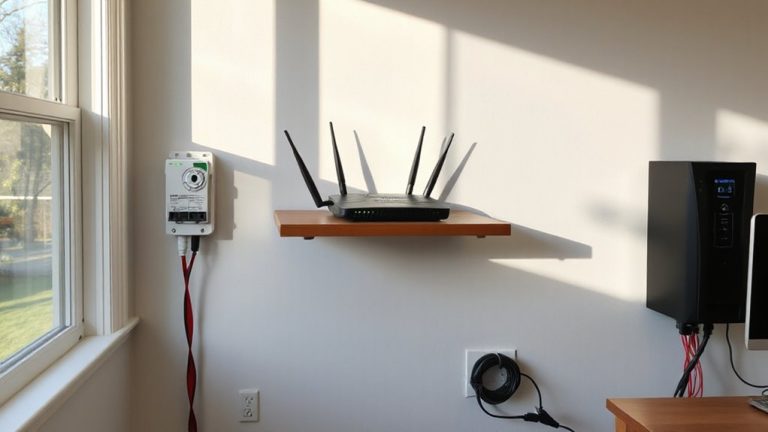
How do you know which type of surge protection actually suits your needs? It depends on your setup, budget, and how critical your gear is. For basic equipment compatibility and convenience, a power strip SPD works-but it offers limited joule ratings and minimal warranty coverage. A UPS provides battery backup and better protection, ideal if you’re running computers or network gear. Whole-house SPDs, installed at your electrical panel, deliver the strongest defense but require an electrician and pair best with point-of-use units. Top-rated UPS backup systems offer scalable runtimes and surge protection tailored to home office demands.
| Type | Best For |
|---|---|
| Power Strip SPD | Simple setups, moderate protection |
| UPS | Sensitive electronics, short outages |
| Whole-House SPD | Whole-home protection, max durability |
No single solution covers everything-combine types for full coverage, and always check warranty coverage for connected equipment guarantees.
Must-Have Features in a Home Office Surge Protector
You’ve likely already considered whether a power strip, UPS, or whole-house SPD makes sense for your setup-but if you’re protecting a home office, the right surge protector needs more than just a few outlets and a basic joule rating. Look for models with at least 1,000 joules and clear overvoltage protection to safeguard sensitive electronics during spikes. Equipment compatibility matters-you’ll want enough USB-C and standard AC outlets to support laptops, monitors, and networking gear without daisy-chaining. A low clamping voltage (under 400V) guarantees faster response to surges, reducing damage risk. Choose units with an indicator light so you know protection is active. Don’t overlook warranty terms-some brands offer connected equipment coverage up to $100,000, but exclusions often apply for improperly grounded outlets or lightning strikes.
6 Common Surge Protector Mistakes (And How to Avoid Them)
While it might seem like plugging your gear into any power strip offers protection, most common surge protector mistakes stem from assuming all units are built alike-leading to preventable damage to expensive home office equipment. You’re risking failure if you overload outlets, drawing more power than the surge protector’s joule rating or amperage can handle. Always check the total wattage of your devices and stay under 80% of the rated capacity. Never resort to daisy chaining-plugging one surge protector into another-as this creates fire hazards and often voids warranties. Units with indicator lights help you monitor protection status, but they won’t compensate for poor placement or outdated models. Replace any protector after a major surge, even if it seems functional. Look for ones with a minimum 1,000-joule rating and UL 1449 certification.
On a final note
You need a surge protector tailored to your home office setup-don’t just plug into any power strip. Look for at least 1,000 joules and a clamping voltage under 400V for solid protection. A UPS adds battery backup, useful during outages, while whole-house SPDs stop surges at the panel. Check for UL 1449 certification, indicator lights, and a good warranty. Replace units after major surges-once they absorb a hit, they’re done.