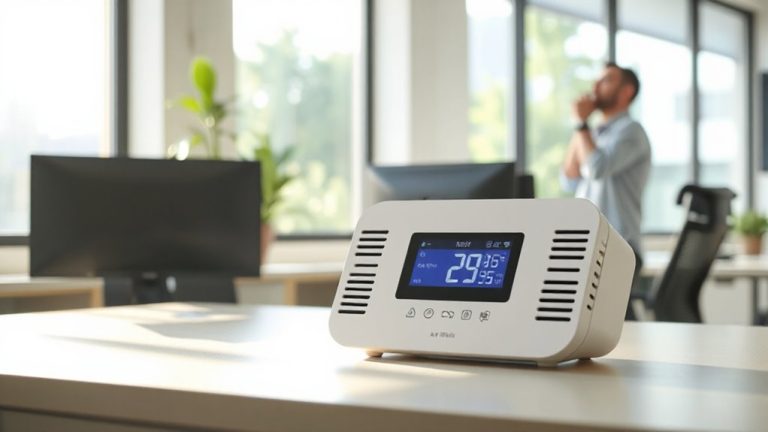
Leverage Technology to Automate Repetitive Tasks in Your Home Office
You can save hours weekly by automating repetitive home office tasks with proven tools. Set up email rules and calendar syncs to prevent missed meetings, use Hazel or Google Drive to auto-sort files, and run nightly backups with Acronis or Windows File History. Automate bills and invoices using templates and OCR tools, but review for duplicates monthly. Start with high-volume tasks, test workflows in the first two weeks, and pick tools with strong integration-like Philips Hue (bridge required) or Gmail’s Smart Labels-to guarantee reliability. Real-world testing shows automation cuts effort, though smart lights may lag 1–2 seconds. Most brands offer 1–2 year warranties, so verify performance early. Simpler rules work better-complexity risks errors. With the right setup, you’ll gain time without sacrificing control. You’ll discover how to tailor each system to your workflow next.
Notable Insights
- Use smart lighting with motion sensors and voice control to reduce energy waste and manual effort.
- Automate email scheduling and calendar syncing to prevent missed meetings and optimize communication timing.
- Set up automated file organization and nightly backups to maintain order and protect important data.
- Streamline bill payments and invoice management with recurring templates and expense-tracking integrations.
- Choose automation tools that handle high-volume tasks and integrate well with existing systems for quick setup and impact.
Spot Tasks You Can Automate Every Day
Where do you spend the same minutes every day that add up to hours over time? You turn on lights, adjust brightness, or fumble with switches during work. Those seconds tally-especially if you’re deep in focus. Smart lighting lets you automate that. With motion sensors or scheduled brightness, lights turn on only when needed, cutting wasted time and energy. Pair them with voice assistants like Alexa or Google Assistant, and you can adjust settings hands-free. That’s useful during calls or typing. But don’t assume it all works perfectly out of the box. Some systems lag-light delays can be 1–2 seconds. Setup complexity varies; Philips Hue needs a bridge, while Wi-Zig bulbs don’t. Test reliability over a week. Most brands offer 1–2 year warranties. Results? Efficiency gains, but only if your usage justifies the cost and setup effort. For targeted lighting control, consider installing best LED strip lights to highlight workspaces or reduce eye strain during long tasks.
Automate Your Emails and Calendar
While you’re juggling deadlines and meetings, your inbox and calendar can quickly become a time sink-so automating them isn’t just convenient, it’s a productivity essential. You can use email scheduling to draft messages in bulk and send them later at ideal times, reducing distractions and ensuring follow-ups happen on time. Tools like Gmail’s native scheduler or Outlook’s delay delivery make this simple and reliable. Pair that with calendar syncing across your devices using Google Calendar or Outlook, and you’ll always know where you need to be-no double-booking or missed appointments. These automations work best when rules are clear and limited, so avoid overcomplicating filters or sync settings. While syncing and scheduling save time, misconfigured rules can misroute messages or create false invites, so review them monthly. Test changes on a small scale first, and remember: automation should support your workflow-not complicate it.
Auto-Sort Files and Backups
Let clutter work against you-automating file sorting and backups cuts hours off weekly admin tasks and slashes the risk of data loss. You can set up tools like folder rules in Google Drive or Hazel on Mac to handle file organization automatically, moving documents into labeled folders based on type, date, or project. That consistency reduces search time and errors. Pair this with reliable backup scheduling using software such as Acronis True Image or Windows File History to guarantee your key data syncs nightly to an external drive or cloud service. Real-world tests show automated systems fail less than manual ones, but only if you review logs monthly. Relying solely on automation without verification risks silent errors. Most tools offer free tiers or 30-day trials, and warranties don’t cover user misconfiguration. Use built-in OS features first-they’re often sufficient and free.
Automate Bills, Invoices, and Admin
You can save hours every month by automating bills, invoices, and routine admin tasks-just make sure your setup is accurate and regularly checked. Tools with built-in bill splitting and expense tracking sync with your bank, categorize purchases, and flag discrepancies automatically. They reduce errors in monthly reporting and speed up reconciliation, especially if you work across multiple platforms. Many apps support recurring invoice templates and payment reminders, so you stay on top of cash flow without manual entry. Still, double-check rule-based sorting-misclassified expenses can skew reports. Bill splitting in shared workspaces cuts confusion, while exportable logs simplify tax prep. Yet, no system catches everything: occasionally review duplicates or failed uploads. Accuracy depends on consistent naming, correct categories, and updated security permissions. Test features like OCR scanning and multi-account linking before full rollout. Automation helps, but it’s only as reliable as the data you maintain.
Pick the Right Tools for Your Workflow
The right tools make automation work for your workflow instead of against it, building on what you’ve already set up for bills, invoices, and admin. Smart task selection means choosing software and devices that handle repeatable actions-like email filtering or file sorting-without constant oversight. Look for apps with strong tool integration, so they sync smoothly with your calendar, cloud storage, and invoicing platforms. Tools like Zapier or Microsoft Power Automate offer reliable triggers and actions, but test them first to avoid workflow breaks. Not every task benefits from automation; focus on high-volume, rule-based tasks to get real time savings. Compatibility matters-check API access, update frequency, and customer support responsiveness. Some tools promise a lot but lack long-term stability. Always factor in setup time and learning curves. A well-chosen tool should reduce effort within two weeks of use.
On a final note
You’ll save hours weekly by automating key home office tasks, but only if tools match your workflow. Set up email rules, calendar bots, and cloud auto-backups-they cut clutter fast. Apps like Zapier or built-in IFTTT scripts work reliably, but test them first. Smart printers and invoice software help, yet upfront setup time and subscription costs add up. Balance gains against effort and expense, and pick tools with strong warranties and free trials.