Creating an Inviting Workspace Environment Using Biophilic Design Principles for Remote Workers
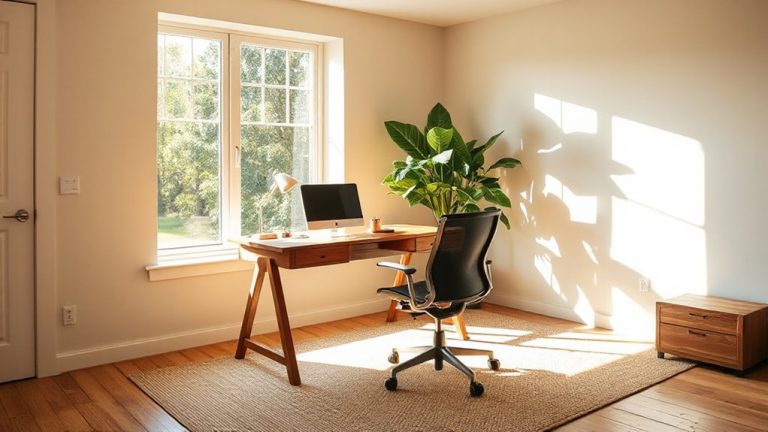
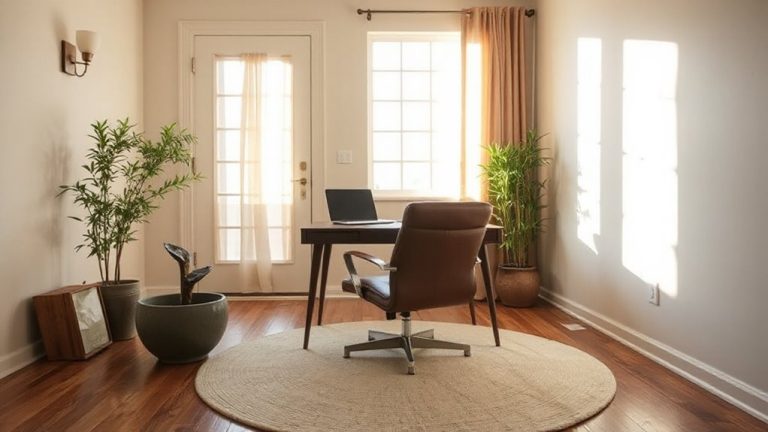
You can boost focus and reduce stress by designing your workspace with biophilic principles. Let in natural light using sheer shades-they filter glare while maintaining brightness. Add a snake plant or peace lily to purify air and lower cortisol. Choose solid wood desks and linen textiles for sensory calm, but know they need upkeep. Use subtle leaf or water-inspired patterns in matte finishes to avoid screen glare. Keep layout open and cords managed. One or two well-placed elements make a measurable difference-especially when matched with daily routines. More details on balancing cost, maintenance, and layout follow.
Notable Insights
- Incorporate indoor plants like snake plants or peace lilies to improve air quality and reduce stress.
- Maximize natural light with sheer window treatments that reduce glare while maintaining brightness.
- Use genuine natural materials such as solid wood desks and stone accents for sensory calm.
- Add subtle organic patterns in rugs or pillows to reinforce biophilic comfort without visual clutter.
- Maintain spatial flow by positioning the desk near daylight and keeping surfaces and cords organized.
How Nature Design Boosts Focus at Home
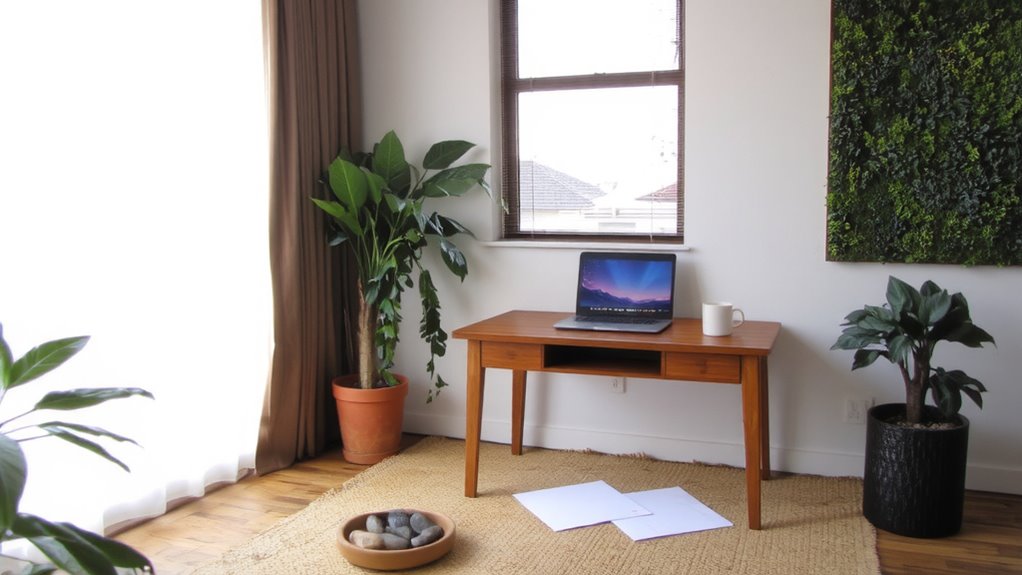
While you might think adding plants or natural elements to your home office is just for looks, integrating biophilic design can actually sharpen your focus-especially during long work sessions. Studies show that indoor plants reduce mental fatigue, making your brainstorming techniques more effective and your time management more consistent. A fiddle-leaf fig or snake plant, for instance, improves air quality and adds visual calm, which helps sustain attention. But don’t overcrowd your desk-clutter hurts productivity. Stick to one or two low-maintenance species in breathable pots with drainage. Natural materials like wood desks or stone accents also support focus, though they can be pricier and harder to clean. Results vary based on space size and lighting. For best outcomes, pair biophilic elements with structured routines. It’s not a magic fix, but when used wisely, nature-inspired design supports real, measurable improvements in concentration.
Let In More Natural Light (Even Without Big Windows)
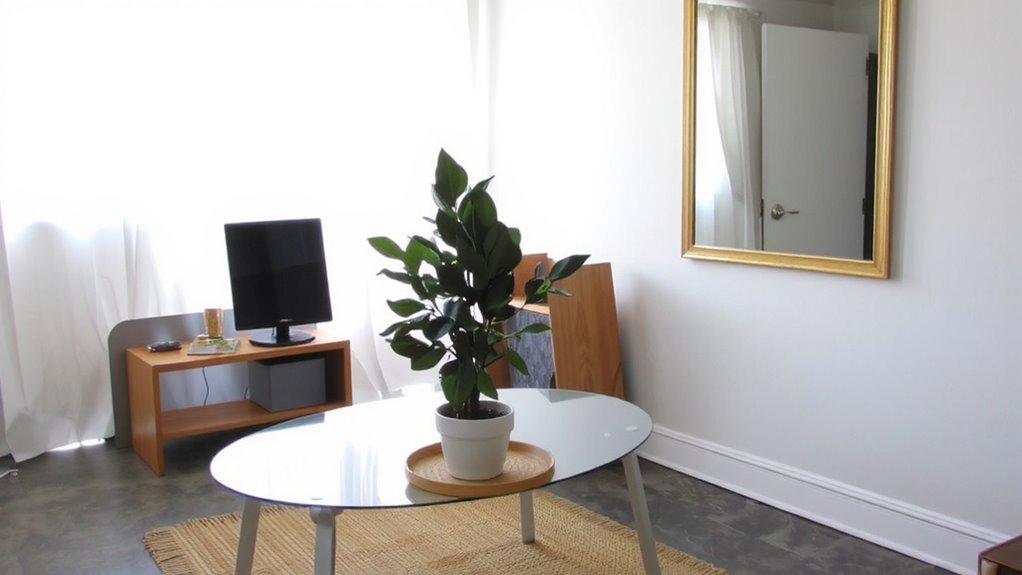
Why settle for dim, artificial lighting when your workspace could get the natural glow it needs-even if you’re stuck with small or poorly positioned windows? You can maximize daylight by swapping heavy drapes for light curtains or sheer shades, which diffuse sunlight evenly while reducing glare on screens. These materials let in up to 60–80% of available light, depending on fabric density, versus less than 30% with opaque coverings. Sheer shades also offer adjustable slats for privacy without blocking all light. Just keep in mind that they provide minimal insulation or UV protection, so fading on furniture or flooring could become an issue over time. Pair them with task lighting to maintain consistent brightness when clouds roll in. It’s a simple, low-cost upgrade that makes a measurable difference in workspace comfort-no renovation required. A well-lit desk setup can be enhanced with the right monitor stands for your desk, improving both ergonomics and visual comfort.
Choose Plants That Purify Air and Lower Stress
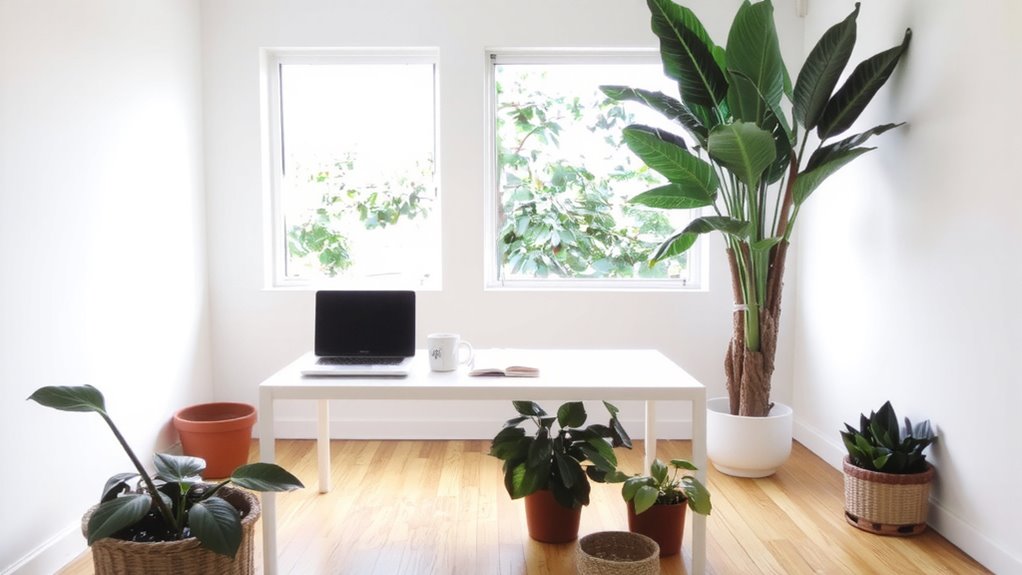
You can boost both air quality and mental focus in your workspace just by choosing the right houseplants-no fancy gadgets required. Plants like snake plants, peace lilies, and spider plants are proven in NASA studies to support air purification by filtering common indoor pollutants such as benzene and formaldehyde. They also contribute to stress reduction, with research showing that simply being near greenery can lower cortisol levels. These plants are low-maintenance, thriving in indirect light and needing water only weekly. But don’t overcrowd your desk-too many plants can make cleaning harder and collect dust, which may worsen air quality if neglected. While they help, they’re not substitutes for proper ventilation. Real plants offer psychological benefits artificial ones don’t, but success depends on matching species to your lighting and schedule. Choose wisely, and you’ll gain measurable boosts in both air purification and stress reduction. For remote workers, incorporating best office plants can significantly enhance the overall workspace environment.
Pick Wood, Stone, and Natural Textures for Calm
Natural materials like wood, stone, and linen bring a grounded, calming feel to your workspace-just make sure you’re picking the right kind for your setup. You’ll want real wood grain, not laminates, since authentic textures support better sensory connection and durability. Solid oak or walnut desks, even with light finishes, preserve that organic warmth and last longer than veneers. For stone surfaces, soapstone or honed granite offer tactile calm without glare, but they require sealing-factor in that upkeep. Linen chair cushions or wool rugs add soft contrast without trapping dust, unlike plush synthetics. You’re not just decorating; you’re shaping how your space feels after hours of focus. Yet, cost and maintenance rise with authenticity: solid wood expands with humidity, and stone can stain if unsealed. Still, if you prioritize material honesty and long-term comfort, investing in true natural textures pays off in daily calm.
Add Patterns Inspired by Leaves, Water, and Sky
Repeating organic forms through patterned surfaces can deepen the calming effect of your workspace, building on the sensory foundation set by real wood and stone. You’ll want to introduce leaf motifs in your throw pillows, rugs, or wallpaper-they echo nature without overwhelming your focus. Subtle water ripples in ceramic tiles or matte desktop accessories can mimic stillness, helping reduce visual stress. These patterns work best when they’re understated; bold prints risk becoming distracting over time. Opt for matte or textured finishes to avoid glare, especially near screens. Natural dyes and fiber-based fabrics hold patterns well but may require spot cleaning. Machine-washable synthetics offer durability, though they lack the depth of natural materials. Test samples under your workspace lighting before committing-patterns can shift in tone depending on bulb temperature and daylight exposure. Keep scale moderate: large motifs might dominate small desks, while tiny ones can get lost.
Arrange Your Space for Open, Calm Flow
How might your workspace influence not just what you do, but how you feel while doing it? Arranging for open, calm flow supports focus and reduces stress through intentional layout and movement. Biophilic design pairs well with feng shui balance-position your desk to allow easy access and clear sightlines, promoting energy flow. Avoid minimalist clutter by choosing only essential gear; even sleek items can overwhelm if overpopulated. Keep cords managed and surfaces mostly clear to sustain visual calm. Effective cable organization contributes to this serene environment through best cable management techniques that hide and route wires neatly.
| Zone | Purpose | Recommendation |
|---|---|---|
| Entry | Shift | Leave 2+ ft clearance |
| Desk | Focus | Face natural light |
| Storage | Access | Use closed cabinets |
| Seating | Rest | Add plant nearby |
| Walkway | Flow | Maintain 3 ft path |
Furniture scale matters-oversized pieces disrupt flow, while smart proportions enhance feng shui balance. Test layouts in real time, adjusting for both comfort and efficiency.
On a final note
You’ll likely focus better and feel calmer in a workspace shaped by biophilic design. Natural light, real plants like snake or peace lilies, and wood or stone surfaces help-studies show modest stress reduction and improved attention. Air-purifying plants work, but don’t overestimate small pots. Natural textures add warmth without clutter. Just avoid overcrowding; too many elements disrupt the calm they’re meant to create. Keep it simple, functional, and tested.