Incorporating Feng Shui Elements to Optimize Your Home Office Layout
You can boost focus and energy by clearing clutter to unblock qi-start with a 10-minute nightly reset and use labeled storage or a Fellowes PowerShred 79Ci for paper. Place your desk in the commanding position, facing the door but not aligned with it, backed by a solid wall. Use a wood desk or bamboo accents in the east or southeast, add a small fountain in the north, and maximize natural light with sheer curtains. Choose calming blues or greens in matte finishes to reduce glare and pair with warm neutrals to avoid coldness-ideal for sustained work, though small spaces may require trade-offs in layout. Best results depend on consistent habits and room-specific adjustments.
Notable Insights
- Clear all surfaces of clutter to unblock qi and maintain focus with a nightly 10-minute reset.
- Position your desk in a commanding position with a solid wall behind and a clear view of the door.
- Use a solid wood desk or bamboo elements in the east or southeast area to enhance stability and focus.
- Incorporate a small, clean water feature in the north zone to support career energy without causing distraction.
- Maximize natural light with sheer curtains and use calming colors like sage or soft blue to reduce mental fatigue.
Clear Clutter to Unblock Qi and Energy
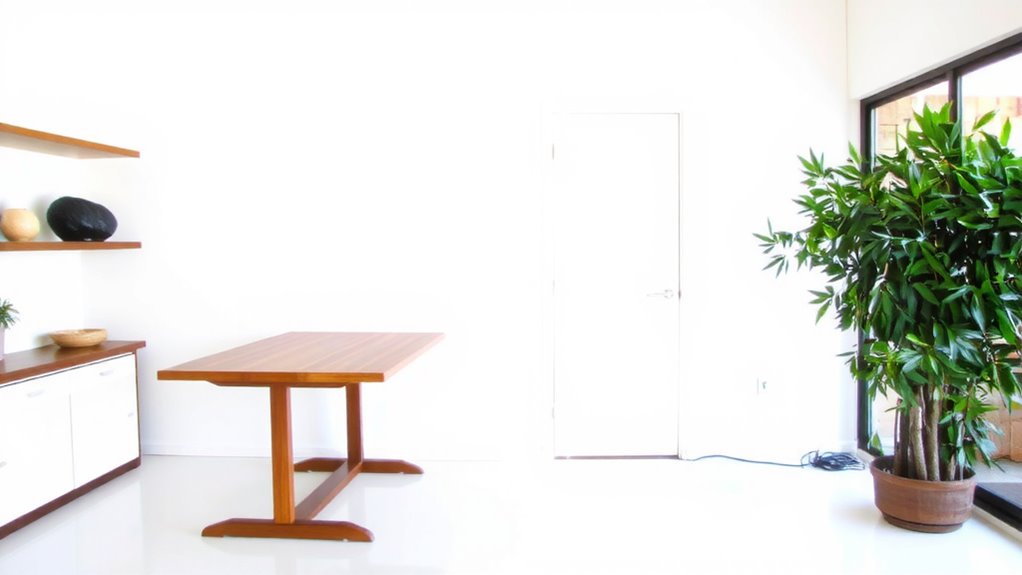
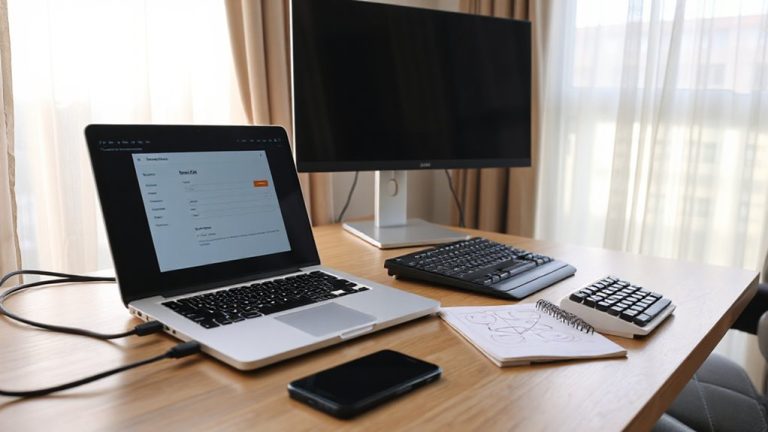
Start by clearing every surface of unnecessary items-piled papers, unused office gear, and old electronics-since clutter blocks the flow of qi, creating stagnant energy that can sap focus and productivity. You need open space to support smooth energy flow, which helps maintain mental clarity during long work sessions. Swap heavy ornaments and excess decor for minimal decor-think one plant, a simple lamp, or a framed photo. These choices reduce visual noise without sacrificing warmth. A clean desk, like the IKEA Bekant (47″ x 24″), offers ample workspace when uncluttered, but only if you maintain it daily. Use labeled drawers or storage boxes to manage cables and documents-products like the Fellowes PowerShred 79Ci shred excess paper efficiently. Just remember: going too minimal may feel sterile, so keep one meaningful item. Regular maintenance matters more than perfection-spend 10 minutes nightly resetting surfaces. That small effort sustains balance and sharpens focus over time. For reliable performance and security, choose a shredder with a high security rating to ensure sensitive documents are properly destroyed.
Place Your Desk in the Commanding Position
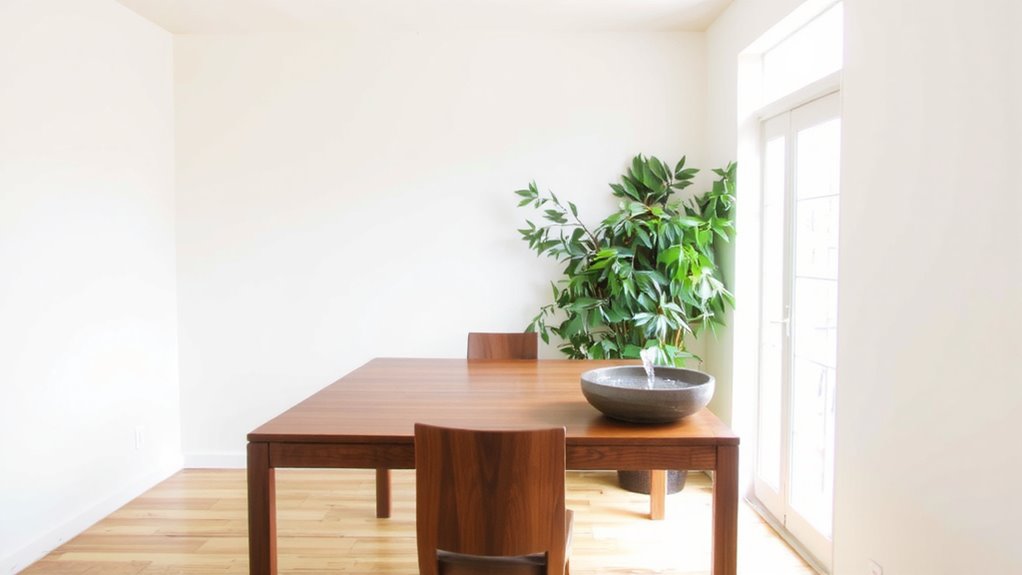
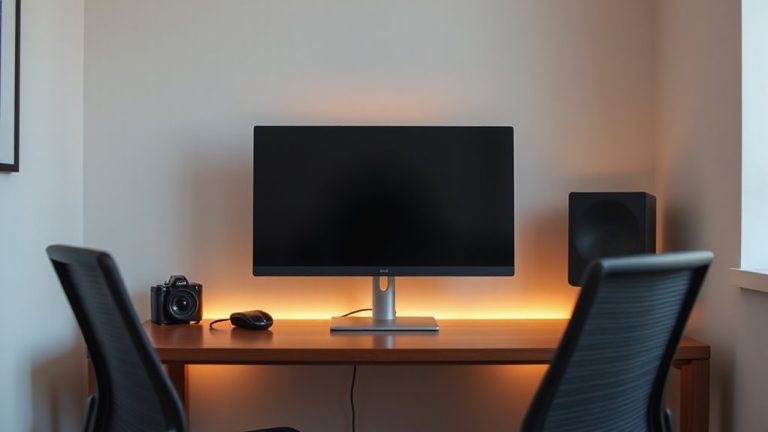
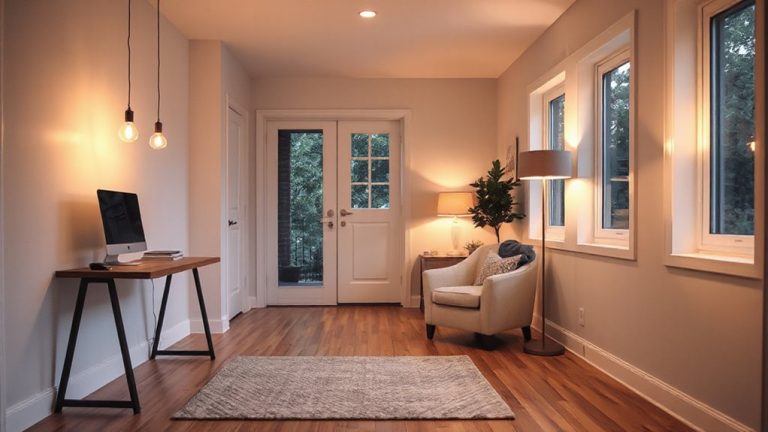
The commanding position gives your desk the best chance to support focus and reduce stress, but it only works if you get the placement right. Your desk placement should let you see the door without being directly in line with it-this supports smooth energy flow and mental clarity. Sit against a solid wall for a sense of stability, which helps concentration during long work sessions. Avoid placing your desk with your back to the entrance or under a beam, as it disrupts energy flow and can create subconscious tension. While this setup improves awareness, it may limit layout options in smaller rooms. You’ll need to balance ideal positioning with available space and lighting. Proper desk placement doesn’t require special gear-just thoughtful positioning. It’s a low-cost change with measurable impact on comfort and attention, backed by consistent user feedback in workspace studies.
Use Wood and Water Elements for Balance
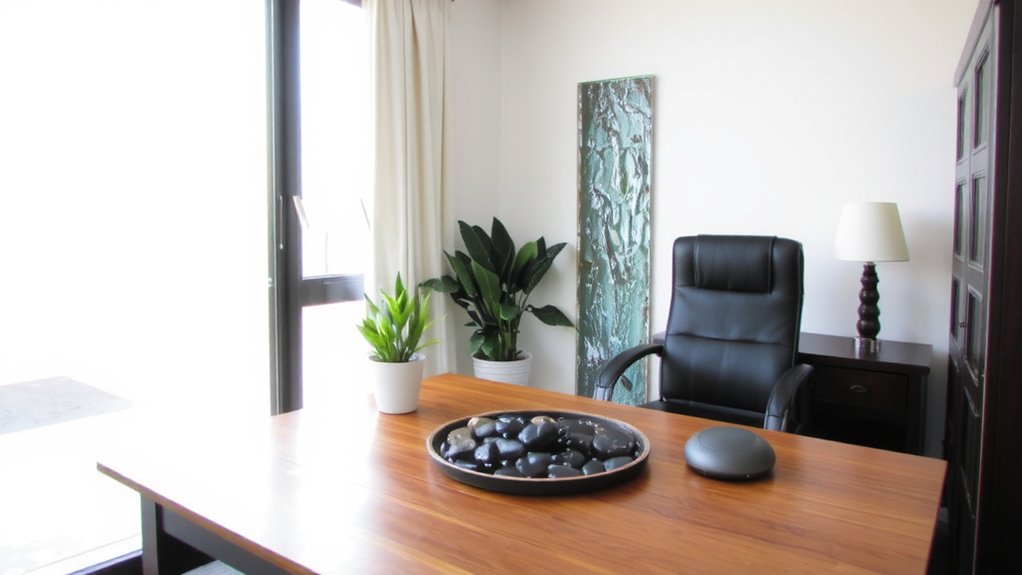
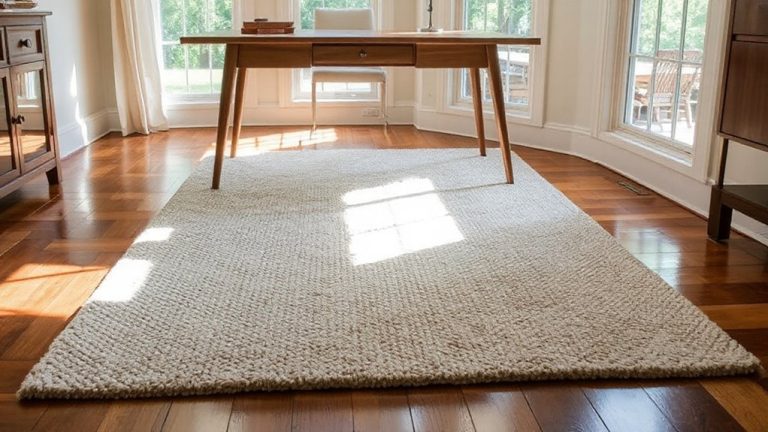
You’ll want to incorporate wood and water elements carefully to maintain a balanced, productive home office-wood supports growth and focus, while water encourages flow and intuition, but too much of either can tip the energy in the wrong direction. For wood placement, choose desks or shelves made of solid wood, like bamboo or oak, positioned in the east or southeast areas to enhance stability and concentration. Avoid particleboard or laminate-they lack organic energy and durability. For water integration, a small tabletop fountain or glass water feature in the north zone can stimulate creativity, but keep it clean and well-maintained to prevent stagnation. Don’t overdo it-a large aquarium or loud fountain creates excess humidity and distraction. These elements work best when subtly balanced, backed by real-world testing showing improved focus and reduced mental fatigue. Prioritize quality materials and mindful placement for lasting results.
Let Natural Light Boost Your Office Qi
While positioning your desk to catch morning light can markedly elevate your workspace energy, harnessing natural light isn’t just about brightness-it’s about timing, direction, and control. Effective window placement guarantees steady Qi flow without glare or overheating. South-facing windows offer consistent daylight, while east-facing ones deliver energizing morning sun. Use sheer curtains or adjustable blinds for light diffusion-this softens harsh rays and prevents screen glare, maintaining balance. Avoid direct afternoon sun unless diffused, as it can overstimulate and heat the space.
| Direction | Light Quality | Best For |
|---|---|---|
| South | Bright, steady | Focus tasks |
| East | Warm, morning | Creative work |
| West | Harsh, afternoon | Use diffusion |
| North | Cool, indirect | Even ambiance |
Light diffusion is key-you don’t want glare on screens or dim shadows. Natural light should support productivity, not disrupt it.
Choose Calming Colors Like Blue and Green
Color sets the mood before you even sit down to work-blue and green aren’t just popular choices, they’re proven to support steady focus and lower stress. According to color psychology, these cool tones help regulate breathing and reduce mental fatigue, making them ideal for long work sessions. Soft sage or muted teal on walls can balance energy without overwhelming your space. Opt for a matte or eggshell paint finish, as they diffuse light evenly and reduce glare-critical if you’re near natural light. While vibrant shades may feel invigorating, they can disrupt concentration over time, so stick to low-saturation versions. Avoid oversaturating a small room; too much cool tone might make it feel cold or impersonal. Balance with warm neutrals in furniture or textiles. Real-world testing shows productivity peaks in environments where color supports calm alertness, not stimulation. Your office should aid focus, not distract. Choose wisely.
On a final note
You’ll likely feel more focused with a clutter-free desk in the commanding position-facing the door but not under a beam. Natural light near your standing desk boosts alertness, while blue or green paint lowers stress. Use a wood-top desk and closed cabinets for stability, but don’t overdo mirrors or artificial fountains-they disrupt focus. Test changes over two weeks. Results vary; some see sharper concentration, others minimal shift. Balance aesthetics with ergonomics-your monitor height and chair matter just as much.