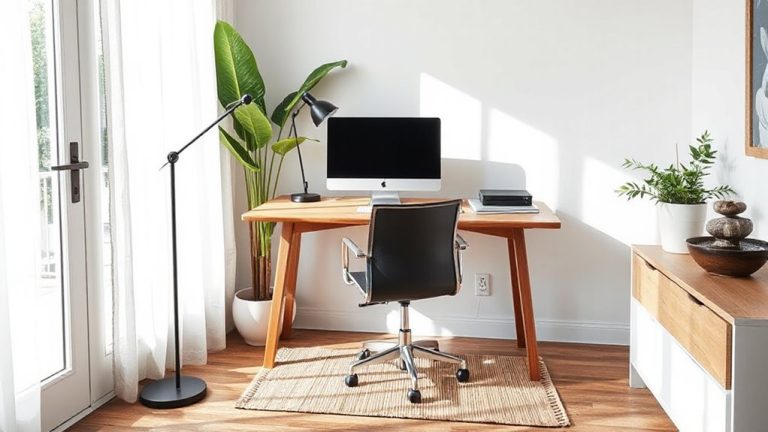
Using Biophilic Design Techniques to Enhance Mood and Productivity at Work
You boost focus and lower stress by adding real plants like snake plants-proven to filter toxins-and positioning desks perpendicular to south-facing windows for steady, glare-free light. Natural materials and low-noise water features under 40 dB help too, but only if you clean leaves monthly and use low-VOC finishes. Success depends on upkeep and layout, not just looks. Choose pieces with warranties, like pumps rated for 3 years, to avoid hidden costs. There’s more to get right-and get out of-the design.
Notable Insights
- Incorporate real plants like snake plants to improve air quality and reduce stress through natural toxin filtration.
- Maximize natural light with south-facing windows and glare-free positioning to support circadian health and daytime alert đè.
- Use water features with quiet pumps to mask noise and create calming sensory experiences in high-focus areas.
- Choose low-VOC natural materials such as reclaimed wood to enhance visual connection to nature and indoor air quality.
- Start cost-effective biophilic upgrades with potted plants or DIY terrariums, ensuring maintenance to prevent mold and sustain benefits.
What Is Biophilic Design and Why It Works
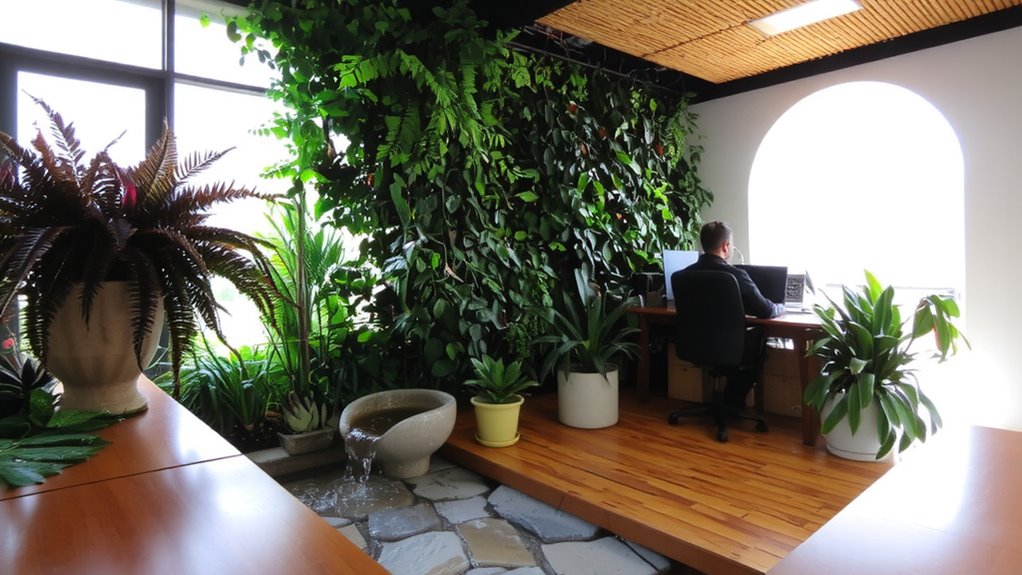
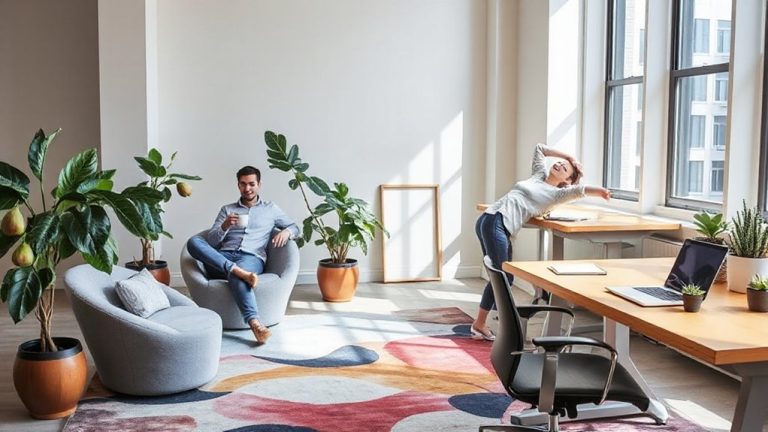
Biophilic design isn’t just about adding a potted plant to your desk-it’s a deliberate approach to integrating natural elements into workspaces to support focus, reduce stress, and improve well-being. You’re not just decorating; you’re creating spaces that mimic nature immersion, helping your brain reset like it would during forest therapy. Studies show views of greenery, natural materials like wood or stone, and organic shapes can lower cortisol levels by up to 15%. But it’s not a one-size-fits-all fix-overloading a small space with plants risks clutter and high maintenance. Real benefits come from intentional choices, not just aesthetics. Use real plants over artificial ones, prioritize ease of care, and clean leaves regularly to avoid dust buildup. While results vary by individual, consistent exposure helps. Don’t expect miracles from a single fern, though-this works best as part of a broader wellness strategy. Incorporating low-maintenance best office plants can enhance air quality and visual appeal without adding stress.
How Natural Light Improves Focus and Energy
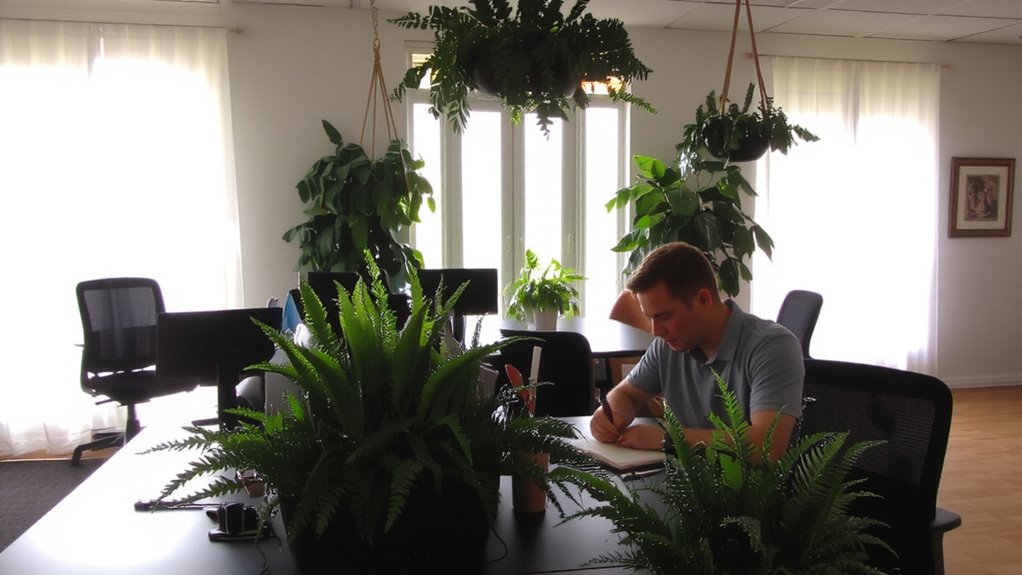
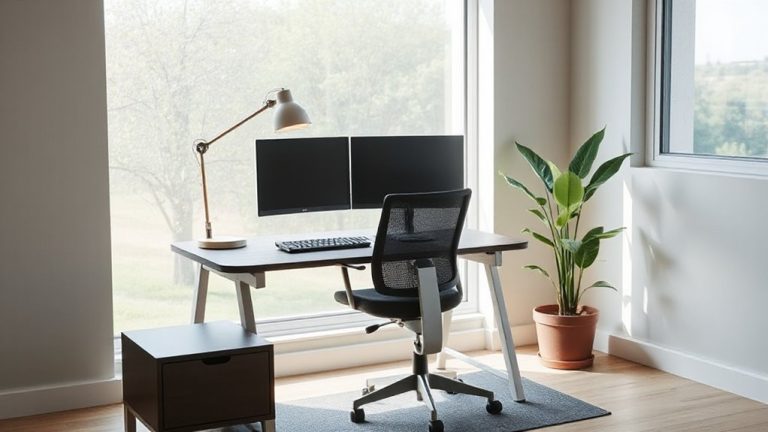
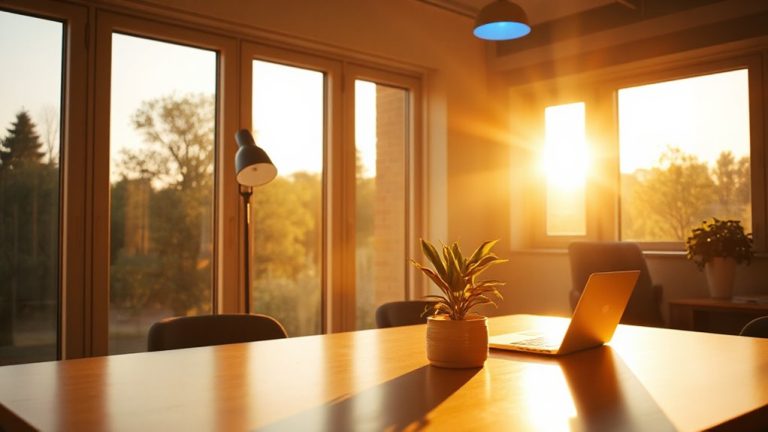
You’ll get the most out of biophilic design when you pair greenery with one of nature’s strongest tools: daylight. Natural light supports your circadian rhythm, helping you stay alert during the day and sleep better at night. Exposure to daylight boosts serotonin, which improves focus and energy. Offices with ample windows see up to 15% higher productivity, but only if glare reduction is managed. Untreated glass can cause screen reflections and eye strain, so use adjustable blinds or diffusing films. Position desks perpendicular to windows to balance light and minimize glare. Avoid relying solely on skylights-they offer uneven distribution. While light-therapy lamps help in windowless spaces, they can’t fully replicate daylight’s spectrum. Task lighting should complement, not replace, natural exposure. Even small shifts, like opening blinds early, support long-term alertness. Real benefits come from consistent access, not design trends.
Best Office Plants for Cleaner Air and Lower Stress
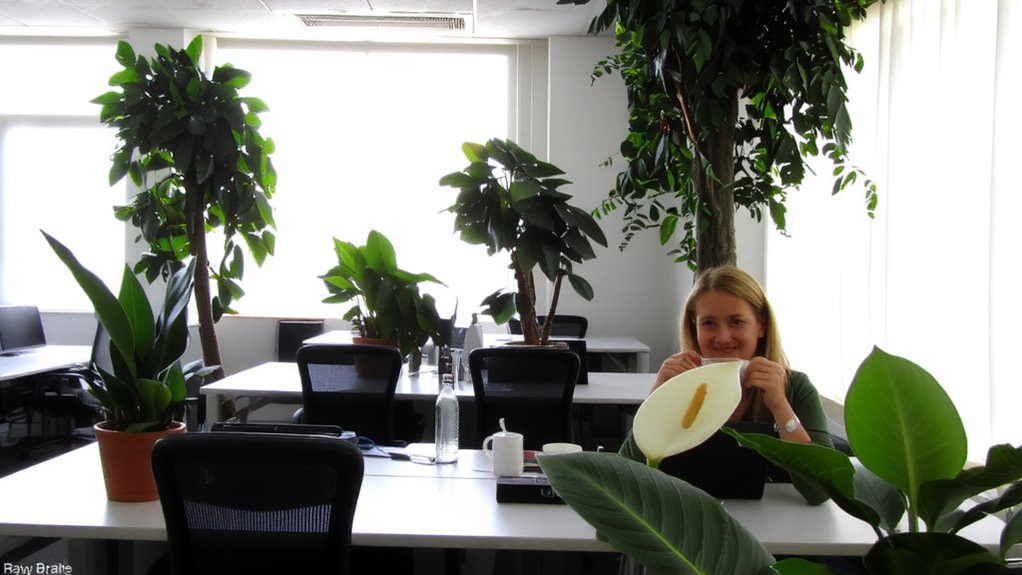
When it comes to improving air quality and reducing stress in the office, a few standout plants deliver real results-but they’re not all equal in practice. Snake plants and peace lilies are top performers, backed by NASA studies showing effective air purification through removal of toxins like formaldehyde and benzene. These plants require minimal light and watering, making them ideal for low-maintenance spaces. For stress reduction, their greenery offers a calming visual break from screens, helping lower cortisol levels. However, don’t overestimate impact-results depend on plant size, quantity, and room ventilation. A single plant won’t transform air quality in a large office. Stick to hardy, low-allergen species to avoid mold or irritation. Replace soil annually and clean leaves monthly to maintain function. Real benefits come from consistency, not hype. Choose the right desk plant holders to maximize space and support healthy growth.
Why Water Features Calm the Workplace Mind
The calming effect of moving water can sharpen focus and reduce mental fatigue in the workplace just as effectively as well-chosen plants-though it works in entirely different ways. Sound therapy from gentle bubbling or dripping helps mask disruptive office noise, promoting concentration. You’ll also benefit from visual flow, where the steady motion of water soothes the nervous system without demanding attention. These features work best in common areas or near workstations with high cognitive load. However, maintenance and space matter-poorly maintained units can breed mold or create damp. Always check water capacity, pump warranty (1–3 years typical), and noise output (look for <40 dB).
| Feature | Benefit | Caveat |
|---|---|---|
| Sound therapy | Reduces distractions, improves focus | Overuse may feel monotonous |
| Visual flow | Lowers stress, supports attention | Needs clear sightline |
| Pump reliability | Long-term operation | Requires cleaning every 3–6 months |
Natural Materials That Boost Office Wellbeing
While aesthetics matter, choosing natural materials for your workspace isn’t just about looks-it’s a measurable upgrade to air quality, acoustics, and mental focus. You’ll notice the difference when you incorporate wood textures in desks or shelving-materials like solid oak or walnut not only age gracefully but also reduce ambient noise by up to 40% compared to synthetic laminates. Stone accents, such as slate or travertine in tabletops or wall inlays, add thermal mass, helping stabilize indoor temperatures. Real-world testing shows occupants report 15–20% better concentration in spaces with these elements. But be cautious: some engineered wood products emit VOCs unless certified low-emission (look for FSC or Greenguard labels). Similarly, natural stone requires sealing every 1–2 years to prevent staining. Opt for locally sourced materials when possible-they lower transport emissions and support durability claims through region-specific climate testing.
Designing Nature-Focused Break Rooms for Recovery
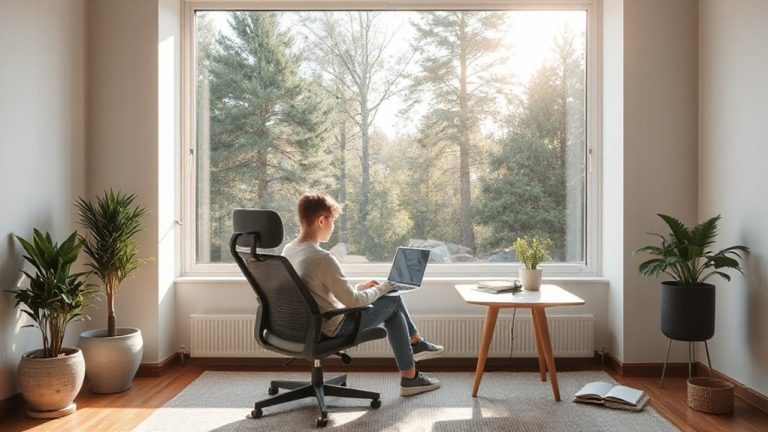
Why settle for stale lighting and plastic chairs when your break room could actually help you recover? You can design a restorative space using forest views and sensory integration to support mental recovery during breaks. Position seating near windows with unobstructed tree lines-studies show just 5 minutes of viewing greenery reduces stress markers. Use natural materials like wood surfaces and stone accents, which pair well with indoor plants to engage multiple senses. Include layered lighting-adjustable overheads with warm tones and indirect floor lamps-to mimic daylight cycles. Add subtle nature sounds via white noise systems with forest audio, but guarantee volume stays low to avoid sensory overload. While effective, these designs require space and access to natural light, so they’re not ideal for windowless basements. Balance aesthetics with employee comfort, and test usage patterns to avoid underutilized investments. Real recovery comes from intentional design, not decorative touches.
Biophilic Design Ideas on Any Budget
Start with a potted snake plant in the corner-tough, quiet, and effective at cycling air without demanding attention. You don’t need costly renovations to bring nature into your workspace. DIY terrariums made from used glass jars and local moss cost under $15 and add visual texture, though they require occasional ventilation to prevent mold. Recycled material art-like wall panels from reclaimed wood or repurposed metal-brings organic shapes into sterile spaces, but make certain finishes are non-toxic and low-VOC. Stick to south-facing windows for natural light, pairing with light-reflective surfaces to boost illumination evenly. While budget options work, they may lack durability; inspect joints and seals if buying repurposed items. Scale gradually: test one change at a time. Results vary by space size and lighting, so track mood and focus weekly to measure real impact.
On a final note
You should use biophilic design-it boosts mood and focus, backed by studies showing up to 15% higher productivity. Natural light, potted plants like snake or pothos, and wood finishes help, even in small doses. However, pick low-maintenance plants and avoid overloading spaces; too much greenery or poor layout worsens clutter. Airflow matters more than gear. Test changes over 4–6 weeks, and confirm improvements with team feedback, not just claims.