How to Use Floating Shelves to Organize and Beautify Your Meeting Environment
Mount floating shelves at 48–60 inches high near your meeting area for easy access and visual balance-ideal for holding notebooks, chargers, and pens. Pick minimalist designs in neutral tones to stay professional, and anchor into studs or use toggle bolts for stability up to 30 lbs. Style with a plant or framed quote, but avoid clutter. Wipe monthly and check hardware regularly. You’ll find smarter ways to refine both function and look.
Notable Insights
- Install floating shelves at eye level (48–60 inches high) near seating areas for easy access and visual balance.
- Choose minimalist, neutral-toned shelves that complement room aesthetics and avoid glare under meeting lighting.
- Anchor shelves securely into studs or use appropriate drywall anchors to ensure stability and safety.
- Store frequently used meeting essentials like notebooks, chargers, and pens within arm’s reach on the shelves.
- Style shelves with purposeful decor-such as a plant or framed note-while maintaining minimal clutter and easy access.
Pick the Best Spot for Floating Shelves
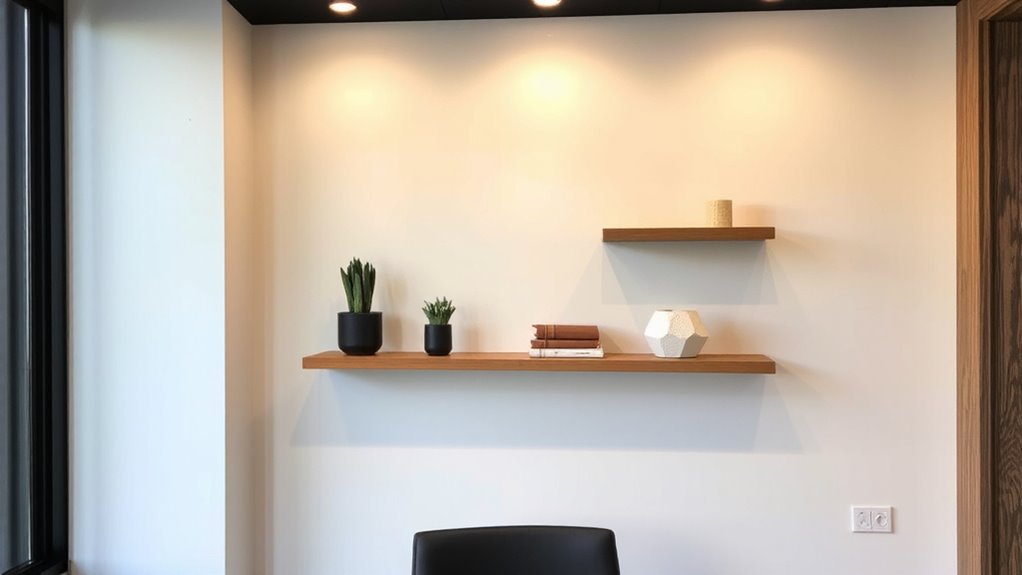
Where should you mount floating shelves in your meeting environment? Prioritize wall placement near seating zones or presentation areas for easy access and visual balance. Position shelves at eye level-typically 48 to 60 inches from the floor-to maximize visibility without straining. Use corner utilization to free up wall space and improve flow, especially in compact rooms. Install corner shelves at a 45-degree angle to maintain sightlines and improve reach. Avoid mounting above radiators or near HVAC vents to prevent heat damage or airflow interference. Confirm stud alignment using a reliable stud finder-anchoring into drywall alone risks failure. Most quality shelves support 30–50 lbs when secured properly, but always check manufacturer load ratings. Some brands offer lifetime warranties if installed per guidelines. Remember, poor placement can clutter sightlines or disrupt audio during recordings. Balance function and spacing: leave 12–18 inches between shelves for ease of use and aesthetic proportion.
Choose a Shelf Style That Fits Your Space
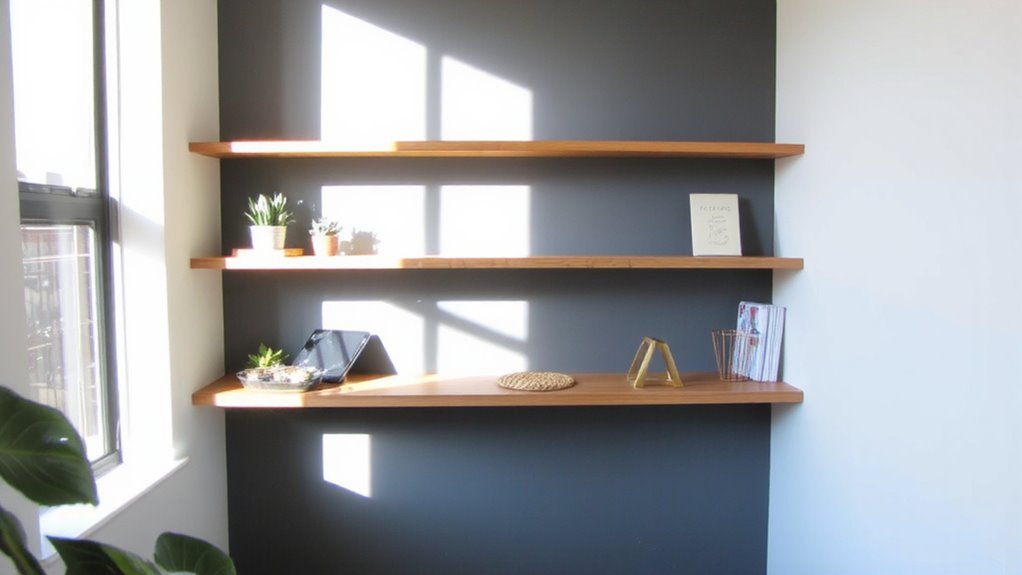
You’ve nailed the placement-now it’s time to pick a shelf style that matches both your room’s function and look. For modern meeting spaces, go with a minimalist design: sleek metal or thin wood shelves in neutral tones keep the focus on collaboration, not clutter. These work well in small rooms since they don’t visually crowd the wall. If your space has exposed brick or natural light, lean into rustic charm with reclaimed wood or wrought iron brackets-just guarantee the finish resists scratches and fingerprints. Solid hardwood holds up better than particleboard long-term, especially with heavy items. Avoid overly decorative styles; they distract in professional settings. Most quality floating shelves support 15–50 pounds, but always check manufacturer ratings. Keep proportions balanced-shelves wider than 24 inches can overwhelm tight walls. Test a sample finish under your room’s light to confirm it fits the mood you want without glare or fading. For durable and stylish options, consider best floating shelves that combine strength with clean aesthetics.
Install Floating Shelves the Right Way
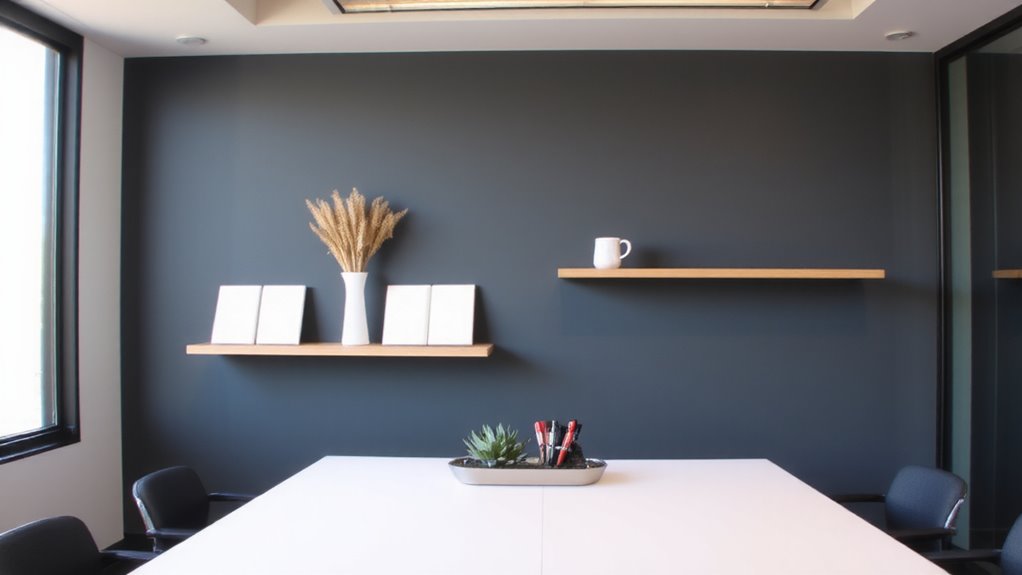
While getting your shelves to look seamless is the goal, installing them the right way means prioritizing structure over speed-cutting corners risks damage to your walls or even shelf failure. For long-term reliability, always use proper floating hardware and aim for secure mounting into wall studs. If studs aren’t aligned, toggle bolts offer reliable drywall support. Use a level and drill straight to prevent sagging. Consider shelf load: heavier items demand stronger anchors and thicker brackets.
| Material | Max Load (lbs) | Best For |
|---|---|---|
| Wood stud | 50+ | Books, devices |
| Drywall + toggle | 30 | Decor, light storage |
| Metal track | 25 | Sleek, minimal designs |
| Concrete anchor | 60 | Basement or office |
| Plastic anchor | 15 | Temporary setups |
Always double-check supports-proper install guarantees both safety and style.
Store Essential Meeting Items Within Reach
When it comes to keeping your meeting space functional, mounting floating shelves near your setup lets you stash essential items within arm’s reach without cluttering the desk. Smart shelf accessibility means placing meeting essentials like notebooks, pens, headphones, and chargers just a grab away. This keeps video calls smooth and reduces disruptions. Use shelves mounted between 48–60 inches from the floor-within easy sight and reach-for best results. However, avoid overcrowding; space items with at least 1–2 inches between them for quick access. Remember, while convenient, poor placement can lead to strain or distraction. Choose sturdy brackets rated for daily use and guarantee anchors fit your wall type-drywall toggles need 50+ lb capacity. Always test stability before loading. Balance practicality with clean sight lines for a workspace that supports focus, not clutter.
Style Shelves With Inspiring Office Decor
A well-styled floating shelf elevates your meeting space from functional to focused, blending practicality with visual calm. You’re aiming for a minimalist design-clean lines, neutral tones, one or two textured items like a ceramic pot or woven coaster. This reduces distraction while adding warmth. Use a creative arrangement: stagger item heights, lean a slim frame slightly forward, or group a small plant with a hardcover notebook. Avoid clutter; shelves aren’t storage units. Decor should inspire, not overwhelm. Choose pieces with purpose-matte-finish finishes resist glare under overhead lights, and low-profile objects won’t block sightlines. Test layouts before finalizing: spend a day observing how natural light hits each object. Remember, even elegant decor loses impact if it competes for attention. Balance is key.
Keep Your Shelves Organized and Clean
You keep the look sharp by maintaining order and cleanliness on your floating shelves, just as much as by how you style them. Minimal maintenance is key-wipe surfaces weekly with a microfiber cloth to prevent dust buildup that dulls finishes and diminishes visual appeal. Use consistent clutter control by limiting items to essentials: one or two decor pieces, a small plant, or neatly stacked notebooks. Avoid overcrowding, which makes even well-styled shelves look chaotic. Reassess contents monthly to remove outdated materials or excess supplies. Floating shelves with closed backs or low-profile brackets are easier to clean and resist dust accumulation. While sleek designs impress, they demand discipline-every added item must earn its space. Real-world use shows shelves under constant use need more frequent editing. The payoff is a polished, professional impression during meetings-worth the small effort required.
On a final note
Floating shelves can tighten your meeting space’s function and look when placed wisely. Pick sturdy, mid-weight brackets and solid wood or metal shelves for reliability. Mount them near seating areas to hold notebooks, chargers, or a sleek speaker-within reach but out of the way. Style with minimal decor to avoid clutter. Just remember: overloading risks sagging, especially on drywall, so follow load ratings and use anchors. When installed right, they’re useful, clean, and lasting-for months, not years.