Movement Variation Importance: Incorporating Regular Movement Breaks Into Your Daily Remote Work Routine
You don’t need a standing desk or treadmill to stay sharp-just move every 30 to 60 minutes to reset circulation, focus, and posture. Short breaks with simple stretches or walks boost brain oxygen, mood, and reaction time by up to 12%, but benefits fade without consistent timing. Desk-friendly moves like neck tilts, ankle pumps, or seated twists help, especially when paired with daily habits like checking email. Even small shifts beat relying on ergonomic gear alone-consistency matters more than intensity. You’ll see how to time and tailor these breaks for real results.
Notable Insights
- Regular movement breaks every 30–60 minutes prevent muscle stiffness and improve circulation during remote work.
- Short bouts of activity enhance focus by increasing oxygen flow to the brain and reducing mental fatigue.
- Incorporating stretches like neck tilts and seated twists alleviates postural strain from prolonged sitting.
- Walking meetings boost creativity and endorphin release, supporting both cognitive and emotional health.
- Pairing movement with daily habits, like coffee breaks, builds sustainable routines without needing special equipment.
Why Sitting All Day Ruins Your Focus and Energy
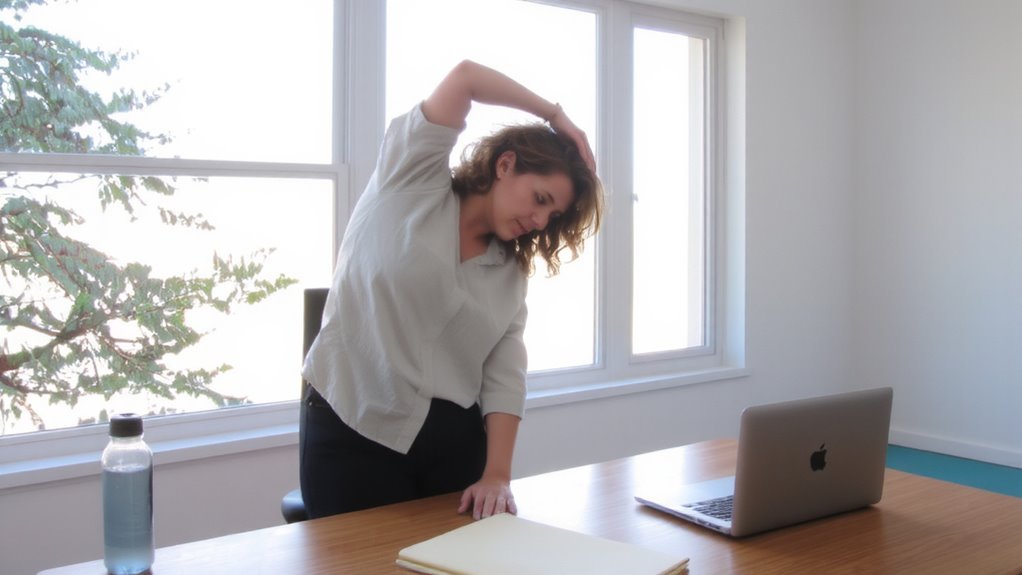
Sitting for hours on end tanks your focus and drains your energy, plain and simple. Poor posture from slumping at a desk strains your neck and lower back, leading to discomfort that distracts you within hours. When you stay still, blood circulation slows markedly, reducing oxygen flow to your brain and making it harder to think clearly. You might feel sluggish or mentally foggy by mid-afternoon, not realizing it’s tied directly to inactivity. Even ergonomic chairs or standing desks won’t fully fix this if you’re not moving regularly. The human body isn’t built for static positions, no matter how well-designed the office gear. Short breaks to stretch or walk reset both circulation and concentration. Don’t rely on products alone-no warranty or adjustable armrest reverses the effects of immobility. Movement is the real fix, and it’s free. Incorporating a wobble stool can subtly encourage constant micro-movements that support spine health and sustained attention.
How Moving More Boosts Your Brain and Mood
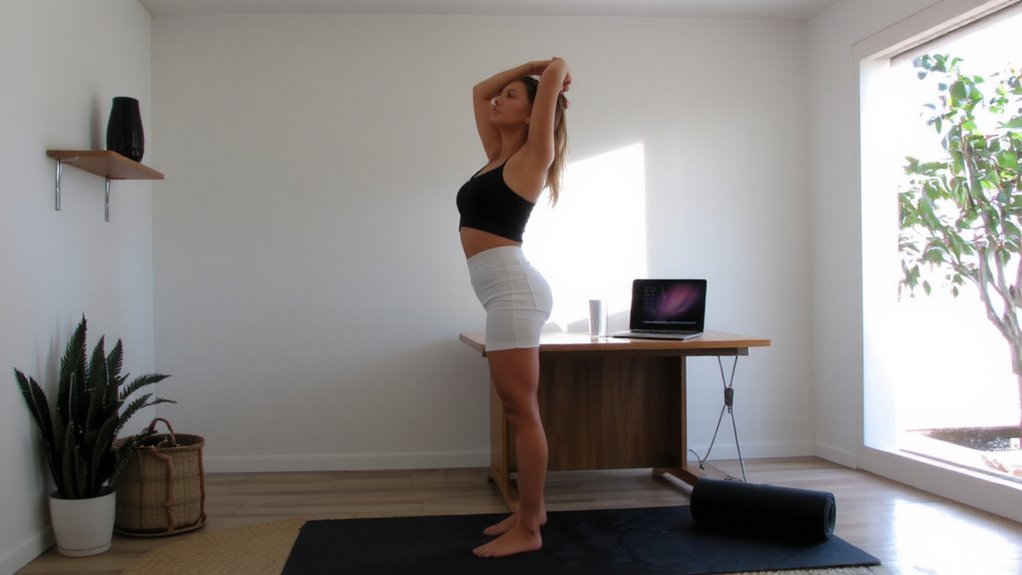
You already know long stretches of sitting mess with your focus and energy, but the real fix isn’t just about breaking stillness-it’s about upgrading your mental performance. Movement fuels cognitive enhancement and supports emotional regulation by increasing blood flow and balancing neurotransmitters. Even brief activity boosts oxygen to the brain, sharpening attention and problem-solving.
| Benefit | Mechanism | Real-World Impact |
|---|---|---|
| Sharper focus | Increased cerebral blood flow | Better task accuracy in 10+ min tests |
| Improved mood | Endorphin and serotonin release | Reduced self-reported stress in trials |
| Faster processing | Neural activation via aerobic movement | 12% improvement in reaction time studies |
| Emotional regulation | Lowered cortisol, balanced autonomic tone | Measurable reduction in emotional reactivity |
No special gear or office setup is needed-consistent, simple motion delivers results. But gains depend on timing; too long a delay between work blocks reduces benefits.
Simple Ways to Sneak Movement Into Your Workday
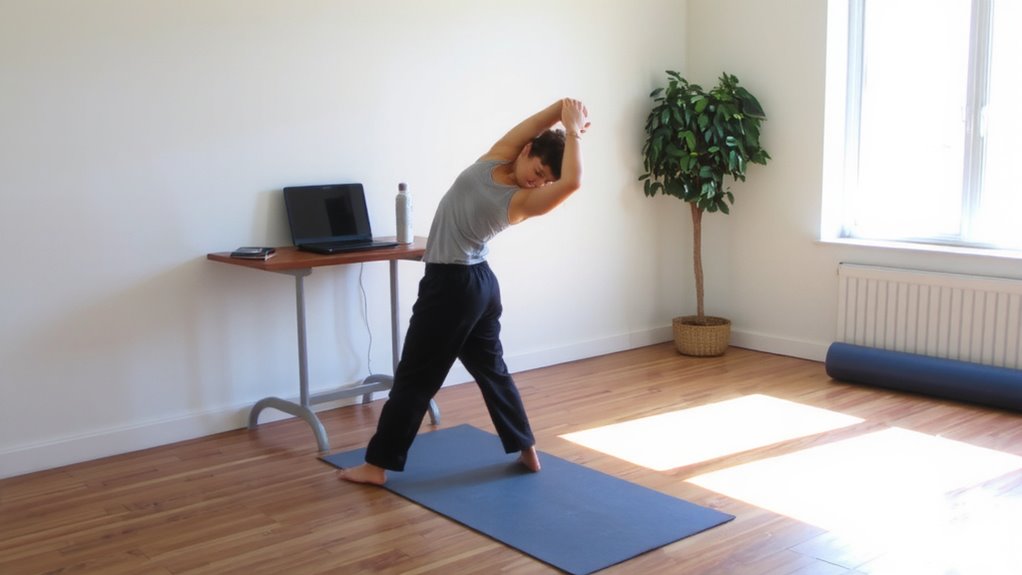
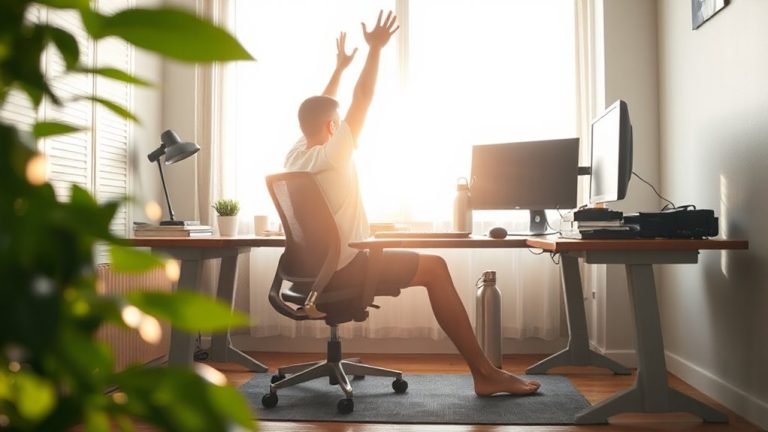
A well-timed stretch or quick walk around the house can do more than just relieve stiffness-it can reset your focus and stabilize your mood, especially when built into your workday intentionally. You can start by scheduling short stretch breaks every 90 minutes; even 2–3 minutes of shoulder rolls, neck tilts, or standing side bends help reduce tension. Try pairing calls with walking meetings whenever possible-audio-only meetings are ideal. Walking boosts circulation and creativity but only works if your space is safe and distraction-free. Treadmill use during calls is possible but risks distraction and requires a stable setup. These small efforts add up, especially when consistent. Just be realistic-poor footwear or cramped spaces undermine walking meetings, and overly long breaks may disrupt workflow. The key is practical, repeatable movement that fits your day, not perfect conditions or gear.
5 Desk-Friendly Exercises for Remote Workers
While your workspace might be compact, it’s still possible to incorporate effective exercises that don’t require leaving your desk or investing in bulky equipment-just a few targeted moves can improve circulation, reduce stiffness, and support long-term musculoskeletal health. Build stretch breaks and posture checks into your routine every hour to stay aligned and energized. These mini-sessions boost focus without disrupting workflow. Choosing the right ergonomic office chairs can further enhance comfort and support during prolonged sitting.
| Exercise | How-To |
|---|---|
| Neck Tilts | Gently tilt head side to side, 10 reps |
| Seated Spinal Twist | Rotate torso while seated, hold 15 sec |
| Wrist Circles | Roll wrists clockwise and counterclockwise |
| Ankle Pumps | Lift toes, then heels, 15 reps each |
| Shoulder Rolls | Roll shoulders forward and backward |
A chair with lumbar support helps, but isn’t essential. Consistency matters more than gear.
How Often to Move: And Why It Matters
Regularly breaking up prolonged sitting is nearly essential for maintaining both comfort and long-term health, especially when working remotely. Experts suggest a movement frequency of at least every 30 to 60 minutes to reduce muscle stiffness and circulation issues. Even small posture shifts-like standing, stretching, or walking briefly-can make a meaningful difference over time. These mini-breaks help reset your spine alignment and decrease strain on your neck and lower back. While sit-stand desks support posture shifts, they’re not required-a timely stretch or lap around your home works just as well. Don’t assume more movement is always better; excessive interruptions can disrupt focus. Aim for consistency, not intensity. There’s no universal fix, so adjust based on energy levels and task demands. The goal isn’t perfection but sustainable, routine movement that supports both productivity and well-being.
Smart Reminders That Fit Your Workday Flow
How do you actually remember to move when you’re deep in focus? Smart alarms and motion prompts can help-when set thoughtfully. Instead of random alerts, use apps or wearable devices that sync with your calendar to suggest breaks between meetings or after 50-minute work blocks. These smart alarms, like those in Apple Watch or Google Fit, track activity and deliver motion prompts based on inactivity, not just time. But be selective: over-alerting causes fatigue, and some systems demand setup time. Stick to tools with customizable intervals and silent vibrations to avoid disrupting flow. Real-world testing shows people respond best to gentle nudges-like a wrist tap or soft chime-rather than loud sounds. Also, make certain your tech integrates with your existing workflow; no reminder works if it clashes with your day. A well-timed prompt beats five intrusive ones.
How to Make Movement a Daily Habit (Without Trying)
Once you sync movement with existing routines, it sticks without constant effort-because habit beats willpower. You can build consistency by using habit stacking: pair movement with daily actions like brewing coffee or checking email. Stand and stretch while waiting, or do calf raises during phone calls. These micro routines add up without needing extra time. Start small-two-minute stretches or a quick walk around the house-and anchor them to existing habits, like after sending a key message or finishing a meeting. It works because it’s low-pressure and repeatable. But don’t expect dramatic results overnight; the benefit comes from daily repetition, not intensity. Avoid relying on gear like standing desks or resistance bands unless you’re sure they fit your space and routine-some products overpromise. Track progress with simple logs, not apps that nag. Real change comes from integration, not gadgets.
On a final note
You should take short movement breaks every 60–90 minutes to maintain focus and reduce stiffness. Research shows walking or stretching improves blood flow, boosting alertness by up to 15%. Simple habits-like calf raises or shoulder rolls-require no gear and fit tight schedules. Standing desks help but aren’t essential. Over-relying on reminders can disrupt deep work, so test intervals and adjust. Results vary by person, but consistency matters more than duration.