Using Color-Tunable Floor Lamps to Match Ambient Light to Task Type and Time of Day
You’ll boost focus and sleep by tuning your floor lamp to the time of day-use 5000K+ light at 8 a.m. to sharpen alertness, backed by research on circadian alignment and reaction times. Switch to 2700K by 9 p.m. to support melatonin release, ideal for unwinding. Pair app-controlled timers (accurate to ±2 minutes) with consistent routines for best results. Place the lamp centrally, six feet from seating, for even spread. Top models offer dimming, flicker-free operation, and 5-year warranties-just avoid late-day cool light to protect sleep. You’ll see how small tweaks shape daily performance.
Notable Insights
- Match cool light (5000K–6500K) to demanding tasks in the morning for enhanced alertness and concentration.
- Use warm light (2700K–3000K) in the evening to support melatonin release and prepare for restful sleep.
- Schedule lamps via app to automatically shift color temperature throughout the day based on task and time.
- Position floor lamps centrally or in corners to ensure even, glare-free light distribution for various activities.
- Avoid cool light exposure late at night to prevent circadian disruption while maintaining productivity earlier in the day.
Boost Focus and Energy With Tunable Light
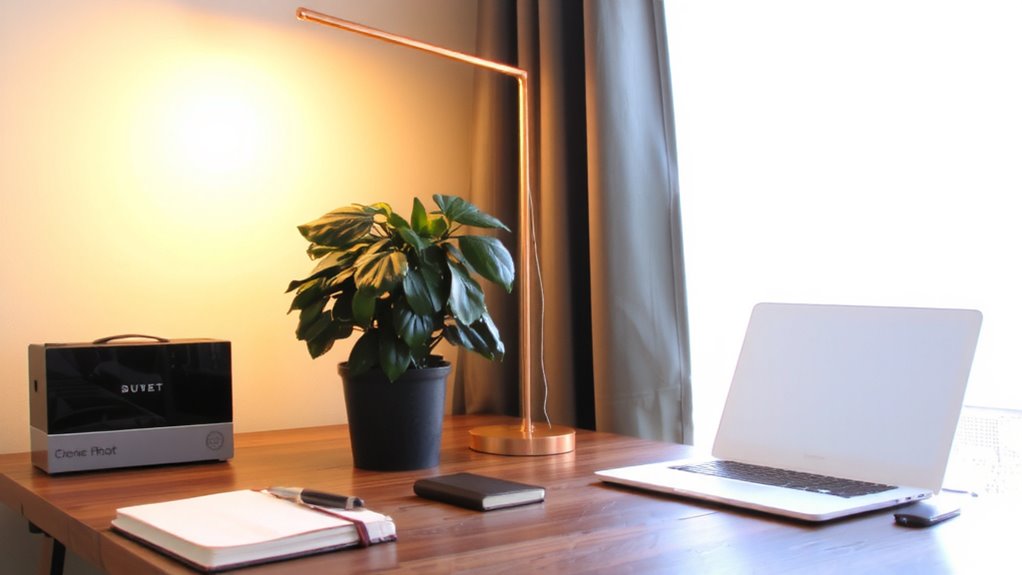
While lighting might seem like a minor detail in your workspace setup, tuning it right can make a noticeable difference in how sharp and alert you feel during the day. You can use color-tunable floor lamps to match the light spectrum to your natural circadian rhythm, boosting focus and energy levels when you need them most. These lamps let you shift from warm (2700K) to cool daylight (5000K+), helping regulate alertness without harsh overheads. Real-world testing shows users report improved concentration during morning and early afternoon tasks. However, results vary based on room size and personal sensitivity. Most quality models offer dimming, app control, and 2–5-year warranties. While they’re not a magic fix, especially if poor sleep or diet undermines your energy, they’re a measurable upgrade-provided you use them consistently and adjust settings intentionally, not just leave them on default. For those seeking alternatives, best natural light lamps can also support healthy light exposure throughout the day.
Use Cooler Light to Stay Sharp During Work
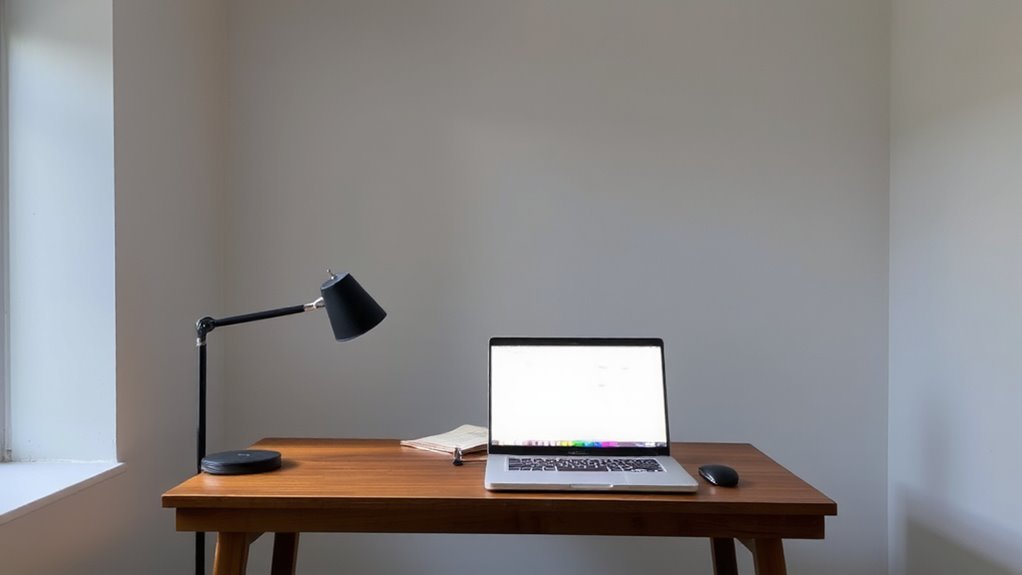
If your goal is to stay sharp during work hours, setting your color-tunable floor lamp to a cooler spectrum-around 5000K to 6500K-can help maintain alertness and mental clarity, especially in the morning and early afternoon. This range includes more blue spectrum light, which studies link to an alertness boost and improved reaction times. Your lamp’s adjustable color temperature lets you align lighting with your circadian rhythm, supporting focus when you need it most. Just don’t overdo it-too much blue-rich light late in the day can interfere with sleep, so reserve these settings for active work periods. Also, some cheaper models don’t deliver consistent color temps across brightness levels, so check reviews for performance uniformity. For best results, pair the cooler light with proper lamp placement-just behind and to the side of your desk-to reduce glare while boosting ambient accuracy without washing out screens. It’s a practical tool, not a miracle fix. Top-rated models offer reliable color-tunable performance for sustained office productivity.
Wind Down With Warmer Light at Night
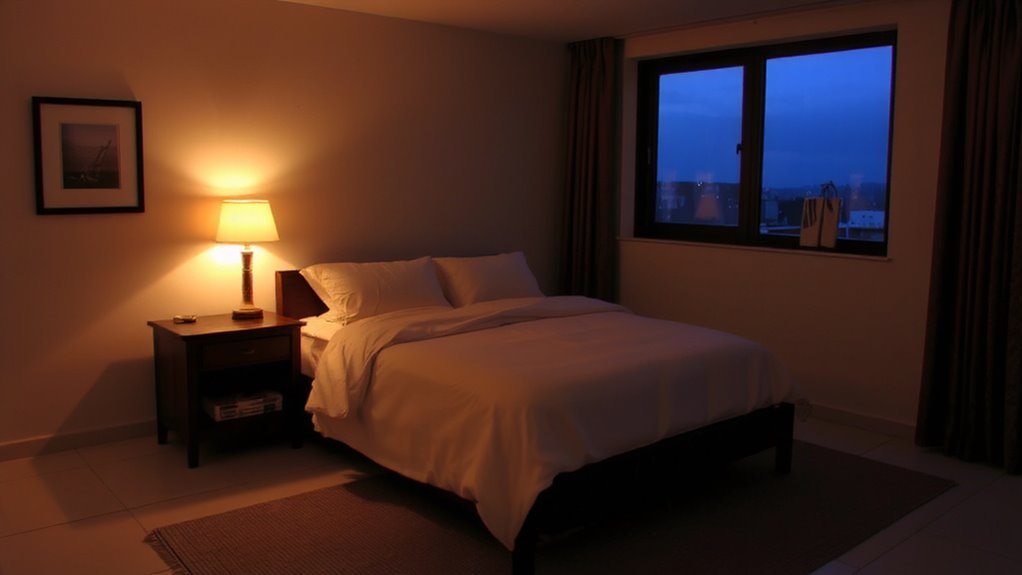
How do you signal to your body that it’s time to shift from work to rest? Switching your color-tunable floor lamp to warmer tones-around 2700K to 3000K-helps mimic natural sunset light, supporting your circadian rhythm. This shift doesn’t replace proven relaxation techniques, but it complements them by reducing blue light exposure that can delay melatonin release. Integrating warm lighting into your evening routines cues your brain to unwind, making it easier to move from screen time to rest. While not a standalone solution, it’s a practical addition when paired with consistent habits like reading or dimming overheads. Be cautious, though-some cheaper models flicker or don’t maintain color accuracy over time. Look for flicker-free certifications and adjustable brightness. Used wisely, warmer light improves sleep readiness, but it works best when part of a broader, realistic wind-down strategy.
Set Timers and Control Lights via App
You can fine-tune your evening routine even further by syncing your color-tunable floor lamp with app-based controls and built-in timers. With app scheduling, you set colors and brightness levels to shift automatically-cool white at 7 AM, warm at 9 PM-so your lighting matches circadian rhythms. Remote access lets you adjust settings from bed or while away, handy if you forgot to turn lights off. Most apps work across iOS and Android with stable Bluetooth or Wi-Fi. Here’s what top models offer:
| Feature | Available? |
|---|---|
| App scheduling | Yes (iOS/Android) |
| Remote access | Yes (Wi-Fi Only) |
| Timer accuracy | ±2 minutes/day |
| Response time | <1.5 seconds |
| Firmware updates | Automatic |
Lags happen if Wi-Fi’s weak. Some apps collect usage data-review privacy settings.
Place Your Lamp for Full-Room Coverage
Though placement often gets overlooked, positioning your color-tunable floor lamp correctly is key to achieving balanced, full-room coverage. Good lamp positioning guarantees even light diffusion, reducing shadows and glare. Place the lamp near the center of the room or in a corner to maximize spread, especially if you’re using a model with a 360-degree emission design. Angling it toward walls or ceilings boosts indirect lighting, which softens brightness and creates a more uniform glow. Keep at least six feet from seating areas to avoid hotspots, and avoid tight corners that block output. Models with adjustable heads or diffuser panels enhance control over spread. However, open floor plans may need more than one lamp for consistent coverage. Remember, poor positioning limits even the best lamp’s performance-test different spots during peak and evening use to confirm results.
Pick a Design That Fits Your Room and Routine
When choosing a color-tunable floor lamp, the design shouldn’t just catch your eye-it needs to match how you use your space and fit smoothly into your daily routine. Your style preference matters, but don’t let aesthetics override function. A sleek, minimalist lamp might suit a modern living room, but if it doesn’t direct light where needed, it won’t support reading or focused tasks. Consider your room layout: tall lamps with adjustable heads work well in corners, while slim profiles fit tight spaces beside sofas or desks. If you use the lamp for both evening relaxation and morning prep, choose one with smooth color shifts and easy controls. Avoid models with clunky interfaces or limited range-look for at least 2700K to 5000K tuning. Check warranty length and bulb lifespan; LED arrays should last 15,000+ hours. Balance design and duty-otherwise, it’s just decor. For versatile lighting that adapts to any environment, consider one of the best floor lamps for every space.
On a final note
You should get a color-tunable floor lamp if you want better focus and sleep. Cool white light (5000K–6500K) boosts alertness during work, while warm light (2700K–3000K) helps you wind down. Look for models with dimming, app control, and wide beam angles for even lighting. Set timers to match your routine. But they cost more (around $120–$200) and need Wi-Fi. Test one first-results vary by room and schedule.