Compression Relief Exercises: A Comprehensive Guide to Reducing Nerve Impingement Caused by Prolonged Sitting While Working Remotely
You’re compressing your nerves every hour you sit, especially with poor posture or an ill-fitted chair. Relieve pressure fast with seated spinal twists, forward folds, and neck side bends every 60 minutes. Strengthen your core and hips using bird-dogs and clamshells-3 sets of 10, every other day-to support spinal alignment. Pair this with a properly adjusted workstation: lumbar-supported chair, elbows at 90°, and screen at eye level. Movement variety matters more than gear-consistent, small changes cut nerve risk far better than any single fix. There’s a smarter way to stay pain-free, and it starts with what you do between tasks.
Notable Insights
- Take a 5-minute movement break every hour to reduce spinal nerve compression and reset posture.
- Perform seated spinal twists and forward folds to relieve mid and lower back nerve pressure.
- Stretch wrists and ankles regularly to prevent median and tibial nerve irritation from prolonged typing and sitting.
- Strengthen core and hip muscles with bird-dogs and clamshells to support spinal alignment and prevent nerve pinching.
- Adjust chair, desk, and screen height to maintain neutral posture and minimize nerve compression during remote work.
Why Sitting All Day Compresses Nerves (And What to Do About It)
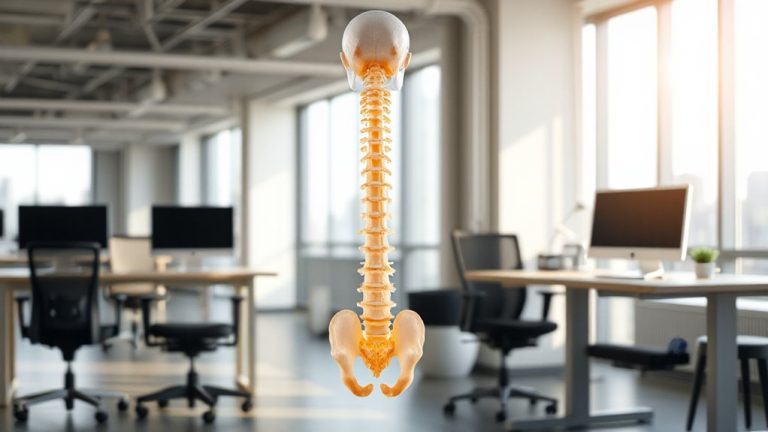
Ever wonder why your back aches or your legs go numb after hours at your desk? Sitting all day compresses nerves, especially when your spinal alignment is off. Poor posture increases pressure on your spine, which can lead to nerve inflammation-tingling, pain, or weakness in your back, hips, or legs. Even an ergonomic chair won’t fix this if you don’t move regularly. You need to interrupt long sits every 30–60 minutes to reset spinal alignment and reduce nerve load. Standing helps, but only if your workstation height allows neutral positioning-elbows at 90°, screen at eye level. Sit-stand desks can help, though models under $300 often lack stability or smooth height adjustment. Compression isn’t inevitable, but gear alone won’t stop it. Movement does. Consistent posture checks and body awareness are your best tools. No gadget replaces that.
5-Minute Stretches to Instantly Relieve Nerve Pressure
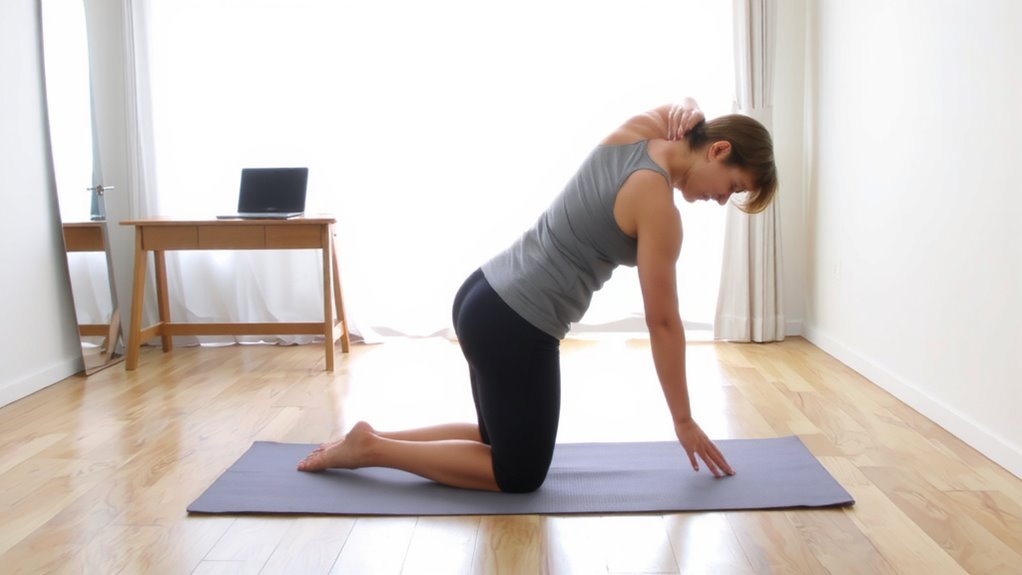
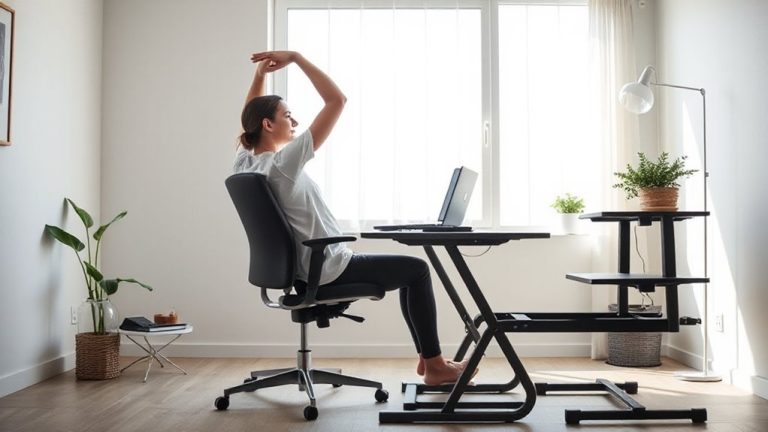
You can cut nerve pressure fast with just a few targeted stretches, even in tight office spaces. These moves boost blood flow and loosen tight tissues that compress nerves. Hold each for 30 seconds, and repeat hourly if needed. Below are five key stretches to integrate seamlessly into your remote work routine:
| Stretch | Benefit |
|---|---|
| Neck side bend | Releases cervical nerve tension |
| Seated spinal twist | Eases mid-back compression |
| Wrist flexion | Reduces median nerve irritation |
| Forward fold | Decompresses lower spine |
| Ankle circles | Prevents tibial nerve pinching |
Wrist flexion improves forearm mobility, especially if typing all day. Ankle circles combat stiffness from flat-footed sitting, aiding circulation. These aren’t cures for chronic pain, but they offer real, measurable relief when done consistently. Some users report tingling reduction within minutes. Results vary based on posture and desk setup. No equipment is required, minimizing barriers-but improper form can worsen strain. Move slowly, avoid bouncing, and stop if pain spikes.
Strengthen Your Core and Hips to Prevent Nerve Pain
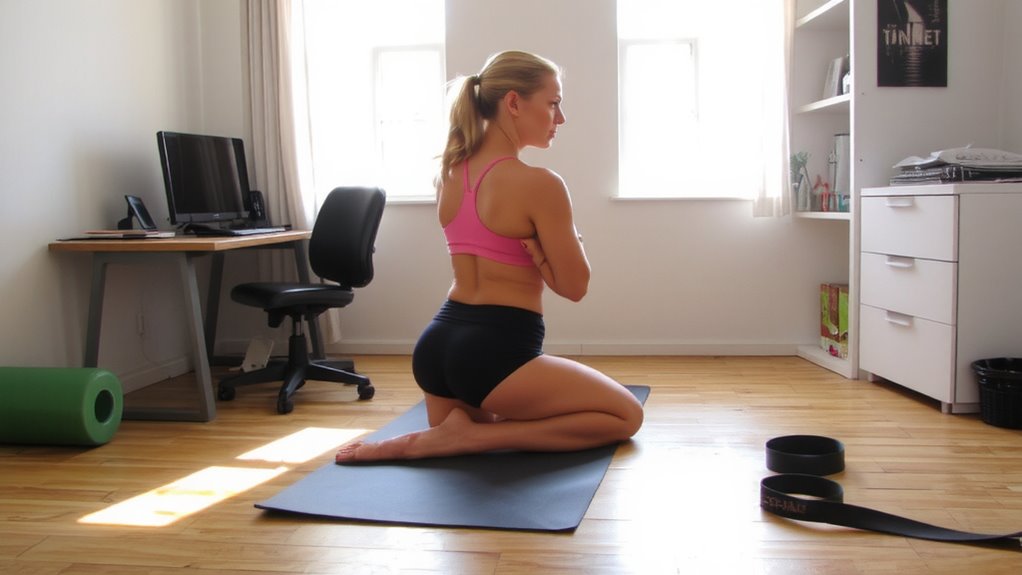
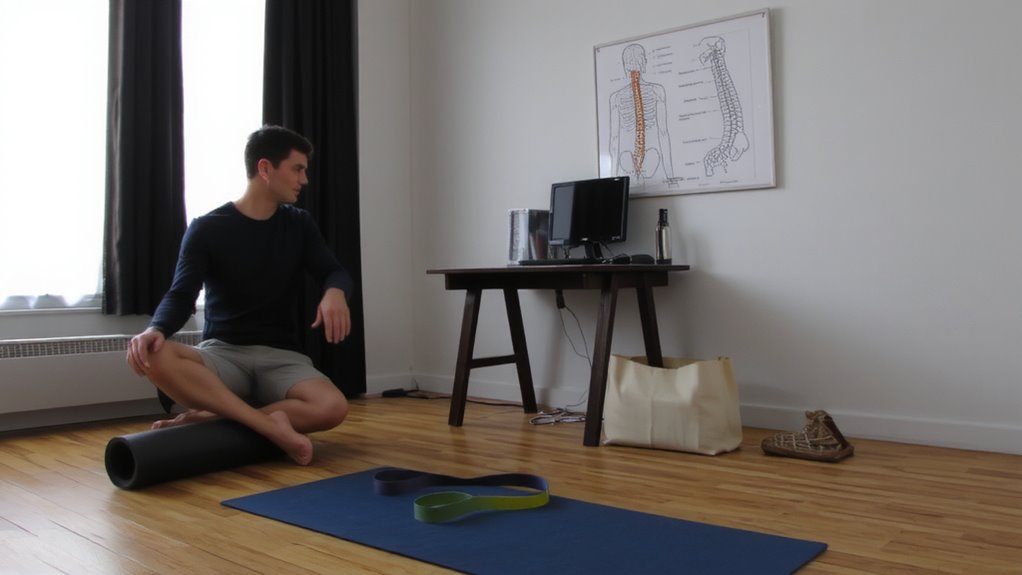
A strong core and stable hips aren’t just for athletes-they’re essential for keeping your spine aligned and nerves free from compression during long workdays. When your core muscles support your lower back, you maintain proper pelvic alignment, reducing strain on the sciatic nerve. Hip stability prevents excessive internal rotation that can tilt the pelvis and pinch nerves over time. Exercises like bird-dogs, dead bugs, and clamshells build this foundational strength without needing equipment. Do them consistently-three sets of 10 reps each, every other day-for best results. While resistance bands add light tension, they’re optional. You won’t see changes overnight, and overdoing it can cause soreness or imbalance. Focus on form, not speed or reps. Your workstation setup matters, but no ergonomic chair fixes weak musculature. Strengthening isn’t a quick fix, but it’s a proven way to reduce long-term nerve pain risks tied to sitting.
Fix Your Workspace Posture to Stop Nerve Compression
Good posture at your desk isn’t just about sitting up straight-it’s about setting up your workspace so your body stays aligned without constant effort. An ergonomic chair helps, but only if you adjust it right. Pair it with the correct desk height, and you’ll reduce pressure on your spine and nerves all day. For those working remotely, investing in one of the top ergonomic chairs can make a significant difference in long-term comfort and nerve health.
| Feature | Why It Matters |
|---|---|
| Ergonomic chair with lumbar support | Supports your lower back, but only if adjusted to your spine’s curve |
| Desk height at elbow level (about 28–30 inches) | Keeps wrists neutral, reducing compression risk in arms and hands |
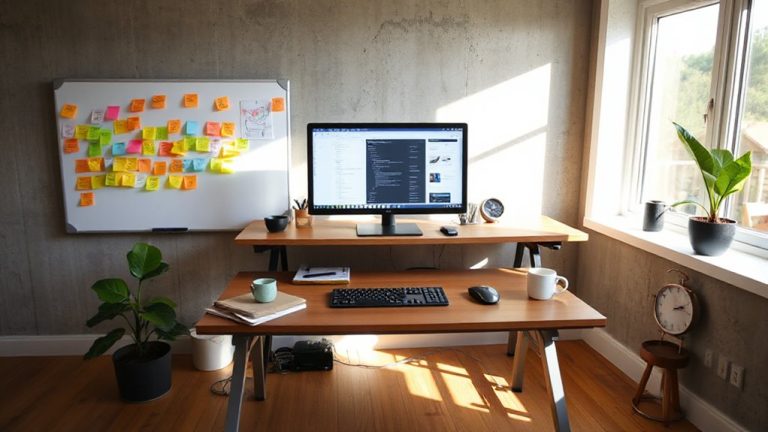
You don’t need the most expensive gear-just gear that fits *you*. Measure your setup: elbows at 90°, feet flat, screen at eye level. Even the best chair won’t fix a desk that’s too high or low.
Move Smarter: A Daily Routine to Stay Pain-Free at Home
While a well-adjusted workspace lays the foundation, staying pain-free at home also depends on how you move throughout the day-because even the best ergonomic setup can’t compensate for hours of stillness. You should take a 5-minute movement break every hour: stretch your neck, roll your shoulders, and walk around. Pair this with mindful breathing to reduce muscle tension and sharpen focus. Use ergonomic lighting to maintain circadian rhythm and reduce eye strain, which indirectly supports better posture by keeping you alert. Stand during calls, squat while reading, or use a floor seat for part of your day to vary spinal load. These micro-movements matter more than perfect gear. Even top-rated desks or chairs won’t fix immobility. Movement variety-not intensity-is the key. Results aren’t instant, and consistency beats extreme routines. Trade-offs exist: frequent shifting may slow short-term output. Still, long-term comfort wins.
On a final note
You should fix your setup now-poor posture compresses nerves fast. Use a height-adjustable desk (ideally 22–28 inches high) paired with an ergonomic chair (look for 3–5 year warranties). Test changes over 2 weeks. Movement beats gear: stretch hourly, strengthen core muscles twice weekly. No single product eliminates risk-combining proper alignment, consistent movement, and proven equipment delivers real relief, but only if you stick with it daily. Results vary by body type and discipline.