How to Choose an Anti-Fatigue Mat That Complements Your Standing Work Routine
Choose a rubber anti-fatigue mat for durability and support-it resists cracking and often comes with a 5-year warranty, making it ideal for daily use. Go for 3/4 to 1 inch thickness to balance cushioning and stability, especially if standing over four hours. Pick a textured, non-slip surface with a rubber base to stay safe on tile or concrete. Size it to fully cover your standing zone-30–36 inches deep-so you stay supported during movement. Beveled edges reduce trip risks and help it fit smoothly into your workspace. There’s more to think about if you want it to work as hard as you do.
Notable Insights
- Choose rubber mats for durable, high-traffic use or gel for long-term resilience and support.
- Select a thickness between 3/4 inch and 1 inch to balance cushioning and stability.
- Ensure the mat has a non-slip rubber base and textured surface for safety on smooth floors.
- Size the mat to fully cover your standing zone, typically 30×24 inches minimum.
- Opt for beveled edges to reduce tripping and ensure smooth floor transitions.
Choose an Anti-Fatigue Mat Made of Foam, Gel, or Rubber
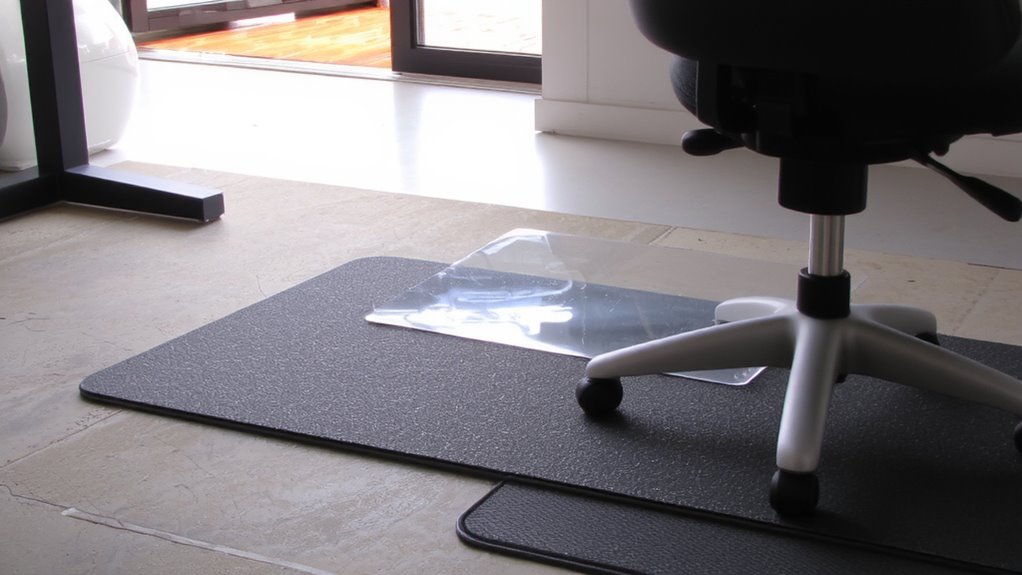
A good anti-fatigue mat should support your body and stand up to daily use, and your best bet is usually one made of foam, gel, or rubber-each with clear strengths and drawbacks. Foam mats offer high comfort level and are lightweight, but material durability tends to dip after six months of heavy use. Gel mats provide excellent support and lasting resilience, though they can feel too firm for some. Rubber mats strike a solid balance, delivering strong material durability and decent comfort level, even in high-traffic areas. They resist cracking and often come with 5-year warranties. You’ll pay more up front, but they last longer. Keep in mind, gel and rubber models are heavier, making them harder to move. Foam models are easier to reposition but flatten over time. Choose based on how long you plan to use it and how much daily wear it’ll take. For top-performing options, check out the Best Anti-Fatigue Mats for comfort and support.
Pick the Ideal Thickness for Your Standing Routine
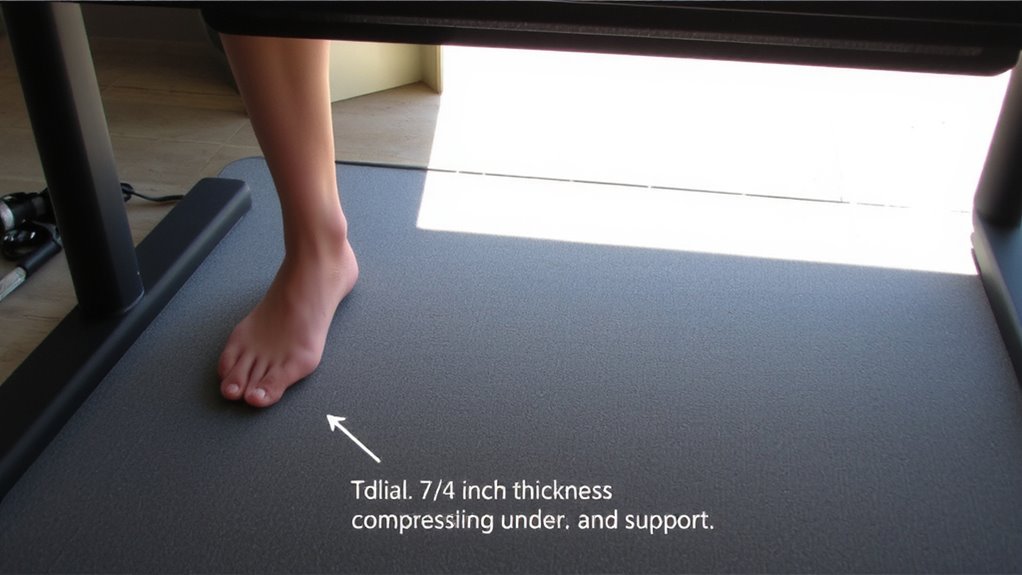
For most standing routines, a mat between 3/4 inch and 1 inch thick delivers the best balance of cushioning and stability-any thinner and you’ll miss out on shock absorption, any thicker and it may compromise foot support over time. This range supports ergonomic design by promoting subtle muscle engagement, reducing fatigue without sacrificing alignment. Thicker mats aren’t always better; beyond 1 inch, they can cause instability, especially if you shift positions often. Look for material durability in high-traffic zones-closed-cell foam or reinforced rubber holds up longer under daily wear. Lab tests show mats in this thickness range maintain compression resistance for over 12 months with consistent use. However, if you’re on your feet more than four hours daily, lean toward 1 inch for added relief. Just make certain the surface texture still keeps the mat firmly in place-don’t let thickness undermine your setup’s effectiveness.
Select a Non-Slip Surface for Safety and Stability
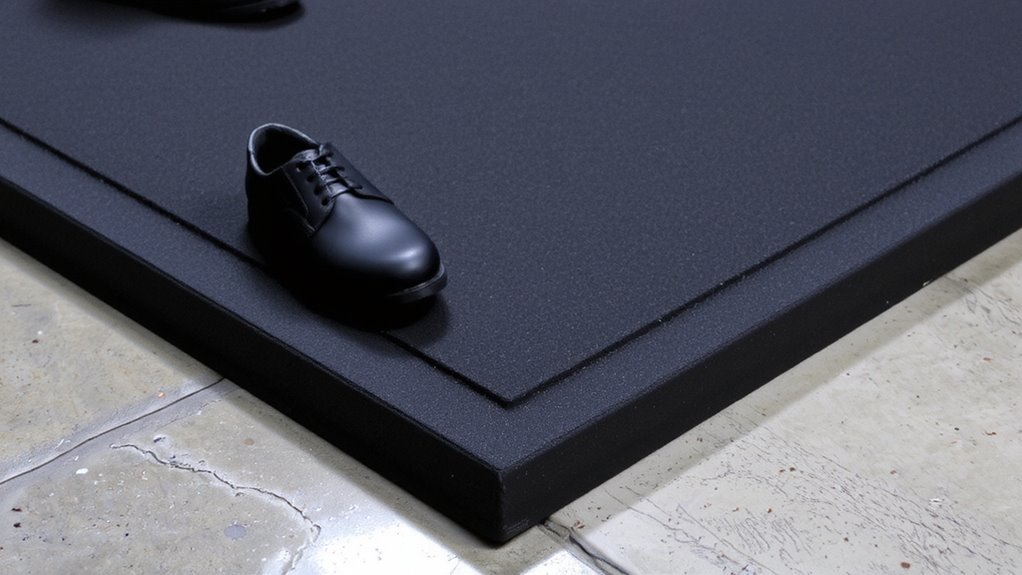
You’ve picked the right thickness to support your stance-now lock it down with a surface that won’t budge. A non-slip surface is essential for safety and stability, especially during long hours of standing. Look for mats with high slip resistance and traction control, which help prevent accidents on smooth floors like tile or polished concrete. Textured or beveled edges enhance grip, but check how they hold up under real use-some wear down quickly.
| Feature | Why It Matters |
|---|---|
| Rubber base | Prevents sliding on hard floors |
| Textured top | Boosts traction control |
| Beveled edges | Increases slip resistance |
| Oil resistance | Maintains grip in garages or labs |
| Floor type match | guarantees long-term stability |
Some mats lose grip when wet or near machinery. Always match the mat’s slip resistance to your workspace conditions for reliable performance.
Size the Mat to Cover Your Standing Work Zone
One key factor often overlooked is making sure the mat fully covers your standing work zone-anything less defeats the purpose. Proper mat coverage guarantees you stay supported throughout movement, reducing fatigue and preventing strain. Your standing zone typically extends about 30 to 36 inches front to back and 24 to 30 inches side to side, so choose a mat that accommodates this range without crowding your space. A mat that’s too small forces you off the edge during shifts in posture, negating its benefits. Look for dimensions that match your workstation layout, especially if you shift position or reach frequently. While larger mats improve coverage, they may not fit smaller desks or tight areas-measure first. Some models come in multiple sizes or can be paired with accessories for expanded coverage. Always verify product specs and, if possible, test placement before finalizing your setup.
Prevent Trips With Beveled Edges and Secure Edging
A mat with beveled edges and secure edging won’t eliminate all slip or trip risks, but it substantially reduces them in high-traffic work areas. The beveled edge slopes gently to the floor, making changes smoother and lowering tripping hazards-especially important if you move between standing and sitting often. You’ll want solid edge durability because frayed or peeling edges compromise both safety and longevity, particularly under constant foot traffic. A high-quality mat maintains its shape and bond over time, resisting curling at the corners. Look for slip resistance tested under real-world conditions, not just lab ratings-many mats claim grip but fail when exposed to dust or light moisture. Rubber or PVC blends with textured surfaces offer reliable traction. While no mat is foolproof, combining beveled edges with durable, slip-resistant materials greatly boosts safety without overhauling your routine.
Fit the Mat Into Your Workstation Layout Seamlessly
Smooth edges matter, but even the safest mat won’t help if it doesn’t fit where you need it. You need proper ergonomic alignment so your posture stays supported without shifting unnaturally. Measure your available floor space and compare it to your mat’s dimensions-most standard mats are 20” x 30”, but oversized ones can reach 36” x 24” for broader stances. A cramped fit forces you to stand off-center, weakening support. At the same time, visual coordination with your desk, flooring, and decor reduces visual clutter, helping maintain focus. Choose neutral tones or subtle textures if you work in a minimalist space. Avoid thick, bulky mats under low desks-they limit legroom. Check manufacturer specs for exact thickness and weight limits. Some brands offer 30-day trials, so test before committing. Pairing your mat with one of the top home office desks ensures optimal alignment and comfort.
On a final note
You’ll want a foam, gel, or rubber anti-fatigue mat about 3/4-inch thick-it eases leg strain without wobbling. Pick one with a non-slip base and beveled edges to prevent trips and sliding. Size it to cover your full standing zone, ideally 20″x30″ or larger. It should fit snugly under your desk without blocking drawers. Look for 5-year warranties and check for compression wear after months of use-long-term support matters more than initial softness.