Designing a Sit-Stand Workflow That Supports Deep Focus and Creative Tasks
You’ll stay sharper by switching between sitting and standing every 30–90 minutes using a height-adjustable desk with at least 12 inches of travel and a 30–48 inch range. Sit for deep work like coding, stand for creative bursts under 15 minutes. Choose a stable, steel-framed desk with dual motors (15,000-cycle rating) and a 5-year motor warranty to guarantee smooth, wobble-free shifts. Avoid fatigue with timed breaks, and position your monitor correctly each time-there’s more to optimizing your setup than just the desk.
Notable Insights
- Alternate between sitting and standing every 30–45 minutes to maintain mental stamina and focus.
- Use seated posture for deep-focus tasks like coding or writing to enhance accuracy and concentration.
- Stand during brainstorming sessions to boost creativity, alertness, and cognitive performance.
- Choose a stable, height-adjustable desk with smooth electric lifting and minimal wobble for seamless transitions.
- Take 3–5 minute standing breaks with light movement every 60–90 minutes to reduce mental fatigue and improve circulation.
Stop Sitting All Day to Protect Your Focus
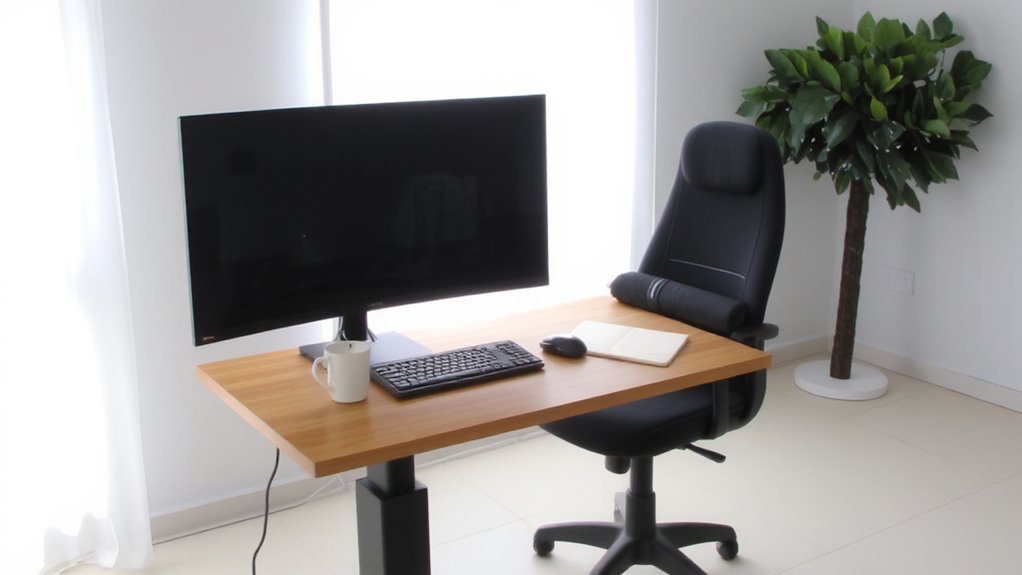
While sitting might feel like the default work position, staying in your chair all day comes at a cost to your focus-evidence shows prolonged sitting slows mental clarity and increases fatigue after just 90 minutes. You’ll do better by scheduling standing breaks every 60–90 minutes, even just 3–5 minutes at a time. These micro-interruptions support focus restoration by boosting blood flow and reducing mental fog. A basic adjustable desk converter or height-adjustable desk lets you shift smoothly, but stability and range matter-check for at least 12 inches of vertical adjustment and minimal wobble under load. Standing too long risks discomfort, so pair shifts with supportive footwear or an anti-fatigue mat. There’s no one-size-fits-all rhythm, so track your energy for a week. Accuracy beats convenience: use a timer, not guesswork. For seamless transitions between sit-stand positions, ensure your setup includes reliable USB-C to USB-C cables to maintain power and data connections without interruption.
Use Standing to Boost Mental Clarity and Creativity
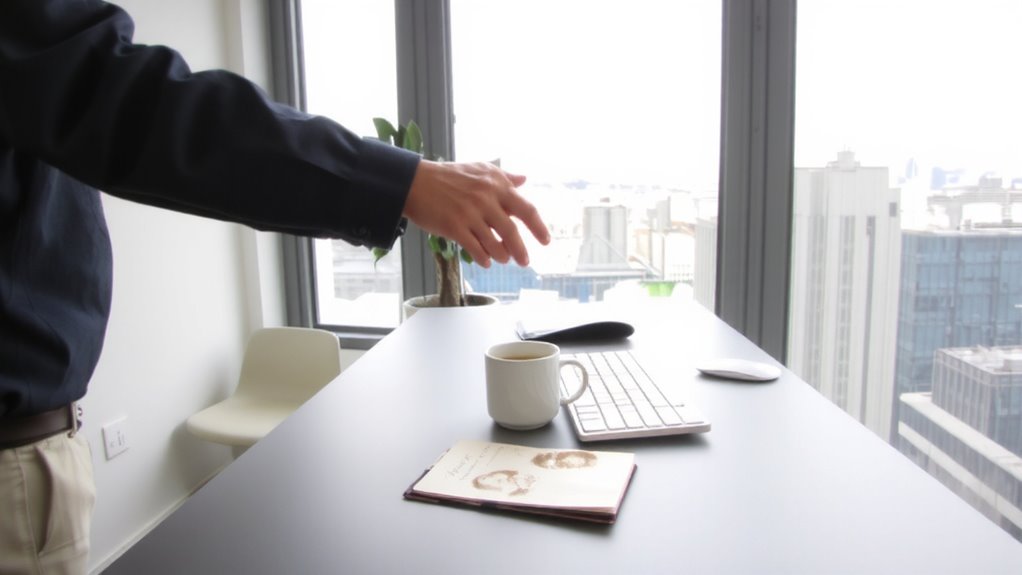
Standing isn’t just a break from your chair-it’s a tool to sharpen mental clarity and spark fresh thinking when used right. You’ll often notice a boost in brainstorm energy after just five minutes upright, especially during midday slumps. Light movement while standing-shifting weight, pacing slightly-can create subtle movement inspiration that helps idea flow without distraction. Studies show cognitive performance on creative tasks improves modestly in short standing sessions, peaking around 10–15 minutes. But don’t stand too long-over 20 minutes can reduce focus due to fatigue. A height-adjustable desk with a stable, wobble-free mechanism (look for steel frame, 30–48″ range) gives reliable shifts. Pair it with an anti-fatigue mat for comfort. Results vary by person, so test for yourself in 5-day blocks. Standing won’t replace deep focus, but timed right, it’s a simple lever for sharper, more adaptive thinking. For added comfort and mobility, consider a portable standing desk stool that supports dynamic posture changes throughout the day.
Match Your Posture to Your Task Type
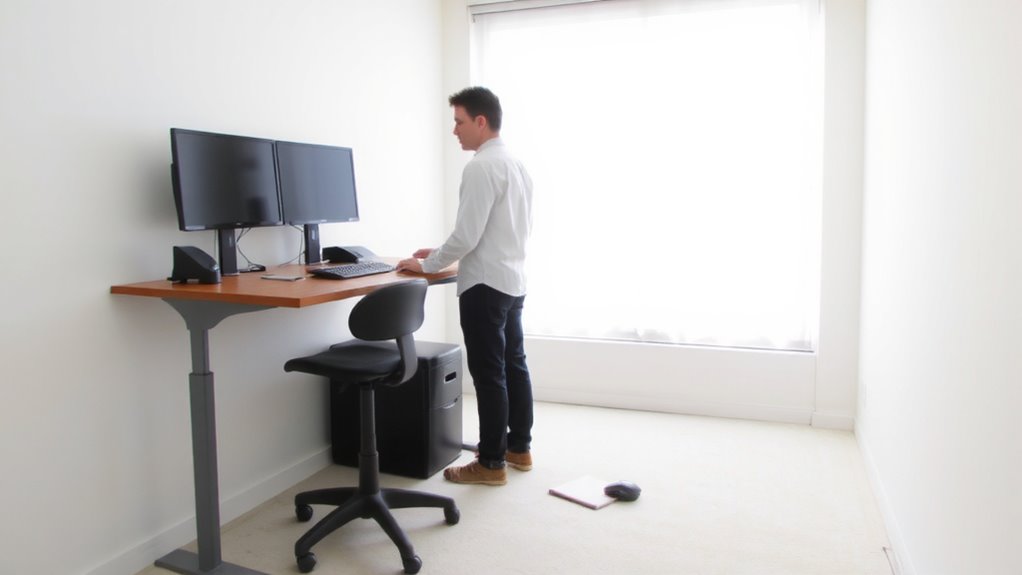
If you’re tackling a task that demands steady focus or precision, sitting with your back supported and wrists at a 90-degree angle on a well-adjusted desk will likely serve you better than standing. Posture matching boosts both comfort and performance-aligning your body position with your work type is key. For deep cognitive work, task alignment means minimizing physical strain so your mind stays sharp. Standing isn’t always better; it can reduce fine motor control over time. A high-quality adjustable desk ensures smooth transitions between postures and supports long-term ergonomic health.
| Task Type | Recommended Posture | Rationale |
|---|---|---|
| Writing/Coding | Seated | Supports sustained focus |
| Brainstorming | Standing | Encourages movement, alertness |
| Data Entry | Seated | Enhances accuracy, reduces fatigue |
| Creative Sketching | Optional standing | Depends on tool use and duration |
Alternate wisely-prolonged static postures, even “ideal” ones, still carry risks.
Build a Sit-Stand Workflow for Peak Focus
When you’re aiming for peak focus, pairing a sit-stand desk with intentional movement patterns can make a real difference in mental clarity and stamina-provided you use it right. Alternate between sitting and standing every 30–45 minutes to sustain energy without burning out. Use timed movement breaks to stretch or walk briefly, resetting your attention. These short shifts prevent fatigue better than long static sessions. Pair changes with simple posture cues-like adjusting monitor height or rolling your shoulders-to reinforce proper alignment and reduce strain. Avoid standing too long; research shows focus dips after 60 minutes upright. A reliable desk with smooth height adjustment (electric dual-motor models tested to 15,000 cycles) supports consistency. But remember: the desk isn’t magic. Without deliberate timing and awareness, you’ll miss the benefits. Build the habit first, then refine with tools.
Set Up Your Desk to Switch Effortlessly
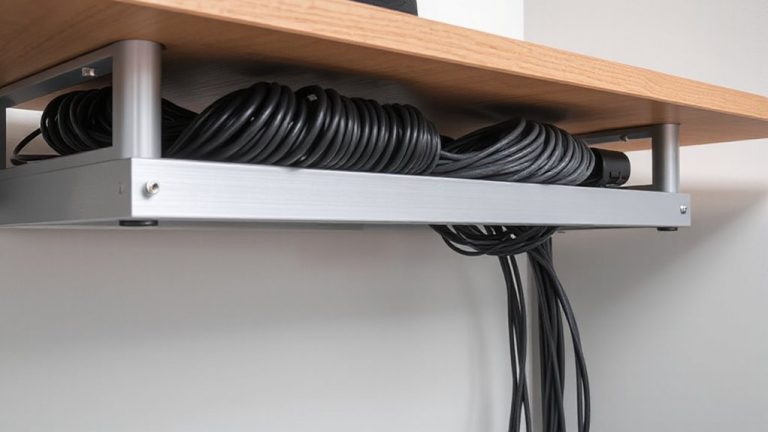
A sit-stand desk that moves smoothly and holds steady makes all the difference when you’re switching postures throughout the day. You need reliable desk ergonomics, starting with a stable base and a motorized lift system tested for at least 15,000 cycles. Look for a desktop with rounded edges and at least 48 inches wide to support monitor, keyboard, and mouse in both sitting and standing positions. Good cable management is essential-use clip-on sleeves or under-desk trays to keep cords taut and out of the way, preventing snagging during height changes. Avoid models with wobble beyond 1/8 inch at standing height, as instability disrupts focus. Cheaper units often sacrifice durability for price, so check warranty: 5 years minimum for motors. Balance performance with long-term comfort, not just features.
Fix These Focus-Killing Sit-Stand Mistakes
Why do you still feel drained after switching between sitting and standing? Because even with an adjustable desk, small missteps can sabotage your focus. Poor footwear turns standing sessions into fatigue traps, while Inconsistent lighting strains your eyes and disrupts rhythm. Below are common mistakes and their fixes:
| Mistake | Effect on Focus | Solution |
|---|---|---|
| Poor footwear | Foot fatigue in 15 mins | Wear supportive shoes or use an anti-fatigue mat |
| Inconsistent lighting | Eye strain, headaches | Use steady, diffuse overhead + task lighting |
| Standing too long | Mental fatigue | Limit to 30-min blocks |
| Static monitor height | Neck strain | Align top of screen at eye level |
| No shift routine | Disrupted flow | Set visual cues or timers |
Adjust wisely-small tweaks make focus sustainable, but overcorrection backfires.
Use These Tools to Sustain Your Focus Workflow
You’ve already fixed the common sit-stand mistakes-now it’s time to build a reliable system that keeps your focus sharp throughout the day. Sync your task rhythm with your body’s natural energy cycles by using a height-adjustable desk with programmable presets-models like the Uplift V2 or Fully Jarvis let you switch stances in seconds, reducing friction between deep work and movement. Pair it with a footrest or anti-fatigue mat to ease leg strain during long standing intervals. A simple timer app, such as Focus@Will or built-in Pomodoro tools, helps maintain rhythm without guesswork. But don’t automate everything-over-reliance on gadgets can disrupt focus if alerts become distractions. Test setups over two weeks, noting fatigue and concentration shifts. Most warranties cover 5–7 years, so durability isn’t usually an issue, but comfort varies by build and shoe choice. Balance tech use with awareness.
On a final note
You should try a sit-stand setup-it can sharpen focus and boost creativity when used right. Alternate postures every 30–60 minutes, using an adjustable desk with at least a 24″ height range and solid stability at standing height. Pair it with an anti-fatigue mat and proper monitor alignment. But don’t overdo standing; it can cause leg fatigue or lower back strain. Success depends on consistent, mindful switching-not the gear.