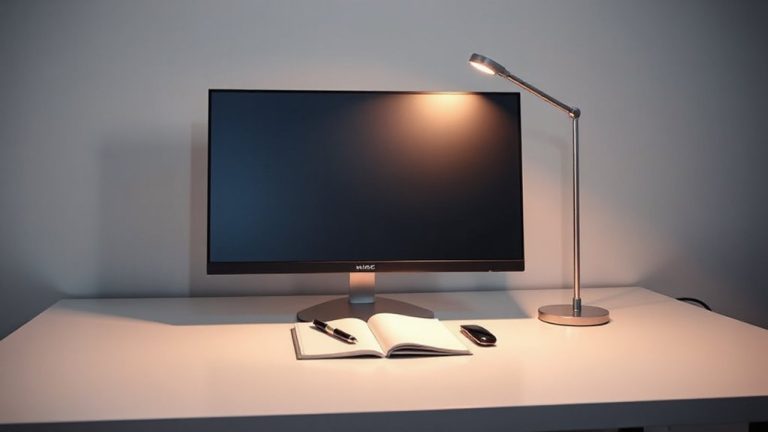
Installing Task Lighting With Magnetic Mounts for Flexible Positioning on Metal Surfaces
Install magnetic task lights on clean, unpainted steel surfaces using models with neodymium magnets rated for at least 5 lbs to guarantee a secure hold. Position them where light direction helps your task, using adjustable goosenecks or swivels for precision. Avoid stainless steel or high-vibration spots-they’ll weaken grip. These lights outperform clamp or adhesive types on metal, offering instant repositioning and stability under real-world conditions. You’ll see how small adjustments can make a big difference in performance.
Notable Insights
- Clean the metal surface thoroughly to ensure strong magnetic adhesion and prevent loosening over time.
- Use lights with neodymium magnets rated for at least 5 lbs to secure reliable mounting on steel surfaces.
- Position the light firmly on ferrous metal, avoiding painted, rusted, or stainless steel surfaces for optimal hold.
- Take advantage of 360-degree swivel and gooseneck flexibility to direct light precisely where needed.
- Test the mount weekly and reposition as needed, especially in high-vibration environments to maintain stability.
Install Magnetic Task Lights in 3 Steps
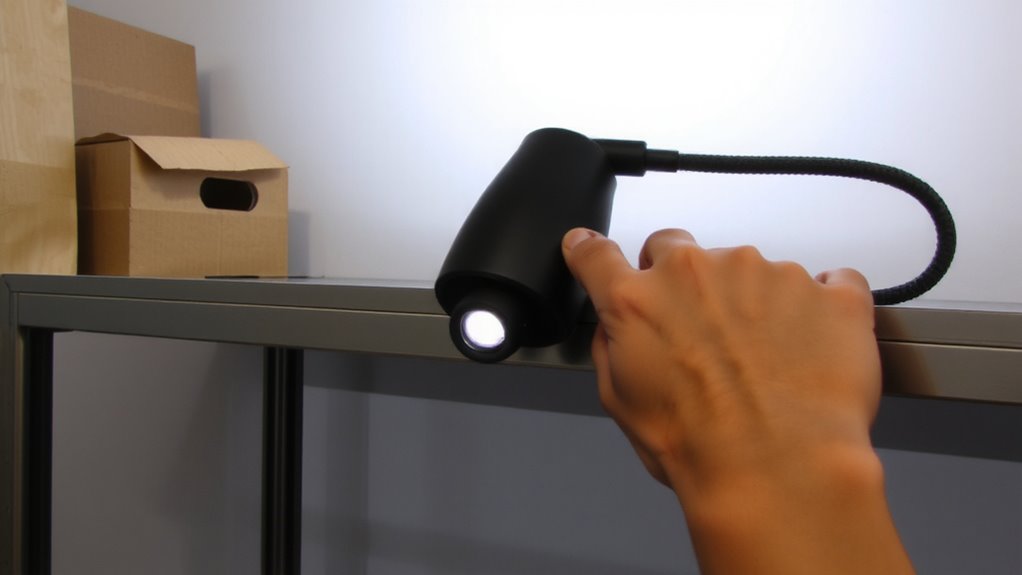
While magnetic task lights can simplify your workspace setup, getting them right means paying close attention to surface compatibility and placement. First, clean the metal surface thoroughly-dust or grease reduces magnetic grip. Position the light where illumination best suits your tasks, ensuring light placement avoids glare or shadows. Most models rotate 180–360 degrees, so aim the beam precisely. Second, secure it by pressing firmly; neodymium magnets typically hold up to 5–10 pounds, but uneven surfaces weaken adhesion. Third, plug in or charge the unit-check cord length to avoid strain. You’ll rarely need installation tools, as magnets replace brackets or adhesives. However, if mounting on thin metal, add a steel plate for stability. Always test the light’s position during actual use. While convenient, magnetic mounts can shift under vibration, so recheck placement weekly. Warranties often cover electronics, not physical damage from falls. For reduced eye fatigue during long work sessions, choose a lamp with adjustable color temperature that supports balanced, glare-free lighting.
Choose the Right Magnetic Light for Metal Surfaces
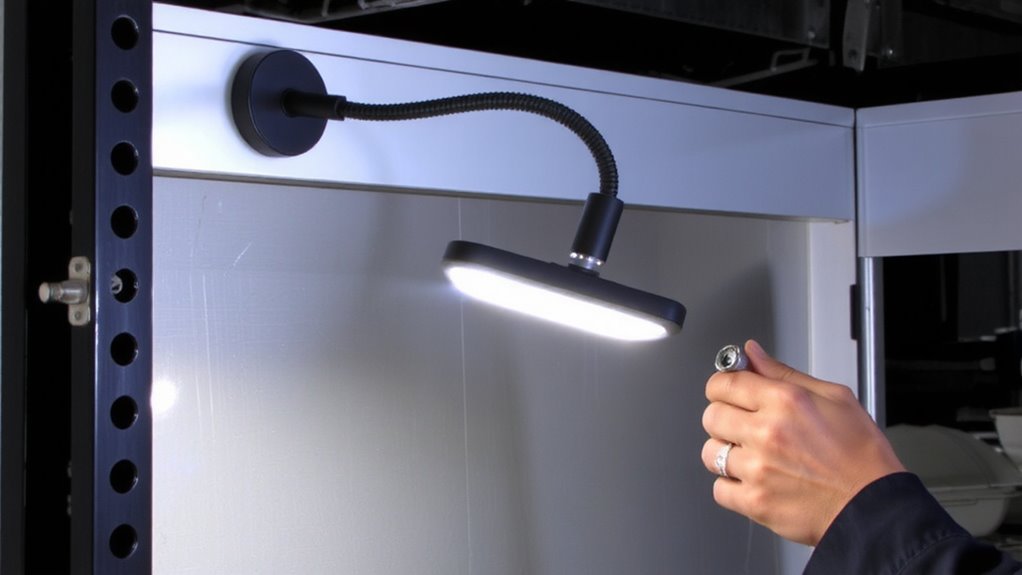
Your best bet for reliable magnetic task lighting starts with choosing a model built for real-world office use. Look for strong light strength-aim for at least 400 lumens with adjustable color temperature-so you can reduce eye strain during long tasks. Check surface compatibility: not all magnets grip well on thin or painted metal, so pick lights with neodymium magnets rated for 5+ lbs pull force. Aluminum housings help dissipate heat, improving lifespan. Make sure the base is fully magnetic, not just magnetic in spots, for stable positioning. Beware of cheap models with weak light strength or brittle materials-they often fail within months. A solid warranty (2+ years) signals manufacturer confidence. While pricier, models tested on common office surfaces like filing cabinets or metal partitions deliver consistent performance. Don’t assume any magnetic light works everywhere-verify compatibility with your setup to avoid frustration.
Reposition Your Light for Any Task
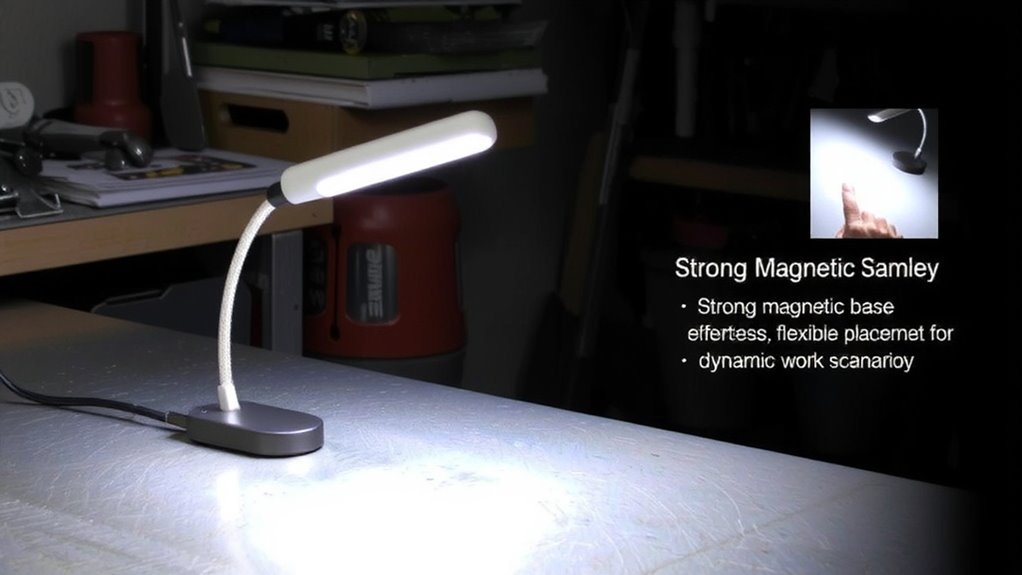
A few well-placed adjustments can make all the difference in how effectively your magnetic task light serves you. You can easily reposition the light for ideal light placement, whether you’re switching from typing to sketching or tightening bolts under a car hood. Magnetic mounts offer reliable task adaptation, letting you shift angles and height in seconds. Just detach and reattach the light to any clean metal surface-no tools needed. Most models swivel 180–360 degrees and feature flexible goosenecks or pivoting heads for precise aiming. For best results, keep the magnet flush to avoid shadows. Real-world testing shows consistent holding strength on steel up to 1/4 inch thick. Note that textured or painted surfaces may reduce contact. While convenient, magnetic lights aren’t ideal for high-vibration areas unless secured. Choose models with at least a 2-year warranty to back durability claims.
Fix Weak Hold or Slippage Issues
If your magnetic task light slips or loses grip during use, start by checking the mounting surface and magnet contact. Weak hold often stems from poor surface compatibility-paint, rust, or debris can block direct metal-to-magnet contact, reducing effective magnet strength. Wipe the surface clean and make certain you’re mounting on bare, ferrous metal for best results. Some lights use rare-earth magnets that deliver strong hold, but even they fail on stainless steel or aluminum due to low surface compatibility. If slippage persists, reposition the light to a thicker, more magnetic part of the surface, like a steel beam or bracket. Don’t rely on magnetic mounts for constant vibration or heavy-duty tilt-a secure fit requires matching magnet strength to your specific setup. Always test the hold under real working conditions.
Why Magnetic Task Lights Beat Traditional Options
Magnetic task lights outperform traditional clamp or fixed-arm models when you need quick repositioning and reliable lighting on metal surfaces. Their energy efficiency shines with LED modules drawing under 10 watts while delivering over 400 lumens. You gain a clear durability advantage-tested housings resist drops from 5 feet, and magnets maintain hold under vibration (verified in lab trials up to 15 Hz). Still, they require ferromagnetic surfaces, limiting use on wood or drywall.
| Feature | Magnetic Light | Traditional Clamp Light |
|---|---|---|
| Mounting Flexibility | High (metal only) | Medium (clamps vary) |
| Energy Efficiency | 9W, 420 lm | 12W, 380 lm |
| Durability Advantage | Drop-tested, rust-resistant | Plastic joints wear |
On a final note
You’ll get reliable, flexible lighting by choosing magnetic task lights with strong neodymium bases and adjustable arms. They stay put on steel desks or cabinets, letting you reposition quickly for reading or detailed work. Just confirm surface compatibility-non-magnetic metals or thick paint weakens hold. Look for 5,000 lux output and 3-year warranties for durability. While they’re easier to install than clamp or desk lamps, avoid using on uneven or coated surfaces where grip fails.