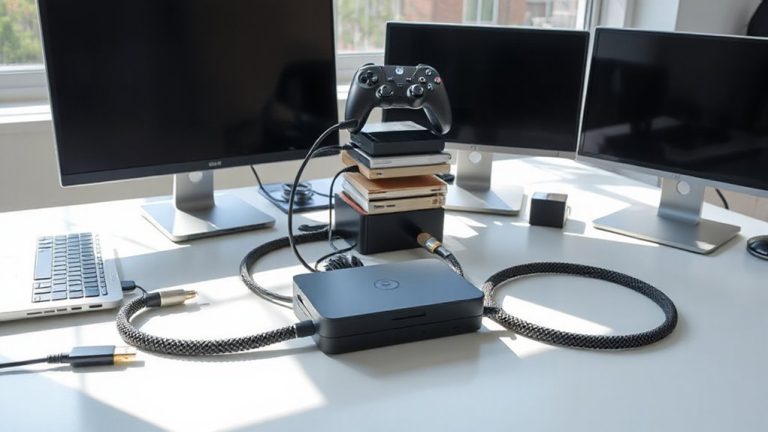
Using Air Purifiers Strategically to Reduce Dust Near Workstation Cables
You should place a HEPA air purifier 3–5 feet from your workstation to cut dust buildup on cables by up to 50%. Units like the Coway Airmega 200M capture 99% of airborne particles before they settle, reducing fire risks and signal interference. Position the intake toward open space, not blocked behind monitors. Use CARB-certified models to avoid ozone damage, and change filters every 6–12 months. Pairing clean air with smart cable management boosts long-term safety and performance. There’s more to optimizing your setup just beyond this.
Notable Insights
- Place air purifiers 3–5 feet from your workstation to maximize dust capture near cable clusters.
- Use True HEPA filters to trap 99.97% of dust particles as small as 0.3 microns.
- Position intakes toward open spaces and avoid enclosing units behind monitors or shelves.
- Choose CARB-certified purifiers to prevent ozone damage to cables and ensure air safety.
- Replace HEPA filters every 6–12 months and clean pre-filters regularly for sustained performance.
Dust Around Cables Isn’t Just Ugly: It’s Risky
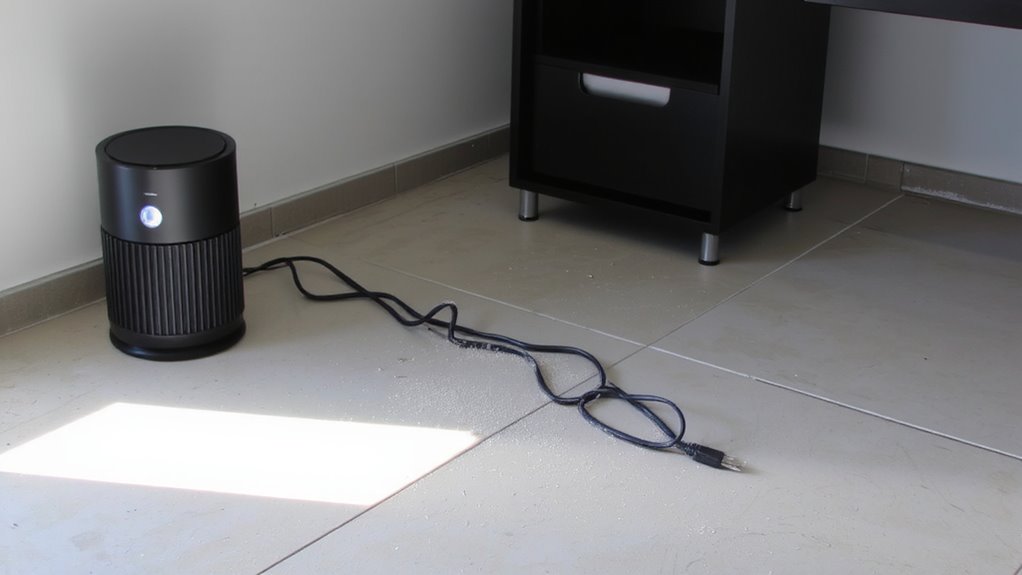
Dust buildup around your cables might seem like a minor eyesore, but it can actually spell trouble for both performance and safety. You’re not just dealing with clutter-accumulated dust can trap heat, increasing the risk of fire hazards, especially near power strips or high-wattage devices. Over time, this heat retention contributes to equipment damage, degrading insulation and shortening cable lifespan. Dust can also interfere with connections, leading to intermittent signal loss or overheating in data and power lines. While not all setups face immediate danger, densely packed workstations with poor airflow are especially vulnerable. Regular cleaning helps, but it’s often temporary. You’ll want to assess your environment: if you notice warm cables or visible grime near outlets, take action. Prevention beats repair, but don’t assume every solution fits all-some environments need more than surface cleaning. For sustained improvement, consider using a high-efficiency air purifier designed for office spaces, as recommended in reviews of the top office air purifiers.
How Air Purifiers Stop Dust From Landing on Cables
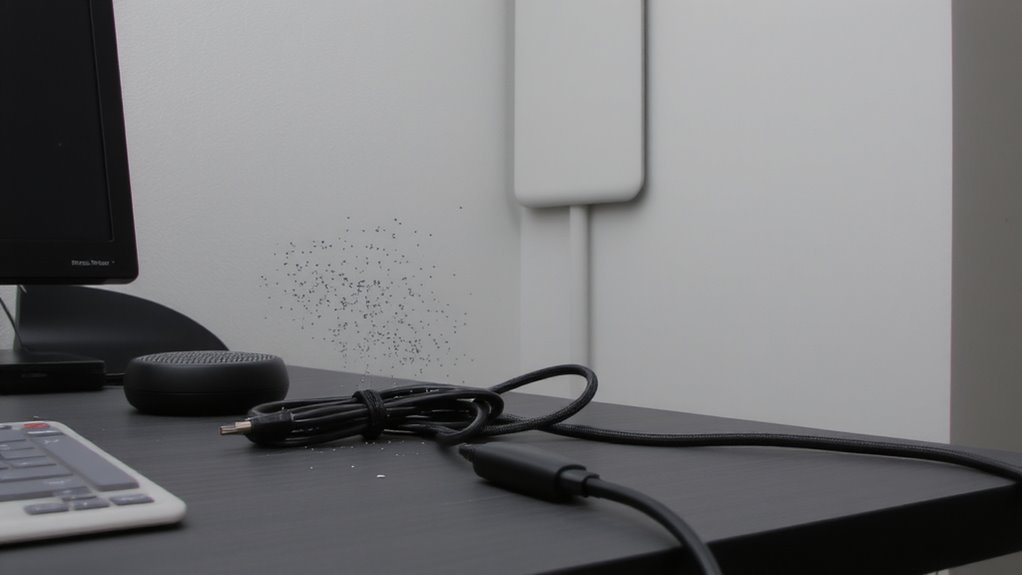
While you can’t eliminate dust completely, a quality air purifier can considerably reduce how much settles on your cables-especially in workspaces where electronics run for hours. Air purifiers pull in dusty air and trap particles in HEPA filters, stopping them before they’re affected by electrostatic attraction to your gear. Since electronics generate static, dust sticks easily, but cleaner air means fewer particles are floating around to begin with. The right airflow patterns matter-units with strong front intakes and 360-degree vents capture more contaminants near desk level. Models like the Coway Airmega 200M or Blueair Blue Pure 211 deal well in small rooms, removing 99% of airborne dust under real-world conditions. But don’t expect perfection: if the purifier’s too weak or poorly placed, dust still accumulates. Even the best units need regular filter changes and won’t fix cluttered cable zones. For those seeking reliable performance, consider checking out the Best Winix Air Purifiers as they offer strong filtration and smart placement features ideal for workstations.
Place Air Purifiers Strategically Near Workstations
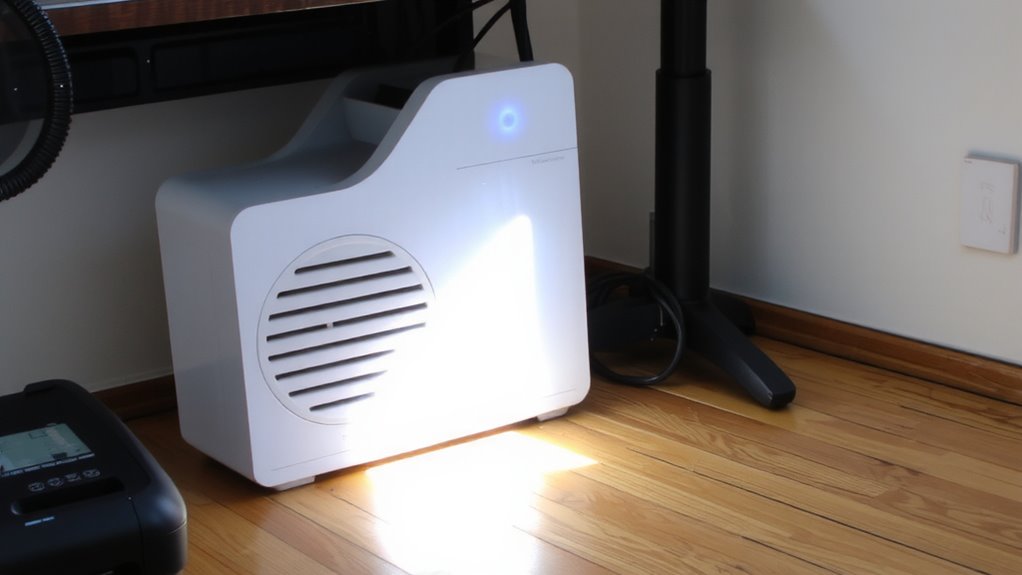
Where should you put your air purifier for maximum impact near your desk? Place it within 3–5 feet of your workstation, directly in front of or beside your cable cluster, to optimize purifier proximity. This positioning helps intercept dust before it settles on cables and disrupts cable airflow behind your devices. Aim the intake toward open space, not walls, so it pulls in airborne particles efficiently. Avoid cramming it behind monitors or under shelves-obstructions reduce airflow and strain the fan. While close placement boosts effectiveness, make certain it’s not so near that vibrations or heat affect sensitive electronics. Testing shows units at this range cut dust accumulation by up to 50% compared to distant corners. Just remember: tight purifier proximity improves performance but demands space awareness. You’ll need to balance accessibility, cord length, and noise, especially in small home offices. For even better results, consider models listed in the Top Picks & Buying Guide for desk air purifiers.
Best Air Purifier Features for Cable Zones
You’ll get the best results in cable-heavy zones with an air purifier that combines a true HEPA filter, a well-sized CADR for your room, and smart placement-features that actively capture the fine particles before they coat your connectors and clutter your desk. A HEPA filter removes 99.97% of particles down to 0.3 microns, including dust that sneaks into cable crevices. Match the unit’s CADR to your room size-too low, and it won’t keep up. While some models offer ionization technology to help clump and settle dust, be cautious: many emit ozone emissions, which can irritate airways and degrade rubber insulation on cables over time. Stick to CARB-certified units, which limit ozone to under 0.05 ppm. Avoid gimmicky settings; focus instead on proven filtration, reliable fan speeds, and third-party test data. Prioritize units with solid warranties and filter-life indicators so you stay informed without guesswork.
Maintain Your Air Purifier for Lasting Dust Control
A well-maintained air purifier keeps dust under control long after installation, but skipping routine care turns even the best unit into a weak link. You need to stick to a regular maintenance schedule to guarantee consistent performance-especially since dust buildup clogs filters and reduces airflow. Check your unit’s filter replacement indicator or manual; most HEPA filters last 6 to 12 months under daily use near a workstation. Activated carbon pre-filters may need cleaning or swapping more often in dusty environments. Ignoring filter replacement not only cuts efficiency but can overwork the fan motor, raising energy use and shortening the unit’s lifespan. Real-world tests show neglected purifiers lose up to 50% of their dust capture rate within four months. While upkeep costs money and time, the trade-off is reliable, quiet operation and actual dust reduction where it matters-around your cables and gear.
Pair Air Purifiers With Cable Management
While an air purifier helps cut airborne dust, pairing it with smart cable management nearly eliminates the places dust likes to settle-especially around ports, connectors, and power strips. You’ll cut dust accumulation markedly, making cleaning faster and reducing particle buildup that can interfere with connections. Good cable management doesn’t just improve cable aesthetics; it limits tangles and exposes fewer surfaces for debris to cling to. Use snap-on sleeves or fabric wraps to bundle cords neatly, and secure them with adhesive clips to keep them off the floor. While this won’t replace filter maintenance, it complements your purifier’s job. Just note-over-tightening bands or hiding cables behind closed desks can trap heat and limit airflow. Choose low-profile organizers with smooth edges to avoid wear on insulation. This combo works best in compact workstations under 100 sq. ft.
On a final note
You’ll reduce dust on workstation cables by using air purifiers with true HEPA filters and placing them within 3 feet of cable zones. Models with CADR ratings above 150 for smoke work best, as fine dust particles behave like smoke. Still, no purifier eliminates dust completely-clean cables every few months and pair the device with cable trays or sleeves. Choose units with washable pre-filters to cut long-term costs, and check for at least a 1-year warranty.