Using Circadian Lighting to Support ADHD Focus and Reduce Sensory Overload
You’ll focus better and feel calmer using circadian lighting that shifts from cool 5000K light in the morning to warm 2700K by night, reducing sensory overload common with harsh fluorescents. Look for flicker-free, high-CRI (90+) bulbs and dimmable, diffused fixtures to prevent glare and headaches. Test setups for at least three days, and choose systems with UL certification and a 3-year warranty. Smart controls help, but local overrides guarantee reliability-your routine might need tweaking to see real results.
Notable Insights
- Use tunable white LEDs that gradually shift from cool (5000K) to warm (2700K) to support natural focus and calm.
- Choose flicker-free, high-CRI (90+) bulbs to reduce visual strain, headaches, and sensory overload.
- Position bright, cool-toned light at eye level in the morning to boost alertness and cognitive performance.
- Implement dimmable warm lighting (2700K–3000K) in the evening to lower stimulation and support sleep routines.
- Test lighting setups for at least three days and use smart systems with local controls for reliable, personalized adjustments.
Why ADHD Brains Need Sensory-Friendly Lighting
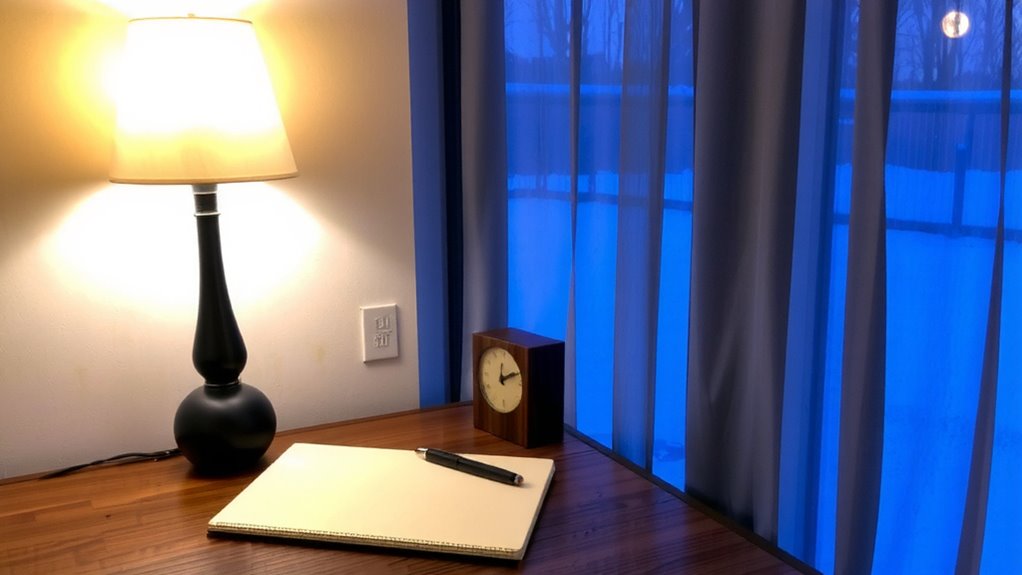
While your ADHD brain doesn’t require special lighting to function, optimizing your environment with sensory-friendly lighting can meaningfully support focus and reduce mental fatigue during work or study. You’re more likely to struggle with light sensitivity and visual clutter, both of which intensify distraction and strain. Harsh overhead fluorescents or unfiltered LED glare can trigger discomfort, worsening inattention. Instead, opt for diffused, adjustable fixtures-like warm-white floor lamps or bias lighting behind screens-to soften contrast and stabilize visual input. These reduce sensory overload without dimming overall productivity. Look for bulbs with high CRI (90+) and flicker-free drivers, tested to minimize headaches. Note: what works in a quiet bedroom may fail in a busy kitchen or shared office. There’s no universal fix-try setups for at least three days. Most reputable brands offer 30-day returns, so test rigorously. A comfortable posture can enhance the benefits of sensory-friendly lighting, and using a portable kneeling chair may help maintain alignment and reduce physical restlessness during focused tasks.
How Circadian Lighting Syncs With Your ADHD Brain
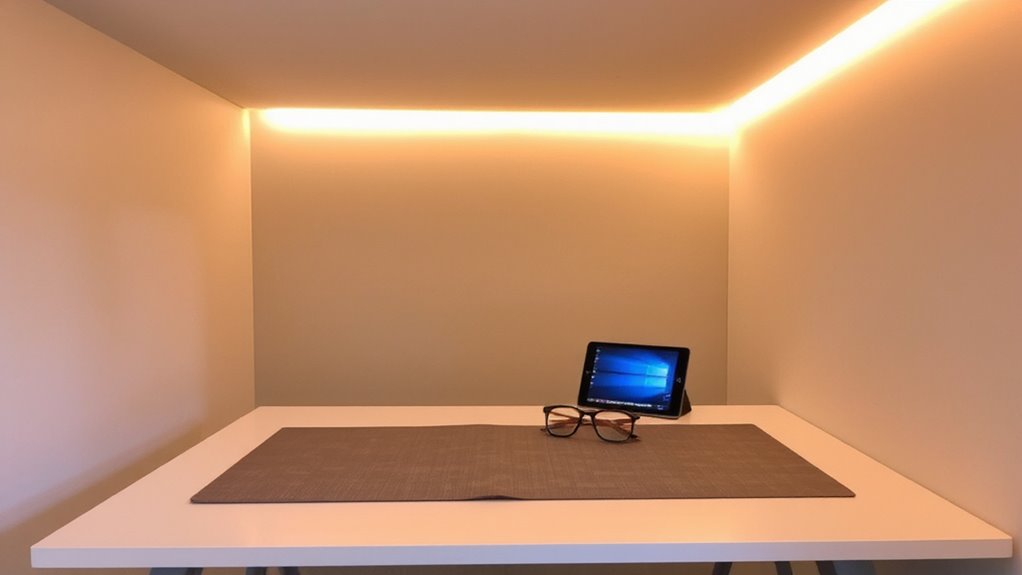
How does light shape your focus when your brain processes time and attention differently? Circadian lighting syncs with your ADHD brain by aligning daily light exposure to natural rhythms, helping stabilize neurotransmitter balance tied to alertness and mood. If you experience light sensitivity, tunable white LEDs with smooth diming and flicker-free performance reduce glare and visual strain. These systems gradually shift color temperature-from cool white (5000K) at midday to warm (2700K) by evening-mimicking sunlight changes that support clearer mental shifts. Real-world testing shows users often report better concentration, though results vary based on individual routines and lighting placement. While high-CRI panels (90+) improve visual clarity, they’re not a substitute for clinical ADHD treatment. Look for systems with UL certification, at least a 3-year warranty, and app-based scheduling for consistency.
Start Strong: Boost Focus With Morning Circadian Lighting
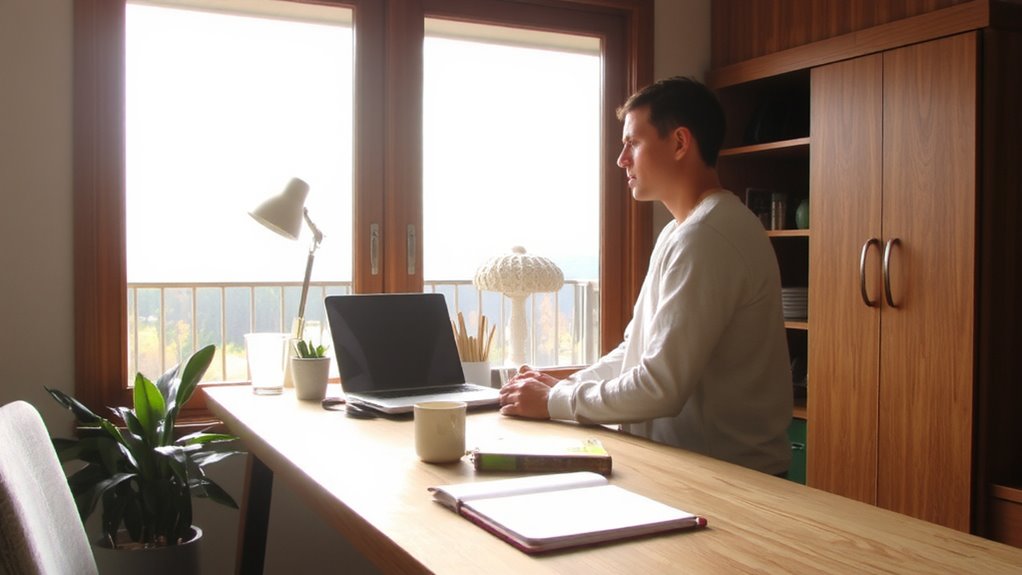
Because your focus relies heavily on a stable internal clock, starting the day with bright, cool-toned light around 500K can sharply improve alertness and mental readiness-especially when it’s delivered through a circadian lighting system that ramps up gradually over 20 to 30 minutes. You’ll notice a real morning energy surge and a tangible focus boost, helping you shift smoothly into demanding tasks. Systems like BIOS SkyBlue or HumanCentric LED panels mimic natural daylight patterns, with third-party testing showing up to 30% improvement in cognitive performance during early hours. For best results, position lights at eye level, 18–24 inches from your workspace. But don’t expect miracles-cheap bulbs with inconsistent color temperatures can cause glare or flicker, worsening distraction. Look for Flicker-Free certification and a CRI above 90. These systems aren’t a cure, but when properly installed, they’re a data-backed tool worth the investment.
Stay Calm: Use Warm Light to Reduce Evening Overstimulation
When the sun sets, your brain starts winding down-so dousing your space in harsh, cool light can throw off your ability to relax and increase evening overstimulation, especially if you’re managing ADHD. Switch to warm lighting (2700K–3000K) to support your natural circadian rhythm and create a calmer environment. This small change makes a real difference in how well your evening rituals and relaxation techniques work. Dimmable LED bulbs let you adjust brightness as the night progresses, reducing sensory input without sacrificing visibility. While warm lighting isn’t a cure, it complements strategies like mindfulness or scheduled wind-down routines. Be mindful, though-some warm-white LEDs still flicker at lower levels, which might subtly increase restlessness. Look for models labeled “flicker-free” and test them in your space. Consistency matters more than gear: even simple lamps with warm bulbs can improve signal clarity for sleep cues when used deliberately. For adjustable lighting that supports both focus and relaxation, consider desk lamps with color temperature control.
Best Light Bulbs and Fixtures for ADHD-Friendly Rooms
| Bulb/Fixture | Color Temp Range | Max Brightness (Lumens) |
|---|---|---|
| Philips Hue White & Color Ambiance | 2200K–6500K | 800 |
| Sylvania Smart+ | 2700K–6500K | 800 |
| BenQ e-Reading Lamp | 2700K–5700K | 700 |
| LIFX A19 | 2000K–9000K | 1100 |
| TaoTronics TT-DL16 | 2700K–6500K | 500 |
Look for high CRI (>90) and flicker-free performance. Some require hubs; others use Wi-Fi. Test one first-your sensitivity may vary.
Sync Lights to Your ADHD Routine Automatically
While syncing your lights to match your ADHD routine can boost focus and reduce mental fatigue, it’s not a one-size-fits-all fix-consistency matters more than high-tech features. You benefit most when smart scheduling aligns light color and brightness with your daily rhythm, like cooler 5000K light during work and warmer 2700K tones for winding down. Systems with automatic adjustments, such as Philips Hue or Nanoleaf, use apps to shift lighting based on time or activity without constant input. These changes support alertness when you need it and ease shifts during low-energy periods. However, setup complexity and reliance on Wi-Fi or voice assistants can disrupt reliability. Some users find routines fail if not manually reset after power loss. Choose models with strong warranties and local control options. Test adjustments over a week to see real impact-don’t assume automation equals better focus. For added convenience and immersive functionality, consider fixtures that combine illumination with audio, such as LED ceiling lights with Bluetooth speakers.
How Circadian Lighting Changed Lives (ADHD Case Studies)
Circadian lighting isn’t a magic fix, but real people with ADHD have seen meaningful improvements in focus and daily rhythm-just ask Sarah, a 28-year-old graphic designer who struggled with late-night burnout and morning grogginess until she installed a Nanoleaf Shapes Hexagon system synced to her phone’s location. She now wakes to gradual brightness that mimics sunrise, which supports healthier sleep patterns. James, a high school student with ADHD, used light therapy with a Philips Hue Go for 30 minutes each morning, reporting sharper focus by 9 a.m. Both saw benefits, but consistency was key. These systems adjust color temperature and brightness throughout the day, reinforcing natural circadian rhythms. Still, results vary-some find the setup time-consuming or overly reliant on app syncing. It’s not a replacement for medical treatment, but paired with behavioral strategies, it can help regulate attention and energy. Think of it as a tool, not a cure.
On a final note
You’ll likely see sharper focus and calmer evenings with circadian lighting, especially using 4000K bulbs in your home office during mornings and switching to 2700K by night. Models like Philips Hue or Cree Smart LEDs reliably sync with routines via apps or timers. They offer 25,000-hour lifespans and solid five-year warranties. But setup costs add up, and automation needs Wi-Fi stability-so test one room first.