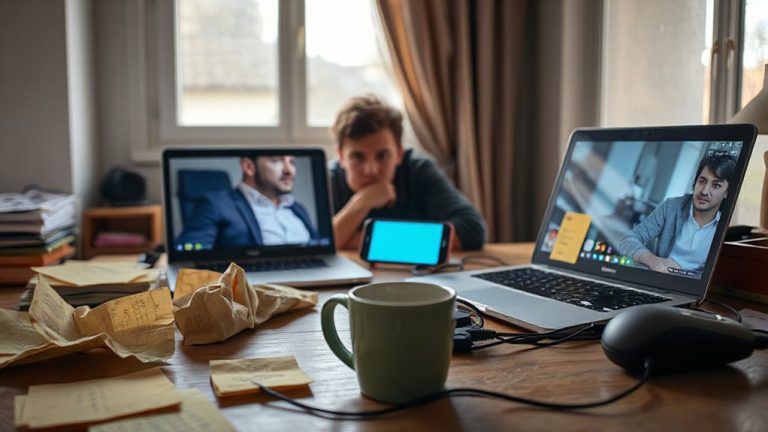
Designing a Work Environment That Supports Attention and Focus Duration
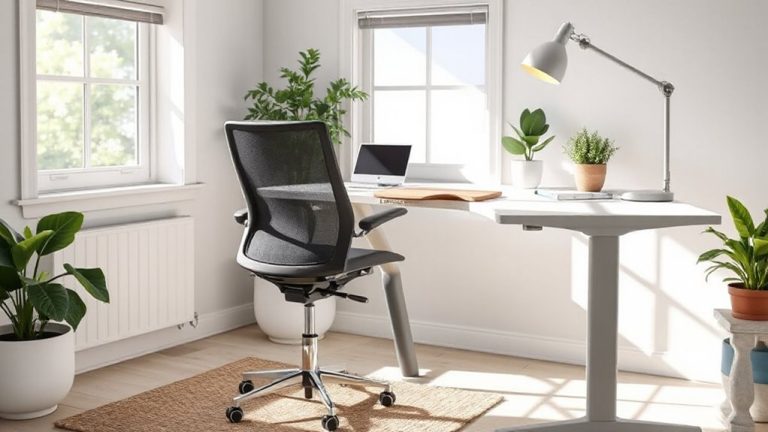
You can boost your focus by up to 50% with the right setup. Use cooler 5000K–6500K lighting paired with task lamps and place your desk near a window for natural light-just avoid glare. Install acoustic panels where noise hits hardest, and pair them with sound masking for real results. Choose an adjustable desk (22–48 in) and a chair with lumbar support; even mid-range models help if set up right. Keep your eyes level with the screen top and elbows at 90°. Use soft blues or greens on walls, stick to matte finishes, and aim for 60–70% neutral tones. A small recharge zone with plants or natural textures helps reset attention. The best setups combine precise gear with smart room use-details on getting each element right follow.
Notable Insights
- Use cooler lighting (5000K–6500K) with high CRI bulbs and task lighting to enhance alertness and reduce eye strain.
- Position desk near a window with controlled natural light to support circadian rhythm and improve focus.
- Install acoustic panels and use sound masking to minimize distractions and sustain concentration.
- Choose ergonomic furniture with adjustable height, lumbar support, and proper alignment to reduce physical discomfort.
- Designate a quiet, low-traffic work zone with visual boundaries to limit interruptions and reinforce focused work habits.
Optimize Lighting for Focus and Alertness
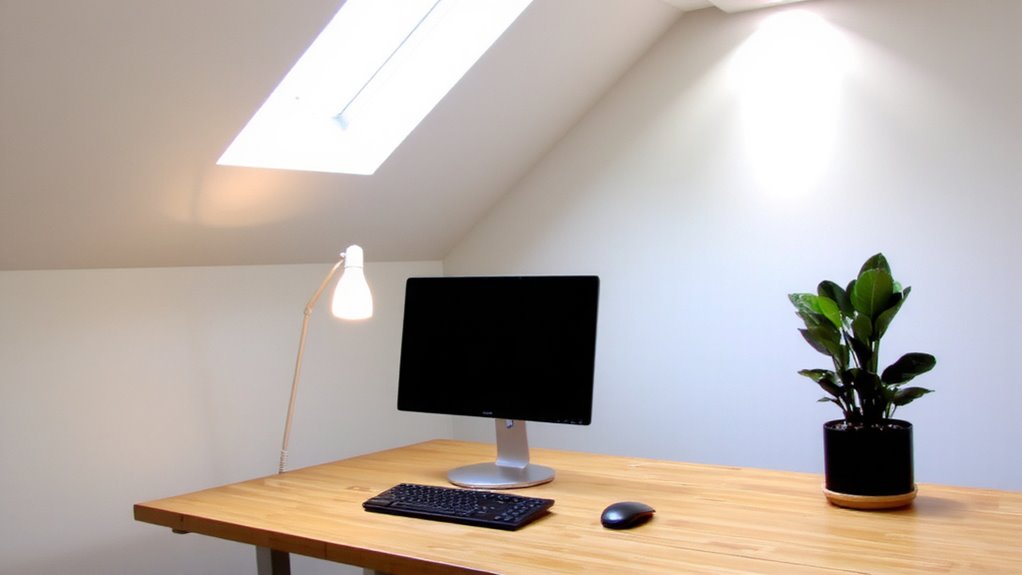
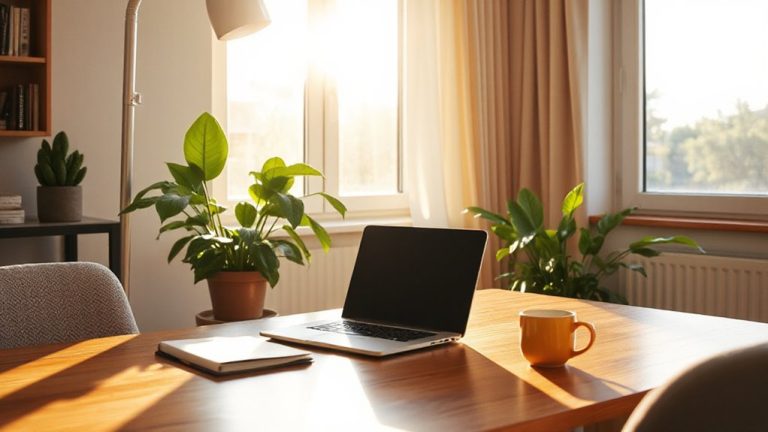
Most people see a noticeable boost in focus and alertness when they switch to cooler color temperature lighting-think 5000K to 6500K-especially during morning and midday hours. You’ll benefit from pairing this with task lighting that directs illumination exactly where you need it, reducing eye strain without over-lighting the whole room. Aim for natural exposure by placing your desk near a window, but use blinds to manage glare. Full-spectrum bulbs can mimic daylight, but they’re not a complete substitute for actual sunlight. Look for LED panels or desk lamps with high CRI (90+) for accurate color rendering. Avoid overly bright setups-intensity above 500 lux may cause discomfort over time. Some lights offer adjustable color temps, letting you shift warmer in the evening. Check product warranties, ideally 3+ years, and prioritize flicker-free models validated by third-party testing. A well-designed Top Desk Lamps can combine these features to enhance both comfort and concentration.
Reduce Noise to Sustain Concentration
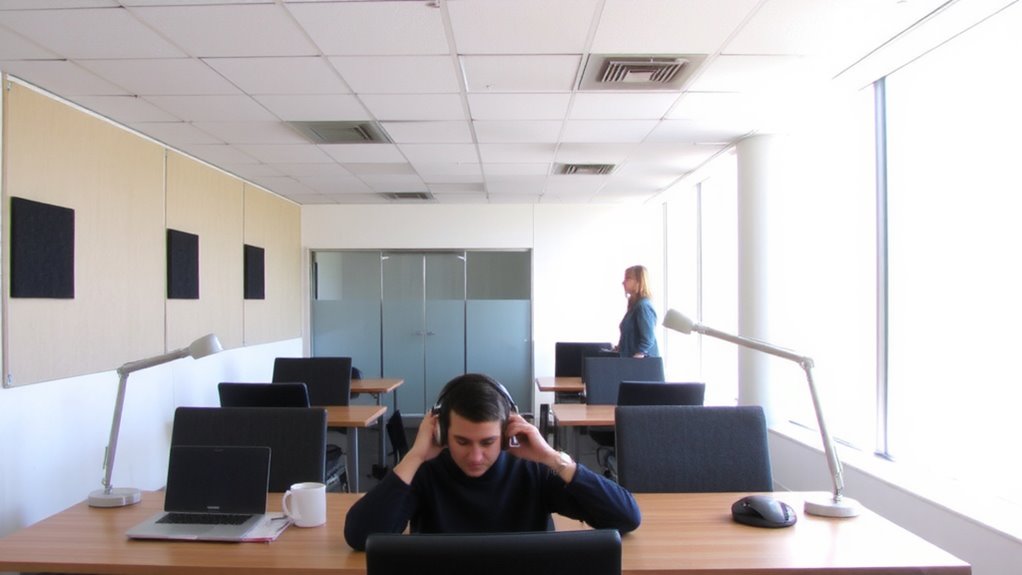
| Solution | Real-World Effectiveness |
|---|---|
| Acoustic panels | High (when properly placed) |
| Sound masking | Moderate to high |
| DIY fixes (towels, bookshelves) | Low to moderate |
Acoustic panels offer significant noise reduction, especially when strategically installed, and selecting the best acoustic panels can make a measurable difference in maintaining focus.
Use Ergonomic Furniture for Long-Term Focus
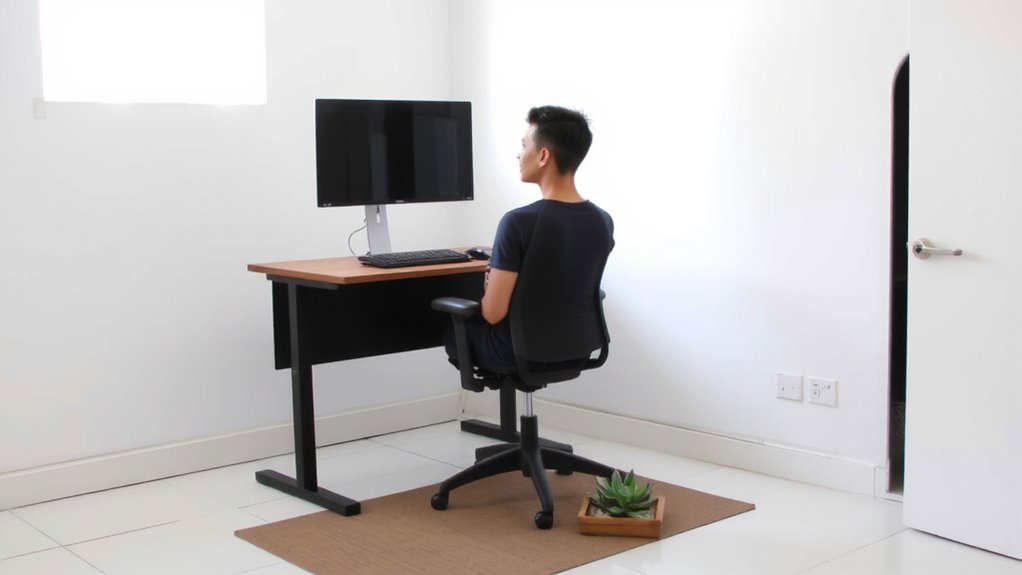
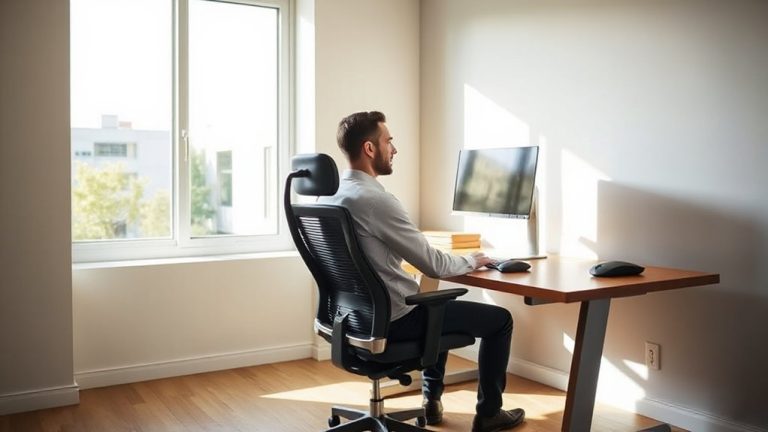
Ergonomic furniture can make or break your ability to stay focused over extended work sessions. You’ll work longer and more comfortably with adjustable desks and supportive seating that align with your body’s needs. An adjustable desk lets you switch between sitting and standing, reducing fatigue-look for ones with stable mechanisms and height ranges from 22 to 48 inches to fit various body types. Supportive seating should include lumbar support, adjustable armrests, and breathable fabric to prevent overheating. Real-world testing shows these features reduce discomfort by up to 50% over eight-hour days. But don’t assume higher price means better function-some mid-range chairs outperform premium models. Check warranties: a solid 5-year coverage is reasonable. While ergonomic gear helps, poor setup can still lead to strain, so adjust your chair and desk to align your eyes with the top of the screen and your elbows at 90 degrees. Best Standing Desks offer a balance of stability, height adjustability, and ease of use for sustained focus.
Design Work Zones to Limit Interruptions
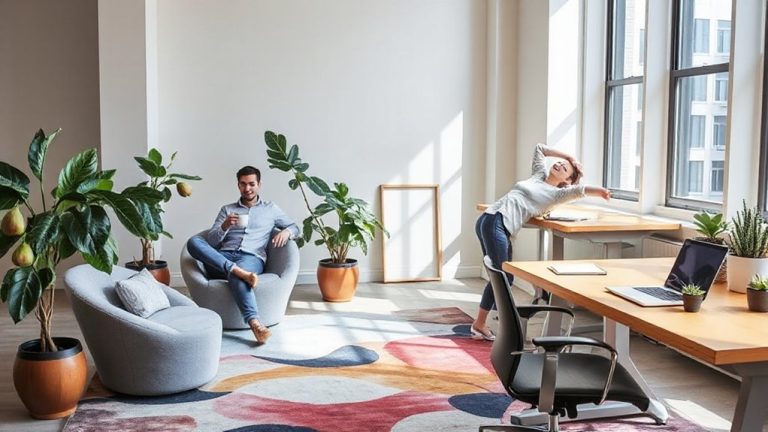
While it’s easy to underestimate how much your surroundings shape your focus, designing distinct work zones can greatly reduce interruptions-especially if you work from home. Use visual boundaries like bookshelves, screens, or area rugs to signal separation between work and rest areas. This kind of task zoning trains your brain to shift into focus mode more quickly. A dedicated corner with minimal foot traffic works better than a shared table, even in small spaces. Avoid placing your desk near high-activity zones like kitchens or hallways to reduce distractions. While full-room setups aren’t always possible, even subtle shifts-like facing away from distractions-help. Just remember: visual boundaries only work if you respect them. Consistency matters more than the setup. Over time, clear task zoning can improve focus duration-provided you enforce boundaries with housemates or family.
Leverage Color to Boost Mental Performance
You’ll get better focus by choosing the right colors for your workspace, since certain hues have been shown to influence cognitive performance-just don’t expect a paint job to fix poor habits. Color psychology suggests that cool tones like soft blues and greens promote calm concentration, while muted yellows can spark mild alertness without overstimulation. High chromatic contrast-like dark text on light backgrounds-boosts screen readability and reduces eye strain during long tasks. However, oversaturation or clashing tones may backfire, increasing distraction. Stick with 60-70% cool neutral walls, 20-30% accent hues, and 10% high-contrast elements for balance. Matte finishes reduce glare compared to glossy paints. These choices support mental performance, but they won’t replace disciplined routines or proper lighting. Test samples in your actual space under natural and artificial light before committing. The goal isn’t aesthetic appeal alone, but functional environments where focus can thrive-measurably and consistently-with realistic trade-offs in mind.
Create Recharge Spaces With Natural Elements
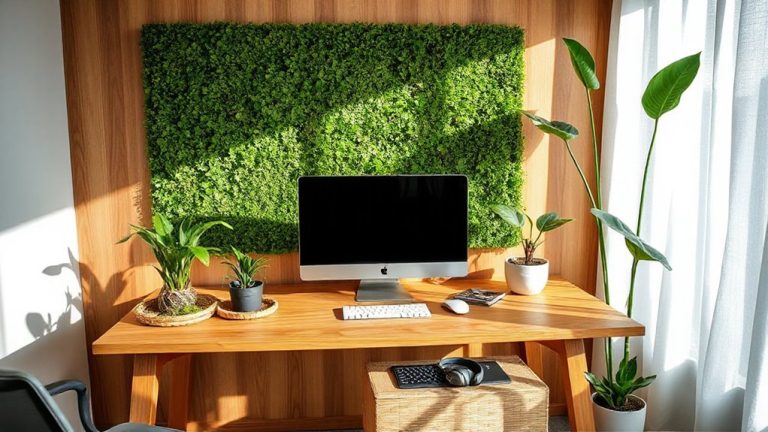
A break from the screen doesn’t have to mean scrolling on your phone or pacing the hallway-designing a nearby recharge space with natural elements can sharpen your focus when you return to work. Biophilic design isn’t just trendy; it supports sensory balance by reducing cognitive load. Even small touches like potted plants, natural wood finishes, or indirect sunlight help regulate stress. But skip oversized fountains or strong scents-these can disrupt more than restore. For best results, keep the space nearby but visually separated from your desk.
| Feature | Benefit |
|---|---|
| Potted snake plant | Low light needs, improves air quality |
| Bamboo mat | Adds texture, grounds the space |
| Near window | Maximizes natural light exposure |
| Noise diffuser | Maintains quiet without silence |
Prioritize simplicity. Overdesigning harms sensory balance. Test for comfort over one workweek before finalizing.
On a final note
You’ll get better focus by optimizing lighting, noise, and layout-but it’s not a magic fix. Use 350–500 lux cool-white LEDs, pair acoustic panels with white noise, and pick sit-stand desks with at least a 5-year warranty. Zones should separate tasks, and colors like soft blue can help, but test changes over 2–3 weeks. Natural elements recharge attention, though space limits exist. Results vary; track your focus before investing.