Age-Related Light Requirements: Customizing Your Workspace to Meet Individual Needs at Every Stage of Life
You need more light as you age, starting with cool, bright setups (5000K–6500K) for focus if you’re under 25, shifting to balanced 4000K–5000K lighting with 300–500 lux and high-CRI LEDs for office work between 30–50, then moving toward warmer 2700K–3000K bulbs with task lighting over 50 to reduce glare. Always use diffused, flicker-free lamps with adjustable controls and a 3+ year warranty-individual sensitivity varies, so test your setup thoroughly to see what truly works for your eyes over time.
Notable Insights
- Older adults need up to 50% more light due to pupil shrinkage and lens yellowing, requiring brighter, high-CRI lighting for clarity.
- Kids and young adults benefit from cool daylight-like lighting (5000K–6500K) to support focus, visual development, and circadian rhythms.
- Adults aged 30–50 should use layered lighting with cool white LEDs (4000K–5000K) and task lamps to reduce screen glare and eye strain.
- Over age 50, warmer light (2700K–3000K) with soft ambient and adjustable task lighting improves comfort and minimizes eye fatigue.
- Flicker-free, high-CRI (90+) LEDs with diffused lenses and adjustable color temperature help all ages reduce eye strain and customize workspace lighting.
Why Your Eyes Need Different Light as You Age
Ever wonder why reading in the same light that worked for decades suddenly feels harder? As you age, your eyes change in ways that demand more from your lighting. Pupil shrinkage means less light reaches the retina, so you’ll need brighter sources-typically 50% more than when you were younger. Lens yellowing distorts color perception, making whites appear warmer and reducing contrast. That’s why a neutral or cool-white LED (around 4000K) often works better, though it’s not a fix-all. Look for lights with high CRI (90+) to improve clarity. Adjustable task lamps with glare shields help direct illumination where it’s needed. But be cautious: overly bright or poorly positioned lights can cause glare, especially with screens. There’s no universal solution-personal sensitivity varies. Test models with dimmable settings and solid warranties, like those offering 3-year coverage, before committing. Top-rated adjustable desk lamps combine brightness control, flexible positioning, and high color accuracy to meet evolving visual needs.
Bright, Cool Light for Kids and Young Adults
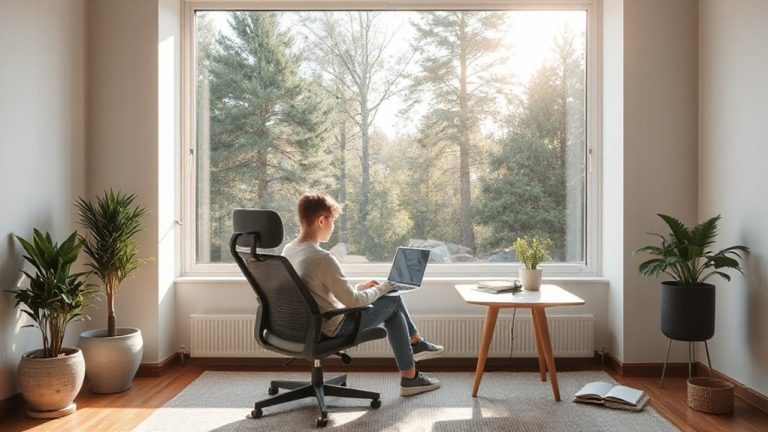
A bright, cool-white light setup-around 5000K to 6500K-typically supports focus and alertness for kids and young adults, especially during study or screen-based tasks. This color temperature aligns well with natural daylight, aiding visual development and concentration. However, prolonged exposure without breaks may cause eye strain.
| Age Group | Recommended Color Temperature | Purpose |
|---|---|---|
| 6–12 | 5000K–5500K | Homework, reading |
| 13–18 | 5500K–6000K | Studying, screen use |
| 19–25 | 6000K–6500K | Alertness, task focus |
| All | Use dimmers or timers | Avoid overexposure |
You’ll want adjustable fixtures to tailor intensity. While cool light boosts short-term focus, excessive use at night can disrupt sleep. Balance is key-pair high-color-temperature lighting with regular breaks and warm-toned ambient light in non-task areas to support overall visual development. Choosing the right lamp with adjustable brightness and color settings can enhance sustained concentration, especially when using a Top Desk Lamps for Studying design that minimizes glare and supports prolonged reading or digital work.
Lighting for Office Work: Focus Without Fatigue (Ages 30–50)
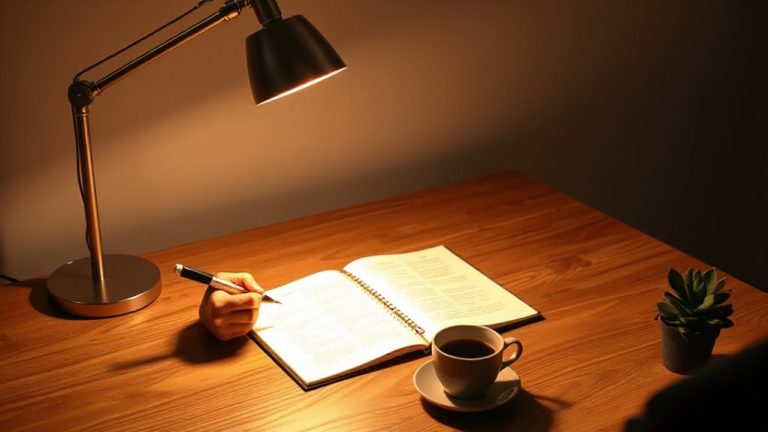
Why do so many office workers in their 30s to 50s still struggle with eye fatigue and midday slumps despite having modern workspaces? You need balanced lighting that supports task visibility and reduces glare without overstimulation. As you age, your eyes require more lumens-around 300–500 lux-for clear screen and document reading. Cool white LEDs (4000–5000K) enhance alertness and focus, but only if properly diffused. Poor placement causes glare, so position lights to the side of your monitor, not facing it directly. Use adjustable desk lamps with dimmers and shades for personalized control. You’ll perform better with layered lighting: ambient ceiling lights plus task lighting. However, even high-CRI bulbs (90+) can cause fatigue if too bright or flicker undetectably. Check specs for flicker rate and warranty-reputable brands offer 3–5 years. Test setups for at least a week. Good lighting helps, but it won’t fix poor screen ergonomics or lack of breaks. For those relying on video calls, consider best desk lamps for Zoom calls to maintain professional appearance and reduce eye strain during long meetings.
Warmer, Softer Light for Adults Over 50
As you move past 50, your eyes don’t just need more light-they need better-quality light, and that often means shifting from the cooler, brighter setups ideal for younger adults. You’ll likely find greater visual comfort with warmer light, around 2700K to 3000K color temperature, which reduces glare and eye fatigue. Unlike harsh 5000K+ LEDs, these tones mimic natural indoor lighting and support sustained focus. Look for bulbs or desk lamps labeled “warm white” and verify color temperature on the packaging. While softer light improves comfort, it may reduce contrast, so pair it with task lighting that’s adjustable in brightness. Avoid dimmable fixtures unless you have compatible controls, and check for flicker-some cheaper LEDs cause strain over time. Test different models for at least a week; individual needs vary. A well-chosen light enhances clarity without sacrificing warmth.
Why Desk Lights Cause Eye Strain: And How to Fix It
Ever wonder why your eyes feel tired after just an hour under your desk light, even if it seems bright enough? It’s likely due to excessive blue light and poor glare reduction. Harsh LEDs often emit too much blue light, disrupting focus and increasing eye fatigue. Direct, unshielded lighting creates glare, making your eyes work harder. Below are key fixes:
| Issue | Solution |
|---|---|
| Blue light excess | Use adjustable CCT bulbs |
| Harsh glare | Choose diffused, indirect lamps |
| Poor positioning | Angle light from the side |
Opt for lights with proven glare reduction and adjustable color temperature. Position them to avoid reflections on screens. While full-spectrum lights help some, they may worsen glare without proper shielding. Quality build and 3-year warranties matter most. Not every premium light prevents strain-verify real-world testing results before buying.
Choose the Right Bulb for Your Age and Eye Needs
You need more light as you age, but simply cranking up brightness won’t solve the problem-and might make eye strain worse. The right bulb balances color temperature and glare control for clearer, more comfortable vision. Aim for 3500K to 4000K color temperature: warm enough to feel natural, cool enough to keep focus. LEDs with diffused lenses or indirect lighting designs reduce glare, especially if you wear glasses or have early cataracts. Look for bulbs labeled “flicker-free” and “high CRI” (90+), so text appears sharp and colors stay true. Avoid bare bulbs or exposed diodes-these increase glare. Dimmable models let you adjust light as needs change. While full-spectrum bulbs sound appealing, they’re often too blue, disrupting sleep if used late. Test brands like Philips or GE for reliability, but always check return policies. Long warranties (3+ years) signal confidence in longevity.
On a final note
You need tailored lighting as you age-don’t rely on one setting for life. Younger users benefit from 500+ lux cool-white (5000K) LED task lights to boost alertness, but those over 50 need warmer (3000K), diffuse lighting to reduce glare and support slower-adapting pupils. Always pair adjustable desk lamps with ambient overheads to avoid contrast strain. Look for dimmable LEDs with CRI >90, but expect higher cost. Check return policies-if it causes glare or flicker, return it.