Creating a Hybrid Office Zone Using Sound-Absorbing Panels and Diffusers
You’ll boost focus and teamwork by pairing sound-absorbing panels with diffusers, but only if you place them right. Use high-NRC (0.8+) panels on walls and ceilings to cut echo, especially between desks and near hard surfaces. Add diffusers at ear and ceiling level in shared areas to scatter sound and improve speech clarity by up to 30%. Avoid overloading quiet zones-too much treatment creates unnatural silence. Balance is key, and layout matters just as much as materials. Get the zoning right, and you’ll see real gains in attention and dialogue. There’s a smarter way to design each zone for how people actually use the space.
Notable Insights
- Use sound-absorbing panels with NRC 0.8+ on walls and ceilings to minimize echoes and improve speech privacy.
- Combine absorbers and diffusers to balance noise reduction and speech clarity in hybrid workspaces.
- Install diffusers at ear and ceiling level to scatter sound evenly without over-damping acoustic energy.
- Place panels at reflection points between desks to reduce auditory fatigue and enhance concentration.
- Designate quiet and collaborative zones with targeted acoustics to support diverse work activities effectively.
Why Noise Kills Hybrid Office Productivity
Why does noise feel so disruptive when you’re trying to focus in a hybrid office? Open floorplan drawbacks-like echoing voices and sudden sounds-shatter concentration. Your brain can’t filter out random chatter, making tasks take longer and feel harder. That’s where sound masking benefits come in. Systems that emit low-level, non-distracting noise-often white or pink sound-reduce speech intelligibility by filling acoustic gaps. They don’t eliminate noise, but they make it less noticeable. Real-world tests show productivity improves up to 15% with proper masking. Still, placement matters: units too loud or too close create their own distraction. Pair them with sound-absorbing panels and diffusers for balanced acoustics. These materials reduce reverberation, but need strategic mounting-at ear level and near noise sources. Warranties range 5–10 years, but effectiveness depends on room size and layout. There’s no one-size-fits-all fix.
Design Quiet and Collaborative Zones First
Start with a clear plan: designing dedicated quiet and collaborative zones upfront shapes how well your hybrid office works. You’ll boost focus and teamwork by separating these needs early. Quiet zones need minimal distractions, while collaborative areas should encourage交流 without disrupting others.
| Feature | Quiet Zones | Collaborative Areas |
|---|---|---|
| Noise Level | <45 dB | <60 dB |
| Layout | Enclosed, minimal traffic | Open, central location |
| Seating | Individual pods or carrels | Shared tables, mobile chairs |
| Tech | Headphone jacks, charging ports | Screens, video conferencing tools |
| Acoustics | High absorption materials | Balanced diffusion |
Don’t retrofit later-doing it now cuts costs and boosts efficiency. But remember: if quiet zones are too far, people won’t use them. Collaborative areas can get noisy fast, so balance openness with control. Planning now prevents acoustic chaos later.
Install Sound Panels to Reduce Echo and Distractions
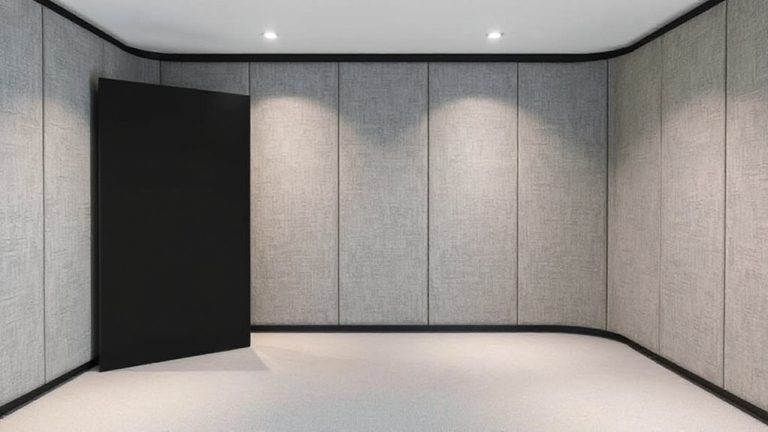
While noise can unravel even the best office layout, installing sound-absorbing panels is one of the most effective ways to cut echo and keep distractions in check. You’ll want panels with high NRC (Noise Reduction Coefficient) ratings-ideally 0.8 or above-for real echo cancellation. Mount them on walls and ceilings where sound bounces most, like between desks or near hard surfaces. This boosts voice isolation, helping team members focus without blocking communication. Foam panels are affordable but less durable; fabric-wrapped fiberglass lasts longer and handles low-frequency noise better. Placement matters-corners and mid-wall spots deliver the best results. Avoid overloading spaces; too many panels create an unnaturally quiet environment that feels off. Test configurations in high-traffic zones first. Panels aren’t soundproof, but they noticeably improve clarity and reduce fatigue when properly selected and spaced. For optimal performance, consider the best acoustic panels based on material, size, and design compatibility with your space.
Use Diffusers for Clearer Speech in Shared Spaces
How often do you struggle to catch words in a busy shared space, even when everyone’s speaking at a normal volume? You’re not alone-and sound diffusion can help. Unlike panels that absorb, diffusers scatter sound waves evenly, reducing harsh echoes without making the room feel too dead. This boosts speech clarity by preventing muddled audio build-up, especially in spaces with hard surfaces. Real-world tests show that well-placed diffusers improve voice intelligibility by up to 30% in mid-sized rooms. For best results, install them at ear and ceiling level where sound reflects most. But don’t overdo it-too many diffusers can create phase issues that distort sound instead of clarifying it. They also cost more than basic foam and need precise placement. While they won’t fix poor room layout or background noise, used wisely, diffusers are a smart upgrade for clearer communication in hybrid work zones.
Choose Acoustic Panels That Fit Your Office Style
Style matters just as much as function when it comes to acoustic panels-because no one wants to trade a sleek office design for better sound. You can find panels that match your office’s color schemes and material finishes without sacrificing performance. Look for fabric-wrapped foam or felt options in neutral tones like charcoal, beige, or deep blue-they’re versatile and professional. Some brands offer custom printing, so you can integrate branding or abstract designs. Keep in mind that glossy finishes may reflect light and create glare, while matte textures absorb it, blending seamlessly. Most quality panels are 2” thick and tested with Noise Reduction Coefficients (NRC) of 0.7 or higher. Check warranties-many reputable models offer 5+ years. Just remember: stylish panels won’t help if they’re poorly placed later.
Place Panels Where Sound Bounces Most
Since sound tends to bounce off hard surfaces like walls, ceilings, and large glass partitions, you’ll get the best noise control by installing panels where reflections are strongest-especially on walls directly across from speakers or workstations. Start with sound mapping to identify key reflection points, where noise repeatedly bounces between surfaces. Target those spots first-usually at ear and desk height-for maximum effect. While full coverage looks clean, strategic placement beats uniformity. Panels work best when they break early reflections, not just decorate walls. Note: too many panels can make a space feel too dead, hurting speech clarity. Use diffusers alongside absorbers to keep sound balanced. Test adjustments over a few days, especially near collaboration zones. Most commercial panels install easily with adhesive or rails, but check fire ratings and warranty length-some materials degrade faster in sunlight or humid zones.
On a final note
You’ll boost focus and teamwork by combining sound-absorbing panels and diffusers in your hybrid office. Panels with NRC ratings above 0.8 cut echo effectively, especially on walls and ceilings where sound bounces most. Diffusers improve speech clarity without deadening sound. Install both strategically-panels near noisy zones, diffusers in shared areas. Most quality units fit standard mounts and come with 5-year warranties, but proper placement matters more than quantity. Test layouts before finalizing.